
AI-Powered Drug Discovery Reaches Inflection Point as Pharma and Academia Commit Billions
A wave of major investments in June 2026, including a $1 billion partnership between Merck and Google Cloud and a new Alzheimer's initiative at Indiana University, signals a massive shift toward AI-driven medical research.
By Factlen Editorial Team
- Biopharma Industry
- Focuses on leveraging enterprise AI to accelerate R&D pipelines, reduce costs, and bring novel therapeutics to market faster.
- Academic Researchers
- Values AI as a computational tool to unlock complex biological mechanisms that evade traditional manual analysis.
- Public Health Advocates
- Argues that AI's greatest immediate value lies in closing the care delivery gap to ensure existing treatments reach vulnerable patients.
What's not represented
- · Patient advocacy groups concerned about health data privacy
- · Frontline nurses and technicians tasked with implementing these new AI tools
Why this matters
By dramatically reducing the time it takes to identify and test new drug compounds, these AI partnerships could bring life-saving treatments for diseases like Alzheimer's and cancer to patients years faster. Furthermore, using AI to close the care delivery gap ensures that existing medical breakthroughs actually reach the vulnerable populations who need them most.
Key points
- Merck has partnered with Google Cloud in a $1 billion deal to deploy enterprise AI across its global R&D and manufacturing operations.
- Indiana University launched a $6 million NIH-funded initiative to discover new Alzheimer's treatments using machine learning.
- Sanofi is expanding its collaboration with Owkin to develop autonomous 'agentic AI' for oncology target identification.
- Public health experts are urging the industry to use AI to close the 'discovery-delivery gap' and connect undiagnosed patients with existing treatments.
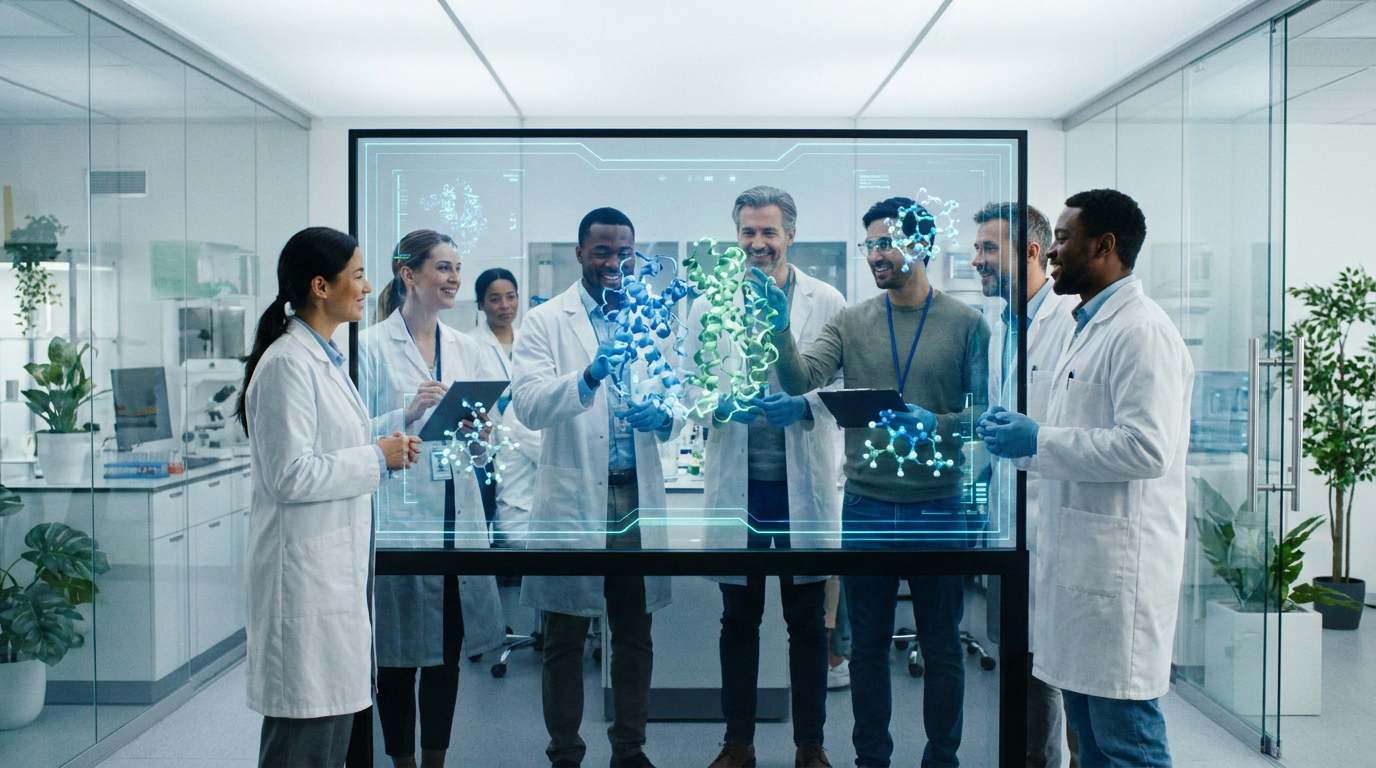
June 2026 is emerging as a watershed moment for artificial intelligence in medicine, marking the definitive shift from experimental pilot programs to massive, enterprise-wide infrastructure. Across the pharmaceutical and academic sectors, billions of dollars are being committed to AI platforms designed to fundamentally rewrite the timeline of drug discovery and patient care.[2][5]
Leading the charge is pharmaceutical giant Merck, which recently announced a sweeping, multiyear partnership with Google Cloud valued at up to $1 billion. The agreement will deploy Google's advanced AI tools, including Gemini Enterprise, across Merck's entire global operation, embedding predictive analytics into everything from early-stage research workflows to complex manufacturing processes.[2]
The scale of the Merck-Google alliance underscores a growing industry consensus: the traditional drug discovery process, which often takes over a decade and billions of dollars to bring a single molecule to market, is no longer sustainable. By leveraging machine learning to predict efficacy and optimize clinical trials, companies aim to drastically reduce the time it takes to identify viable drug candidates.[2][6]

Parallel to this corporate mega-deal, academic institutions are launching highly targeted AI initiatives to tackle some of medicine's most intractable diseases. Researchers at Indiana University have initiated a five-year, $6 million project funded by the National Institutes of Health to harness machine learning specifically for Alzheimer's disease and related dementias.[1]
The Indiana University team is combining advanced computational techniques with traditional chemistry to search for novel chemical structures capable of interacting with the specific proteins linked to Alzheimer's progression. According to project leaders, the technology allows scientists to analyze vast libraries of potential compounds in a fraction of the time it would take human researchers to evaluate them manually.[1]
Beyond traditional machine learning, the biopharma sector is also embracing "agentic AI"—autonomous systems capable of executing multi-step workflows. Sanofi has entered into a multi-year agreement with the France-based AI company Owkin to co-develop next-generation biopharma agents.[2]
Beyond traditional machine learning, the biopharma sector is also embracing "agentic AI"—autonomous systems capable of executing multi-step workflows.
The Sanofi-Owkin partnership includes a five-year license for Owkin's K Pro platform, which fuses multimodal patient datasets with biological AI systems. These tailored AI agents will support Sanofi's drug development pipeline from early discovery through the clinical stages, with a particular focus on identifying new oncology targets and stratifying patient subgroups.[2]

This shift toward multimodal AI is transforming the broader clinical landscape. According to a recent review in the European Medical Journal, AI systems are moving beyond single-modality tasks—like reading a solitary X-ray—toward fusing imaging, genomics, laboratory data, and wearable signals into a cohesive patient trajectory.[4]
By analyzing these subtle patterns across multiple data streams, multimodal models can contextualize findings and detect preclinical disease long before symptoms appear. This capability is driving a transition toward proactive, precision medicine, where treatments are tailored to the individual and monitored remotely in real time.[4][6]
However, as the frontiers of medical discovery expand, public health experts are cautioning that invention alone is not enough. Dr. Dave Chokshi, former New York City Health Commissioner, recently argued at the Mount Sinai "New Wave of AI in Healthcare" conference that the industry must not measure AI's success solely by what it helps invent.[3]
Dr. Chokshi highlighted the urgent need to close the "discovery-delivery gap"—the stubborn distance between what medical science has made possible and what patients actually receive. He noted that medicine already possesses curative treatments for various conditions that simply fail to reach the most vulnerable populations.[3]

Instead of just hunting for the next miracle cure, AI can be deployed to augment case finding. By analyzing health system data, AI can identify patients who have an undiagnosed condition, qualify for a proven intervention, or have fallen out of care, connecting them to life-saving treatments that already exist.[3]
Ultimately, the true winners of this medical AI wave will be the organizations that successfully translate raw computational power into measurable clinical outcomes. Whether it is discovering a novel Alzheimer's compound, streamlining a global pharmaceutical supply chain, or ensuring a marginalized patient receives a proven therapy, the focus has firmly shifted from technological novelty to tangible human impact.[3][5]
How we got here
2021
Sanofi and Owkin launch their initial collaboration focused on oncology target identification.
May 2026
Experts at the Mount Sinai AI conference highlight the need for AI to close the healthcare delivery gap.
June 2026
Merck announces a $1 billion enterprise AI partnership with Google Cloud.
Mid-June 2026
Indiana University launches a $6 million AI-driven Alzheimer's drug discovery initiative.
Viewpoints in depth
Biopharma's view
Enterprise AI is the key to sustainable drug development.
For major pharmaceutical companies, the traditional R&D model has become increasingly unsustainable due to skyrocketing costs and high failure rates in clinical trials. Industry leaders view enterprise-wide AI integration—such as Merck's billion-dollar deployment of Google Cloud tools—as an existential necessity. By using predictive analytics and agentic AI to simulate molecular interactions and optimize manufacturing, biopharma aims to slash the time and capital required to bring novel therapeutics to market.
Academic Researchers' view
AI unlocks biological complexities that human researchers cannot process manually.
Academic institutions approach AI as a fundamental research multiplier. Teams like the one at Indiana University emphasize that human researchers simply cannot manually evaluate the millions of potential chemical structures needed to find new treatments for complex conditions like Alzheimer's. For academia, machine learning is a vital tool to identify subtle protein interactions and preclinical disease markers that would otherwise remain hidden in massive datasets.
Public Health Advocates' view
Technology must prioritize delivering proven care over chasing new miracles.
Public health officials and clinicians warn against a singular focus on invention. They argue that the medical system already possesses highly effective, sometimes curative, treatments that fail to reach marginalized or undiagnosed populations. From this perspective, the most urgent application of AI is in augmenting case finding—using data to identify patients who have fallen through the cracks and ensuring they receive the care that science has already proven effective.
What we don't know
- How seamlessly these new AI models will integrate with legacy electronic health record systems across different hospital networks.
- Whether the accelerated discovery of drug compounds will translate to higher success rates in late-stage human clinical trials.
- How regulatory bodies like the FDA will adapt their approval processes for therapeutics developed primarily through autonomous agentic AI.
Key terms
- Agentic AI
- Artificial intelligence systems capable of autonomously executing multi-step workflows and making decisions to achieve a specific goal, rather than just answering single prompts.
- Multimodal AI
- AI models that can simultaneously process and integrate different types of data, such as combining medical images, genomic sequences, and electronic health records.
- Precision Medicine
- An approach to disease treatment and prevention that takes into account individual variability in genes, environment, and lifestyle for each person.
Frequently asked
How is AI changing the drug discovery process?
AI accelerates drug discovery by rapidly analyzing vast libraries of chemical compounds and predicting their efficacy, reducing a process that traditionally takes years down to months.
What is the goal of the Indiana University project?
The $6 million NIH-funded initiative uses machine learning to identify new chemical structures that can interact with proteins linked to Alzheimer's disease.
What is the 'discovery-delivery gap'?
It refers to the distance between medical breakthroughs and patient access. Experts argue AI should be used to identify undiagnosed patients and connect them with proven treatments, not just invent new ones.
Sources
Source coverage
6 outlets
3 viewpoints surfaced






[1]Drug Target ReviewAcademic Researchers
AI-powered $6M project targets new Alzheimer's treatments
Read on Drug Target Review →[2]Crescendo AIBiopharma Industry
Latest AI News and Breakthroughs That Matter Most | June 2026
Read on Crescendo AI →[3]New York Academy of SciencesPublic Health Advocates
The Breakthrough Healthcare Needs Most
Read on New York Academy of Sciences →[4]European Medical JournalAcademic Researchers
AI in therapeutics and precision medicine
Read on European Medical Journal →[5]Mean CEOBiopharma Industry
Latest AI breakthroughs news, June 2026
Read on Mean CEO →[6]VertuBiopharma Industry
Top 10 AI Medical Breakthroughs 2026: Revolutionizing Healthcare
Read on Vertu →


Every angle. Every day.
Get ai stories with full source coverage and perspective breakdowns delivered to your inbox.