
PHEV vs. BEV in 2026: The Complete Guide to Choosing Your Next Electrified Vehicle
As the auto industry shifts toward electrification, shoppers face a critical choice between fully electric vehicles and plug-in hybrids. Here is a data-driven breakdown of the costs, conveniences, and trade-offs of each powertrain.
By Factlen Editorial Team
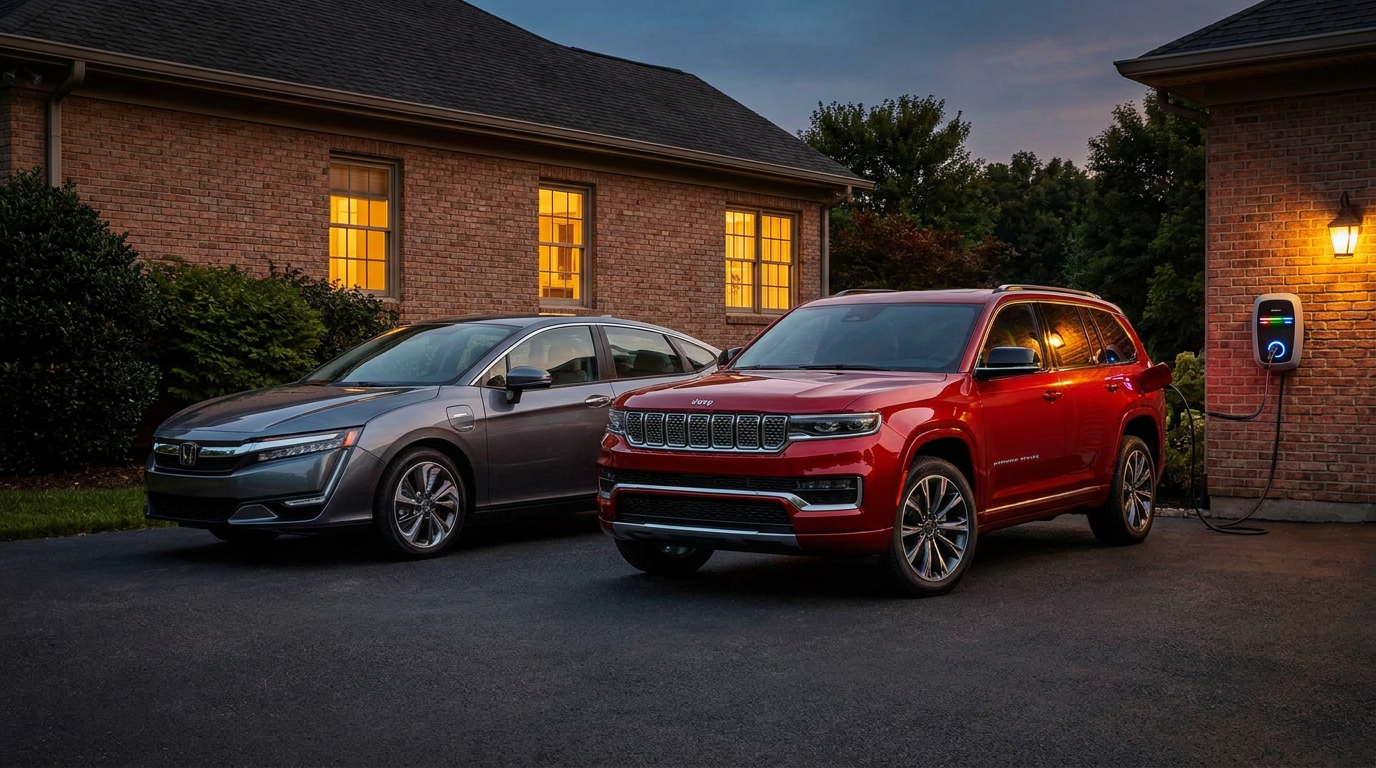
- Plug-In Pragmatists
- Supporters of flexible electrification who view PHEVs as the ideal transition technology to eliminate range anxiety.
- Battery Electric Purists
- Advocates for a complete break from fossil fuels, emphasizing mechanical simplicity and lower long-term operating costs.
- Total Cost Analysts
- Financial realists focused strictly on the bottom line, warning that upfront costs and charging behavior dictate actual savings.
What's not represented
- · Apartment Renters Without Charging Access
- · Rural Drivers Far From Infrastructure
- · Used Car Buyers
Why this matters
Choosing the wrong electrified powertrain can lead to thousands of dollars in wasted premiums or a deeply frustrating daily commute. Understanding the precise trade-offs between BEVs and PHEVs ensures buyers select a vehicle that actually fits their lifestyle and lowers their long-term costs.
Key points
- Fully electric vehicles (BEVs) offer the lowest per-mile operating costs and the highest owner satisfaction.
- Plug-in hybrids (PHEVs) eliminate range anxiety by combining an electric motor for daily commutes with a gas engine for road trips.
- PHEV sales have surged recently as mainstream buyers seek a middle-ground transition technology.
- A PHEV's financial and environmental benefits collapse if the owner does not plug it in regularly.
- High upfront purchase prices and insurance premiums remain the largest barriers to BEV adoption.
- The optimal choice depends entirely on a driver's daily commute length and access to home charging.
In 2026, the transition away from traditional combustion engines has moved past the early-adopter phase and into the mainstream driveway. For millions of shoppers, the decision no longer revolves around whether to electrify, but how far to take the leap. The market has crystallized into a two-way battle between fully battery electric vehicles (BEVs) and plug-in hybrid electric vehicles (PHEVs). Both architectures promise to slash tailpipe emissions and reduce trips to the gas station, but they demand entirely different relationships with charging infrastructure. Choosing the wrong powertrain for a specific lifestyle can lead to thousands of dollars in wasted premiums or a deeply frustrating daily commute.[8]
The fundamental difference lies in the safety net. A BEV relies entirely on a large battery pack and an electric motor, meaning it must be plugged in to move. A PHEV, conversely, carries a smaller battery capable of handling typical daily driving on pure electricity, paired with a traditional gasoline engine that seamlessly takes over for longer journeys. This dual-powertrain approach has made PHEVs increasingly attractive to hesitant buyers, but it also introduces mechanical complexity. As automakers flood dealership lots with 2026 models of both varieties, the financial and practical trade-offs have never been more starkly quantified by industry analysts.[2][8]
The case for the fully electric BEV centers on mechanical simplicity, long-term operational savings, and an unmatched driving experience. Without a combustion engine, BEVs eliminate oil changes, spark plug replacements, and transmission fluid flushes. Proponents argue that once the initial purchase price is absorbed, the BEV becomes a highly predictable, low-maintenance appliance that insulates drivers from volatile gasoline markets. Furthermore, the instant torque and silent operation of a pure electric drivetrain provide a refined ride quality that traditional engines struggle to match, especially in stop-and-go urban traffic.[5][6]
The evidence heavily supports the BEV's operational superiority. According to 2026 data from FinanceBuzz, the average maintenance cost for an electric vehicle sits at just $0.06 per mile, compared to $0.10 for internal combustion engines. Over a five-year ownership period, this mechanical simplicity translates to substantial savings. Furthermore, the 2026 U.S. Electric Vehicle Experience Ownership Study by J.D. Power reveals that BEV owners are significantly more satisfied than their PHEV counterparts. In the mass-market segment, BEV satisfaction outscored PHEVs by a massive 117 points, driven largely by lower running costs and the convenience of waking up to a fully charged vehicle every morning.[1][6]

The case against the BEV is anchored by steep upfront costs, insurance premiums, and the unreliability of public charging networks. The American Automobile Association's latest driving costs study highlights that the average new EV still commands a purchase price of around $55,000, creating a high barrier to entry. When factoring in depreciation, financing, and elevated insurance rates, the total cost of ownership can sometimes eclipse the savings generated by cheaper electricity. Additionally, for drivers who frequently embark on long, unpredictable road trips, the necessity of mapping out fast-charging stations—and hoping they are operational upon arrival—remains a significant source of friction.[3]
The case for the plug-in hybrid revolves around ultimate flexibility and the elimination of range anxiety. PHEVs are designed to operate as pure electric vehicles for the vast majority of daily errands and commutes, but they carry a gasoline engine to guarantee uninterrupted travel across the country. Advocates argue that PHEVs represent the pragmatic middle ground, allowing drivers to decarbonize their routine miles without being held hostage by the current state of public charging infrastructure. This dual capability theoretically offers the best of both worlds, requiring less behavioral change from the driver while still delivering substantial fuel savings.[2][8]
The case for the plug-in hybrid revolves around ultimate flexibility and the elimination of range anxiety.
The evidence for the PHEV's rising appeal is visible in shifting consumer behavior. Consumer Reports found that PHEV sales recently surged by 60 percent, outpacing the growth rate of fully electric vehicles. Modern 2026 PHEV models routinely offer between 30 and 70 miles of pure electric range, which comfortably covers the daily driving needs of the average commuter. When tested by Consumer Reports, many PHEVs delivered a quieter, quicker, and more satisfying driving experience than their gas-only siblings. For households looking to transition to electric driving without purchasing a second vehicle for road trips, the PHEV has proven to be a highly effective gateway technology.[2]
The case against the PHEV focuses on the "worst of both worlds" risk and the discipline required to realize its benefits. Because they house both an electric motor and a gasoline engine, PHEVs are heavy and mechanically complex. If a driver fails to plug the vehicle in daily, the PHEV effectively becomes an overweight, inefficient gas car. Fleet telemetry data from Orbis IO demonstrates this pitfall clearly: in real-world tracking, PHEVs that were rarely charged returned dismal fuel economy, completely collapsing the manufacturer's efficiency claims. Furthermore, the International Energy Agency notes that the price premium for PHEV SUVs is growing, making them a costly proposition if not utilized correctly.[4][7]

When comparing the total cost of ownership side-by-side, the math requires careful calculation. Clean Fleet Report's five-year analysis indicates that while BEVs carry a higher sticker price, their lower fuel and maintenance costs often allow them to undercut gas and hybrid vehicles over half a decade of ownership. However, AAA notes that the high upfront cost of BEVs means that drivers must retain the vehicle for several years to break even. PHEVs, meanwhile, often sit between traditional hybrids and BEVs in purchase price, but their long-term savings are entirely dependent on the owner's charging discipline. A PHEV driven strictly on gas will cost significantly more to operate than a standard hybrid.[3][5]
Reliability data presents a fascinating counter-narrative to the assumption that mechanical simplicity always wins. Despite having two distinct powertrains, hybrids and PHEVs have consistently scored at the top of Consumer Reports' reliability rankings. Conversely, fully electric SUVs have frequently landed at the bottom. Analysts attribute this paradox not to the electric motors themselves, but to the tendency of automakers to pack BEVs with bleeding-edge infotainment systems, experimental software, and complex power electronics that are prone to glitching. PHEVs, often built on mature, proven vehicle platforms, have largely avoided these digital growing pains.[2]
Ultimately, the decision between a BEV and a PHEV cannot be made on a spreadsheet alone; it is dictated by the driver's environment. A fully electric BEV fits well when the buyer has dedicated access to Level 2 charging at home or the workplace. It is the optimal choice for drivers with predictable daily routes, multi-car households where a gas vehicle is available for remote road trips, and buyers who plan to keep the car long enough for the operational savings to offset the initial purchase premium. In these conditions, the BEV delivers an unparalleled, low-friction ownership experience.[1][8]

Conversely, a BEV does not fit well when the driver lacks reliable overnight charging access. Relying exclusively on public fast chargers negates the convenience of electric ownership and significantly degrades the financial savings, as public electricity rates are vastly higher than residential rates. BEVs are also a poor fit for drivers who frequently tow heavy loads over long distances, as towing drastically reduces battery range, necessitating frequent and lengthy charging stops that can turn a weekend getaway into a logistical headache.[3][8]
A plug-in hybrid fits well when the driver has a short, predictable daily commute but regularly embarks on long, unpredictable weekend journeys into areas with sparse charging infrastructure. It is an excellent fit for single-car households that need one vehicle to do everything. Crucially, a PHEV fits perfectly for buyers who can plug into a standard 120-volt wall outlet overnight; because PHEV batteries are smaller, they do not necessarily require the installation of an expensive Level 2 home charger to replenish their range by morning.[2][8]
Finally, a PHEV does not fit well when the driver has absolutely no access to a plug at home or work. Buying a PHEV solely for tax incentives or carpool lane access, without the intention or ability to charge it daily, is a financial misstep. Under those conditions, the driver is simply hauling around hundreds of pounds of dead battery weight, resulting in worse fuel economy and higher maintenance costs than a standard, cheaper hybrid vehicle. The plug-in hybrid is a tool of compromise, and it only rewards those who actively utilize both sides of its engineering.[2][4]

How we got here
2010s
Early BEVs and PHEVs enter the mass market, primarily appealing to early adopters willing to compromise on range.
2021–2023
BEV sales surge as ranges extend past 300 miles and public charging networks rapidly expand.
2024–2025
PHEV sales experience a massive 60% growth spike as mainstream buyers seek electrification without range anxiety.
2026
The market stabilizes into a dual-path landscape, with automakers offering robust 2026 lineups of both BEVs and long-range PHEVs.
Viewpoints in depth
Battery Electric Purists
Advocates for a complete break from fossil fuels.
This camp argues that retaining a combustion engine is a half-measure that preserves the maintenance headaches of legacy auto engineering. They point to data showing that BEV owners report significantly higher overall satisfaction, driven by the smooth, silent ride and the convenience of waking up to a 'full tank' every morning. For purists, the expanding fast-charging network has already solved range anxiety for all but the most extreme edge cases.
Plug-In Pragmatists
Supporters of flexible, transitional electrification.
Pragmatists argue that PHEVs perfectly match actual human driving behavior. Since the vast majority of daily trips are under 40 miles, a PHEV operates as a zero-emission vehicle for routine errands, while reserving its gas engine for the occasional road trip. This camp highlights that PHEVs require smaller batteries, making them less resource-intensive to build, and they completely insulate drivers from the current unreliability of public fast-charging infrastructure.
Total Cost Analysts
Financial realists focused on the bottom line.
This perspective strips away the environmental and technological romance, focusing strictly on total cost of ownership. Analysts warn that the high upfront purchase price and elevated insurance premiums of BEVs can easily wipe out years of fuel savings. Conversely, they caution that PHEVs only make financial sense if the owner is highly disciplined about plugging in daily; otherwise, the buyer has simply paid a premium for a heavy, inefficient gas car.
What we don't know
- How rapidly public fast-charging infrastructure will improve in rural corridors by the end of the decade.
- Whether future government tax incentives will continue to favor BEVs over PHEVs equally.
- How the long-term resale value of complex PHEVs will hold up once their battery warranties expire.
Key terms
- BEV (Battery Electric Vehicle)
- A vehicle powered entirely by a large battery pack and electric motors, requiring plug-in charging and producing zero tailpipe emissions.
- PHEV (Plug-in Hybrid Electric Vehicle)
- A vehicle with both a rechargeable battery for short electric trips and a gasoline engine for longer journeys.
- Level 2 Charging
- A 240-volt charging system, typically installed at home or found in public, that can fully charge a BEV overnight.
- Range Anxiety
- The fear that an electric vehicle will run out of battery power before reaching a destination or a suitable charging station.
Frequently asked
Do I need a special home charger for a PHEV?
Generally, no. Because PHEV batteries are relatively small, they can usually be fully recharged overnight using a standard 120-volt household outlet.
Are electric vehicles cheaper to maintain than gas cars?
Yes. BEVs lack engines, oil, and traditional transmissions, bringing average maintenance costs down to roughly $0.06 per mile compared to $0.10 for gas vehicles.
What happens if I never plug in my PHEV?
If a PHEV is never charged, it operates entirely on its gas engine. Because it carries the extra weight of a dead battery, it will typically get worse fuel economy than a standard hybrid.
Do BEVs or PHEVs hold their value better?
Depreciation varies by model, but BEVs have historically faced steeper depreciation curves due to rapid technological advancements, though the market is stabilizing in 2026.
Sources
Source coverage
8 outlets
3 viewpoints surfaced








[1]J.D. PowerBattery Electric Purists
2026 U.S. Electric Vehicle Experience (EVX) Ownership Study
Read on J.D. Power →[2]Consumer ReportsPlug-In Pragmatists
Research Backs Plug-In Hybrids
Read on Consumer Reports →[3]AAATotal Cost Analysts
EVs Cheaper To Operate Than Gas Cars, Per AAA, But Ownership Costs Remain High
Read on AAA →[4]IEATotal Cost Analysts
Trends in electric car affordability – Global EV Outlook 2025
Read on IEA →[5]Clean Fleet ReportBattery Electric Purists
5-Year Total Cost of Ownership Comparison (EV vs. Hybrid vs. Gas)
Read on Clean Fleet Report →[6]FinanceBuzzBattery Electric Purists
Electric Vehicle Costs Everyone Should Know [2026 Stats]
Read on FinanceBuzz →[7]Orbis IOTotal Cost Analysts
PHEV vs BEV Company Car: Which is Right for Your Fleet?
Read on Orbis IO →[8]RechargedPlug-In Pragmatists
PHEV vs BEV: Which Is Better for You in 2026?
Read on Recharged →

More in shopping
See all 5 stories →


Every angle. Every day.
Get shopping stories with full source coverage and perspective breakdowns delivered to your inbox.