
Inside the 'Longevity Residence': How Luxury Real Estate Became a Preventative Health Tool
The wellness real estate market is projected to reach $1.8 trillion by 2030 as high-net-worth buyers demand homes engineered with clinical-grade air purification, circadian lighting, and integrated medical diagnostics.
By Factlen Editorial Team
- Wellness Real Estate Developers
- Argue that homes must actively support human healthspan rather than just providing shelter.
- Health & Longevity Optimizers
- Value the seamless integration of biohacking and preventative medicine into daily routines.
- Data Privacy Skeptics
- Warn that biometric-tracking homes create unprecedented vulnerabilities for personal health data.
What's not represented
- · Mid-market homebuyers priced out of wellness features
- · Municipal building code regulators
- · Health insurance actuaries evaluating smart home data
Why this matters
As the global population ages and biohacking goes mainstream, the home is evolving from a passive shelter into an active health platform. This shift is fundamentally rewriting the standards of residential construction, introducing technologies that will eventually trickle down to the broader housing market.
Key points
- The global wellness real estate market is projected to reach $1.8 trillion by 2030.
- Buyers are paying a 10 to 25 percent premium for homes engineered to support preventative health.
- Modern longevity homes feature medical-grade air purification, circadian lighting, and built-in contrast therapy.
- Ultra-luxury developments now include on-site medical diagnostics and dedicated Directors of Longevity.
- Privacy concerns remain regarding the massive amounts of biometric data generated by sentient smart homes.
The era of the luxury mega-mansion defined purely by sprawling square footage, gold fixtures, and subterranean bowling alleys is quietly fading. For a rapidly expanding cohort of high-net-worth buyers, the ultimate luxury is no longer conspicuous display—it is time. Specifically, they are purchasing healthy time. This profound shift in consumer priorities is fundamentally rewriting the standards of high-end residential construction, transforming the home from a passive shelter into an active, highly engineered preventative health instrument. The real estate industry is now catering to buyers who expect their houses to actively extend their lifespans.[6]
In April 2026, this movement reached a critical milestone when the Global Wellness Institute formally named a new sub-category of property: the "longevity residence." These are not simply traditional houses with a treadmill and a steam room tucked into the basement as an afterthought. They are comprehensive, scientifically calibrated living environments designed to seamlessly integrate preventive medicine, advanced diagnostics, biohacking, and AI-enabled health tracking into the daily rhythm of domestic life. The goal is to remove the friction from proactive health behaviors, making wellness a structural default rather than a daily chore.[1][2]
The financial data driving this architectural evolution is staggering, reflecting a massive reallocation of wealth toward health-centric living. According to industry tracking, the global wellness real estate market surged from $151 billion in 2017 to an estimated $876 billion by 2025, vastly outpacing standard construction growth. Current forecasts project the sector will reach a massive $1.8 trillion by 2030, making it the fastest-growing segment of the broader wellness economy. Developers are heavily incentivized to meet this demand, as wellness-focused residences currently command a 10 to 25 percent price premium over standard luxury builds at the mid and upper market tiers.[1][2]
At the foundation of the longevity residence is a complete reimagining of environmental infrastructure, starting with the very air occupants breathe and the water they drink. Modern, energy-efficient homes are often built to be highly airtight to conserve power, which inadvertently traps pollutants, allergens, and volatile organic compounds indoors, leading to degraded indoor air quality. To combat this, the 2026 generation of wellness estates integrates medical-grade purification systems directly into their mechanical frameworks, moving far beyond standard residential HVAC capabilities. These systems are calibrated to perform well above municipal standards, ensuring the indoor climate is pristine.[3][5]

These advanced filtration networks utilize a rigorous, multi-layered approach to environmental control. Whole-home HEPA-integrated systems are designed to remove 99.97 percent of airborne particulates, including microscopic dust, pollen, and pet dander, without restricting the necessary airflow required to cool massive estates. These mechanical filters are frequently paired with ultraviolet light purification modules installed within the ductwork to actively neutralize airborne pathogens, including viruses and bacteria, before they circulate. Similarly, point-of-entry water filtration systems strip out microplastics, heavy metals, and chemical impurities at the municipal connection, ensuring that every drop of water used for drinking, cooking, or bathing is clinically pure.[3][6]
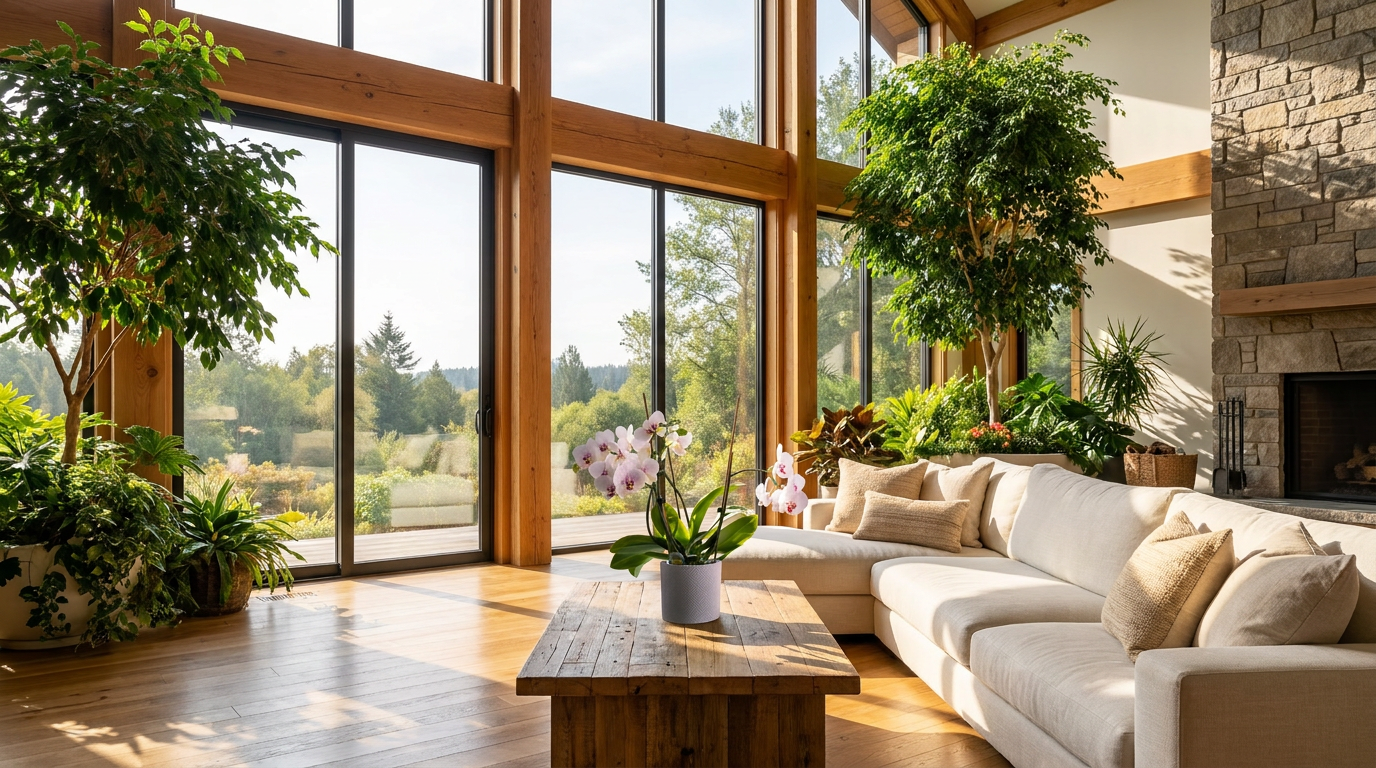
The second critical pillar of the longevity home is the mastery of light. For thousands of years, human biology was regulated by the natural progression of the sun, but modern artificial lighting—particularly the constant glare of screens and static LEDs—has severely disrupted this evolutionary rhythm, leading to chronic sleep deprivation. To correct this, developers are installing sophisticated circadian lighting systems, such as the DARWIN wellness intelligence platform by Delos or Lutron’s Ketra system. These smart networks dynamically adjust the color temperature and intensity of indoor lighting throughout the day to perfectly mimic the solar cycle outside.[4][5]
The biological impact of these automated lighting interventions is profound and immediate. In the morning, the home gradually fills with warm, reddish-tinged light to simulate dawn, gently waking occupants as they complete their final REM sleep cycles rather than jolting them awake with an alarm. As the day progresses, the fixtures transition to a bright, cool blue-white light that actively suppresses melatonin production, thereby boosting alertness, focus, and overall cognitive function. Finally, as evening approaches, the system automatically shifts back to warm, low-intensity amber tones, stripping out the blue light and signaling to the body that it is time to prepare for deep, restorative rest.[4][5]
The biological impact of these automated lighting interventions is profound and immediate.
This dynamic illumination is not merely a cosmetic feature or a neat party trick; it is a measurable, evidence-based health intervention. Research cited by the International WELL Building Institute has linked optimized indoor lighting and advanced ventilation to a remarkable 20 percent improvement in cognitive performance. For globally mobile executives and entrepreneurs whose biological clocks are constantly strained by frequent travel across multiple time zones, homes that actively support circadian alignment help mitigate physiological stress. By anchoring the body to a natural rhythm, these systems dramatically improve sleep architecture, which is widely considered the foundational pillar of human longevity.[4]

Where longevity residences truly separate themselves from standard wellness homes is the seamless integration of a clinical layer. The 2026 generation of luxury estates is moving far past the outdated concept of the basement home gym, instead designing contrast therapy and biohacking infrastructure directly into the primary spatial floorplan. Red light therapy panels are being embedded into primary walk-in closets for daily cellular rejuvenation, while commercial-grade infrared saunas and temperature-controlled stainless-steel cold plunge pools are becoming standard, non-negotiable fixtures in primary en-suite bathrooms. These amenities are designed to be used daily, turning recovery into a frictionless routine rather than a scheduled appointment.[2][3]
At the absolute pinnacle of the market, the real estate product is merging entirely with concierge medicine and clinical diagnostics. Walk into the lobby of a flagship new build in Miami, Dubai, or Cancún today, and residents are likely to be greeted not just by a concierge, but by a dedicated Director of Longevity. These ultra-luxury communities are embedding preventive medicine, clinical partnerships, and personalized health protocols directly into the fabric of the building and the homeowner association fees. The home and the community are effectively becoming primary points of care, structurally integrated with the healthcare system rather than adjacent to it.[1][2]
Several high-profile global developments perfectly illustrate this ambitious shift. In North Miami, the Continuum 12000 project is pioneering the developer-as-operator model, offering extensive in-house wellness programming that rivals world-class medical spas. In Australia, the Elysium Fields development has announced unprecedented plans to pair luxury residential living with on-site MRIs, advanced brain scans, and dedicated anti-aging clinics. Meanwhile, in Utah, the Velvaere ski-in, ski-out community is integrating early-detection diagnostics directly into the residential experience. These communities allow homeowners to track their biomarkers over decades, utilizing the home as a continuous data-gathering tool to optimize their long-term healthspan.[1][2]
The demographic and economic drivers behind this real estate boom are powerful, structural, and unlikely to reverse. An aging global population of high-net-worth individuals is increasingly focused on extending their "healthspan"—the number of years lived in robust, active health, rather than merely extending their total lifespan through late-stage medical interventions. Simultaneously, soaring venture capital investment in longevity technology has mainstreamed concepts like biohacking, bringing them out of niche Silicon Valley circles and into the broader luxury consumer consciousness. Buyers now possess a deep, data-driven understanding of how environmental factors influence their biology, and they are demanding homes that reflect that science.[1][3]

This represents a fundamental rethink of what a residential property is actually for. Historically, the luxury resort stay or the annual trip to a Swiss wellness clinic was viewed as a temporary escape from a daily life that simply didn't support optimal health. Today, the buyers, developers, and investors leading this market have decided they are done escaping. They want to build the exact environment they used to vacation in, and live in it every single day. By embedding these tools into the home, they remove the friction from proactive health behaviors, ensuring that wellness is an ambient reality rather than a conscious effort.[2][6]
However, the rapid rise of the sentient, health-tracking home introduces significant new uncertainties, particularly regarding data privacy and digital security. Homes equipped with built-in biometric tracking devices, continuous air quality monitors, smart toilets that analyze waste, and AI-driven health platforms generate massive amounts of highly sensitive personal data every single day. As these systems scale from individual luxury units to fully connected smart neighborhoods, urgent questions are emerging. The industry has yet to fully resolve who exactly owns this ambient data, how it is secured against sophisticated cyber threats, and whether it could eventually be leveraged by health insurance companies to adjust premiums.[6]
Despite these regulatory and privacy hurdles, industry experts view longevity real estate not as a passing trend dressed up in living walls, but as the new permanent baseline for premium construction. Much like anti-lock brakes, backup cameras, or heated seats in the automotive industry, technologies that debut at the ultra-luxury tier frequently trickle down to the mass market over time as manufacturing scales and costs decrease. Elements like health-focused architectural design, non-toxic building materials, and basic smart environmental controls are already beginning to appear in mid-market multi-family developments, signaling a broader shift in standard building codes.[1][6]

Ultimately, the emergence of the longevity residence reflects a growing cultural realization: true healthspan gains do not happen during one-off clinic stays, extreme weekend diets, or annual wellness retreats. They happen incrementally, day by day, in the environment where people spend the vast majority of their time. By transforming the home from a passive container into a proactive, intelligent partner in human vitality, the real estate industry is fundamentally changing the value proposition of property ownership. For those who can afford it, the residence has officially become the most powerful, seamlessly integrated longevity tool of all.[1][6]
How we got here
2014
Delos introduces the WELL Building Standard, establishing the first architectural guidelines focused exclusively on human health and wellness.
2019
The global wellness real estate market reaches $225 billion, signaling a shift in buyer priorities before the pandemic.
2025
Market valuation hits $876 billion as post-pandemic health awareness drives massive demand for residential air purification and wellness amenities.
April 2026
The Global Wellness Institute officially categorizes 'longevity residences' as a distinct real estate sector, defined by integrated clinical programming.
Viewpoints in depth
Wellness Real Estate Developers
Argue that homes must actively support human healthspan rather than just providing shelter.
This camp views the traditional home as a biological liability—a place filled with stagnant air, toxic materials, and disruptive lighting. They argue that by integrating medical-grade filtration, circadian lighting, and clinical diagnostics into the architecture, the home becomes a frictionless health platform. They point to the massive $876 billion market valuation as proof that buyers are willing to pay a premium for environments that actively extend their healthy years.
Traditional Luxury Purists
Focus on location, heritage, and architectural pedigree, viewing some wellness tech as a depreciating novelty.
While acknowledging the importance of clean air and water, this perspective cautions against over-engineering the home. They argue that technology ages rapidly, and a house hardwired with 2026's biometric sensors may feel obsolete by 2030. For these buyers and agents, true luxury remains rooted in timeless fundamentals: prime locations, irreplaceable views, superior craftsmanship, and architectural significance, rather than the presence of an on-site longevity clinic.
Data Privacy Skeptics
Warn that biometric-tracking homes create unprecedented vulnerabilities for personal health data.
This camp raises alarms about the 'sentient home' model, where AI systems continuously monitor occupants' sleep patterns, biometrics, and daily habits. They argue that the convenience of automated health tracking comes at a steep cost to privacy. Without robust, standardized regulations, they fear this highly sensitive data could be monetized by operators, hacked by malicious actors, or eventually subpoenaed by health insurance providers to deny coverage.
What we don't know
- How quickly these clinical-grade technologies will become affordable for the middle-class housing market.
- The long-term data privacy implications of homes that continuously monitor occupants' biometrics and health markers.
Key terms
- Circadian Lighting
- Automated lighting systems that mimic the sun's natural progression to regulate human sleep-wake cycles.
- Biophilic Design
- An architectural approach that connects building occupants more closely to nature through natural lighting, ventilation, and landscape features.
- Contrast Therapy
- The practice of alternating between hot and cold environments, such as saunas and cold plunges, to improve circulation and recovery.
- Longevity Residence
- A home designed specifically to extend the healthy lifespan of its occupants through integrated medical, environmental, and technological systems.
Frequently asked
What is a longevity residence?
A longevity residence is a home designed to actively extend the healthy lifespan of its occupants by integrating preventive medicine, advanced diagnostics, and environmental controls like medical-grade air and water purification.
How much does wellness real estate cost?
Wellness-focused residences typically command a 10 to 25 percent price premium over standard luxury homes in the same market, driven by the high cost of specialized infrastructure and clinical amenities.
What is circadian lighting?
Circadian lighting is an automated smart home system that adjusts the color and intensity of indoor lights throughout the day to mimic the natural sun, helping to regulate the body's sleep-wake cycle.
Will these features become available in normal homes?
Yes, industry experts predict a trickle-down effect. While full clinical integration remains a luxury, features like non-toxic materials, improved air filtration, and basic circadian lighting are already entering the mid-market housing sector.
Sources
Source coverage
6 outlets
3 viewpoints surfaced






[1]Global Wellness InstituteWellness Real Estate Developers
2026 Wellness Communities and Real Estate Initiative Trends
Read on Global Wellness Institute →[2]BrightwillWellness Real Estate Developers
Wellness-Led Luxury Residences in 2026: The Quiet Reordering of What HNW Buyers Pay For
Read on Brightwill →[3]Engel & VölkersHealth & Longevity Optimizers
Wellness real estate: Health and longevity as the foundation for exclusive living
Read on Engel & Völkers →[4]Prestige ExpoHealth & Longevity Optimizers
How circadian lighting and air purification are redefining value in luxury real estate
Read on Prestige Expo →[5]DelosWellness Real Estate Developers
Building for wellness: Discover Advanced Air Purification and Circadian Lighting
Read on Delos →[6]Factlen Editorial TeamData Privacy Skeptics
Synthesis by Factlen editorial team
Read on Factlen Editorial Team →
Every angle. Every day.
Get real estate stories with full source coverage and perspective breakdowns delivered to your inbox.