
Iran's Supreme Leader Ayatollah Ali Khamenei Dies at 87, Triggering Succession Process
Iran has announced the death of Supreme Leader Ayatollah Ali Khamenei, initiating a critical transition of power in Tehran that carries profound implications for the Middle East and global security.
By Javier Cruz
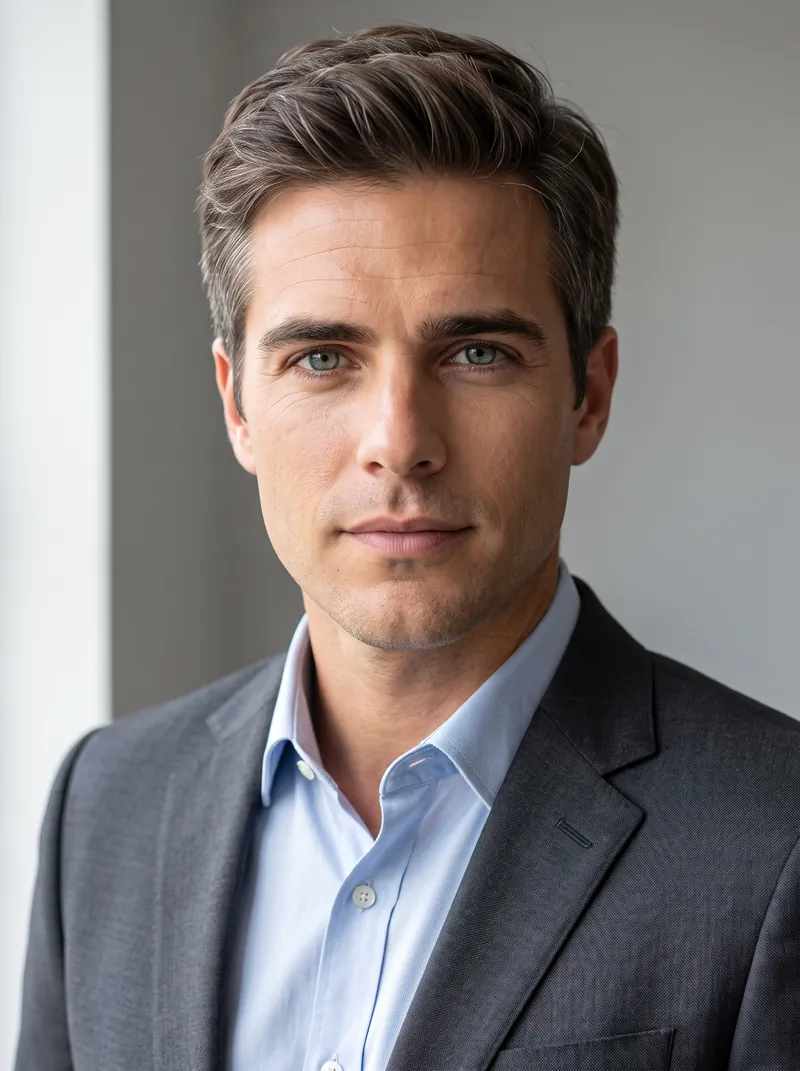
Iran has entered a period of national mourning following the death of Supreme Leader Ayatollah Ali Khamenei at the age of 87, marking the end of a 35-year era that profoundly shaped the modern Middle East.
State media announced the passing early Thursday, detailing a multi-day funeral procession that will begin in the capital, Tehran, move through the holy city of Qom, and conclude with his burial in his hometown of Mashhad. The announcement immediately triggered the constitutional mechanisms for succession, plunging the Islamic Republic into its most significant political transition since 1989.[1][2][3][5]
The 88-member Assembly of Experts, a clerical body tasked with selecting the next Supreme Leader, has been convened in Tehran for emergency sessions. Under the Iranian constitution, a temporary leadership council—comprising the president, the head of the judiciary, and a cleric from the Guardian Council—will assume the Supreme Leader's executive duties until a permanent successor is chosen. The streets of Tehran have seen a massive deployment of internal security forces and the Islamic Revolutionary Guard Corps (IRGC), a standard protocol designed to ensure stability during the vulnerable transition period.[2][4][5][7]
Khamenei's death removes the central pillar of Iran's political and military establishment. Since succeeding the republic's founder, Ayatollah Ruhollah Khomeini, in 1989, Khamenei consolidated absolute authority over the country's armed forces, judiciary, and state media.
He was the ultimate arbiter of Iran's nuclear ambitions and the architect of its "forward defense" strategy, which relies on a vast network of proxy militias across Lebanon, Syria, Iraq, and Yemen. His staunchly anti-Western worldview dictated Tehran's foreign policy, ensuring that hostility toward the United States and Israel remained a core tenet of the state.[3][4][5][7]
The succession battle unfolds against a backdrop of severe domestic and international pressure. Iran's economy remains crippled by sweeping Western sanctions, while the regime has faced recurring waves of popular unrest, most notably the widespread protests of 2022 and 2023. The incoming Supreme Leader will inherit a populace increasingly alienated from the clerical establishment, forcing the state to rely heavily on the IRGC to maintain internal order. Consequently, analysts believe the IRGC will play a decisive, behind-the-scenes role in selecting a successor who aligns with their security-first doctrine.[2][3][4][7]
While the deliberations of the Assembly of Experts are highly secretive, the succession is widely viewed as a contest between a handful of senior clerics and figures closely tied to the military apparatus.
Khamenei's second son, Mojtaba Khamenei, has long been considered a leading candidate due to his deep connections within the IRGC and the intelligence services, though elevating him would risk accusations of hereditary rule—a concept the 1979 Islamic Revolution explicitly sought to abolish. Other potential candidates include hardline clerics who currently hold senior positions within the judiciary or the Guardian Council.[2][7]
Across the Middle East, the transition is being monitored with acute anxiety. The "Axis of Resistance"—Iran's network of allied militant groups, including Hezbollah in Lebanon, Hamas in Gaza, and the Houthis in Yemen—relied heavily on Khamenei's personal ideological guidance and strategic patience. Regional security analysts warn that a power vacuum in Tehran could lead to unpredictable behavior from these proxy groups, or conversely, prompt the IRGC to greenlight aggressive actions to project strength during the transition.[4][6][7]
In Israel, the military and intelligence apparatus have been placed on high alert. Israeli officials are closely tracking the movement of Iranian proxy forces along their northern and southern borders, preparing for any opportunistic escalations. The Israeli defense establishment views the transition as a moment of profound vulnerability for Tehran, but also a period of high risk, as factions within the IRGC may attempt to demonstrate their resolve against the Jewish state to secure domestic political capital.[4][6]
Western capitals have responded cautiously to the news. In Washington, policymakers are assessing how the leadership change might impact Iran's rapidly advancing nuclear program, which currently enriches uranium to near-weapons-grade levels. While the US administration has maintained a posture of strict sanctions enforcement, diplomatic channels remain open through intermediaries to prevent regional miscalculation. European diplomats have emphasized the need for stability, warning that any internal fracturing within Iran could have cascading effects on global energy markets and maritime security in the Persian Gulf.[2][3][4][5]
As millions of Iranians prepare to participate in the state-mandated mourning ceremonies, the focus remains squarely on the closed doors of the Assembly of Experts. The speed at which they select a successor will be a key indicator of the regime's internal cohesion. A swift, unanimous announcement would signal that the IRGC and the clerical establishment have successfully managed the transition, while a protracted delay could expose deep factional rifts at the very top of the Islamic Republic.[2][5][7]
Key points
- Iran's Supreme Leader Ayatollah Ali Khamenei has died at 87, ending a 35-year rule.
- A multi-day funeral procession will take place in Tehran, Qom, and Mashhad.
- The 88-member Assembly of Experts has convened to select his successor.
- A temporary leadership council will manage executive duties during the transition.
Open questions
- Who the Assembly of Experts will ultimately select as the next Supreme Leader.
- How long the succession process will take to reach a consensus.
- Whether the transition will spark renewed domestic protests against the clerical establishment.
Timeline
1989
Ali Khamenei succeeds Ayatollah Ruhollah Khomeini as Iran's second Supreme Leader.
2015
Iran signs the JCPOA nuclear agreement with world powers under Khamenei's ultimate approval.
2022-2023
Widespread domestic protests challenge the regime's authority, met with a severe state crackdown.
April 2024
Iran launches direct drone and missile strikes against Israel, escalating regional conflict.
June 13, 2026
State media announces Khamenei's death, triggering the constitutional succession process.
- Iranian State Apparatus
- Emphasizes constitutional continuity, national unity, and the enduring nature of the Islamic Republic's institutions during the transition.
- Regional Security Analysts
- Focuses on the potential for a power struggle involving the IRGC and the risk of proxy miscalculation or escalation during the transition.
- Western Policymakers
- Prioritizes the implications for Iran's nuclear program, sanctions enforcement, and broader geopolitical stability in the Middle East.
Perspectives this story doesn't cover
- Iranian reformist opposition
- Exiled Iranian diaspora groups
Sources
Source coverage
7 outlets
3 viewpoints surfaced







- [1]Al JazeeraIranian State Apparatus
Iran announces funeral, burial dates for late Supreme Leader Khamenei
Read on Al Jazeera → - [2]ReutersWestern Policymakers
Iran's Supreme Leader Khamenei dies at 87, triggering succession process
Read on Reuters → - [3]New York TimesWestern Policymakers
Ayatollah Ali Khamenei, Iran's Paramount Leader, Is Dead
Read on New York Times → - [4]Fox NewsWestern Policymakers
Israeli ambassador warns Iran's grip on Lebanon is a 'warning sign' for Middle East peace
Read on Fox News → - [5]BBC NewsIranian State Apparatus
Iran supreme leader calls for revenge after father's burial
Read on BBC News → - [6]Times of IsraelRegional Security Analysts
Israel on high alert as Iran begins transition after Khamenei's death
Read on Times of Israel → - [7]Al ArabiyaRegional Security Analysts
Khamenei's death leaves power vacuum in Tehran amid regional tensions
Read on Al Arabiya →
More in News & Politics
See all →Border Conflict
Pakistan Launches Second Wave of Airstrikes on Afghan Drone Sites as Taliban Vows Retaliation
5 sources
UN General Assembly
Netanyahu Attacks Enemies and Allies in Fiery UN Speech, Sparking Mass Envoy Walkout
8 sources
Russia-Ukraine War
Ukraine Launches Largest Drone Attack on Moscow as Russian Elections Conclude
8 sources
International Law
The Signature's Obligation: How International Law Distinguishes Treaty Signing From Ratification
9 sources
Comments
Every angle. Every day.
Get News & Politics stories with full source coverage and perspective breakdowns, free every day.