
Induction vs. Gas Stoves: The Science Behind the Kitchen's Biggest Shift
As induction technology becomes more accessible, a growing body of evidence highlights its massive advantages in energy efficiency, cooking speed, and indoor air quality over traditional gas stoves.
By Factlen Editorial Team
- Public Health & Climate Advocates
- Focuses on the urgent need to remove combustion from homes to improve indoor air quality and reduce greenhouse gas emissions.
- Culinary Professionals & Testers
- Prioritizes cooking performance, speed, temperature precision, and the tactile experience of meal preparation.
- Energy & Efficiency Analysts
- Evaluates the raw physics of heat transfer, grid impact, and long-term utility cost savings.
- Consumer Technology Analysts
- Synthesizes market trends, consumer adoption barriers, and the overall technological shift in home appliances.
What's not represented
- · Gas Utility Companies
- · Traditional Restaurant Chefs
Why this matters
Switching from gas to induction cooking fundamentally changes the health and efficiency of your home, eliminating a major source of indoor air pollution while cutting energy waste by more than half.
Key points
- Induction cooktops use electromagnetic fields to heat pans directly, achieving up to 90% energy efficiency compared to gas's 40%.
- A landmark Columbia University study found that switching to induction reduces indoor nitrogen dioxide (NO2) pollution by 56%.
- Nearly 13% of childhood asthma cases in the U.S. are linked to the combustion byproducts of gas stoves.
- Induction boils water up to twice as fast as gas and offers precise, instant temperature control.
- Transitioning requires ferromagnetic cookware and often a dedicated 240-volt electrical circuit.
The humble kitchen stove has become the center of a generational technological shift. For decades, the blue flame of a gas range was the undisputed symbol of a serious home kitchen, marketed heavily as the professional standard. But a rapid transition is underway, driven by advancements in electromagnetic technology and a growing awareness of indoor air quality.[7]
The debate centers on the transition from traditional gas combustion to electric induction cooking. Unlike older electric resistance coils that glow red and heat up slowly, induction represents a fundamental change in how thermal energy is generated. This shift is not merely an aesthetic trend; it is fundamentally altering the efficiency, speed, and health profile of the modern home.[3][7]
To understand the shift, one must first look at the mechanism of gas cooking. Gas stoves rely on the combustion of fossil fuels—primarily methane—to create an open flame. This flame heats the air around the cookware, which in turn heats the pot or pan. The U.S. Department of Energy notes that this indirect method is inherently inefficient, with approximately 60% to 68% of the generated heat escaping into the surrounding kitchen environment rather than entering the food.[6]
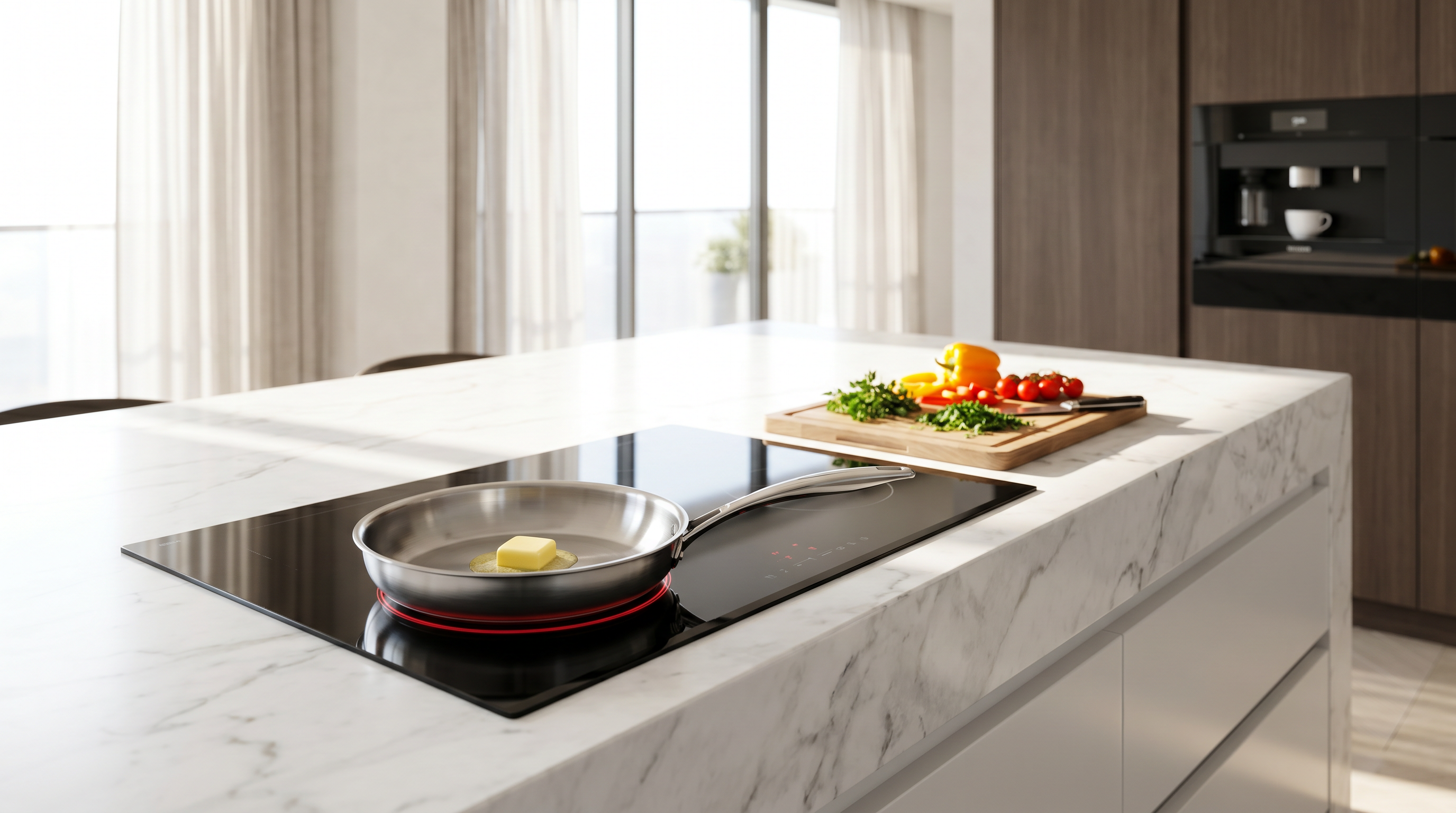
Induction cooking, by contrast, bypasses the need for an external heat source entirely. Beneath the smooth glass surface of an induction cooktop lies a coil of copper wire. When an alternating electrical current passes through this coil, it creates a fluctuating magnetic field. If a piece of ferromagnetic cookware—such as cast iron or magnetic stainless steel—is placed on the zone, this magnetic field induces smaller electrical currents, known as eddy currents, directly within the metal of the pan.[4][7]

Because the pan itself becomes the heater, the energy transfer is remarkably direct. Data from the U.S. Department of Energy and Energy Star confirms that induction cooktops achieve an energy transfer efficiency of up to 90%. This means nearly all the electricity consumed goes directly into cooking the food, leaving the surrounding air and the glass surface relatively cool to the touch.[6]
This direct energy transfer translates into significant culinary advantages, particularly regarding speed. In extensive laboratory testing, culinary experts have consistently found that induction burners can boil a large pot of water in roughly half the time of a high-output gas burner. The Good Housekeeping Institute noted that induction burners work faster than almost any other home cooking technology, fundamentally changing the timing of meal preparation.[4]
Precision is another major factor driving adoption among home chefs. While gas has long been praised for its visual feedback—allowing a cook to judge heat by the height of the flame—induction offers immediate, digital responsiveness. Food Network testers highlighted that induction allows for absolute control, enabling cooks to drop a rapid boil down to a gentle simmer instantly, preventing delicate sauces from breaking or chocolate from scorching.[5]
Precision is another major factor driving adoption among home chefs.
Beyond culinary performance, the most urgent catalyst for the shift away from gas is a growing body of research regarding indoor air quality. When a gas stove burns fuel, it releases a cocktail of combustion byproducts directly into the home. The most concerning of these is nitrogen dioxide (NO2), a respiratory irritant that can accumulate rapidly in kitchens lacking robust, outward-venting exhaust hoods.[2][3]
A landmark study led by researchers at the Columbia University Mailman School of Public Health provided stark evidence of this impact. Partnering with a community organization in New York City, researchers monitored air quality in public housing apartments. They found that during cooking with gas, NO2 levels routinely spiked to nearly 200 parts per billion—well above the Environmental Protection Agency's outdoor safety standards.[1]
The researchers then replaced the gas stoves in a subset of these apartments with electric induction models. The results were dramatic: the induction group experienced a 56% reduction in average daily NO2 concentrations. During controlled cooking tests, the background NO2 levels in the induction homes remained virtually unchanged, demonstrating that the removal of the combustion source effectively eliminated the pollution spikes.[1]

The health implications of these indoor emissions are profound, particularly for children, whose lungs are still developing. Data published by the National Institutes of Health highlights that short-term exposure to NO2 is associated with the aggravation of respiratory diseases, while long-term exposure is linked to the onset of asthma. A widely cited 2022 analysis estimated that nearly 12.7% of current childhood asthma cases in the United States are attributable to gas stove use.[2][3]
Despite the clear performance and health benefits, the transition to induction is not without friction. The primary hurdle for many households is the upfront cost. While prices have fallen significantly, a premium induction range still commands a higher price tag than a basic gas or radiant electric model. Furthermore, homes switching from gas to induction often require electrical upgrades, as induction ranges require a dedicated 240-volt circuit, which can add substantial installation costs.[5][7]
Cookware compatibility also presents a barrier. Because induction relies on magnetism, pots and pans made of aluminum, copper, or non-magnetic stainless steel will not work. Consumers must test their existing cookware with a simple refrigerator magnet; if the magnet sticks strongly to the bottom, the pan is induction-ready. While most modern high-quality cookware sets are compatible, replacing legacy non-stick or copper pans adds to the transition cost.[4][7]

There is also a tactile and cultural adjustment. Many professional chefs and enthusiastic home cooks have spent decades mastering the visual cues of a gas flame. The transition to tapping digital glass controls can feel sterile or less intuitive. Techniques that rely on an open flame, such as charring peppers directly on the grate or aggressively tossing a wok to catch the "wok hei" flavor, are difficult or impossible to replicate on a flat glass surface.[5][7]
Nevertheless, the momentum is clearly shifting toward electrification. Environmental advocates point out that as the electrical grid incorporates more renewable energy sources, the carbon footprint of an induction stove shrinks further, whereas a gas stove will always burn fossil fuels. Programs like the Inflation Reduction Act have introduced rebates to help offset the electrical upgrade costs, accelerating adoption in the residential market.[3][7]
Ultimately, the kitchen is evolving from a space defined by combustion to one defined by precision electronics. For households prioritizing speed, safety, and clean indoor air, the science heavily favors induction. While the blue flame may retain its romantic appeal for traditionalists, the electromagnetic coil is rapidly establishing itself as the superior tool for the modern home cook.[4][7]
How we got here
1909
Early patents for induction cooking technology are filed, though the concept remains a novelty.
1970s
Westinghouse introduces the first modern induction ranges for home use, but high costs limit adoption.
2022
The U.S. passes the Inflation Reduction Act, introducing significant rebates for home electrification, including induction stoves.
2024
Columbia University publishes a landmark study demonstrating massive reductions in indoor NO2 pollution when public housing units switch to induction.
2026
Induction cooktops capture over 35% of new kitchen builds in the U.S., driven by efficiency standards and health awareness.
Viewpoints in depth
Public Health & Climate Advocates
Focuses on the urgent need to remove combustion from homes to improve indoor air quality and reduce greenhouse gas emissions.
This camp, which includes environmental groups and medical researchers, views the gas stove as a Trojan horse for fossil fuels inside the home. They point to decades of data showing that unvented gas combustion releases nitrogen dioxide and benzene, directly linking the appliances to childhood asthma. For these advocates, the transition to induction is less about culinary preference and more about a necessary public health intervention and a critical step toward decarbonizing residential buildings.
Culinary Professionals & Testers
Prioritizes cooking performance, speed, temperature precision, and the tactile experience of meal preparation.
Appliance testers and modern chefs champion induction for its raw performance metrics. They emphasize that induction boils water in half the time of gas and offers unparalleled low-temperature stability for delicate tasks like melting chocolate. However, traditionalists within this camp mourn the loss of the open flame, noting that techniques requiring direct fire—like charring tortillas or aggressive wok cooking—are fundamentally incompatible with flat glass surfaces.
Energy & Efficiency Analysts
Evaluates the raw physics of heat transfer, grid impact, and long-term utility cost savings.
Energy experts focus on the sheer physics of the technology. They highlight that gas stoves waste roughly 60% of their heat to the surrounding air, while induction transfers 90% of its energy directly into the cookware. This camp argues that as electricity rates stabilize and the grid becomes greener, the long-term operational savings of induction will easily offset the higher upfront appliance and installation costs, making it the most logical economic choice for the future.
What we don't know
- How quickly landlords and building developers will adopt induction at scale in multi-family housing.
- Whether future iterations of induction technology will successfully simulate the visual feedback of an open flame for traditional chefs.
- The exact long-term impact of widespread residential electrification on local power grid peak loads.
Key terms
- Electromagnetic Induction
- The process of using a fluctuating magnetic field to generate an electrical current directly within a piece of metal.
- Nitrogen Dioxide (NO2)
- A toxic gas released as a byproduct of burning fossil fuels, known to irritate airways and contribute to asthma.
- Ferromagnetic Cookware
- Pots and pans made of materials that contain iron, such as cast iron or magnetic stainless steel, required for induction cooking.
- Particulate Matter (PM2.5)
- Microscopic particles released during cooking and combustion that can penetrate deep into the lungs.
Frequently asked
Do I need to buy all new pots and pans for an induction stove?
Not necessarily. Any pan that a refrigerator magnet sticks to strongly—like cast iron or magnetic stainless steel—will work perfectly. Aluminum, copper, and glass will not work.
Is an induction stove the same as a traditional electric glass-top stove?
No. Traditional electric stoves use a glowing red coil under the glass to generate heat, which then transfers to the pan. Induction uses magnets to heat the pan directly, keeping the glass surface much cooler.
Will switching to induction increase my electric bill?
While it uses electricity instead of gas, induction is highly efficient (90% energy transfer). Most households see a net savings on their total utility costs over time, though exact savings depend on local gas versus electricity rates.
Does induction cooking emit harmful radiation?
No. Induction cooktops emit low-frequency electromagnetic fields, similar to those from a Wi-Fi router or microwave. Extensive testing has shown they are entirely safe for home use.
Sources
Source coverage
7 outlets
4 viewpoints surfaced







[1]Columbia University Mailman School of Public HealthPublic Health & Climate Advocates
Study Finds Switching From Gas to Electric Stoves Cuts Indoor Air Pollution
Read on Columbia University Mailman School of Public Health →[2]National Institutes of HealthPublic Health & Climate Advocates
Cooking Up Indoor Air Quality: The Health Impacts of Gas Stoves
Read on National Institutes of Health →[3]Rewiring AmericaPublic Health & Climate Advocates
Why Induction Stoves are Better for Your Home and the Planet
Read on Rewiring America →[4]Good HousekeepingCulinary Professionals & Testers
Best Induction Cooktops of 2025, Tested and Reviewed
Read on Good Housekeeping →[5]Food NetworkCulinary Professionals & Testers
The Best Induction Cooktops, Tested by Food Network Kitchen
Read on Food Network →[6]U.S. Department of EnergyEnergy & Efficiency Analysts
Cooking with Energy Savings: Induction vs. Gas
Read on U.S. Department of Energy →[7]Factlen Editorial TeamConsumer Technology Analysts
Synthesis by Factlen editorial team
Read on Factlen Editorial Team →

More in home
See all 18 stories →Neuroarchitecture
How Neuroaesthetics is Rewiring Interior Design for Brain Health
6 sources

Kitchen Tech
The Science of Induction: Why Magnetic Cooking is Taking Over the 2026 Kitchen
7 sources
Home Electrification
Cold-Climate Heat Pumps Break the Freezing Barrier, Proving Reliable in Sub-Zero Winters
7 sources

Bio-Fabrication
The Science of Bio-Fabricated Furniture: How Mycelium is Grown into Chairs and Tables
7 sources

Every angle. Every day.
Get home stories with full source coverage and perspective breakdowns delivered to your inbox.