
How to Identify High-Quality Wood Furniture and Avoid the Fast Furniture Trap
As fast furniture fills landfills at record rates, understanding solid wood, traditional joinery, and eco-certifications can help you invest in pieces that last generations.
By Factlen Editorial Team
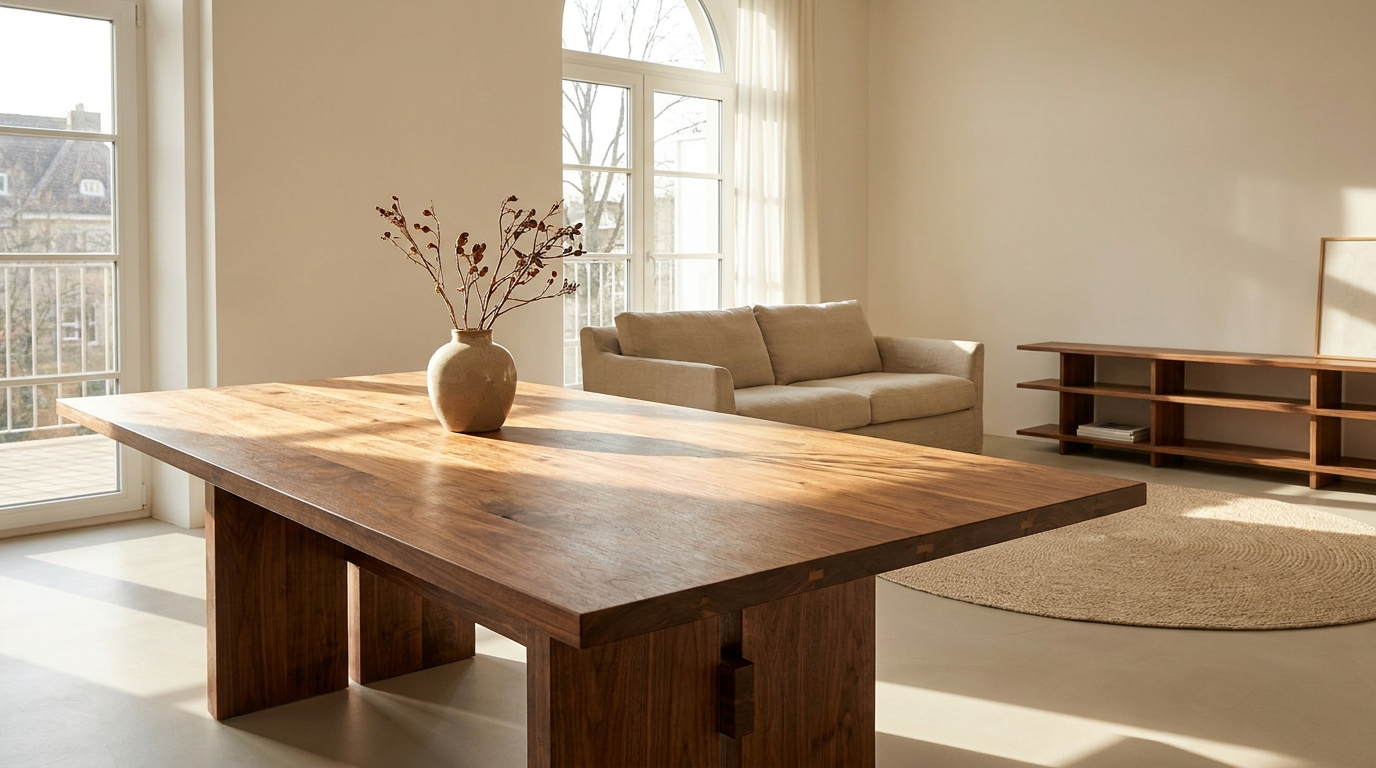
- Environmental Advocates
- Focusing on the systemic ecological damage of the fast furniture supply chain.
- Sustainable Makers
- Advocating for traditional craftsmanship and materials that last generations.
- Consumer Advocates
- Balancing the desire for sustainability with the reality of high upfront costs.
What's not represented
- · Large-scale fast furniture manufacturers defending their supply chain improvements
- · Waste management professionals dealing with the influx of non-recyclable particleboard
Why this matters
The furniture you buy directly impacts your indoor air quality, your long-term finances, and the global environment. Knowing how to spot genuine craftsmanship and verifiable sustainability prevents you from wasting money on disposable decor.
Key points
- Fast furniture has an average lifespan of just five years, contributing to 12.1 million tons of annual waste.
- Solid wood offers superior durability and repairability compared to engineered woods like particleboard.
- High-quality construction relies on traditional joinery, such as dovetail joints, rather than staples and glue.
- Verifiable certifications like FSC and GREENGUARD Gold help consumers avoid industry greenwashing.
- Reclaimed timber provides the highest level of sustainability by eliminating the need for new logging.
The modern home is increasingly filled with furniture that looks great on a screen but barely survives a single move. Driven by the demand for affordable, trend-driven aesthetics, the home goods industry has adopted the "fast fashion" model. But behind the appealing price tags and flat-pack convenience lies a growing environmental and financial toll that consumers are only just beginning to recognize.[9]
Mass-produced items, commonly referred to as "fast furniture," are manufactured rapidly and inexpensively, often utilizing lower-quality materials that are prone to breaking. According to industry analysts, desks, beds, and consoles from major big-box retailers now have an average lifespan of just about five years. Once damaged, these pieces are notoriously difficult to repair, leaving owners with little choice but to throw them away.[1]
The ecological consequences of this disposable culture are staggering. In the United States alone, the Environmental Protection Agency (EPA) reports that over 12.1 million tons of furniture and furnishings are generated as waste annually. Of that massive volume, a mere fraction is recycled, leaving roughly 8.6 million tons to languish in landfills. Because these items are often constructed with synthetic resins and plastics, they do not biodegrade naturally.[1][3]
Beyond the landfill, the production of fast furniture drives severe resource depletion. The furniture industry is responsible for an estimated 70% of the global demand for tropical wood, directly contributing to habitat destruction and biodiversity loss. Each year, furniture manufacturing leads to the logging of over 15 million hectares of forest, with many budget manufacturers relying on unsustainably sourced timber to keep costs low.[2]

The core difference between heirloom-quality pieces and disposable decor lies in the materials. Solid wood has been the gold standard for centuries due to its strength, durability, and ability to be refinished. In contrast, most fast furniture relies on engineered woods—such as medium-density fiberboard (MDF) and particleboard—which are created by binding wood fibers and particles together with chemical adhesives.[3]
While engineered woods offer the look of real timber at a fraction of the cost, they lack structural integrity. Particleboard is highly vulnerable to moisture; a spilled glass of water can cause the material to swell, warp, and crumble. Furthermore, because these boards are held together by glue, they cannot be easily recycled at the end of their lifecycle, ensuring they remain in landfills indefinitely.[3][7]
While engineered woods offer the look of real timber at a fraction of the cost, they lack structural integrity.
Identifying high-quality solid wood furniture requires engaging the senses. Experts recommend the "weight and stability" test: solid hardwoods like oak, maple, and walnut are significantly denser and heavier than particleboard. Lifting a corner of a well-made piece should require effort. Additionally, tapping the surface of solid wood produces a resonant, grounded sound, whereas cheaper materials often sound hollow or tinny.[5]
Construction techniques offer another clear window into a piece's longevity. The way furniture is joined speaks volumes about the craftsmanship behind it. High-quality items utilize traditional joinery methods, such as dovetail or mortise-and-tenon joints, which interlock the wood pieces for a strong, durable connection. Shoppers should actively avoid furniture held together primarily by staples, visible glue, or weak nails, as these will inevitably loosen over time.[4]

The finish applied to the wood is equally critical, serving as the furniture's protective armor against scratches and moisture. However, poorly made furniture often utilizes cheap lacquers that can yellow over time and emit volatile organic compounds (VOCs) into the home's air. High-quality pieces typically feature low-VOC finishes, such as conversion varnishes or natural oils, which protect the wood while highlighting its natural grain rather than obscuring it under a thick, glossy plastic-like coating.[6]
As consumers become more eco-conscious, the industry has responded with a wave of "greenwashing"—marketing tactics designed to make products appear more sustainable than they are. Vague terms like "eco-friendly" or "natural" are often used without any supporting evidence. To cut through the noise, buyers must look for verifiable, third-party certifications rather than relying on a brand's self-proclaimed sustainability reports.[7]
The Forest Stewardship Council (FSC) certification remains the gold standard for responsible wood sourcing, ensuring that timber comes from forests managed to maintain biodiversity and protect local communities. For indoor air quality, the GREENGUARD Gold certification verifies that a product meets strict chemical emission limits, ensuring it will not off-gas harmful toxins into a bedroom or living space.[7]

For the most environmentally conscious buyers, the ultimate standard is FSC Recycled certification. This label guarantees that the product is made from 100% reclaimed timber—salvaged from old buildings, bridges, or traditional homes. By using wood that has already done decades of work, manufacturers eliminate the need to cut down new trees, protecting existing forests and rewarding longevity over extraction.[8]
Shifting away from fast furniture requires a change in how we calculate value. While a solid wood, sustainably sourced dining table carries a higher upfront price tag, its cost-per-year of ownership is often lower than buying and replacing three cheap particleboard tables over a fifteen-year span. Furthermore, quality pieces retain resale value in the consignment market, supporting a circular economy.[2][9]

Ultimately, outfitting a home sustainably is about changing the logic of consumption. By prioritizing verifiable materials, traditional joinery, and timeless design, consumers can reject the cycle of disposable decor. Investing in fewer, better pieces not only reduces our collective environmental footprint but also fills our living spaces with furniture that is built to last for generations.[9]
How we got here
1990s-2000s
The rise of flat-pack, mass-produced furniture democratizes home decor but normalizes shorter product lifespans.
2018
The EPA reports that US furniture waste reaches 12.1 million tons annually, highlighting a growing landfill crisis.
2020s
Consumer awareness around 'greenwashing' grows, leading to increased demand for verifiable certifications like FSC and GREENGUARD.
2026
Sustainable furniture trends shift heavily toward reclaimed materials and circular design, prioritizing longevity over rapid trends.
Viewpoints in depth
Sustainable Makers' view
Advocating for traditional craftsmanship and materials that last generations.
Artisans and sustainable manufacturers argue that the true cost of furniture should be measured over decades, not at the checkout counter. They emphasize that traditional joinery techniques—like dovetail and mortise-and-tenon—combined with solid hardwoods create pieces that can be repaired and refinished indefinitely. For this camp, sustainability is inherently tied to longevity; a piece of furniture that never needs to be thrown away is the ultimate eco-friendly choice.
Environmental Advocates' view
Focusing on the systemic ecological damage of the fast furniture supply chain.
Environmental groups point to the staggering 12.1 million tons of furniture waste generated annually as a crisis of overconsumption. They argue that the industry's reliance on cheap particleboard and toxic adhesives not only fills landfills with non-biodegradable waste but also drives global deforestation. This camp pushes for strict regulatory standards, circular economy models, and mandatory third-party certifications like FSC and GREENGUARD to hold massive retailers accountable.
Consumer Advocates' view
Balancing the desire for sustainability with the reality of high upfront costs.
While many consumers want to make eco-friendly choices, they note that solid wood, FSC-certified furniture often carries a prohibitive upfront cost. For young professionals, renters, or families on a tight budget, fast furniture provides an accessible way to furnish a home quickly. This perspective highlights a gap in the market: the need for mid-tier options that offer better durability and sustainable materials without the luxury price tag of bespoke heirloom pieces.
What we don't know
- How upcoming international regulations might force large retailers to take responsibility for the end-of-life disposal of their products.
- Whether the cost of sustainably sourced, solid wood furniture will decrease enough to compete directly with fast furniture prices.
- The long-term health impacts of prolonged exposure to low-level VOCs emitted by older engineered wood products.
Key terms
- Fast Furniture
- Mass-produced, inexpensive furniture designed for a short lifespan, often made from low-quality materials that end up in landfills.
- Engineered Wood
- Manufactured materials, such as MDF or particleboard, created by binding wood fibers and particles together with chemical adhesives.
- Dovetail Joint
- A strong, traditional woodworking joint characterized by interlocking wedge-shaped pins and tails, indicating high-quality craftsmanship.
- FSC Certification
- A designation by the Forest Stewardship Council ensuring that wood is harvested from responsibly managed forests that protect biodiversity.
- Greenwashing
- Marketing tactics used to make a product appear more environmentally friendly or sustainable than it actually is.
- VOCs (Volatile Organic Compounds)
- Harmful chemicals that can off-gas from cheap furniture finishes and adhesives, negatively impacting indoor air quality.
Frequently asked
How can I tell if a piece of furniture is solid wood or veneer?
Examine the edges and grain patterns. Solid wood features a continuous grain that wraps around the edges, whereas veneer often has a visible seam or a uniform, repeating pattern on the surface.
Is all engineered wood bad for the environment?
Not all engineered wood is equal; high-quality plywood can be durable. However, particleboard and MDF are generally less sturdy, prone to moisture damage, and difficult to recycle due to the chemical adhesives used.
What is the most sustainable type of wood for furniture?
Reclaimed wood and FSC Recycled timber are the most sustainable options, as they utilize existing materials and require no new trees to be cut down. Bamboo is also a highly renewable alternative.
What does GREENGUARD Gold certification mean?
It indicates that a piece of furniture has been rigorously tested and verified to have low chemical emissions, ensuring it will not release harmful volatile organic compounds (VOCs) into your home's air.
Sources
Source coverage
9 outlets
3 viewpoints surfaced








[1]Earth.orgEnvironmental Advocates
The Environmental Impact of Fast Furniture
Read on Earth.org →[2]Coast ConsignmentEnvironmental Advocates
The True Cost of Fast Furniture
Read on Coast Consignment →[3]Azure RoadEnvironmental Advocates
The Environmental Impact of Fast Furniture
Read on Azure Road →[4]Hearthside FurnitureSustainable Makers
How to Identify High-Quality Wood Furniture
Read on Hearthside Furniture →[5]FurniturewallaSustainable Makers
Learn how to identify high-quality wood furniture
Read on Furniturewalla →[6]The Stated HomeSustainable Makers
How to Identify High Quality Wood Furniture: Finishes
Read on The Stated Home →[7]Solar Tech OnlineEnvironmental Advocates
Sustainable Furniture Guide
Read on Solar Tech Online →[8]Nusantara LifestyleSustainable Makers
FSC Certification as Proof, Not a Promise
Read on Nusantara Lifestyle →[9]Factlen Editorial TeamConsumer Advocates
Synthesis by Factlen editorial team
Read on Factlen Editorial Team →

More in shopping
See all 7 stories →TV Tech
OLED vs. Mini-LED: The 2026 TV Buyer's Guide
0 sources

E-Bike Tech
The Ultimate Guide to Buying an E-Bike in 2026
0 sources

Summer Sales
The 'July' Deal Wars Move to June as Amazon, Walmart, and Target Announce Overlapping Summer Sales
0 sources

TV Tech
OLED vs. Mini-LED in 2026: The Ultimate TV Technology Comparison
0 sources

Every angle. Every day.
Get shopping stories with full source coverage and perspective breakdowns delivered to your inbox.