
Stablecoins Overtake Traditional Wire Transfers in Key Emerging Market Remittance Corridors
Digital dollar-pegged tokens are drastically reducing cross-border payment fees, transforming how billions of dollars are sent home to Latin America, Africa, and Southeast Asia.
By Factlen Editorial Team
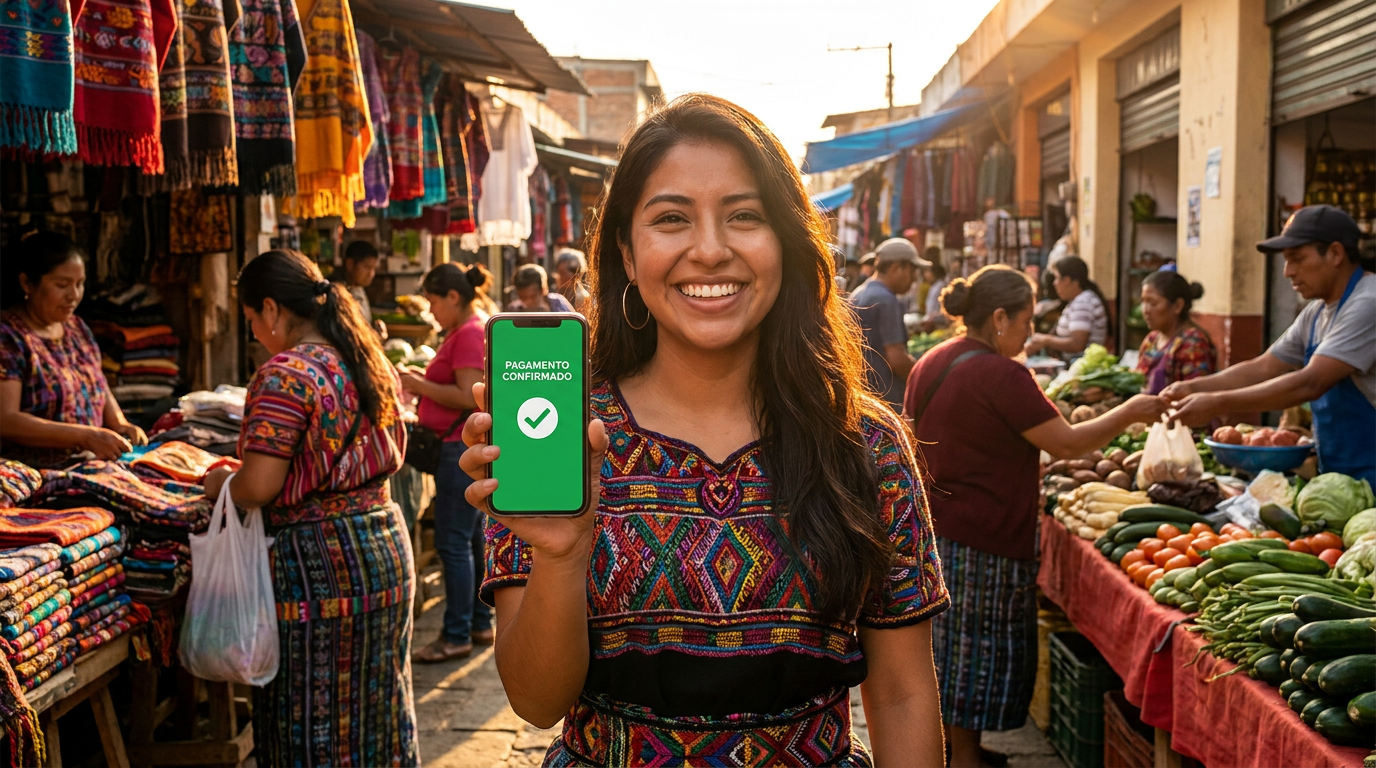
- Financial Inclusion Advocates
- Argues that blockchain payment rails democratize finance by drastically lowering fees for the unbanked.
- Global Payment Networks
- Views stablecoins as a necessary infrastructure upgrade to modernize legacy settlement systems.
- Macroeconomic Regulators
- Warns that widespread stablecoin adoption could lead to digital dollarization and weaken local monetary policy.
- Remittance Senders & Receivers
- Prioritizes speed, low transaction costs, and bypassing the hurdles of traditional correspondent banking.
What's not represented
- · Legacy Money Transfer Operators
- · Local Retail Merchants
Why this matters
By reducing cross-border transfer fees by up to 76%, stablecoins are returning billions of dollars directly to families in emerging markets, fundamentally reshaping global financial inclusion.
Key points
- Stablecoins are rapidly replacing traditional wire transfers for cross-border remittances in emerging markets.
- Blockchain-based transfers reduce average transaction fees from roughly 6.5% to around 1%.
- Latin American stablecoin remittance volume is projected to exceed $30 billion by the end of 2026.
- Major payment networks like Visa are actively integrating stablecoin settlement into their infrastructure.
- Regulators warn that widespread adoption could weaken central banks' control over local monetary policy.
The quietest revolution in global finance isn't happening on Wall Street trading desks or in Silicon Valley venture capital boardrooms. It is unfolding in the remittance corridors of Latin America, Africa, and Southeast Asia, where families are abandoning traditional wire transfers in favor of digital dollars.[1]
For decades, sending money across borders has been notoriously slow and expensive. Migrant workers sending portions of their paychecks home have routinely surrendered significant percentages of their capital to legacy money transfer operators and fragmented correspondent banking networks.[7]
That dynamic is fracturing in 2026. Stablecoins—cryptocurrencies pegged one-to-one with the U.S. dollar—have transitioned from speculative trading instruments into foundational payment infrastructure. By routing transfers over efficient blockchain networks, users are bypassing the traditional banking system entirely.[1][5]
The cost savings are staggering. According to the World Bank, the global average cost of sending a traditional remittance remains stubbornly high at roughly 6.49%. In contrast, stablecoin transfers executed on modern blockchain networks typically incur fees between 0.5% and 1.5%.[4][7]

For a standard $500 remittance, that difference translates to saving up to 76% in fees—capital that stays in the pockets of the families who need it most. Furthermore, while traditional bank wires can take days to clear, blockchain-based transfers settle in seconds, operating 24 hours a day, seven days a week.[1][3][4]
Latin America has emerged as the epicenter of this shift. Industry projections indicate that stablecoins will account for up to 22% of the region's remittance market by the end of 2026, representing over $31 billion in transfer volume.[3][4]

This adoption is not driven by a sudden interest in cryptocurrency speculation, but by pure economic utility. In countries battling high inflation and volatile local currencies, dollar-backed stablecoins offer a reliable way to preserve purchasing power while facilitating immediate, low-cost peer-to-peer transactions.[6]
This adoption is not driven by a sudden interest in cryptocurrency speculation, but by pure economic utility.
Recognizing the existential threat to their legacy business models, major financial institutions are no longer fighting the trend. Global payment giants have actively begun integrating stablecoin settlement rails into their own networks to remain competitive.[2]
Visa, for instance, has expanded its stablecoin settlement capabilities, allowing clients to settle obligations in USDC on public blockchains. The company's annualized stablecoin settlement run rate has already reached $7 billion, signaling a massive institutional pivot toward programmable digital money.[2]
"Stablecoins are becoming payment infrastructure," noted a recent comprehensive survey of retail investors and financial trends. The technology is increasingly disappearing into the background; users simply know they are sending and receiving dollars instantly, often without realizing a blockchain is powering the transaction.[1][5]

However, the rapid proliferation of digital dollars is creating friction at the macroeconomic level. International regulators warn that the scale of stablecoin inflows into emerging markets is beginning to rival domestic financial systems.[6][8]
The International Monetary Fund has cautioned that this phenomenon amounts to "digital dollarization." If citizens broadly substitute their local currency with foreign-currency stablecoins, central banks risk losing control over their domestic money supply and the efficacy of their monetary policy.[6][8]
Additionally, regulatory bodies emphasize the need for stringent reserve requirements and anti-money-laundering controls, noting that the borderless nature of these assets can be exploited if left entirely unchecked by local jurisdictions.[8]
Despite these macroeconomic concerns, the momentum appears irreversible. For the millions of people who rely on cross-border payments to support their families, the theoretical risks of monetary policy dilution are vastly outweighed by the immediate reality of keeping more of their hard-earned money.[1][7]
How we got here
2020-2021
Stablecoins are primarily used by crypto traders as a safe haven between speculative bets on volatile assets.
2023
Major payment networks like Visa begin piloting stablecoin settlement on public blockchains.
2024-2025
Inflation spikes in several emerging markets accelerate the organic adoption of dollar-pegged tokens for everyday savings.
Early 2026
Stablecoin remittance volume in Latin America surges, capturing nearly a fifth of the total cross-border transfer market.
June 2026
International regulators issue coordinated warnings regarding the macroeconomic impacts of digital dollarization in developing nations.
Viewpoints in depth
Financial Inclusion Advocates
Argues that blockchain payment rails democratize finance by drastically lowering fees for the unbanked.
For advocates of financial inclusion, stablecoins represent the fulfillment of cryptocurrency's original promise: bypassing rent-seeking intermediaries. They point out that legacy correspondent banking networks penalize the poorest users with the highest percentage fees. By utilizing decentralized networks, migrant workers can send micro-remittances that would previously have been entirely consumed by flat wire fees, effectively returning billions of dollars directly to local economies.
Macroeconomic Regulators
Warns that widespread stablecoin adoption could lead to digital dollarization and weaken local monetary policy.
Central banks and international financial organizations view the trend with cautious alarm. The IMF and FSB argue that while the microeconomic benefits to consumers are clear, the macroeconomic risks are severe. If a significant portion of a nation's economy begins operating on U.S. dollar-pegged stablecoins, the local central bank loses its ability to manage inflation or stimulate the economy through interest rate adjustments. They advocate for strict capital controls and mandatory local-currency off-ramps to preserve monetary sovereignty.
Global Payment Networks
Views stablecoins as a necessary infrastructure upgrade to modernize legacy settlement systems.
Rather than viewing stablecoins as a disruptive threat, legacy payment processors like Visa and Mastercard see them as a backend infrastructure upgrade. They argue that public blockchains offer a 24/7, programmable settlement layer that is vastly superior to the fragmented, batch-processed correspondent banking system. Their strategy is to integrate these rails into existing merchant networks, allowing consumers to benefit from blockchain speeds while maintaining the consumer protections and compliance standards of traditional finance.
What we don't know
- How emerging market governments will balance the consumer benefits of cheap remittances against the loss of monetary sovereignty.
- Whether upcoming international regulatory frameworks will impose strict capital controls that limit stablecoin accessibility for the unbanked.
- How legacy money transfer operators will adapt their pricing models to compete with near-zero-fee blockchain networks.
Key terms
- Stablecoin
- A digital asset pegged to a stable reserve asset, like the U.S. dollar, designed to minimize price volatility.
- Remittance
- Money sent by a person working in a foreign country back to their home country, usually to support family members.
- Correspondent Banking
- A network of financial institutions that provide services on behalf of another, traditionally used to route international wire transfers through multiple jurisdictions.
- Digital Dollarization
- The widespread adoption of U.S. dollar-pegged digital assets within a foreign country's domestic economy.
- Settlement Layer
- The underlying infrastructure where the final transfer of funds occurs and is permanently recorded.
Frequently asked
What is a stablecoin?
A stablecoin is a type of cryptocurrency designed to maintain a fixed value, most commonly pegged one-to-one with the U.S. dollar, backed by reserves of fiat currency and short-term treasury bills.
Why are stablecoins cheaper for sending money internationally?
They bypass the traditional correspondent banking network, which requires multiple intermediary banks to process a single cross-border transaction, each taking a cut of the funds.
Do I need a bank account to receive a stablecoin remittance?
No. Anyone with a smartphone and internet access can download a digital wallet to receive stablecoins, making them highly accessible to unbanked populations.
What is digital dollarization?
It is a phenomenon where citizens of a country abandon their volatile local currency in favor of using digital U.S. dollars (stablecoins) for everyday savings and transactions, which can weaken the local government's control over its economy.
Sources
Source coverage
8 outlets
4 viewpoints surfaced







[1]ReutersRemittance Senders & Receivers
Stablecoins bypass traditional banks to dominate emerging market remittances
Read on Reuters →[2]BloombergGlobal Payment Networks
Visa and Mastercard Accelerate Stablecoin Integration as LatAm Adoption Surges
Read on Bloomberg →[3]CoinDeskFinancial Inclusion Advocates
Stablecoin Remittance Volume to Top $30 Billion in Latin America by End of 2026
Read on CoinDesk →[4]PayRetailersFinancial Inclusion Advocates
How 2026 payment trends are reshaping LatAm commerce
Read on PayRetailers →[5]PwC StrategyRemittance Senders & Receivers
Crypto Survey 2026: Retail investors hold firm as the digital asset market matures
Read on PwC Strategy →[6]International Monetary FundMacroeconomic Regulators
Tokenized Finance and Money: Macro-Financial Implications
Read on International Monetary Fund →[7]World BankRemittance Senders & Receivers
Remittances and Migration Report 2026
Read on World Bank →[8]Financial Stability BoardMacroeconomic Regulators
Stablecoins in Cross-Border Payments: Benefits, Risks, and 2026 Trends
Read on Financial Stability Board →

More in finance
See all 5 stories →Generational Wealth
How a new 'birth-to-retirement' account lets families bypass standard Roth IRA rules
0 sources

Intergenerational Wealth
How New Tax Rules Allow Families to Fund a Child's Retirement From Birth
0 sources

SpaceX Debut
SpaceX Completes Historic $75 Billion IPO, Reshaping the Commercial Space Economy
0 sources

Every angle. Every day.
Get finance stories with full source coverage and perspective breakdowns delivered to your inbox.