
U.S. and Iran Send Mixed Signals on Emerging Peace Agreement
President Trump announced a comprehensive peace agreement with Iran would be signed Sunday, but Iranian officials caution that final terms and sanctions relief are still being negotiated. The potential deal aims to end months of direct conflict, though key verification mechanisms remain contested.
By Factlen Editorial Team
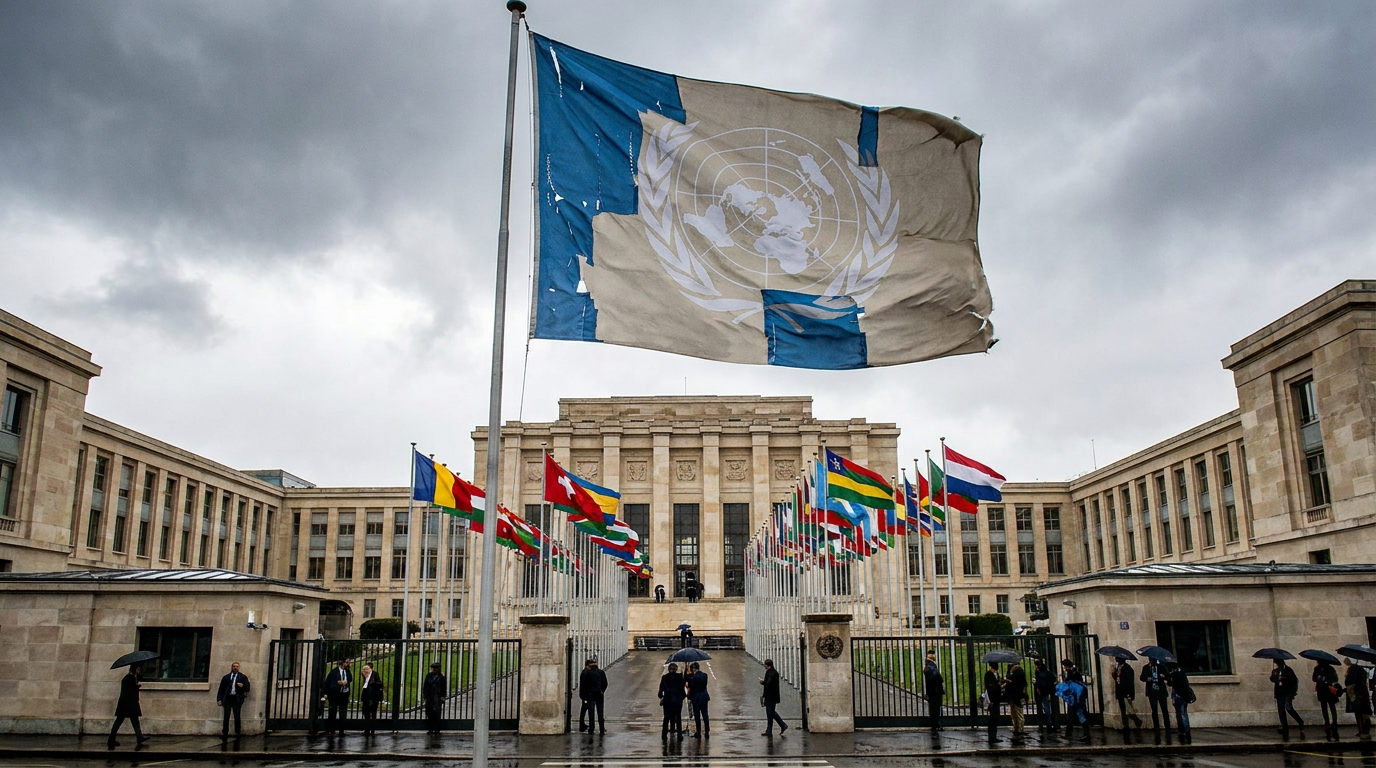
- U.S. Administration
- Frames the agreement as an imminent, historic victory that will immediately halt hostilities and stabilize the region.
- Iranian Government
- Emphasizes that technical details regarding sanctions relief remain unresolved and cautions against a rushed timeline.
- Regional Allies
- Views the diplomatic engagement with skepticism, fearing that sanctions relief will fund proxy networks.
- Global Markets & Analysts
- Focuses on the economic implications, particularly the stabilization of oil prices and the mechanics of verification.
What's not represented
- · Iranian civilian population facing economic hardship
- · Specific proxy groups operating in the region
Why this matters
A finalized peace agreement would halt a major regional war, immediately stabilize global energy markets, and reshape the geopolitical balance of the Middle East. However, a collapse in these final hours could trigger a rapid return to military escalation and economic volatility.
Key points
- President Trump announced a U.S.-Iran peace agreement would be signed by Sunday.
- Iran's Foreign Ministry cautioned that technical details remain unresolved, suggesting a slower timeline.
- The core debate centers on whether sanctions relief or military verification should happen first.
- Global oil markets have stabilized in anticipation of Iranian crude returning to the market.
- European diplomats are expressing cautious optimism about the draft framework.
Washington and Tehran are navigating the final, fragile stages of what could be a historic peace agreement, though the two capitals are projecting starkly different timelines for its completion. On Saturday, U.S. President Donald Trump announced that a comprehensive deal to end the ongoing conflict would be signed by Sunday. The announcement, arriving on the weekend of the president's 80th birthday, framed the diplomatic breakthrough as an imminent victory that would immediately halt hostilities and stabilize the region.[1][3]
However, the narrative of an immediate resolution was quickly complicated by officials in Tehran. Iran’s Foreign Ministry issued a cautionary statement hours later, emphasizing that while significant progress has been made, the timeline for a finalized signature will likely be slower than Washington suggests. Iranian diplomats stressed that critical technical details regarding sanctions relief and verification mechanisms remain unresolved, warning against premature declarations of success.[1][6]
The proposed framework, negotiated through Omani and Swiss backchannels, aims to establish a permanent ceasefire following months of direct military and economic confrontation. At its core, the agreement reportedly requires Iran to scale back its regional military posturing and cap its uranium enrichment levels in exchange for the phased lifting of crippling U.S. economic sanctions.[4][7]

The mechanism for this sanctions relief is the primary sticking point. The U.S. proposal reportedly favors a "compliance-first" model, where sanctions are suspended only after international inspectors verify Iranian adherence to military drawdowns. Tehran, conversely, is demanding simultaneous or front-loaded economic relief, arguing that previous U.S. withdrawals from diplomatic agreements necessitate upfront guarantees before they dismantle any strategic assets.[3][6][7]
Global energy markets are reacting intensely to the mixed signals. Brent crude, which had spiked significantly during the height of the recent escalations, stabilized near $92 per barrel on Friday in anticipation of a breakthrough. Energy analysts note that a finalized deal could unlock millions of barrels of Iranian crude for export, fundamentally altering the global supply calculus just as Western nations grapple with persistent inflation.[2][4]

Regional allies are watching the negotiations with acute anxiety. Israel and Saudi Arabia have historically viewed U.S.-Iran diplomatic engagements with skepticism, fearing that sanctions relief will inadvertently fund Iranian proxy networks across the Middle East. The current draft agreement reportedly includes specific clauses addressing the arming of non-state actors, though the enforcement mechanisms for these clauses remain ambiguous.[4][7]
Regional allies are watching the negotiations with acute anxiety.
European capitals, which have borne the brunt of the economic fallout from the conflict, are expressing cautious optimism. European diplomats have spent weeks shuttling between Washington and Middle Eastern capitals to keep the negotiations alive. They view the current draft as the most viable off-ramp available, even if the Sunday timeline proposed by the U.S. administration proves overly ambitious.[5]
The domestic political stakes in the United States are immense. For the Trump administration, securing a major foreign policy victory provides a significant boost, framing the president as a decisive peacemaker who can close complex international deals. However, conservative critics and hawkish lawmakers are already demanding congressional review of the terms, warning that any concessions to Tehran could be perceived as a strategic retreat.[3]

In Tehran, the political calculus is equally complex. The Iranian government is balancing severe domestic economic pressure—exacerbated by years of sanctions and recent wartime expenditures—against the ideological demands of hardline factions. Pragmatists within the Foreign Ministry are pushing for the economic lifeline the deal offers, while the Islamic Revolutionary Guard Corps (IRGC) remains wary of any agreement that limits their regional operational capacity.[4][6]
The discrepancy in the timeline—Sunday versus "slower"—reflects these internal pressures. Diplomatic experts suggest that Trump's public deadline may be a negotiating tactic designed to force Tehran's hand and accelerate the final concessions. Alternatively, it may reflect a genuine disconnect between the political leadership in Washington and the technical negotiators finalizing the text in Geneva.[5][7]
Verification remains the linchpin of the entire endeavor. The Council on Foreign Relations notes that any durable ceasefire will require an unprecedented level of access for international monitors to ensure that military drawdowns are genuine and not merely tactical repositioning. Without robust, mutually agreed-upon verification, the agreement risks collapsing at the first sign of friction.[7]

The role of international financial institutions is also quietly being negotiated. If sanctions are lifted, Iran will require immediate access to frozen assets held in foreign banks to stabilize its currency. The mechanics of unfreezing these funds—likely through restricted accounts designated strictly for humanitarian and civilian trade—are highly complex and require the cooperation of European and Asian banking sectors.[2][5][7]
As the Sunday deadline approaches, the window for a finalized signature remains open but highly volatile. If the negotiations stall, both sides risk a rapid return to the escalatory cycle that has defined the past year. For now, the international community remains in a holding pattern, waiting to see whether the political will in Washington and Tehran can bridge the final, critical gaps in the text.[1][2][4]
Ultimately, the coming days will test the durability of the backchannel diplomacy that brought the two nations to this precipice. Whether the agreement is signed this Sunday or in the weeks to follow, the fundamental architecture of U.S.-Iranian relations is undergoing a profound shift. The success or failure of this pact will dictate the security architecture of the Middle East for a generation.[1][4][7]
How we got here
Recent Months
Direct military and economic confrontation escalates between the U.S. and Iran.
Early June 2026
Omani and Swiss backchannels facilitate intense draft negotiations.
Friday
Oil markets stabilize near $92 per barrel on rumors of an imminent breakthrough.
Saturday
President Trump announces the deal is finalized and will be signed on Sunday.
Saturday Evening
Iran's Foreign Ministry pushes back, stating technical details are still unresolved.
Viewpoints in depth
U.S. Administration's View
Framing the agreement as a finalized, historic victory ready for immediate signature.
The U.S. administration is projecting confidence that the core negotiations are complete. By setting a public Sunday deadline—coinciding with the president's 80th birthday—the administration aims to frame the agreement as a decisive foreign policy win that immediately halts regional hostilities. They emphasize a 'compliance-first' approach, insisting that sanctions will only be lifted once international monitors verify Iranian military drawdowns.
Iranian Foreign Ministry's View
Cautioning that critical technical details regarding economic relief are still being negotiated.
Tehran is actively managing expectations, pushing back against the narrative of an immediate Sunday signature. Iranian diplomats argue that the sequencing of the agreement is paramount; they are demanding simultaneous or front-loaded sanctions relief rather than waiting for lengthy verification processes. This caution is driven by a need to ensure tangible economic benefits before dismantling strategic assets, reflecting deep skepticism of U.S. commitments.
Regional Security Analysts' View
Focusing on the enforcement mechanisms and the potential impact on proxy networks.
Security analysts and regional allies, including Israel and Saudi Arabia, are scrutinizing the draft's fine print. Their primary concern is that unfreezing Iranian assets will inadvertently fund non-state actors across the Middle East. They argue that without robust, enforceable clauses addressing proxy arming, the ceasefire may simply shift the conflict from direct confrontation back to asymmetric warfare.
What we don't know
- Whether the final agreement will adopt a 'compliance-first' model or offer simultaneous sanctions relief.
- The exact mechanisms by which international monitors will verify Iranian military drawdowns.
- How hardline factions within Iran's IRGC will react to the finalized terms.
- Whether the U.S. Congress will attempt to block or review the concessions made in the agreement.
Key terms
- Sanctions Relief
- The removal or suspension of economic penalties imposed by the U.S., allowing a country to resume international trade and access frozen assets.
- Compliance-First Model
- A negotiating stance where one party must prove they have met their obligations (e.g., military drawdowns) before the other party provides the agreed rewards (e.g., lifting sanctions).
- Verification Mechanism
- The agreed-upon process by which international monitors inspect and confirm that a nation is adhering to the terms of a treaty.
- Brent Crude
- A major trading classification of sweet light crude oil that serves as a benchmark price for purchases of oil worldwide.
Frequently asked
What are the main terms of the proposed agreement?
The draft agreement reportedly requires Iran to scale back its regional military posturing and cap uranium enrichment in exchange for the phased lifting of U.S. economic sanctions.
Why are the U.S. and Iran giving different timelines?
The U.S. administration is pushing for an immediate Sunday signature, while Iranian diplomats state that critical technical details regarding how and when sanctions will be lifted are still being negotiated.
How will this affect global oil prices?
A finalized deal could unlock millions of barrels of Iranian crude for export, which has already helped stabilize Brent crude prices near $92 per barrel.
What is the 'compliance-first' model?
It is a U.S. proposal where economic sanctions are only suspended after international inspectors verify that Iran has adhered to the agreed-upon military drawdowns.
Sources
Source coverage
7 outlets
4 viewpoints surfaced







[1]NYTU.S. Administration
Iran War Live Updates: U.S. and Tehran Send Mixed Signals on Emerging Peace Agreement
Read on NYT →[2]ReutersGlobal Markets & Analysts
Oil markets stabilize as Washington and Tehran near historic ceasefire
Read on Reuters →[3]Fox NewsU.S. Administration
Trump touts 'historic' Iran peace deal, but critics warn of concessions
Read on Fox News →[4]Al JazeeraRegional Allies
Middle East on edge as US and Iran negotiate final terms of peace pact
Read on Al Jazeera →[5]BBCGlobal Markets & Analysts
European allies cautiously optimistic as US-Iran peace timeline remains contested
Read on BBC →[6]IRNAIranian Government
Foreign Ministry: Negotiations ongoing, no final agreement reached yet
Read on IRNA →[7]Council on Foreign RelationsGlobal Markets & Analysts
The Mechanics of a US-Iran Ceasefire: Verification and Sanctions Relief
Read on Council on Foreign Relations →

More in news politics
See all 5 stories →Strait of Hormuz
US and Iran Near 60-Day Ceasefire Deal to Reopen Strait of Hormuz
0 sources

Platform Liability
UK Politicians Propose Forcing Social Media Platforms to Pay for Riot Damages Amid Hate Speech Row
0 sources

Platform Liability
UK Politicians Demand Social Media Platforms Pay for Belfast Riot Damages
0 sources
Every angle. Every day.
Get news politics stories with full source coverage and perspective breakdowns delivered to your inbox.