
AI Breakthrough Accelerates Molecular Simulations 10,000-Fold, Reshaping Drug Discovery
Researchers have developed a new AI model that predicts molecular motion 10,000 times faster than traditional methods, potentially shaving years off the drug discovery process.
By Factlen Editorial Team
- Computational Biologists
- Viewing the breakthrough as a fundamental leap in simulating dynamic molecular physics.
- Pharmaceutical Industry
- Focusing on the potential to drastically reduce R&D costs and accelerate drug pipelines.
- AI Validation Experts
- Emphasizing the necessity of real-world testing and the limitations of early-stage models.
What's not represented
- · Patient advocacy groups awaiting faster access to novel therapies
- · Regulatory agencies tasked with evaluating AI-generated preclinical safety data
Why this matters
By compressing the time it takes to simulate molecular interactions from months to days, this technology could drastically reduce the cost and timeline of bringing new life-saving medications to market.
Key points
- Researchers developed the TITO AI model, which accelerates molecular dynamics simulations by over 10,000 times.
- The model uses generative AI to predict how molecules evolve over time, bypassing the need to calculate every microscopic atomic collision.
- This speedup could compress the lead identification phase of drug discovery from months to mere days.
- While highly promising, the model currently requires scaling from simplified solvent tests to complex cellular environments.
The central bottleneck of modern pharmacology is not a lack of chemical imagination, but the agonizingly slow pace of physics. To understand how a potential drug interacts with a disease target, scientists rely on molecular dynamics—computational simulations that calculate the movement of every single atom over time. These simulations are the bedrock of modern drug discovery, allowing researchers to see exactly how a therapeutic molecule binds to a target protein. However, because atoms vibrate at extraordinary speeds, these simulations must calculate movements in femtoseconds, which is one quadrillionth of a second.[1][2]
This immense computational burden creates a massive traffic jam in the early stages of drug development. Simulating just a few microseconds of biological activity can take weeks of continuous supercomputer processing. When a pharmaceutical company needs to screen thousands of potential compounds, the sheer volume of required calculations becomes a prohibitive barrier. Researchers are often forced to compromise, either simulating fewer molecules or running shorter simulations that might miss crucial long-term interactions.[1][2]
A breakthrough published in the journal Science Advances has shattered that computational speed limit. Researchers from Chalmers University of Technology and the University of Gothenburg have developed an artificial intelligence model that accelerates molecular simulations by more than 10,000 times. This advancement represents a fundamental shift in how computational biology is performed, moving the field away from brute-force physics calculations and toward predictive, data-driven modeling.[1][2]
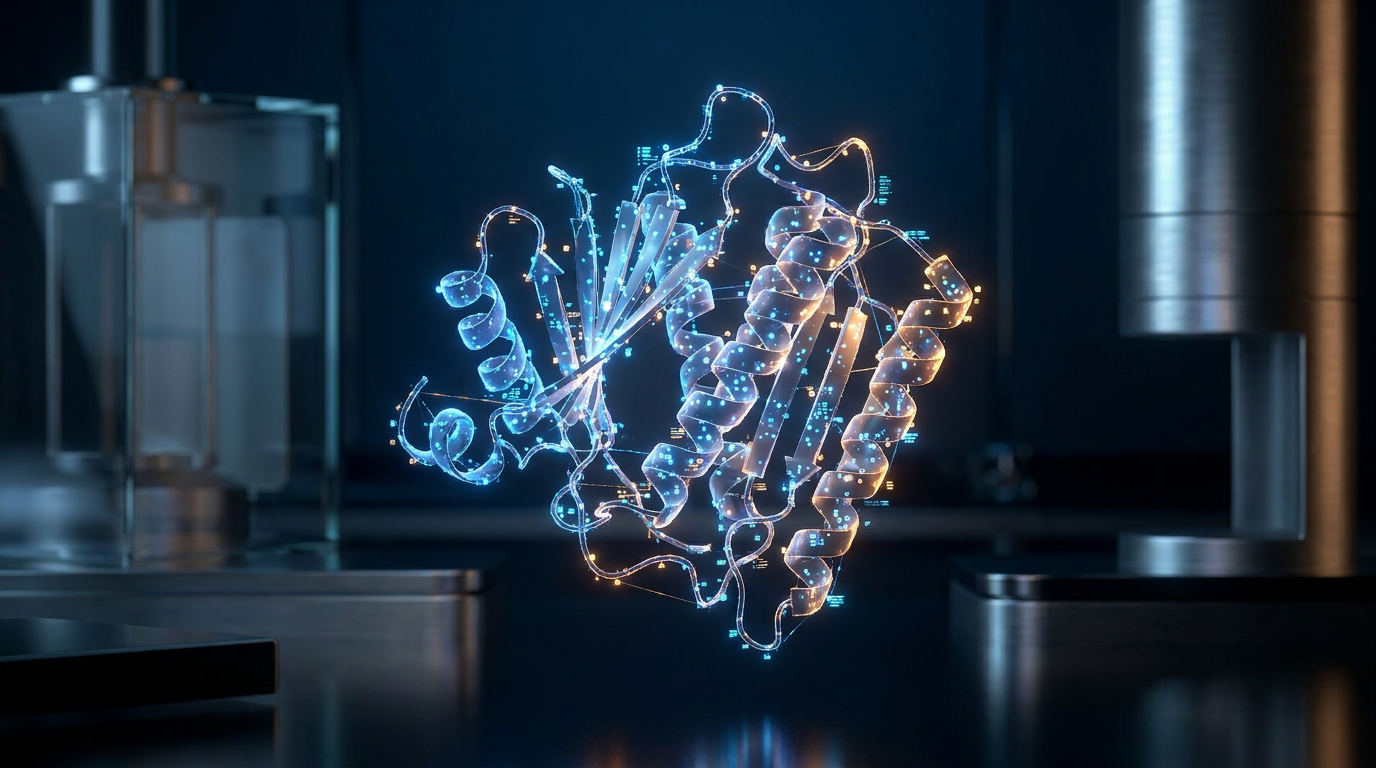
The new framework, dubbed TITO (Transferable Implicit Transfer Operators), uses a deep generative modeling architecture to learn the statistical rules governing molecular motion directly from existing simulation data. Rather than calculating the physical trajectory of every atomic collision step-by-step, TITO predicts how atomic configurations will evolve over long time scales. It effectively learns the underlying physics of the system and generates the most probable future states without having to render the microscopic intermediate steps.[1][2]

Simon Olsson, one of the lead researchers on the project, describes the advancement as the difference between watching a movie frame-by-frame versus jumping directly between key scenes. This 10,000-fold acceleration means that lead identification and optimization phases—which typically take months or even years of computational time—can theoretically be compressed into days or weeks. For research teams staring down massive chemical libraries, the ability to rapidly screen how molecules behave in motion is a game-changing capability.[2][3]
The pharmaceutical industry is watching this development closely, driven by intense economic pressures. Developing a new drug currently takes over a decade from initial concept to clinical approval, with global research and development spending reaching an estimated $260 billion in 2025. Despite this massive investment, the industry still faces a staggering 90 percent failure rate for drug candidates entering clinical trials.[4][5]
A significant portion of that time and capital is burned in the early preclinical stages, where thousands of compounds are tested to find a handful of viable candidates. By dramatically lowering the computational cost of simulating these interactions, TITO allows researchers to virtually test exponentially more molecular permutations before ever stepping foot in a physical laboratory. This operational efficiency translates directly into lower R&D expenditure per successful candidate and a faster return on investment.[2][3][4]
A significant portion of that time and capital is burned in the early preclinical stages, where thousands of compounds are tested to find a handful of viable candidates.
This development marks the next logical step in the computational biology revolution that began with protein structure prediction. While Google DeepMind's Nobel-winning AlphaFold 2 solved the 50-year-old grand challenge of predicting static protein structures, biology is fundamentally dynamic. Proteins fold, twist, and change shape as they interact with other molecules, and a static three-dimensional snapshot only tells part of the story.[6][7]

TITO begins to address this dynamic complexity, moving the field from static snapshots to fluid, predictive motion that mirrors how biology actually operates in the real world. By understanding how a protein's conformational landscape shifts over time, researchers can identify hidden binding pockets or predict how a mutation might alter a protein's function, opening up entirely new avenues for therapeutic intervention.[1][6]
The implications of this speedup extend far beyond human medicine and pharmaceutical development. In materials science, the ability to rapidly simulate molecular interactions could accelerate the discovery of novel battery chemistries, highly efficient solar cells, or biodegradable plastics that break down harmlessly in the environment. By unblocking the simulation bottleneck, researchers across multiple scientific disciplines can explore fundamental mechanisms with unprecedented fidelity.[3]
In the realm of biomanufacturing, the model could be used to optimize enzyme design for industrial applications, refine large-scale fermentation processes, or engineer specialized microbes for the enhanced production of biofuels and high-value chemicals. Agricultural scientists could leverage the technology to design more effective and targeted pesticides, or to enhance crop resilience by understanding plant biology at a molecular level.[3]
However, the researchers are transparent about the technology's current limitations and the rigorous validation work that remains to be done. The TITO model has thus far been validated primarily on small molecular systems in simplified solvent environments and at specific, controlled temperatures. While the initial results are highly promising, they represent a proof of concept rather than a fully mature commercial product.[1][2]

The next critical hurdle is scaling the framework to handle the messy, complex, and highly variable realities of full biological systems. The environment inside a living human cell is crowded, chaotic, and influenced by countless interacting variables. Bridging the gap between a simplified digital model and complex organic reality remains one of the most difficult challenges in computational science, requiring extensive wet-lab validation to ensure the AI is not hallucinating physically impossible states.[1][2][7]
This transition will require a new breed of workforce and a shift in how laboratories operate. According to industry analyses, the biotechnology sector is increasingly prioritizing the hiring of "scientific translators"—professionals who possess deep expertise in both complex biology and advanced machine learning architectures. These hybrid scientists are essential for navigating the nuanced intersection of regulatory requirements, organic chemistry, and generative AI.[5]
The ultimate goal is not to replace physical wet-lab experimentation, but to make it drastically more efficient and targeted. AI models like TITO will act as ultra-fast computational filters, ensuring that only the most highly optimized and statistically promising candidates consume expensive laboratory resources and human capital. This ensures that when scientists do run physical experiments, they are testing the highest-probability molecules.[2][5]
As the life sciences industry shifts from using AI as a simple copilot to integrating it as a foundational operating system, breakthroughs in simulation speed are moving the sector closer to a closed-loop discovery model. In this near-future paradigm, digital models and physical laboratory experiments will exist in a continuous, automated cycle of hypothesis and validation.[4][5][7]

The AI predicts the optimal molecule and simulates its dynamic behavior, automated robotic labs synthesize and test the compound, and the resulting physical data immediately feeds back to refine the algorithm. With simulation speeds increasing 10,000-fold, that discovery loop is about to spin faster than ever before, fundamentally altering the timeline of scientific breakthrough.[4][5]
How we got here
2020
AlphaFold 2 solves the 50-year-old grand challenge of predicting static protein structures.
2024
The Nobel Prize in Chemistry is awarded for breakthroughs in AI-driven protein structure prediction.
2025
The pharmaceutical industry begins shifting from pilot AI projects to integrated digital discovery systems.
June 2026
Researchers publish the TITO model, achieving a 10,000-fold speedup in dynamic molecular simulations.
Viewpoints in depth
Computational Biologists
Viewing the breakthrough as a fundamental leap in simulating dynamic molecular physics.
For researchers focused on the mechanics of biology, the TITO model represents a paradigm shift. While tools like AlphaFold provided static snapshots of protein structures, understanding how these proteins interact over time has remained computationally prohibitive. By using generative AI to learn the statistical rules of molecular motion, computational biologists can now bypass the brute-force calculation of every atomic collision. This allows them to simulate long-term biological processes—like a drug binding to a cellular receptor—at speeds that were previously unimaginable.
Pharmaceutical Industry
Focusing on the potential to drastically reduce R&D costs and accelerate drug pipelines.
Industry executives view this 10,000-fold acceleration through an economic lens. The current drug discovery pipeline is plagued by a 90 percent failure rate and development cycles that stretch over a decade. By compressing the lead identification phase from months to days, pharmaceutical companies can virtually test exponentially more compounds before committing to expensive physical trials. This operational efficiency translates directly into lower R&D expenditure per successful candidate and a faster return on investment for novel therapies.
AI Validation Experts
Emphasizing the necessity of real-world testing and the limitations of early-stage models.
While acknowledging the computational achievement, validation experts caution against over-reliance on purely digital predictions. They point out that the TITO model has currently only been proven on small molecular systems in simplified solvent environments. The true test will be scaling the framework to accurately simulate the chaotic, highly variable environment of a living human cell. Until these models can reliably predict outcomes in complex biological systems, rigorous wet-lab experimentation remains the ultimate arbiter of a drug's viability.
What we don't know
- Whether the TITO model can maintain its accuracy when scaled to complex, multi-protein interactions in realistic cellular environments.
- How quickly regulatory bodies like the FDA will adapt their approval frameworks to heavily AI-simulated preclinical data.
- The exact timeline for when drugs discovered using this specific accelerated simulation method will enter human clinical trials.
Key terms
- Molecular Dynamics
- A computer simulation method for analyzing the physical movements of atoms and molecules over time.
- Generative AI
- Artificial intelligence capable of generating text, images, or other data using generative models, often in response to prompts.
- TITO
- Transferable Implicit Transfer Operators, the deep generative modeling framework that accelerates molecular simulations.
- Wet-lab
- A laboratory where chemicals, drugs, or other biological matter are tested and analyzed physically, as opposed to computationally.
- Femtosecond
- One quadrillionth of a second, the incredibly brief time scale at which traditional molecular simulations must calculate atomic movements.
Frequently asked
What exactly does the TITO model do?
It uses generative AI to predict how molecules will move and interact over time, bypassing the need to calculate every single microscopic atomic collision.
How is this different from AlphaFold?
AlphaFold predicts the static 3D shape of a protein. TITO predicts how molecules dynamically move and interact with each other over time.
Will this replace human scientists in drug discovery?
No. The technology is designed to act as an ultra-fast filter, identifying the most promising drug candidates so that human scientists can focus their physical lab work on the highest-probability options.
Is the technology ready for immediate commercial use?
It is currently in the early stages and has been validated on small molecular systems. It still needs to be scaled to handle the complex environments found inside living cells.
Sources
Source coverage
7 outlets
3 viewpoints surfaced







[1]Science AdvancesComputational Biologists
Transferable generative models bridge femtosecond to nanosecond time-step molecular dynamics
Read on Science Advances →[2]News-MedicalComputational Biologists
AI breakthrough accelerates molecular simulations for drug discovery
Read on News-Medical →[3]Biology DigitalPharmaceutical Industry
AI Breakthrough Accelerates Molecular Simulations for Drug Discovery
Read on Biology Digital →[4]Drug Target ReviewPharmaceutical Industry
AI in drug discovery: predictions for 2026
Read on Drug Target Review →[5]Drug Discovery NewsPharmaceutical Industry
The 2026 AI power shift
Read on Drug Discovery News →[6]World Economic ForumPharmaceutical Industry
Here's how AI is reshaping drug discovery
Read on World Economic Forum →[7]Stanford HAIAI Validation Experts
Stanford AI Experts Predict What Will Happen in 2026
Read on Stanford HAI →
Every angle. Every day.
Get technology stories with full source coverage and perspective breakdowns delivered to your inbox.