
How 'Solarpunk' and 'Hopepunk' Literature Are Rewriting the Future of Climate Action
A new wave of optimistic science fiction is rejecting dystopian fatalism, offering readers a blueprint for ecological harmony and community resilience.
By Factlen Editorial Team
- Literary Optimists
- Argue that depicting a survivable, cooperative future is a radical political act that combats climate despair.
- Climate Activists & Urbanists
- View the movement as a practical blueprint for sustainable architecture, renewable energy adoption, and community organizing.
- Tech & Design Analysts
- Focus on how the genre contrasts with cyberpunk by emphasizing 'appropriate technology' that serves human and ecological well-being.
What's not represented
- · Traditional energy sector workers transitioning out of fossil fuels
- · Policymakers tasked with funding experimental green infrastructure
Why this matters
For decades, science fiction has conditioned society to expect a dystopian, technology-ruined future. By vividly imagining how humanity might successfully navigate the climate crisis, these emerging genres provide the psychological blueprint and hope necessary to drive real-world environmental solutions.
Key points
- Solarpunk is a literary and artistic movement envisioning a future where technology and nature exist in sustainable harmony.
- Hopepunk, coined in 2017, focuses on narratives where characters use radical kindness and cooperation to fight for a better world.
- Both genres serve as a direct, optimistic counter-response to the fatalism of cyberpunk and grimdark fiction.
- Psychologists note that these optimistic frameworks help combat 'climate anxiety' by providing actionable blueprints for the future.
- The solarpunk aesthetic is actively influencing real-world sustainable architecture, such as vertical gardens and off-grid Earthships.
For decades, the cultural imagination of the future has been dominated by towering neon advertisements, corporate syndicates, and ecological ruin. The "cyberpunk" genre, alongside a broader wave of dystopian and post-apocalyptic media, has conditioned audiences to expect a world where technological advancement inevitably leads to societal decay and environmental collapse. While these cautionary tales were originally designed to warn society about the dangers of unchecked capitalism and authoritarianism, their sheer ubiquity has begun to yield diminishing returns. Instead of inspiring preventative action, the relentless barrage of grimdark narratives has contributed to a pervasive sense of fatalism. Audiences are increasingly left with a vivid blueprint of what could go horribly wrong, but almost no cultural reference point for what a successful, sustainable future might actually look like.[8]
This narrative vacuum has tangible psychological consequences, particularly as the realities of global warming become more pronounced. Psychologists and environmental researchers have documented a sharp rise in "climate anxiety" among younger generations, characterized by feelings of grief, guilt, and an overwhelming sense of doom regarding the planet's trajectory. When the only envisioned futures are bleak, this anxiety can paralyze individuals, hindering meaningful climate action due to a profound sense of personal insignificance. Recognizing that fear alone is an insufficient motivator for long-term systemic change, a growing coalition of authors, artists, and activists has begun to actively reject dystopian pessimism, seeking out new frameworks that prioritize resilience and recovery.[3]
Out of this desire for a survivable future, the "solarpunk" movement was born. The term first surfaced around 2008, sparked in part by a blog post celebrating the maiden voyage of the Beluga Skysail, a hybrid cargo ship that utilized a massive towing kite to achieve a twenty percent reduction in fuel consumption. This real-world integration of modern logistics with ancient, wind-powered mechanics captured the imagination of early internet communities. By 2014, solarpunk had coalesced into a distinct visual and literary aesthetic on platforms like Tumblr, eventually prompting the publication of formal manifestos. Today, it stands as a recognized subgenre of speculative fiction that envisions how humanity might look if it successfully solved major contemporary challenges, particularly climate change and pollution.[1][4]

At its core, solarpunk serves as a direct, optimistic counterfoil to cyberpunk. Where cyberpunk relies on a "high-tech, low-life" dichotomy characterized by neon-lit urban decay and virtual escapism, solarpunk visualizes lush, collectivist utopias where nature and technology grow in harmony. The "solar" prefix represents both renewable energy and a bright, forward-looking disposition, while the "punk" suffix denotes a countercultural rebellion against consumerism, fossil-fuel dependency, and climate doomerism. In the solarpunk vision, rebellion is not enacted by lone hackers fighting monolithic corporations in cyberspace, but by communities coming together to plant urban gardens, build decentralized power grids, and dismantle oppressive social hierarchies in the physical world.[1][7]
Crucially, solarpunk does not advocate for a return to pre-industrial primitivism. Instead, it champions the concept of "appropriate technology"—innovation driven by a genuine commitment to preserving and enhancing both human and ecological well-being. The movement exists in the ideological space between the skepticism of Neo-Luddism and the unbridled techno-optimism of Silicon Valley. Solarpunk literature frequently explores the deployment of open-source technologies, advanced solar and wind infrastructure, and high-tech agricultural systems that operate within the Earth's planetary boundaries. It acknowledges that the impulse for scientific progress remains a powerful motivating force, but insists that this progress must be decoupled from endless extraction and exploitation.[6]
Crucially, solarpunk does not advocate for a return to pre-industrial primitivism.
Running parallel to solarpunk is the emergence of "hopepunk," a term coined in 2017 by fantasy author Alexandra Rowland. Frustrated by the dominance of "grimdark" fiction—a subgenre known for its amoral, violent, and deeply cynical worldview—Rowland proposed hopepunk as its exact opposite. The concept quickly resonated, evolving into a broad literary framework that celebrates the pursuit of positive aims in the face of severe adversity. If solarpunk provides the ecological and technological setting for a better world, hopepunk provides the emotional and philosophical engine. It is a narrative approach that insists kindness, softness, and empathy do not equate to weakness, but rather serve as vital tools for survival.[2][5]

Hopepunk is not synonymous with naive optimism or conflict-free storytelling. The worlds described in these works are rarely perfect utopias; they are often messy, complicated, and fraught with systemic challenges. What distinguishes the genre is how its characters respond to those challenges. Instead of succumbing to apathy or engaging in ruthless self-preservation, hopepunk protagonists choose to fight for positive change, relying on radical kindness and communal cooperation. The genre operates on the self-aware premise that while happy endings are never guaranteed and the work of building a better society is never truly finished, the act of striving for justice is inherently worthwhile. In a cultural landscape saturated with brutal cynicism, hopepunk frames caring deeply about others as a profound act of political rebellion.[2][5]
These philosophies are vividly realized in the works of several prominent contemporary authors. Becky Chambers, widely regarded as a pioneer of the hopepunk ethos, explores themes of radical acceptance and community in her Hugo Award-winning "Wayfarers" series and her "Monk and Robot" duology. Her narratives often eschew galaxy-ending stakes in favor of intimate, character-driven explorations of how diverse species and cultures might peacefully coexist and support one another. Similarly, works like Amal El-Mohtar and Max Gladstone’s "This Is How You Lose the Time War" and Alexandra Rowland’s own "A Conspiracy of Truths" demonstrate how storytelling, empathy, and connection can dismantle oppressive systems and alter the course of history.[5]
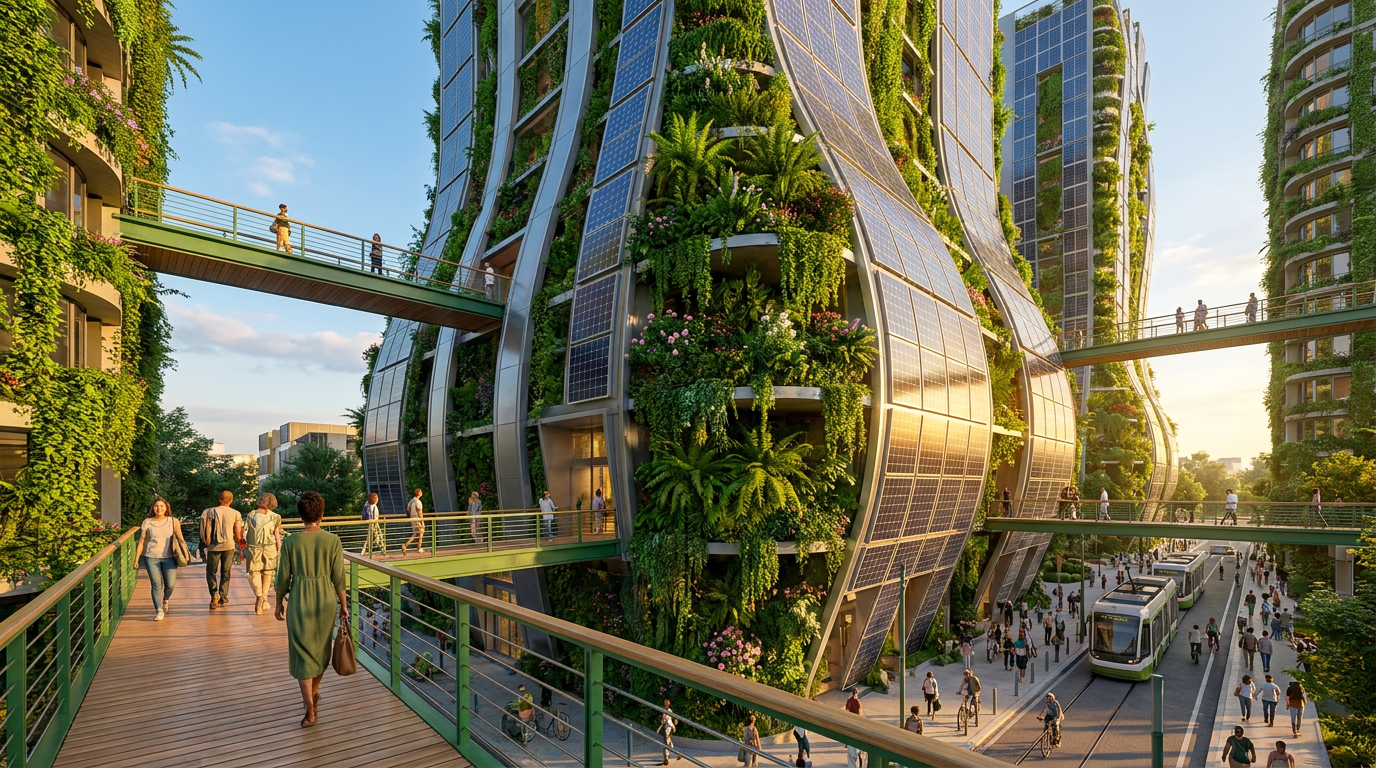
The impact of these optimistic genres is now extending far beyond the pages of science fiction novels, transitioning from speculative literature into tangible "science action." By providing a compelling, highly visual vocabulary for a sustainable future, solarpunk is beginning to influence real-world urban design and architecture. The movement draws heavy inspiration from, and in turn popularizes, existing sustainable frameworks like Earthships—off-grid homes built from recycled materials that manage their own water and energy—and the integration of vertical gardens into dense urban environments. Architects like Stefano Boeri, whose "Forest City" in Liuzhou, China, incorporates millions of plants and trees into its skyscrapers to absorb carbon dioxide, are frequently cited as real-world manifestations of the solarpunk aesthetic.[6][8]

Furthermore, the movement is helping to reframe the public's relationship with renewable energy infrastructure. Transitioning away from fossil fuels requires massive physical changes to the landscape, and projects like large-scale solar farms frequently face local opposition due to aesthetic concerns. By romanticizing green technology and integrating it into a vibrant, desirable vision of the future, solarpunk literature and art can foster greater public acceptance of these necessary developments. When solar panels and wind turbines are culturally coded not as industrial eyesores, but as symbols of community resilience and ecological harmony, the friction associated with their deployment can be significantly reduced.[3]
At the grassroots level, the ethos of these genres is already visible in contemporary climate activism. Organizations like Extinction Rebellion and the Fridays for Future student movement embody the hopepunk principle of demanding a better world through collective, persistent action, even when the odds seem insurmountable. Localized efforts, such as the transformation of vacant lots into community gardens or the establishment of neighborhood tool-sharing libraries, reflect the solarpunk commitment to decentralization and mutual aid. These real-world initiatives demonstrate that the cooperative, post-capitalist structures imagined in fiction can be prototyped and practiced in the present day.[3][8]

Ultimately, the rise of solarpunk and hopepunk represents a critical shift in how society conceptualizes the future. While dystopian fiction remains a valuable tool for identifying potential hazards, it cannot provide the roadmap required to navigate away from them. By daring to imagine a world where humanity successfully addresses its most existential threats, these optimistic genres offer an antidote to climate despair. They remind readers that the future is not a fixed, apocalyptic destination, but a malleable landscape that can still be shaped by ingenuity, cooperation, and the radical choice to remain hopeful.[1][3][8]
How we got here
2008
The term 'solarpunk' is coined in a blog post inspired by the fuel-saving Beluga Skysail cargo ship.
2014
The solarpunk visual aesthetic gains widespread traction on platforms like Tumblr, establishing its core architectural and ecological motifs.
2017
Author Alexandra Rowland coins the term 'hopepunk' to describe narratives that use radical kindness as a rebellion against grimdark cynicism.
2019
The formal 'Solarpunk Manifesto' is published, cementing the movement's focus on post-capitalist, sustainable community building.
2024
Solarpunk is officially added to The Encyclopedia of Science Fiction, marking its mainstream acceptance as a distinct literary subgenre.
Viewpoints in depth
Literary Optimists
Authors and critics who view optimistic fiction as a necessary rebellion against cynicism.
For the creators driving the hopepunk and solarpunk movements, the decision to write optimistic fiction is a deliberate political act. They argue that decades of grimdark and dystopian narratives have normalized apathy, convincing audiences that human nature is inherently selfish and that societal collapse is inevitable. By explicitly portraying characters who choose kindness, cooperation, and resilience in the face of systemic challenges, these authors aim to provide readers with the emotional tools necessary to combat climate despair. They maintain that imagining a survivable, equitable future is the first essential step toward actually building one.
Climate Activists & Urbanists
Practitioners who use solarpunk as a practical blueprint for real-world environmental solutions.
Beyond the realm of fiction, environmental organizers and sustainable architects view solarpunk as a highly effective communication tool. Transitioning away from fossil fuels requires massive infrastructural changes that often face public resistance due to aesthetic or cultural unfamiliarity. By romanticizing green technology—such as vertical forests, decentralized solar grids, and upcycled architecture—solarpunk helps normalize these concepts for the general public. Activists leverage this vibrant aesthetic to make the arduous work of climate mitigation feel less like a series of painful sacrifices and more like an exciting opportunity to build a healthier, more connected society.
Tech & Design Analysts
Observers who focus on the movement's unique approach to technological progress and decentralization.
Technology analysts highlight solarpunk's nuanced departure from both the anti-technology stance of Neo-Luddism and the unbridled techno-solutionism of Silicon Valley. They note that solarpunk champions 'appropriate technology'—tools and systems designed specifically to enhance human and ecological well-being without exceeding planetary boundaries. This perspective emphasizes open-source software, right-to-repair legislation, and decentralized energy grids over proprietary, corporate-controlled platforms. For these analysts, the true value of solarpunk lies in its demand that technological innovation be democratized and firmly tethered to environmental stewardship.
What we don't know
- Whether the solarpunk aesthetic can successfully scale from grassroots community projects to global, state-level infrastructure overhauls.
- How mainstream commercialization might dilute the anti-capitalist, decentralized ethos at the core of the original movement.
Key terms
- Solarpunk
- A literary and artistic movement envisioning a sustainable future where humanity, nature, and technology coexist in harmony.
- Hopepunk
- A subgenre of speculative fiction that emphasizes fighting for positive change, radical kindness, and communal resilience in the face of adversity.
- Grimdark
- A subgenre of speculative fiction characterized by a dystopian, amoral, or highly violent worldview, often serving as the antithesis to hopepunk.
- Cyberpunk
- A sci-fi subgenre focusing on 'high-tech, low-life' scenarios, typically featuring advanced computing and cybernetics in a decaying, corporate-controlled society.
- Appropriate Technology
- Technological innovation that is small-scale, decentralized, labor-intensive, energy-efficient, and environmentally sound.
- Earthship
- A type of passive solar earth shelter made of both natural and upcycled materials, designed to operate entirely off the grid.
Frequently asked
What is the difference between solarpunk and hopepunk?
Solarpunk primarily focuses on the physical and ecological setting of a sustainable future, emphasizing green technology and environmental harmony. Hopepunk focuses on the emotional and philosophical narrative, highlighting characters who use radical kindness and optimism to fight for a better world, regardless of the setting.
Is solarpunk just a utopian fantasy?
No. While it is optimistic, solarpunk acknowledges the severe challenges of climate change and systemic inequality. It focuses on the hard work, community cooperation, and technological adaptation required to overcome those challenges, rather than depicting a magically perfect world.
How is solarpunk influencing the real world?
The movement is inspiring real-world 'science action,' influencing sustainable urban design, promoting the adoption of renewable energy, and providing a positive, motivating framework for grassroots climate activists.
Sources
Source coverage
8 outlets
3 viewpoints surfaced






[1]WikipediaLiterary Optimists
Solarpunk
Read on Wikipedia →Hopepunk
Read on Wikipedia →[3]Earth.orgClimate Activists & Urbanists
What is Solarpunk? The Movement Envisioning a Sustainable Future
Read on Earth.org →[4]The Indian ExpressClimate Activists & Urbanists
What is Solarpunk, the art movement offering a sustainable way forward?
Read on The Indian Express →[5]World Literature TodayLiterary Optimists
Hopepunk and Solarpunk: Optimistic Reads
Read on World Literature Today →[6]One EarthClimate Activists & Urbanists
Solarpunk and Appropriate Technology
Read on One Earth →[7]Built InTech & Design Analysts
What Is Solarpunk? A Guide to the Environmental Art Movement
Read on Built In →[8]Factlen Editorial TeamTech & Design Analysts
Synthesis by Factlen editorial team
Read on Factlen Editorial Team →
Every angle. Every day.
Get culture stories with full source coverage and perspective breakdowns delivered to your inbox.