
Electric vs. Plug-In Hybrid: The 2026 Buyer's Guide
As battery ranges expand and charging networks grow, the debate between fully electric vehicles and plug-in hybrids comes down to your daily commute, charging access, and tolerance for maintenance.
By Factlen Editorial Team
- EV Purists
- Advocates who prioritize zero emissions and mechanical simplicity.
- Pragmatic Commuters
- Drivers who value the flexibility of electric daily driving with a gasoline safety net.
- Cost-Conscious Analysts
- Financial pragmatists focused on total cost of ownership and depreciation.
What's not represented
- · Apartment renters who lack access to overnight home charging.
- · Rural drivers who live far from established fast-charging corridors.
Why this matters
Choosing between an EV and a PHEV is a multi-year financial commitment that dictates your daily routine. Picking the wrong powertrain can result in thousands of dollars in unnecessary maintenance or frustrating road trips, while the right choice seamlessly lowers your cost of living.
Key points
- The 2026 auto market offers robust options for both fully electric vehicles (EVs) and plug-in hybrids (PHEVs).
- EVs offer the lowest operating costs and require minimal maintenance due to having fewer moving parts.
- PHEVs provide 30 to 50 miles of electric range for daily commutes while retaining a gas engine for long road trips.
- A PHEV is the most mechanically complex vehicle on the road, requiring maintenance for both electric and gas systems.
- Failing to plug in a PHEV regularly negates its benefits, turning it into a heavy, inefficient gas car.
- The right choice depends heavily on a driver's access to overnight home charging and their frequency of long-distance travel.
The automotive landscape has crossed a definitive threshold in 2026, marking a permanent shift in how consumers power their daily commutes. For the first time in its history, the influential Consumer Reports Top 10 list of the best new cars features exclusively electrified vehicles—a diverse mix of standard hybrids, plug-in hybrids (PHEVs), and fully electric vehicles (EVs). This milestone signals that battery-assisted driving is no longer a niche alternative reserved for early adopters; it has become the industry standard for reliability, efficiency, and overall performance. As major automakers phase out traditional internal combustion engines, buyers are increasingly faced with a critical decision at the dealership. They must choose not just a make and model, but an entirely new philosophy of fueling and maintaining their primary mode of transportation.[3]
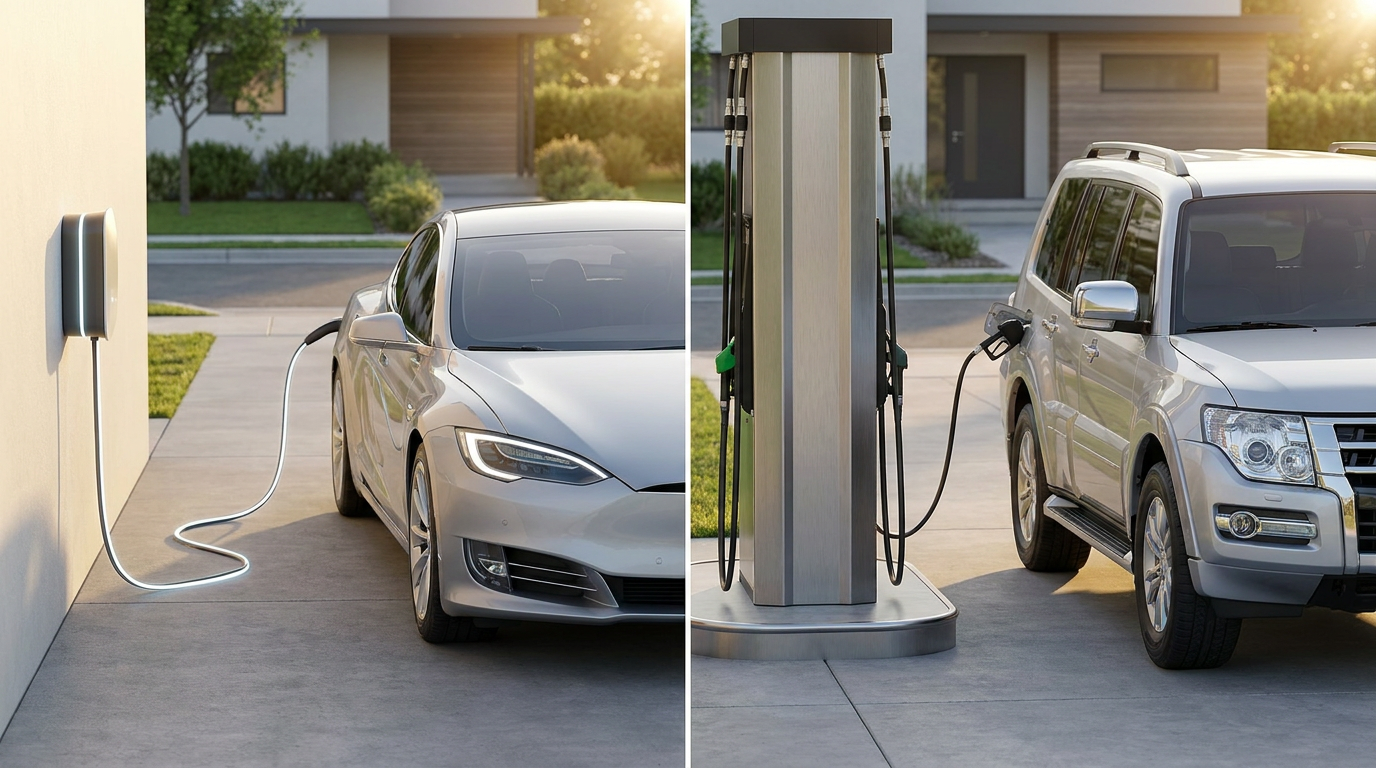
For buyers who are ready to move past traditional combustion engines and embrace the future, the decision usually narrows down to two distinct paths: a pure EV or a PHEV. While both vehicles share the requirement of being plugged into the grid, their underlying engineering philosophies and daily use cases are vastly different. An EV relies entirely on a massive battery pack and electric motors to propel the vehicle, eliminating the gas tank, the exhaust system, and the tailpipe entirely. A PHEV, conversely, houses two completely separate powertrains under one roof: a smaller battery designed for short electric-only trips, and a traditional gas engine that seamlessly takes over the moment the battery is depleted. Understanding this fundamental difference is the key to making a purchase that aligns with your lifestyle.[1][5]
The primary argument for choosing a fully electric vehicle in 2026 is its sheer mechanical simplicity and rock-bottom operating costs. Because an EV completely lacks an internal combustion engine, it permanently dispenses with the need for oil changes, spark plug replacements, timing belts, and transmission fluid flushes. The drivetrain of a modern electric vehicle contains roughly twenty moving parts, a stark contrast to the hundreds of complex, friction-generating components found in a gas-powered vehicle. This engineering elegance translates to significantly lower lifetime maintenance costs, with routine service largely limited to rotating the tires, replacing windshield wiper fluid, and swapping out cabin air filters. Furthermore, the regenerative braking systems in EVs capture kinetic energy to recharge the battery, meaning traditional brake pads can often last well over 100,000 miles before needing replacement.[5][6]
Beyond the savings in the service bay, fueling an EV remains substantially cheaper than buying gasoline, insulating drivers from the volatile swings of the global oil market. At the U.S. national average of $0.17 per kilowatt-hour, driving an EV costs roughly $0.07 per mile. For a typical driver covering 14,000 miles annually, electricity costs hover around $1,000—often less than half the annual fuel bill for a comparable gas-powered car. Furthermore, the 2026 EV market has largely neutralized the dreaded "range anxiety" that plagued early adopters. Many mainstream electric models now comfortably exceed 300 miles on a single charge, and some push past the 400-mile mark, making them highly capable for all but the most extreme, non-stop cross-country road trips.[4][5]

However, the case against a pure EV centers heavily on upfront costs and a strict dependence on charging infrastructure. While battery prices have fallen significantly over the past decade, EVs still carry a noticeable premium over their hybrid counterparts, with the average new electric vehicle transaction price hovering around $54,500 before government tax incentives are applied. More critically, an EV requires reliable, daily access to charging to be truly convenient. If you live in an apartment complex without overnight charging facilities, or if you frequently travel through rural corridors with sparse and unreliable fast-charging networks, the logistics of EV ownership can quickly transition from a seamless experience to a frustrating logistical burden.[2]
This is exactly where the plug-in hybrid presents its strongest evidence as the ultimate transitional vehicle for the modern driver. A typical 2026 PHEV offers between 30 and 50 miles of pure electric range—more than enough capacity to cover the average daily commute, run local errands, and drop the kids off at school without ever burning a single drop of gasoline. But when the weekend arrives and a long road trip beckons, the gas engine seamlessly engages. This dual-nature allows drivers to utilize the vast, existing network of gas stations, completely eliminating range anxiety and the need to meticulously plan routes around the availability of public fast chargers.[1][4]
This is exactly where the plug-in hybrid presents its strongest evidence as the ultimate transitional vehicle for the modern driver.
The core argument for a PHEV is unmatched flexibility: it operates as a silent, zero-emission EV around town and a highly capable, traditional hybrid on the open highway. Buyers benefit from the drastically lower daily running costs of electricity without sacrificing the freedom to drive cross-country on a whim. Additionally, PHEVs often have a lower initial purchase price than long-range, large-battery EVs, making them a much more accessible entry point into electrified driving for families who want to reduce their carbon footprint but cannot justify the premium of a flagship electric SUV. For many, it represents the perfect "best of both worlds" compromise.[1][5]
Yet, the PHEV compromise comes with significant drawbacks, primarily rooted in its immense mechanical complexity. By choosing to house both an electric motor and a traditional gas engine, a PHEV becomes the most mechanically complex vehicle on the road today. Owners must actively maintain both systems, meaning they are still entirely on the hook for regular oil changes, engine air filters, and the eventual wear-and-tear of a combustion engine, all while simultaneously managing a high-voltage battery system. This dual-powertrain setup means there are simply more components that can potentially fail over the lifespan of the vehicle, negating the maintenance savings that draw many people to electrification in the first place.[4][5][6]

Furthermore, a PHEV only delivers its promised environmental and financial efficiency if the owner is disciplined enough to plug it in daily. Industry data and consumer studies reveal a common and costly pitfall: many PHEV owners eventually stop plugging their cars into the grid, treating them exactly like standard, self-charging hybrids. When driven with a depleted battery, a PHEV is essentially lugging around hundreds of pounds of dead battery weight. This drastically reduces its overall fuel economy, making it significantly less efficient—and more expensive to operate—than a standard, non-plug-in hybrid that was designed from the ground up for pure gasoline efficiency.[5]
Insurance premiums and long-term depreciation also play a crucial role in the financial trade-off between the two platforms. Because EVs are generally more expensive to repair after a collision—often requiring specialized labor and expensive replacement battery packs—their insurance premiums run about 7% higher on average than traditional vehicles. However, the resale market for EVs is rapidly stabilizing in 2026, with proven models holding their value much better than the early-generation electrics of the 2010s. PHEVs currently enjoy stable resale values due to the familiar reliability of their gas engines, but their long-term appeal may wane significantly as public fast-charging infrastructure continues to expand and pure EVs become the undisputed default for the average consumer.[2][4]
Ultimately, choosing the right powertrain requires a brutally honest assessment of your daily driving habits and living situation. A pure EV fits perfectly when you have dedicated home or workplace charging, your daily driving routine is relatively predictable, and you want to minimize long-term maintenance and fuel costs to the absolute lowest possible baseline. It is the definitive choice for forward-thinking buyers looking to future-proof their garage, eliminate tailpipe emissions entirely, and enjoy the smooth, silent acceleration that only a fully electric drivetrain can provide.[2][5]
Conversely, an EV does not fit well if you rely solely on public charging networks for your daily energy needs, frequently tow heavy loads over long distances, or regularly drive through remote, rural areas where infrastructure is lacking. In these specific scenarios, the time spent waiting at charging stations and the constant mental math of range calculation can quickly outweigh the operational savings, making the EV experience more stressful than it is worth.[2]

A PHEV fits exceptionally well when you have a short daily commute, can reliably charge the vehicle at home every single night, but regularly take long road trips where fast-charging infrastructure is either unreliable or non-existent. It offers the absolute best of both worlds for the disciplined driver who maximizes the electric range during the week, reserving the gasoline engine strictly for weekend adventures and unexpected long-distance travel.[1][2]
However, a PHEV does not fit well if you lack dedicated home charging or if you simply want a "fire and forget" vehicle that requires zero behavioral changes. If you cannot commit to the daily routine of plugging the vehicle in, the added upfront cost and the immense mechanical complexity of the dual powertrains are completely wasted. In that scenario, you would be much better served financially and practically by purchasing a standard, self-charging hybrid or a highly efficient traditional gas vehicle.[1][5]
How we got here
2010
The introduction of the first mass-market EVs and PHEVs, such as the Nissan Leaf and Chevy Volt.
2020
Battery technology improvements push standard EV ranges past the 200-mile mark, increasing mainstream adoption.
2022
A surge in gas prices accelerates consumer interest in both hybrids and fully electric vehicles.
2024
Automakers begin heavily investing in PHEVs as a bridge technology to ease range anxiety for hesitant buyers.
2026
Consumer Reports' top 10 car list features exclusively electrified vehicles for the first time in history.
Viewpoints in depth
EV Purists
Advocates who prioritize zero emissions and mechanical simplicity.
This camp argues that PHEVs are a compromised "half-measure" that delays the inevitable transition to fully electric transportation. They point to the massive reduction in moving parts as the ultimate selling point, noting that eliminating the combustion engine entirely is the only way to escape the cycle of oil changes, belt replacements, and mechanical failures. For purists, the expanding fast-charging network has already solved the range anxiety problem, making the gas engine in a PHEV an unnecessary and heavy crutch.
Pragmatic Commuters
Drivers who value the flexibility of electric daily driving with a gasoline safety net.
Pragmatists view the PHEV as the perfect bridge technology for the current decade. They argue that while EVs are ideal in theory, public charging infrastructure remains too inconsistent for stress-free long-distance travel, especially in rural areas or during holiday travel rushes. By using electric power for 90% of their daily driving and relying on gas only for long trips, this camp believes they achieve the environmental and financial benefits of an EV without the logistical headaches of route-planning around chargers.
Cost-Conscious Analysts
Financial pragmatists focused on total cost of ownership and depreciation.
This perspective focuses strictly on the math. While acknowledging the lower per-mile fuel costs of an EV, they highlight the higher upfront purchase price and the roughly 7% increase in insurance premiums. They warn against the "PHEV trap" where owners pay a premium for a dual-powertrain vehicle but fail to plug it in, resulting in poor fuel economy and wasted money. For this camp, the winning vehicle is entirely dependent on the buyer's ability to charge at home at low overnight electricity rates.
What we don't know
- How quickly the expansion of public fast-charging networks will render the PHEV's gasoline safety net obsolete.
- Whether long-term resale values for PHEVs will plummet as the market shifts entirely toward pure electric vehicles.
- How future changes to government tax incentives will alter the upfront cost balance between the two powertrains.
Key terms
- EV (Electric Vehicle)
- A car powered entirely by an electric motor and a large battery pack, producing zero tailpipe emissions.
- PHEV (Plug-in Hybrid Electric Vehicle)
- A vehicle with both an electric motor and a gas engine. It can be plugged in to charge a battery for short electric-only trips before the gas engine takes over.
- Level 2 Charger
- A 240-volt charging station commonly installed in homes or found in public, capable of charging an EV much faster than a standard wall outlet.
- Range Anxiety
- The fear that an electric vehicle will run out of battery power before reaching a charging station.
- Regenerative Braking
- A system that captures the kinetic energy usually lost during braking and converts it into electricity to recharge the vehicle's battery.
Frequently asked
Do I need to install a special charger at home for a PHEV?
Not necessarily. Because PHEV batteries are relatively small, they can often fully recharge overnight using a standard 120-volt household outlet, whereas pure EVs typically require a 240-volt Level 2 charger for overnight charging.
What happens if I never plug in my PHEV?
If you don't plug it in, the vehicle operates like a standard hybrid, using the gas engine and regenerative braking. However, because it carries the extra weight of a larger battery, it will get worse gas mileage than a non-plug-in hybrid.
Are EVs really cheaper to maintain?
Yes. Pure EVs lack an internal combustion engine, meaning they never need oil changes, spark plugs, or engine air filters. Their regenerative braking systems also significantly extend the life of the brake pads.
Do PHEVs qualify for the same tax credits as EVs?
It depends on the battery size and local regulations. While many PHEVs qualify for incentives, the amounts are often lower than those offered for fully electric vehicles due to their smaller battery capacities.
Sources
Source coverage
6 outlets
3 viewpoints surfaced





[1]EdmundsPragmatic Commuters
Hybrids vs. Plug-in Hybrids: What's the Difference?
Read on Edmunds →[2]Kelley Blue BookCost-Conscious Analysts
Electric Cars vs Hybrids: Key Considerations for Your Next Vehicle
Read on Kelley Blue Book →[3]Consumer ReportsEV Purists
Consumer Reports' 2026 Top Car List: All Models are Hybrid or Electric
Read on Consumer Reports →[4]The ZebraCost-Conscious Analysts
Electric vs. hybrid cars: Which is right for you?
Read on The Zebra →[5]ZenithEV Purists
EV vs PHEV: What's the difference?
Read on Zenith →[6]Cars.co.zaCost-Conscious Analysts
EV vs PHEV vs REEV: What's the difference?
Read on Cars.co.za →

More in shopping
See all 5 stories →Summer Sales
The 2026 Summer Deal Wars: Amazon, Target, and Walmart Shift Major Sales to June
0 sources

Used EV Market
The 2026 Used EV Market: Battery Health, Expired Tax Credits, and the Price Crash Explained
0 sources
On-Device AI
The Hidden Engine in Your Next Phone: Why On-Device AI is Changing How We Shop for Tech
0 sources
Every angle. Every day.
Get shopping stories with full source coverage and perspective breakdowns delivered to your inbox.