
The Invisible Ecosystem: How the Skin Microbiome is Rewriting the Rules of Skincare
Dermatology is shifting from a war on bacteria to an ecological approach, revealing that cultivating the skin's microscopic ecosystem is the key to resilience, hydration, and clarity.
By Factlen Editorial Team
- Microbiome Researchers
- Focus on the ecological complexity of the skin, advocating for a shift from pathogen eradication to microbial cultivation.
- Clinical Dermatologists
- Prioritize evidence-based outcomes, utilizing microbiome therapies to treat inflammatory conditions while warning against marketing hype.
- Cosmetic Formulators
- Focus on the practical application of microbiome science, utilizing stable postbiotics and prebiotics to create shelf-stable, barrier-supporting products.
What's not represented
- · Traditional Antimicrobial Manufacturers
Why this matters
For decades, the standard approach to problem skin was to scrub, peel, and sterilize it into submission. Understanding your skin as a living ecosystem allows you to stop fighting your biology and start supporting the natural barrier that keeps your skin hydrated, clear, and resilient.
Key points
- The skin microbiome is a vital ecosystem of microbes that actively maintains hydration and defends against pathogens.
- Over-cleansing and harsh exfoliation strip the skin's acidic mantle, leading to microbial imbalance (dysbiosis).
- Dysbiosis is a primary driver of inflammatory conditions like acne, eczema, and rosacea.
- Clinical evidence shows microbiome-targeted therapies can reduce inflammatory acne lesions by over 60%.
- Dermatologists recommend minimalist routines and lifestyle habits (sleep, diet) to support natural barrier function.
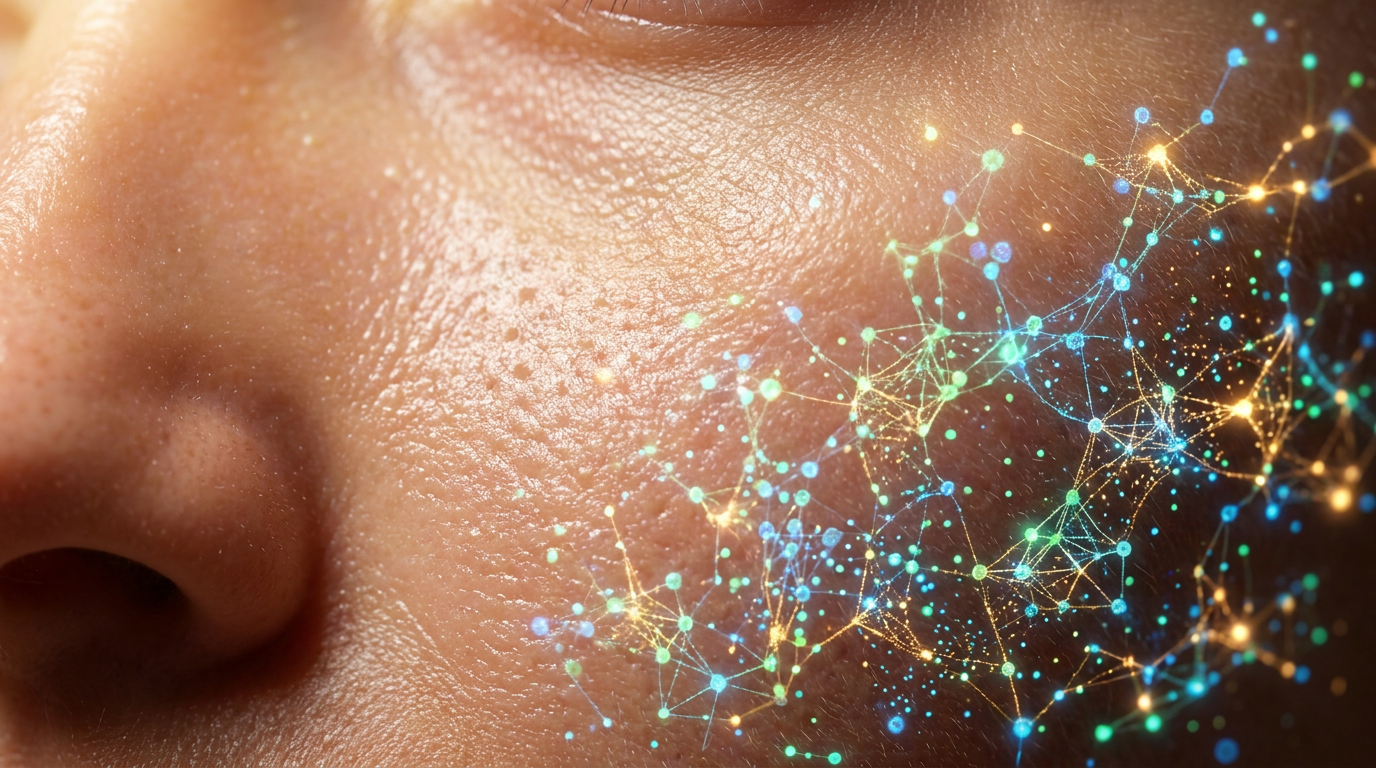
The surface of human skin appears smooth and quiet to the naked eye, but under a microscope, it is a bustling, densely populated metropolis. This is the skin microbiome—a complex ecosystem of bacteria, fungi, viruses, and mites that live in delicate harmony on the outermost layer of our bodies. For generations, the beauty and hygiene industries operated on a simple, adversarial premise: bacteria cause problems, and therefore, skin must be sterilized. Today, a quiet revolution in dermatological science is completely upending that narrative.[3][6]
Advances in genomic sequencing have revealed that the microbes residing on our skin are not invaders to be eradicated, but essential partners in our health. These microscopic residents outnumber our own skin cells by a factor of ten to one. They act as a localized defense force, communicating with our immune system, fending off harmful pathogens, and actively manufacturing the chemical compounds that keep our skin hydrated and plump.[1][3]
The conceptualization of the skin microbiome has evolved rapidly from early pathogen-focused models to a broader ecological perspective. Researchers now understand that a healthy complexion is defined by microbial diversity. Just as a thriving rainforest relies on a vast array of interdependent species, resilient skin relies on a rich, balanced community of microorganisms. When this diversity is robust, the skin is calm, clear, and capable of repairing itself.[3]
To understand how these microbes keep us healthy, it helps to look at the architecture of the skin barrier. The barrier is not a single wall, but a three-tiered defense system: physical, chemical, and immunological. The physical barrier consists of tightly packed skin cells (corneocytes) held together by a mortar of essential lipids, primarily ceramides. The microbiome directly supports this physical structure by promoting the production of these very ceramides, which lock in moisture and prevent transepidermal water loss.[1]

The chemical barrier is where the microbiome truly shines. Healthy skin is naturally slightly acidic, hovering around a pH of 5.0. This acidic mantle is hostile to harmful, infection-causing bacteria but perfectly suited for our beneficial resident microbes. As these good bacteria consume the natural oils (sebum) produced by our skin, they secrete byproducts called postbiotics—including short-chain fatty acids and antimicrobial peptides. These postbiotics actively maintain the skin's acidic pH and act as natural antibiotics against pathogenic invaders.[1][2]
Finally, the immunological barrier relies on constant cross-talk between the microbiome and the body's immune cells. The beneficial bacteria essentially "train" the local immune system, teaching it to tolerate harmless environmental factors while remaining vigilant against true threats. This continuous dialogue prevents the immune system from overreacting, thereby keeping chronic inflammation at bay.[1]
However, modern lifestyles frequently disrupt this delicate ecosystem, leading to a state of imbalance known as dysbiosis. When the microbial community loses its diversity, opportunistic "bad" bacteria can overpopulate, triggering an immune response. This dysbiosis is now recognized as a primary driver behind a host of inflammatory skin conditions, including acne vulgaris, atopic dermatitis (eczema), psoriasis, and rosacea.[2]
However, modern lifestyles frequently disrupt this delicate ecosystem, leading to a state of imbalance known as dysbiosis.
The culprits behind this disruption are often found in our own bathrooms. The overuse of harsh, alkaline cleansers strips away the skin's natural oils, destroying the acidic mantle and starving beneficial bacteria. Aggressive exfoliation physically removes the microbial habitat. Furthermore, the chronic use of broad-spectrum antimicrobial products can act like a forest fire, wiping out both good and bad bacteria indiscriminately and leaving the skin vulnerable to irritation and accelerated aging.[2][6]
Recognizing the dangers of dysbiosis, the dermatological field is shifting its therapeutic focus from broad-spectrum suppression to targeted ecological restoration. This has given rise to microbiome-targeted therapies, primarily utilizing prebiotics, probiotics, and postbiotics. Prebiotics act as specialized fertilizers, providing the specific nutrients that beneficial bacteria need to thrive. Probiotics introduce live, beneficial strains directly to the skin, while postbiotics deliver the beneficial chemical byproducts of bacteria without requiring live cultures.[2][4]
The clinical evidence supporting these interventions is becoming increasingly robust, particularly in the treatment of acne. A comprehensive 2026 systematic review analyzing 33 clinical studies found that probiotic treatments produced a pooled reduction of 45.2% in total acne lesions. Even more impressively, inflammatory lesions were reduced by over 60%. These multistrain formulations not only reduced breakouts but simultaneously improved barrier hydration—a dual benefit rarely seen with traditional, drying acne treatments.[4]

Beyond treating specific conditions, a resilient microbiome is increasingly linked to skin longevity and visible aging. An October 2025 study examining women aged 40 to 50 found that those who were perceived to look younger than their chronological age shared a distinctly more resilient and diverse skin microbiome. While genetics play a role, this resilience is heavily influenced by lifestyle factors that support the gut-skin axis.[5]
The gut-skin axis is the systemic pathway connecting our digestive microbiome to our cutaneous one. Chronic inflammation originating in the gut—often driven by highly processed diets and chronic stress—can manifest on the skin as redness, breakouts, and accelerated collagen degradation. Conversely, a Mediterranean-style diet rich in fiber and fermented foods supports systemic microbial diversity, reducing the low-grade inflammation known as "inflammaging."[5][6]
Despite the excitement surrounding microbiome skincare, significant scientific and regulatory challenges remain. The cosmetics industry is currently flooded with "probiotic" claims, but formulating products with live bacteria is notoriously difficult. Preservatives, which are necessary to prevent dangerous mold growth in creams, inherently kill live probiotics. As a result, many products rely on heat-killed bacteria or postbiotic extracts. While these fragments are highly stable and clinically effective, the lack of standardized definitions leaves consumers navigating a confusing landscape.[3][4]
Dermatologists caution that while microbiome science is a massive leap forward, it is not a magic bullet that replaces basic skin hygiene and protection. Experimental longevity interventions and complex, 10-step routines often outpace the actual clinical evidence. In fact, applying too many overlapping active ingredients is a primary cause of barrier disruption.[5]

The most effective approach to supporting the skin microbiome is often the simplest. Experts recommend a minimalist routine: a gentle, pH-balanced cleanser that doesn't leave the skin feeling tight, a moisturizer containing ceramides or prebiotics to feed the barrier, and consistent sun protection. Crucially, this routine must be paired with adequate sleep and stress management, as cortisol spikes directly impair barrier recovery.[5][6]
We are entering a new era of precision dermatology, where treatments will increasingly be tailored to an individual's unique microbial fingerprint. Future innovations may include skin microbiota transplants and genetically engineered probiotics designed to secrete specific therapeutic compounds. Until then, the most profound takeaway from microbiome research is a philosophical one: our skin is not a canvas to be scrubbed clean, but a living garden to be carefully tended.[2][6]
How we got here
2007
The NIH launches the Human Microbiome Project, accelerating genomic sequencing of human flora.
2014
Early studies begin firmly linking skin dysbiosis to inflammatory conditions like rosacea and acne.
2022
Research solidifies the understanding of the gut-skin axis and how systemic inflammation affects the cutaneous barrier.
2025
Studies demonstrate that a resilient, diverse skin microbiome correlates with reduced visible signs of aging.
2026
Systematic reviews confirm the clinical efficacy of targeted probiotic and postbiotic therapies for acne reduction.
Viewpoints in depth
Microbiome Researchers
Advocating for a paradigm shift from pathogen eradication to ecological cultivation.
For microbiologists and genomic researchers, the skin is viewed as a complex, dynamic habitat rather than a sterile surface. They argue that the 20th-century approach of using broad-spectrum antimicrobials to treat skin conditions is akin to clear-cutting a forest to eliminate a single pest. By mapping the intricate cross-talk between microbial metabolites and human immune cells, researchers emphasize that true skin health requires cultivating diversity. Their focus is on understanding how different micro-environments on the body (oily, dry, moist) dictate microbial populations, and how restoring these specific ecosystems can prevent disease before it starts.
Clinical Dermatologists
Balancing the promise of microbiome science with the need for rigorous, evidence-based patient care.
While clinical dermatologists are highly optimistic about microbiome-targeted therapies, they approach the trend with pragmatic caution. They recognize that dysbiosis is a key factor in conditions like atopic dermatitis and acne, and they increasingly recommend barrier-supporting regimens over harsh exfoliants. However, they warn patients against abandoning proven prescription therapies in favor of unregulated over-the-counter 'probiotic' cosmetics. For dermatologists, the goal is integration: using microbiome science to mitigate the side effects of traditional treatments and to maintain long-term remission, while demanding standardized clinical trials to separate marketing hype from genuine efficacy.
Cosmetic Formulators
Navigating the technical challenges of delivering microbiome benefits in safe, shelf-stable products.
Formulators face a unique paradox: the preservatives legally required to keep cosmetic products safe from dangerous mold and bacterial overgrowth are inherently designed to kill microbes. This makes formulating with live, vegetative probiotics incredibly difficult and expensive. As a result, the formulation industry has largely pivoted to prebiotics (microbe food) and postbiotics (heat-killed bacterial extracts and ferments). Formulators argue that these non-living ingredients deliver the chemical benefits of a healthy microbiome—such as barrier repair and pH regulation—without the instability and safety risks associated with live cultures.
What we don't know
- How to effectively and safely stabilize live, vegetative probiotic strains in water-based cosmetic formulations without compromising shelf life.
- The exact mechanisms by which specific microbial strains interact with individual human genetics to produce personalized skin outcomes.
- Long-term data on whether topically applied microbes can permanently colonize the skin, or if they only offer transient benefits while the product is being used.
Key terms
- Dysbiosis
- An imbalance in the microbial community, where beneficial bacteria are depleted and harmful or opportunistic microbes overpopulate, often leading to inflammation.
- Stratum Corneum
- The outermost layer of the epidermis, consisting of dead skin cells and lipids, which acts as the primary physical barrier against the environment.
- Transepidermal Water Loss (TEWL)
- The process by which water passively evaporates from the skin into the surrounding environment; a healthy barrier keeps TEWL low.
- Prebiotics
- Non-digestible compounds that act as food for beneficial bacteria, encouraging their growth and activity on the skin.
- Postbiotics
- The beneficial chemical byproducts (like peptides and fatty acids) produced by bacteria, which can be used in skincare to deliver results without requiring live cultures.
- Gut-Skin Axis
- The bidirectional communication pathway between the digestive microbiome and the skin, where intestinal health directly influences skin inflammation and resilience.
Frequently asked
What exactly is the skin microbiome?
It is the diverse community of bacteria, fungi, and viruses that naturally live on the surface of your skin. These microbes help regulate your immune system, maintain skin hydration, and fight off harmful pathogens.
How do I know if my skin microbiome is damaged?
Signs of a disrupted microbiome (dysbiosis) include chronic dryness, a tight feeling after washing, increased sensitivity, redness, and flare-ups of conditions like acne, eczema, or rosacea.
Are live probiotics in skincare effective?
While live probiotics have proven clinical benefits, they are very difficult to keep alive in cosmetic creams due to necessary preservatives. Many effective products instead use 'postbiotics'—the beneficial compounds produced by bacteria—which are highly stable and effective.
What is the best way to protect my skin's bacteria?
Adopt a minimalist routine: avoid harsh, stripping cleansers and over-exfoliation. Use pH-balanced products, moisturize regularly to support the physical barrier, and maintain a healthy diet and sleep schedule to support the gut-skin axis.
Sources
Source coverage
6 outlets
3 viewpoints surfaced






[1]International Journal of Molecular SciencesMicrobiome Researchers
Skin Barrier Function and the Microbiome
Read on International Journal of Molecular Sciences →[2]CosmoDermaClinical Dermatologists
Skin microbiome and inflammatory dermatoses: A focused review
Read on CosmoDerma →[3]Minerva MedicaMicrobiome Researchers
Defining the skin microbiome: historical development and current challenges
Read on Minerva Medica →[4]Apiceuticals Clinical DigestCosmetic Formulators
Probiotics in skincare are backed by clinical science
Read on Apiceuticals Clinical Digest →[5]Miami HeraldClinical Dermatologists
Why the Evidence Is Shifting the Skin Longevity Conversation
Read on Miami Herald →[6]Factlen Editorial TeamCosmetic Formulators
Synthesis by Factlen editorial team
Read on Factlen Editorial Team →

Every angle. Every day.
Get health stories with full source coverage and perspective breakdowns delivered to your inbox.