
Biophilic Design: The Science of Bringing Nature Indoors
Architects and scientists are increasingly turning to biophilic design—integrating natural elements into the built environment—to boost cognitive performance, accelerate healing, and reduce chronic stress.
By Factlen Editorial Team
- Evolutionary Psychologists & Researchers
- Argues that human biology is fundamentally mismatched with modern indoor environments, causing chronic cognitive fatigue.
- Architects & Urban Planners
- Views biophilic design as a necessary paradigm shift to make the built environment actively restorative.
- Corporate Real Estate Strategists
- Focuses on the measurable return on investment (ROI) that biophilic environments deliver through human performance.
What's not represented
- · Low-income urban communities who often lack access to biophilic architecture and green spaces.
- · Traditional construction firms facing higher material costs for natural, sustainable elements.
Why this matters
With modern humans spending nearly 90% of their time indoors, the sterile nature of conventional buildings is actively contributing to stress and cognitive fatigue. Biophilic design offers a scientifically backed framework to transform our homes and workplaces into environments that actively heal and energize us.
Key points
- Modern humans spend roughly 90% of their time indoors, leading to a biological mismatch that elevates chronic stress.
- Biophilic design integrates direct nature, organic materials, and evolutionary spatial layouts into the built environment.
- Exposure to nature-inspired spaces lowers cortisol levels, stabilizes blood pressure, and allows the brain to recover from cognitive fatigue.
- Workplaces utilizing biophilic principles report up to a 15% increase in productivity and a 30% reduction in employee stress.
- In healthcare settings, biophilic architecture is linked to shorter hospital stays and reduced reliance on pain medication.
Modern humans are an indoor species. On average, people in industrialized nations spend nearly 90 percent of their lives enclosed within walls, navigating environments defined by steel, glass, and artificial light. This profound separation from the natural world is a historical anomaly, one that environmental psychologists increasingly link to rising rates of chronic stress, cognitive fatigue, and emotional depletion. In response, a transformative movement in architecture and interior design is attempting to bridge the gap between the built environment and the natural world.[7]
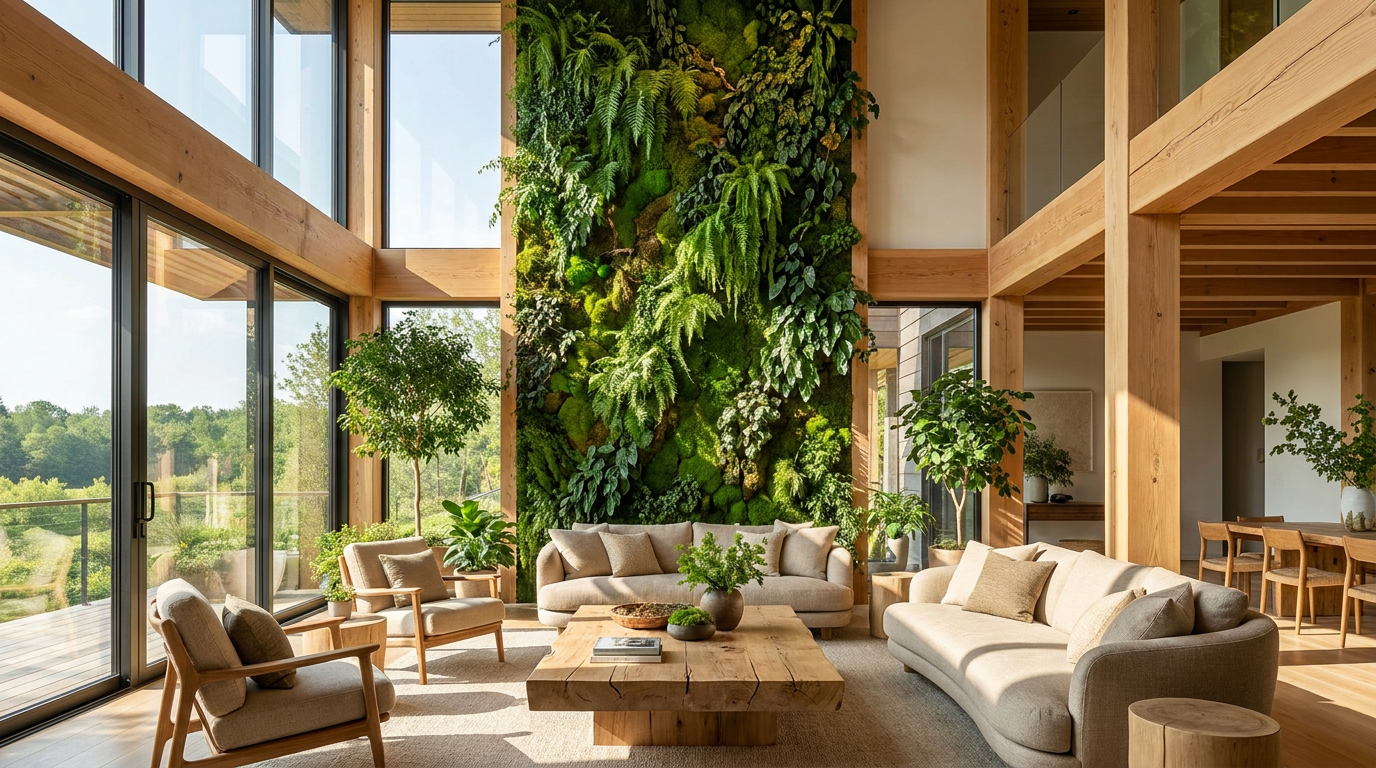
This approach is known as biophilic design. Rooted in the concept of "biophilia"—a term popularized by biologist Edward O. Wilson in the 1980s to describe humanity's innate, evolutionary urge to affiliate with other forms of life—the discipline goes far beyond the superficial placement of potted plants. It is a comprehensive, evidence-based methodology that weaves natural elements, patterns, and processes into the very fabric of the spaces where people live, work, and heal.[1][3][7]
The philosophy operates on the premise that human biology is still calibrated to the savannas and forests of our ancestors, not the sterile cubicles of the modern era. When individuals are placed in environments devoid of natural cues, their nervous systems often remain in a low-grade state of alert. Conversely, introducing sensory elements that mimic the natural world signals safety and abundance to the brain, triggering profound physiological and psychological shifts.[7]
To understand how biophilic design functions, it is essential to look at its underlying mechanisms. The framework is generally divided into three broad categories: the direct experience of nature, the indirect experience of nature, and the experience of space and place. Direct experiences involve tangible, living elements such as abundant natural daylight, flowing water, and vegetation. These features provide immediate sensory engagement, from the sound of a water feature to the dynamic, shifting shadows cast by sunlight moving across a room throughout the day.[1]

Indirect experiences of nature rely on biomimicry and natural materials. This includes the use of exposed wood grain, stone, and natural fibers, as well as architectural shapes that mimic the organic, fractal patterns found in leaves or shells. The human brain is highly adept at processing these natural geometries, which require less cognitive effort to decode than the harsh, rigid right angles typical of modern construction.[5]
The third category, the experience of space and place, taps into evolutionary survival instincts. It incorporates concepts like "prospect and refuge"—the human preference for spaces that offer a broad, unimpeded view of the surroundings (prospect) while providing a sense of sheltered safety at one's back (refuge). When an interior environment balances these spatial dynamics, occupants subconsciously feel more secure and grounded.[7]
The empirical evidence supporting biophilic design has grown robustly over the past decade, moving the concept from a niche architectural aesthetic to a public health imperative. Neuropsychological studies demonstrate that exposure to biophilic environments facilitates rapid stress recovery. When individuals are exposed to natural light and organic textures, their cortisol levels drop, blood pressure stabilizes, and heart rates slow down.[2][4]
Neuropsychological studies demonstrate that exposure to biophilic environments facilitates rapid stress recovery.
This physiological calming effect is closely tied to Attention Restoration Theory. In standard, sterile environments, people rely heavily on "directed attention" to focus on screens and tasks, which quickly leads to cognitive fatigue. Biophilic environments, however, offer "soft fascination"—gentle, effortless sensory stimuli like a view of swaying trees or the texture of natural wood. This allows the brain's directed attention mechanisms to rest and replenish, significantly boosting subsequent focus and cognitive clarity.[7]
The corporate world has taken acute notice of these cognitive benefits. Research compiled by workplace strategists indicates that biophilic office designs can yield a 15 percent increase in employee productivity and a 6 percent boost in baseline creativity. Furthermore, studies have documented up to a 30 percent reduction in self-reported stress levels among workers in nature-inspired environments.[3][6]

For employers, these metrics translate directly into return on investment. Beyond raw productivity, biophilic spaces are associated with lower rates of absenteeism and higher talent retention. When an office features dynamic natural lighting that aligns with human circadian rhythms, employees experience better sleep quality and arrive at work more alert. Consequently, leading technology companies and corporate campuses are increasingly treating biophilic design not as a luxury, but as a core component of their human resources and real estate strategies.[5][6][7]
The impact of biophilic design extends far beyond the corporate office, proving particularly transformative in healthcare settings. Hospitals are traditionally designed for clinical efficiency, often resulting in sterile, windowless environments that inadvertently elevate anxiety for both patients and staff. However, a wave of new medical facilities is integrating healing gardens, natural light, and organic materials into patient rooms and staff break areas.[4]
Systematic reviews of biophilic hospital design reveal striking outcomes. Patients recovering in rooms with views of nature or abundant natural light consistently require fewer pain medications and experience shorter overall hospitalization times compared to those in standard rooms. For healthcare professionals working in high-stress, high-stakes roles, access to biophilic break spaces provides crucial micro-restorative moments that reduce occupational burnout and emotional exhaustion.[2][4]

Educational architecture is also undergoing a biophilic revolution. Classrooms that incorporate natural materials, daylighting, and direct access to outdoor learning environments have been shown to decrease student anxiety and improve academic performance. A poignant example is the redesign of Sandy Hook Elementary School, which heavily utilized biophilic elements—such as natural timber, transitional indoor-outdoor spaces, and a victory garden—to foster a sense of security, healing, and community resilience following tragedy.[1][7]
Despite its proven benefits, the widespread adoption of biophilic design faces structural challenges. Retrofitting existing buildings can be constrained by lease agreements, deep floor plates that limit natural light penetration, and tight urban density. Additionally, there is a persistent misconception that biophilic design requires massive capital budgets or complex structural overhauls, deterring some developers from pursuing it.[7]
However, industry experts emphasize that biophilic interventions can be scaled to fit various budgets. While a full architectural redesign featuring living green walls and massive skylights is ideal, micro-restorative interventions—such as exposing existing timber, optimizing desk placement for natural light, and introducing varied, nature-resembling color palettes—can still yield significant psychological dividends.[3][6]

As urbanization accelerates and climate change prompts a reevaluation of how buildings interact with their environments, biophilic design is poised to become a foundational standard rather than an optional upgrade. It represents a paradigm shift in how society views the built environment: no longer as a barrier constructed to keep nature out, but as a permeable membrane that invites nature back in.[1][7]
Ultimately, the science of neuroaesthetics and biophilia confirms what human intuition has long suggested. People do not merely prefer natural environments; they biologically require them to thrive. By consciously designing interior spaces that honor this evolutionary heritage, architects and designers are crafting environments that actively sustain human health, foster creativity, and restore a vital connection to the living world.[7]
How we got here
1964
Psychologist Erich Fromm first coins the term "biophilia" to describe the human attraction to life.
1984
Biologist Edward O. Wilson popularizes the concept in his book "Biophilia," linking it to evolutionary biology.
2014
Terrapin Bright Green publishes "14 Patterns of Biophilic Design," creating a standardized framework for architects.
2023
A major post-pandemic shift sees corporate real estate aggressively adopt biophilic design to lure workers back to offices.
2025
Neuropsychological studies confirm that even brief 10-minute exposures to biophilic indoor spaces measurably reduce cortisol and stress.
Viewpoints in depth
Evolutionary Psychologists
Argues that human biology is fundamentally mismatched with modern indoor environments, causing chronic cognitive fatigue.
Researchers in this camp rely on the Biophilia Hypothesis and Attention Restoration Theory to explain why natural elements are so effective. They argue that the human brain expends massive amounts of energy filtering out the harsh stimuli of artificial environments. By introducing "soft fascination"—such as the gentle movement of water or the fractal patterns of wood grain—biophilic design allows the brain's directed attention mechanisms to rest, lowering cortisol and restoring cognitive capacity.
Corporate Real Estate Strategists
Focuses on the measurable return on investment (ROI) that biophilic environments deliver through human performance.
For workplace strategists, biophilic design is a calculated investment rather than an aesthetic luxury. They point to data showing 15% increases in productivity and significant drops in absenteeism when employees have access to natural light and greenery. In a competitive talent market, these strategists argue that the physical office must actively enhance an employee's well-being to justify the commute, making nature-inspired architecture a core pillar of modern talent retention.
Healthcare Architects
Prioritizes biophilic design as a non-pharmacological medical intervention that accelerates physical healing.
This camp views the built environment as an active participant in patient recovery. Healthcare architects cite systematic reviews demonstrating that patients in rooms with natural light and views of nature require fewer pain medications and experience shorter hospital stays. They also emphasize the critical need for biophilic break areas to reduce severe occupational burnout among nurses and doctors, arguing that sterile clinical environments actively hinder the healing process.
What we don't know
- The exact 'dosage' of biophilic exposure required to achieve optimal cognitive and physiological benefits remains an active area of study.
- Long-term longitudinal data on how fully immersive biophilic environments affect childhood brain development is still being gathered.
Key terms
- Biophilia Hypothesis
- The theory that humans possess an innate, evolutionary urge to connect with nature and other forms of life.
- Attention Restoration Theory
- A psychological framework suggesting that exposure to natural environments helps the brain recover from the cognitive fatigue caused by intense focus.
- Prospect and Refuge
- An evolutionary design principle where a space offers a broad, unimpeded view of the surroundings (prospect) while providing a sense of sheltered safety at one's back (refuge).
- Soft Fascination
- Gentle, effortless sensory stimuli—like rustling leaves or flowing water—that capture attention without requiring cognitive strain, allowing the mind to rest.
- Circadian Lighting
- Artificial lighting systems designed to mimic the natural progression of sunlight throughout the day, helping to regulate human sleep-wake cycles.
Frequently asked
What is the difference between biophilic design and just having house plants?
While house plants are a component, biophilic design is a comprehensive architectural approach. It includes maximizing natural light, using organic materials like wood and stone, incorporating water features, and designing spatial layouts that mimic nature's patterns.
Does biophilic design require a massive budget?
Not necessarily. While full architectural overhauls are expensive, micro-interventions like rearranging desks to maximize sunlight, exposing existing natural timber, and using nature-inspired color palettes can be done on a tight budget.
How does biophilic design improve mental health?
Exposure to natural elements triggers a physiological relaxation response, lowering cortisol levels and blood pressure. It also provides "soft fascination," which allows the brain's directed attention mechanisms to rest and recover from cognitive fatigue.
Can biophilic design be retrofitted into existing buildings?
Yes. Even in buildings with deep floor plates or limited windows, designers can introduce natural textures, circadian lighting systems that mimic the sun's progression, and indoor green walls to achieve biophilic benefits.
Sources
Source coverage
7 outlets
3 viewpoints surfaced







[1]WikipediaArchitects & Urban Planners
Biophilic design
Read on Wikipedia →[2]MDPIEvolutionary Psychologists & Researchers
Biophilic Design and Restorative Effects: A Neuropsychological Study of Healthy Indoor Workspaces
Read on MDPI →[3]Gensler Research InstituteCorporate Real Estate Strategists
Why Biophilic Design Is Crucial in the Workplace and Beyond
Read on Gensler Research Institute →[4]Global Wellness InstituteEvolutionary Psychologists & Researchers
Biophilic Design - Global Wellness Institute
Read on Global Wellness Institute →[5]PlanRadarArchitects & Urban Planners
Biophilic Design: 10 Great Examples
Read on PlanRadar →[6]ZapfloorCorporate Real Estate Strategists
The impact of biophilic design on workplace productivity
Read on Zapfloor →[7]Factlen Editorial TeamArchitects & Urban Planners
Synthesis by Factlen editorial team
Read on Factlen Editorial Team →

Every angle. Every day.
Get home stories with full source coverage and perspective breakdowns delivered to your inbox.