
UK to Announce 'Australia Plus' Social Media Ban for Under-16s
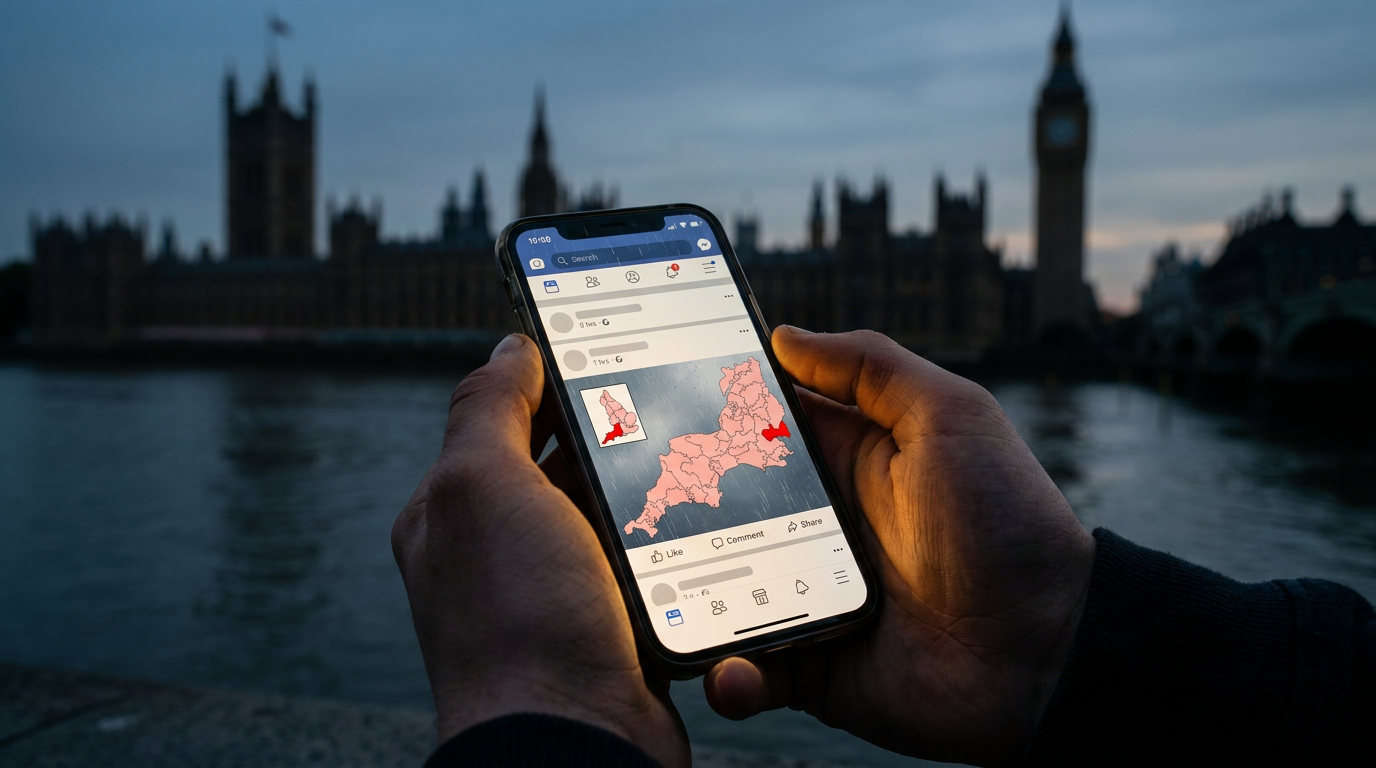
Prime Minister Keir Starmer is set to unveil sweeping legislation banning children under 16 from major social media platforms and imposing strict new rules on gaming apps. The 'Australia plus' model follows overwhelming parental support but faces intense scrutiny over privacy, enforcement, and the risk of pushing teens into unregulated spaces.
By Factlen Editorial Team
- Child Safety Advocates
- Argue that a blanket ban is the only way to protect children from the inherent harms of algorithmic social media.
- Privacy & Civil Liberties Groups
- Warn that the enforcement mechanisms required for the ban will create a mass surveillance apparatus.
- Tech & Cybersecurity Experts
- Question the technical feasibility of the ban and highlight the ease of bypassing it with VPNs.
What's not represented
- · Teenagers directly affected by the ban
- · Social media executives responsible for implementing the changes
Why this matters
This represents one of the most aggressive state interventions into digital life in Western history. If implemented, it will fundamentally alter how millions of teenagers interact, force tech giants to overhaul their platforms, and potentially require age-verification systems that affect the privacy of all adult internet users.
Key points
- The UK will ban under-16s from major social media apps like TikTok, Instagram, and X.
- The 'Australia plus' model includes curfews on infinite scrolling for under-18s after 8:30 PM.
- Gaming apps will be forced to remove features allowing children to chat with strangers.
- The policy follows a public consultation where 90% of parents supported a ban.
- Privacy experts warn enforcement will require all adults to submit ID, ending online anonymity.
- Polling shows 61% of Australian under-16s still access social media despite a similar ban.
UK Prime Minister Keir Starmer is preparing to announce sweeping legislation that will ban children under the age of 16 from accessing major social media platforms. The impending crackdown, described by government insiders as an "Australia plus" model, represents one of the most aggressive state interventions into digital life ever proposed by a Western democracy.[1][2]
The ban will target "high-risk" platforms, effectively locking young teenagers out of dominant apps such as TikTok, Instagram, Snapchat, X, and YouTube. The move follows a massive government consultation on children's online safety, which closed in late May and received more than 116,000 responses—making it the second-largest public consultation in British history.[1][2][6]
According to Technology Secretary Liz Kendall, the public mandate for the ban is overwhelming. Nine out of ten parents who responded to the consultation expressed support for barring under-16s from social media. Kendall has argued that tech companies have repeatedly failed to self-regulate, telling broadcasters that the industry has "had their chance to put this right" and that the government must now step in to protect children from toxic algorithms and online harm.[2][3][5]
While the core of the policy mirrors legislation recently passed in Australia, the UK's "Australia plus" approach goes significantly further by targeting the broader digital ecosystem. For platforms that are not subject to the outright ban—such as multiplayer gaming apps—new mandatory restrictions will be imposed, including the removal of features that allow children to chat with adult strangers.[1][5]

The proposed legislation also extends its reach to older teenagers. Under-18s will face a state-mandated digital curfew, with platforms required to disable highly addictive features like "infinite scrolling" after 8:30 PM. Furthermore, the government plans to completely ban under-18s from accessing romantic or sexual AI chatbots, a growing area of concern for child safety advocates.[1][2]
The catalyst for this hardline approach is a growing body of evidence linking social media use to severe mental health crises, cyberbullying, and exposure to inappropriate content among adolescents. Campaigners argue that children are currently growing up under constant algorithmic scrutiny, and that a blanket ban is the only effective way to shift the cultural expectation that children must be online simply because their peers are.[5][6]
However, the sheer scale of the proposed intervention has sparked intense backlash from privacy advocates, cybersecurity experts, and civil liberties groups. The primary point of contention is the mechanism of enforcement: to successfully ban under-16s, platforms must be able to definitively prove the age of every single user.[1][4]
However, the sheer scale of the proposed intervention has sparked intense backlash from privacy advocates, cybersecurity experts, and civil liberties groups.
Cybersecurity specialists warn that age verification sounds simple in theory but is fraught with technical and ethical landmines. Professor Alan Woodward of the University of Surrey noted that enforcing the ban "means age-verifying all of us." If platforms are required to ensure no child slips through the net, they will likely have to demand government-issued ID or facial scans from every adult user in the UK.[1][4]

This reality has alarmed organizations like Big Brother Watch, who argue the policy will lead to massive surveillance creep. Critics warn that forcing adults to hand over passports or credit card details to access platforms like X or YouTube effectively ends online anonymity, creating vast new databases of highly sensitive personal information that are vulnerable to breaches.[1][4]
Some political commentators have gone further, suggesting the child safety framing is a "convenient fig leaf" for a broader expansion of state monitoring. Writing in The Spectator, critics argued that eliminating online anonymity would allow the government to more easily monitor adult dissenters and whistleblowers who rely on pseudonymous accounts to speak safely.[4]
There are also profound doubts about whether the ban will actually work. The UK government has heavily cited Australia's Online Safety Amendment Act, which passed in late 2024 and imposes multimillion-dollar fines on platforms that fail to keep under-16s off their services. Yet, early data from Australia suggests the digital wall is highly porous.[6][7]
Recent polling indicates that 61% of Australian under-16s still have access to restricted social media apps. Tech-savvy teenagers frequently use Virtual Private Networks (VPNs) or falsified credentials to bypass geoblocks and age gates, leading critics to label the Australian legislation as "very thin scaffolding."[1][2][7]

Child psychologists and digital rights advocates have also warned of unintended consequences. By locking teenagers out of mainstream, moderated platforms, the ban could inadvertently push them into darker, unregulated corners of the internet where extreme content and predatory behavior are far more prevalent. Furthermore, a blanket ban cuts off vulnerable groups, such as LGBTQIA+ youth, from vital online support communities.[1][6]
The government is also bracing for legal challenges. Sources indicate that ministers face the threat of judicial review over the decision to ban certain platforms while allowing others to remain operational under restricted conditions. Defining exactly what constitutes a "social media platform" versus a messaging app or a forum will be a complex legislative hurdle.[1]
Despite these warnings, Downing Street appears resolute. Government sources have emphasized that there will be "no half measures," framing the legislation as a necessary cultural reset. As the UK prepares to draw one of the hardest digital lines in the Western world, the outcome will serve as a critical test case for whether a democratic state can successfully regulate the architecture of the modern internet.[1][5]
How we got here
January 2026
The UK government announces a public consultation on children's relationship with social media.
May 2026
The consultation closes with over 116,000 responses, showing massive parental support for a ban.
June 2026
Reports emerge that Prime Minister Keir Starmer will announce an 'Australia plus' ban.
Late 2024
Australia passes the Online Safety Amendment Act, banning under-16s from major platforms.
Viewpoints in depth
Child Safety Advocates
Argue that a blanket ban is the only way to protect children from the inherent harms of algorithmic social media.
This camp, which includes a vast majority of parents and numerous child protection charities, believes that tech companies have fundamentally failed to design safe products. They argue that features like infinite scrolling and algorithmic recommendations are inherently addictive and toxic to developing brains. For these advocates, the loss of some online communities is a necessary trade-off to stop the rising tide of youth mental health crises, cyberbullying, and exposure to predatory behavior.
Privacy & Civil Liberties Groups
Warn that the enforcement mechanisms required for the ban will create a mass surveillance apparatus.
Organizations like Big Brother Watch and various cybersecurity experts focus on the technical reality of the ban: to keep children off platforms, companies must verify the age of every user. This camp argues that forcing adults to submit government ID or biometric data to access the internet destroys online anonymity. They warn this infrastructure could easily be abused by future governments to monitor dissenters, and that centralized databases of user IDs will inevitably become targets for catastrophic data breaches.
Digital Youth Advocates
Highlight the unintended consequences of cutting teenagers off from the digital world.
This perspective emphasizes that social media is not universally harmful and often serves as a crucial lifeline for marginalized youth, such as LGBTQIA+ teenagers seeking community. They argue that a blanket ban is a blunt instrument that fails to teach digital literacy. Furthermore, they warn that tech-savvy teenagers will simply use VPNs to bypass the restrictions, potentially driving them into darker, entirely unregulated corners of the internet where the risks of exploitation are far higher.
What we don't know
- Exactly which apps will be classified as 'social media' versus messaging platforms.
- What specific age-verification technologies the government will mandate for enforcement.
- How the government plans to prevent teenagers from using VPNs to bypass the restrictions.
Key terms
- Australia Plus
- A term for the UK's proposed legislation, which adopts Australia's under-16 social media ban but adds further restrictions on gaming apps and older teenagers.
- Age Verification
- Technological methods used to confirm a user's age, which critics warn could require all users to submit government ID to access platforms.
- Infinite Scrolling
- A design feature that continuously loads new content as a user scrolls down, which the UK plans to ban for under-18s after 8:30 PM.
- Judicial Review
- A type of court proceeding in which a judge reviews the lawfulness of a decision or action made by a public body.
Frequently asked
Which apps are included in the ban?
The ban targets 'high-risk' major platforms, which is expected to include TikTok, Instagram, X, Snapchat, and YouTube.
What does 'Australia plus' mean?
It means the UK is going further than Australia's baseline ban by adding restrictions on gaming apps and imposing scrolling curfews on older teenagers.
Will adults have to provide ID to use social media?
Privacy experts warn this is highly likely, as platforms will need to verify the age of all users to ensure no under-16s access the service.
Can teenagers just use a VPN to get around it?
Yes, this is a major concern. In Australia, polling shows 61% of under-16s still access restricted apps, often using VPNs or falsified credentials.
Sources
Source coverage
7 outlets
3 viewpoints surfaced






[1]The GuardianTech & Cybersecurity Experts
Starmer to announce 'Australia plus' ban on social media for under-16s
Read on The Guardian →[2]The IndependentTech & Cybersecurity Experts
UK could ban under-16s from 'high risk social media apps'
Read on The Independent →[3]Sky NewsChild Safety Advocates
Minister hints at social media ban for under-16s
Read on Sky News →[4]The SpectatorPrivacy & Civil Liberties Groups
The real reason Keir Starmer is cracking down on social media
Read on The Spectator →[5]Manchester Evening NewsChild Safety Advocates
UK set to announce social media ban for under-16s
Read on Manchester Evening News →[6]House of Commons LibraryChild Safety Advocates
Proposals to ban social media for children
Read on House of Commons Library →[7]WikipediaTech & Cybersecurity Experts
Online Safety Amendment (Social Media Minimum Age) Act 2024
Read on Wikipedia →
More in news politics
See all 8 stories →Water Infrastructure
Supreme Court Upholds EPA's Strict 'Forever Chemical' Drinking Water Limits
0 sources

Electoral Reform
Evidence Pack: Does Ranked-Choice Voting Actually Reduce Political Polarization?
0 sources
U.S.-Iran Relations
U.S.-Iran Peace Deal Nears Signing Amid Fresh Israeli Strikes on Beirut and Hardliner Opposition
0 sources

U.S.-Iran War
The U.S.-Iran Peace Deal and the Beirut Strike Threatening It, Explained
0 sources

Every angle. Every day.
Get news politics stories with full source coverage and perspective breakdowns delivered to your inbox.