
The Science and Art of Aquascaping: How Underwater Gardens Are Transforming Mental Health
Aquascaping blends botany, chemistry, and design to create self-sustaining underwater ecosystems. Beyond aesthetics, the practice is gaining recognition for its profound mental health benefits and biophilic connection to nature.
By Factlen Editorial Team
- Naturalist Aquascapers
- Prefers a balanced, low-tech approach that mimics natural ecosystems without heavy technological intervention.
- High-Tech Enthusiasts
- Advocates for pushing the boundaries of aquatic plant growth using pressurized CO2 and intense lighting.
- Therapeutic Practitioners
- Focuses on the mental health, mindfulness, and biophilic benefits of designing and maintaining the aquatic ecosystem.
What's not represented
- · Animal Welfare Advocates
- · Marine Biologists
Why this matters
As urbanization disconnects people from the natural world, aquascaping offers a tangible, therapeutic way to bring a thriving ecosystem indoors. Understanding the science behind these miniature worlds empowers anyone to cultivate a living piece of art that actively reduces daily stress and anxiety.
Key points
- Aquascaping is the practice of creating self-sustaining, aesthetically pleasing underwater ecosystems using live plants, rocks, and driftwood.
- The hobby was revolutionized in the 1980s by Takashi Amano, who introduced the Zen-inspired Nature Aquarium style and pioneered CO2 injection.
- A successful aquascape relies on the nitrogen cycle, where beneficial bacteria convert toxic fish waste into nitrates that plants can absorb.
- High-tech setups use pressurized CO2 for rapid, vibrant growth, while low-tech setups rely on natural balance and hardy plants.
- Engaging with aquascaping provides measurable mental health benefits, including reduced blood pressure and lower anxiety levels.
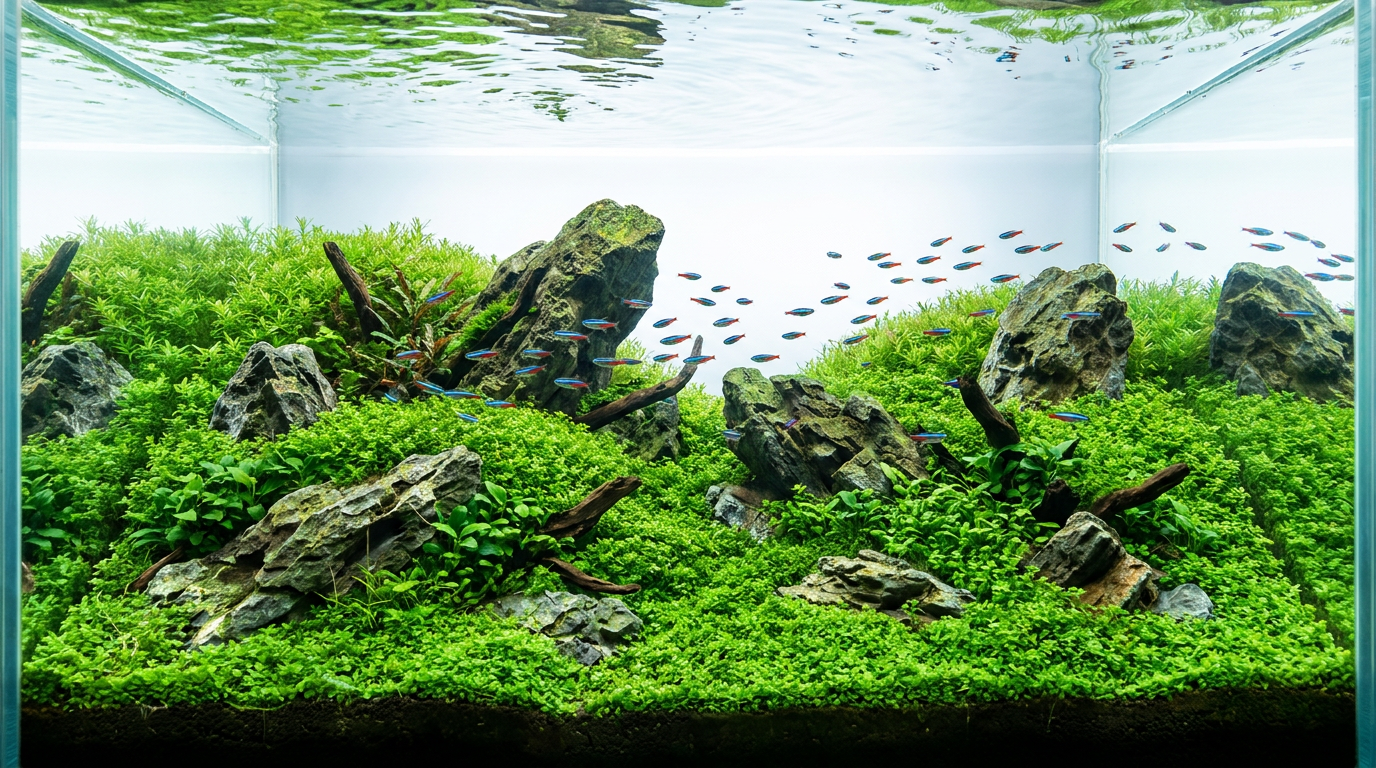
For decades, the standard home aquarium was defined by neon gravel, plastic castles, and bubbling treasure chests. The focus was entirely on the fish, with the environment serving as a mere backdrop. But a quiet revolution has transformed the glass box into a canvas for living art. Aquascaping—the meticulous craft of arranging aquatic plants, rocks, and driftwood into stunning underwater landscapes—has surged from a niche obsession into a global movement. It is a practice that blurs the line between interior design and biology, asking hobbyists to become both artists and chemists. Instead of simply keeping fish alive, the modern aquascaper aims to cultivate a thriving, self-sustaining ecosystem where flora and fauna exist in perfect equilibrium.[1][8]
At its core, aquascaping is an exercise in symbiosis. Every element placed within the tank, whether living or inanimate, serves a distinct biological and aesthetic purpose. The substrate provides a foundation for root systems while housing microscopic life; the hardscape—rocks and submerged wood—dictates the flow of water and creates territorial boundaries for aquatic life. The plants themselves act as the lungs and kidneys of the environment, oxygenating the water and absorbing organic waste. This delicate balance of form and function means that a successful aquascape cannot be built on visual appeal alone; it requires a deep, functional understanding of the natural sciences.[1]
The modern iteration of this hobby owes its existence to the late Takashi Amano, a Japanese professional cyclist and environmental photographer who fundamentally disrupted the aquarium industry in the 1980s. Prior to Amano, the dominant aesthetic was the "Dutch style," which treated the aquarium like a terrestrial flower garden, characterized by dense, orderly rows of colorful plants. Amano rejected this rigid symmetry. Drawing upon his observations of Japanese wetlands and forests, he introduced the "Nature Aquarium" concept. His philosophy was simple but profound: to create nature, one must first learn from nature.[1][4]
Amano infused aquascaping with the traditional Japanese aesthetic of wabi-sabi, which finds beauty in imperfection, asymmetry, and the natural passage of time. Instead of manicured rows, he built underwater dioramas that mimicked sweeping mountain ranges, dense rainforests, and tranquil riverbeds. He popularized the Iwagumi style, a minimalist approach relying on the careful placement of stones and low-growing carpet plants to create the illusion of vast, rolling meadows. By translating terrestrial landscapes into miniature aquatic worlds, Amano elevated the aquarium from a pet enclosure to a profound piece of living, breathing art.[1][4]
Yet, beneath the serene visual surface of any aquascape lies a violent, invisible chemical engine: the nitrogen cycle. In the confined space of a glass tank, fish waste, decaying plant matter, and uneaten food rapidly break down into ammonia. In a closed aquatic environment, ammonia is highly toxic; even trace amounts can burn the gills of fish and trigger catastrophic ecosystem collapse. The success of an aquascape relies entirely on the cultivator's ability to manage this invisible threat before a single fish is ever introduced to the water.[5][6]
The solution to the ammonia problem is entirely bacterial. A healthy aquascape relies on the cultivation of beneficial microbes, primarily Nitrosomonas and Nitrobacter. When a tank is properly "cycled"—a process that can take anywhere from three to six weeks—Nitrosomonas bacteria colonize the filter media and porous rocks, consuming the lethal ammonia and converting it into nitrites. Because nitrites are also dangerous to aquatic life, Nitrobacter bacteria then step in to convert those nitrites into nitrates. While nitrates are significantly less toxic, they will eventually build up and stress the ecosystem if left unchecked.[5][6]

This is where the aquatic plants perform their most crucial function. In a heavily planted aquascape, the flora acts as a massive biological filter, aggressively absorbing nitrates from the water column to fuel their own growth. It is a perfect, closed-loop recycling system. However, for plants to grow densely enough to process this waste, they require more than just light and nutrients; they require carbon. In the early days of the hobby, providing enough carbon for lush underwater growth was a nearly insurmountable challenge, limiting the types of plants that could survive submerged.[4][6]
This is where the aquatic plants perform their most crucial function.
The breakthrough that solved the carbon problem came from a moment of serendipity. According to aquarium lore, Takashi Amano was struggling to keep his submerged plants vibrant when he noticed the carbonated water he was drinking. In a flash of inspiration, he poured the sparkling water—rich in dissolved carbon dioxide—directly into his tank. The plants responded with explosive growth, releasing tiny pearls of oxygen as they photosynthesized. This accidental discovery led to the development of pressurized CO2 injection systems, a technological leap that permanently altered the trajectory of aquatic gardening.[4]
Today, the aquascaping community is broadly divided into two distinct methodologies: high-tech and low-tech. The high-tech approach embraces Amano's CO2 discovery to its absolute limits. These setups utilize pressurized carbon dioxide cylinders, regulators, and diffusers to constantly inject gas into the water. Paired with high-intensity LED lighting and strict, daily regimens of liquid fertilizers, the high-tech tank is essentially a turbocharged ecosystem designed to push botanical limits.[2][7]
The results of a high-tech system are undeniably spectacular. With abundant CO2 and light, aquatic plants can grow five to ten times faster than they would in natural conditions. This rapid metabolism allows aquascapers to cultivate demanding, vibrant red stem plants and dense, manicured carpets of greenery that cover the substrate like a golf course. However, this high-octane environment operates on a razor's edge. The accelerated growth demands constant maintenance, frequent pruning, and meticulous monitoring of water parameters to prevent the system from crashing.[2][7]

In stark contrast, the low-tech approach strips away the heavy machinery in favor of a slower, more natural equilibrium. Low-tech aquariums forgo pressurized CO2 entirely, relying instead on the ambient carbon dioxide naturally produced by the respiration of fish and soil bacteria. These setups utilize moderate lighting and nutrient-rich soil substrates, mimicking the slow, steady pace of a natural pond or stream. It is an exercise in patience rather than technological control.[2][7]
Because low-tech tanks lack the turbocharged inputs of their high-tech counterparts, they require a specific palette of flora. Aquascapers lean on hardy, shade-loving species like Anubias, Cryptocoryne, and Java Fern, which thrive in lower-energy environments. While the growth is undeniably slower and the colors lean heavily toward deep greens rather than vibrant reds, the low-tech tank offers a distinct advantage: stability. With less frequent pruning and a wider margin for error, it provides a deeply relaxing, low-maintenance entry point into the hobby.[2][7]
Beyond the chemistry and the botany, the explosive popularity of aquascaping is deeply rooted in human psychology. In an increasingly digitized and urbanized world, humans suffer from a deficit of nature. Aquascaping taps directly into biophilia—the innate human instinct to connect with the natural world and other living systems. By bringing a thriving, illuminated slice of a riverbed into a living room or office, the aquascape serves as a visceral, daily anchor to the natural environment.[3][8]
The psychological benefits of this connection are measurable and profound. Studies in environmental psychology have consistently shown that observing aquatic ecosystems can trigger physiological relaxation. The gentle sway of submerged leaves, the silent gliding of fish, and the soft sound of moving water combine to lower heart rates and reduce blood pressure. Clinical observations suggest that spending time watching a well-maintained aquarium can reduce symptoms of anxiety and depression, offering a serene escape from the relentless pace of modern life.[3]
Even the maintenance of the tank—often viewed as a chore in traditional fishkeeping—is reframed in aquascaping as a therapeutic ritual. The act of carefully trimming overgrown stems, cleaning the glass, and performing weekly water changes demands absolute focus and presence. This mindful immersion forces the aquascaper to disconnect from screens and stressors, entering a state of flow. The routine provides a sense of control, purpose, and tangible accomplishment as the underwater garden flourishes under their care.[3]

Yet, it is vital to acknowledge that aquascaping is not without its moments of intense frustration. Nature is inherently chaotic, and attempting to bottle it in a glass box invites uncertainty. A slight imbalance in lighting, a missed fertilizer dose, or an unexpected ammonia spike can trigger massive algae blooms that smother the plants and ruin months of careful design. The line between a pristine underwater paradise and a murky, algae-filled swamp is incredibly thin, requiring the hobbyist to constantly observe, adapt, and react to the ecosystem's feedback.[5][8]
Ultimately, aquascaping is much more than a decorative hobby; it is a masterclass in environmental stewardship. It teaches patience, resilience, and the profound interconnectedness of living things. Whether utilizing a high-tech CO2 system to paint with vibrant red flora or relying on the slow, steady hum of a low-tech natural tank, the aquascaper is participating in a quiet dialogue with nature. By learning the invisible rules of water chemistry and biology, they earn the rare privilege of holding a thriving, self-contained world in the palm of their hands.[1][8]
How we got here
1930s
The Dutch style of aquascaping emerges, treating aquariums like highly manicured, orderly underwater flower gardens.
1982
Takashi Amano founds Aqua Design Amano (ADA), beginning his push to revolutionize the aquarium industry.
Late 1980s
Amano discovers the benefits of CO2 injection by accidentally pouring carbonated water into his planted tank.
1992
Amano publishes 'Nature Aquarium World,' introducing the Zen-inspired Nature Aquarium style to a global audience.
2001
The first International Aquatic Plants Layout Contest (IAPLC) is held, cementing aquascaping as a competitive global art form.
Viewpoints in depth
High-Tech Enthusiasts
Focuses on pushing the boundaries of aquatic plant growth using technology.
This camp argues that injecting CO2 and using intense lighting allows for a broader palette of plants, particularly vibrant reds and dense carpets. They view the rigorous maintenance and precise chemical dosing not as a chore, but as the necessary price to elevate the hobby into a fine art form capable of breathtaking visual impact.
Naturalist Aquascapers
Advocates for a balanced, low-tech approach that mimics natural ecosystems.
Naturalists emphasize the importance of the nitrogen cycle, soil biology, and hardy plants over technological intervention. They argue that a slower, more stable environment is healthier for the aquatic life and more sustainable for the hobbyist, reducing the risk of catastrophic algae blooms and ecosystem crashes.
Therapeutic Practitioners
Views aquascaping primarily through the lens of mental health and biophilia.
This perspective highlights the psychological benefits of mindful maintenance and the stress-reducing properties of observing a thriving aquatic ecosystem. They position the tank as a vital tool for wellness and a daily anchor to nature, rather than just a visual display or a botanical experiment.
What we don't know
- The exact long-term psychological differences between maintaining a high-stress, high-tech tank versus a low-maintenance, low-tech setup.
- How climate change and shifting global temperatures might affect the availability and natural habitats of popular wild-sourced aquatic plant species.
- The full extent to which different spectrums of artificial LED lighting impact the circadian rhythms of the fish living within the aquascape.
Key terms
- Nitrogen Cycle
- The biological process where beneficial bacteria convert toxic fish waste (ammonia) into less harmful compounds (nitrates).
- Hardscape
- The non-living foundational elements of an aquascape, such as rocks, driftwood, and substrate.
- Iwagumi
- A minimalist Japanese aquascaping style that focuses primarily on the careful arrangement of stones and low-growing carpet plants.
- Biophilia
- The inherent human tendency to seek connections with nature and other forms of life.
- Wabi-sabi
- A traditional Japanese aesthetic philosophy that embraces the beauty of imperfection, transience, and natural growth.
Frequently asked
Do I need a CO2 injector to start aquascaping?
No. While high-tech setups use pressurized CO2 for rapid growth, low-tech setups rely on the natural CO2 produced by fish and bacteria, which is perfect for hardy plants like Java Fern.
How long does it take to cycle a new aquascape?
Establishing the beneficial bacteria for the nitrogen cycle typically takes three to six weeks before the environment is safe enough to introduce fish.
What is the difference between aquascaping and a regular fish tank?
A regular fish tank prioritizes the fish, often using artificial decorations. Aquascaping prioritizes the creation of a natural, living underwater landscape where plants and hardscape are the primary focus.
How do aquatic plants survive completely underwater?
Submerged plants absorb dissolved carbon dioxide and nutrients directly from the water column and substrate, using aquarium lighting to drive photosynthesis and release oxygen.
Sources
Source coverage
8 outlets
3 viewpoints surfaced




[1]Buce PlantNaturalist Aquascapers
What is Aquascaping: History, Origins, and Evolution
Read on Buce Plant →[2]AquatritionHigh-Tech Enthusiasts
Low Tech vs High Tech Planted Aquarium Setup: A Comprehensive Guide
Read on Aquatrition →[3]SJ WaveTherapeutic Practitioners
Aquascaping for Mental Health: A Guide to Serenity and Creativity
Read on SJ Wave →[4]The Museum of Aquarium and Pet HistoryNaturalist Aquascapers
At the Dawn of Zen Aquascaping
Read on The Museum of Aquarium and Pet History →[5]Aquarium StreetNaturalist Aquascapers
Water Chemistry Deep Science
Read on Aquarium Street →[6]East Ocean AquaticNaturalist Aquascapers
The Essential Guide to the Nitrogen Cycle in Aquariums
Read on East Ocean Aquatic →[7]AquaniaHigh-Tech Enthusiasts
High-tech vs low-tech aquarium
Read on Aquania →[8]Factlen Editorial TeamTherapeutic Practitioners
Synthesis by Factlen editorial team
Read on Factlen Editorial Team →

Every angle. Every day.
Get lifestyle stories with full source coverage and perspective breakdowns delivered to your inbox.