
Israel Strikes Beirut, Threatening Imminent US-Iran Peace Deal
An Israeli airstrike on Hezbollah targets in Beirut has jeopardized a highly anticipated agreement to end the 107-day war between the United States and Iran.
By Factlen Editorial Team
- Israeli Security Establishment
- Views the US-Iran deal as a security risk that empowers Hezbollah, justifying continued preemptive strikes.
- Iranian Leadership
- Demands that any bilateral peace with Washington must include a halt to Israeli attacks on its regional allies.
- Diplomatic Mediators
- Seeks to compartmentalize the conflicts to secure an immediate end to the direct US-Iran war.
What's not represented
- · Lebanese Civilians
- · European Union Diplomats
Why this matters
A collapse of the US-Iran peace agreement would prolong a 107-day conflict that has destabilized global energy markets and drawn multiple Middle Eastern nations into direct military confrontation.
Key points
- The US and Iran were reportedly hours away from signing a deal to end their 107-day war.
- Israel launched airstrikes on Beirut's southern suburbs, targeting a senior Hezbollah commander.
- Iran threatened to abandon the peace talks, insisting a ceasefire must include Lebanon.
- Israel argues the US-Iran deal is flawed because it ignores Iran's ballistic missiles and proxies.
- Qatari mediators are attempting emergency diplomacy in Tehran to salvage the agreement.
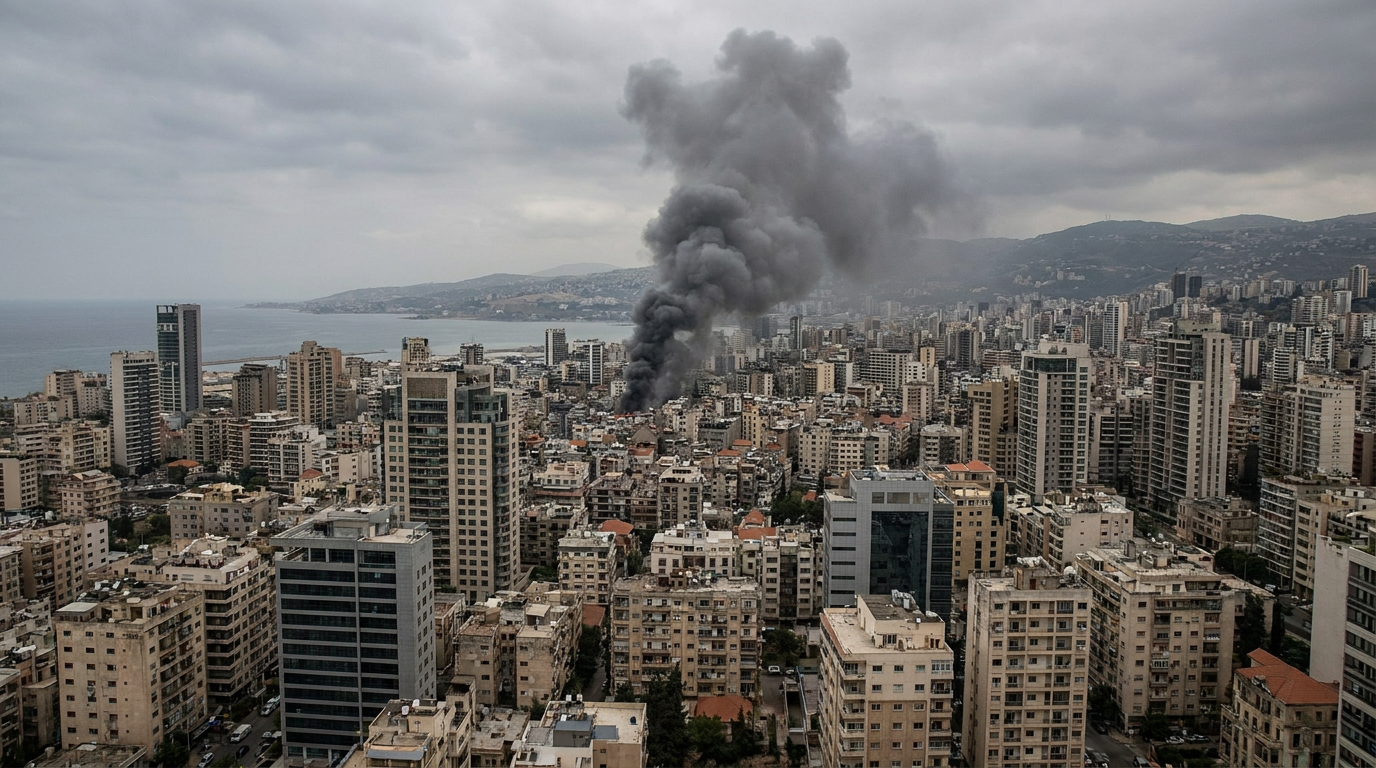
For the first time in over three months, a definitive end to the direct military confrontation between the United States and Iran appeared to be within hours of realization. Mediators from Qatar and Pakistan had painstakingly constructed a framework to halt the 107-day war, with signals from Washington and Islamabad suggesting a signing ceremony was imminent. However, the fragile diplomatic window was violently disrupted on Sunday morning when the Israeli military launched targeted airstrikes into the densely populated southern suburbs of Beirut.[2][3]
The strikes targeted the Dahiyeh district, a well-known stronghold for the Iran-backed militant group Hezbollah. Plumes of smoke and dust rose over the Lebanese capital as a five-story apartment building housing shops on its ground floor sustained heavy damage. Lebanon’s civil defense agency reported that the bombardment killed at least three people and wounded six others, sending panicked residents fleeing from a neighborhood that had only recently seen a return to relative calm.[2][5]
The timing of the Israeli operation immediately threatened to unravel the broader regional peace effort. Iranian officials, who have consistently demanded that any ceasefire with the United States must also encompass an end to Israeli military operations in Lebanon, reacted with swift condemnation. Mohammad Bagher Ghalibaf, Iran’s chief negotiator, publicly stated that there was "no point" in continuing peace talks with Washington if its closest regional ally continued to bomb Lebanese territory.[1][5]

Israel, which has found itself increasingly sidelined in the US-Iran negotiations, defended the Beirut strikes as a necessary and direct response to immediate security threats. The office of Israeli Prime Minister Benjamin Netanyahu, alongside Defense Minister Israel Katz, issued a joint statement declaring that the military would not tolerate Hezbollah firing projectiles into northern Israel. Earlier on Sunday, the Israel Defense Forces reported that three suspected Hezbollah drones had struck northern Israeli territory in separate incidents.[2][4][5]
According to the Israeli military, the primary target of the Dahiyeh strike was a senior command-and-control official belonging to Hezbollah’s elite Radwan Force. The IDF characterized the targeted facility as a central headquarters for the group's operations. Lebanese media outlets noted that the strike hit a building owned by the municipality of Haret Hreik, a central neighborhood within the district.[4]
According to the Israeli military, the primary target of the Dahiyeh strike was a senior command-and-control official belonging to Hezbollah’s elite Radwan Force.
The tactical exchange in Lebanon underscores a profound strategic rift between the United States and Israel regarding the terms of the impending deal with Tehran. Israeli officials have expressed deep disappointment with the proposed framework, arguing that it poses significant risks to Israel's national security. Their primary contention is that the agreement focuses too narrowly on halting the direct US-Iran hostilities while failing to address Iran’s ballistic missile capabilities or its continued arming of proxy forces across the region.[2][4]
From the Israeli perspective, the current deal would provide Tehran with crucial time and financial resources to rebuild its military strength, particularly by unfreezing billions of dollars in Iranian state assets. Israeli security officials fear this capital will inevitably flow to Hezbollah, limiting Israel's future ability to respond to threats on its northern border. Consequently, Israel has maintained its operational independence, continuing to strike Hezbollah infrastructure to degrade the group's capabilities regardless of the diplomatic timeline in Geneva or Tehran.[2][4]

For the United States, the priority remains extracting itself from a direct conflict with Iran that began in early March. The administration has relied heavily on regional partners to bridge the gap with Tehran. The proposed deal reportedly involves a comprehensive halt to direct military engagements and the release of frozen Iranian funds, though Iran has not publicly committed to dismantling its enriched uranium stockpiles, which are housed in subterranean facilities previously damaged by US strikes.[2]
The Beirut strike has now forced a diplomatic scramble. A Qatari delegation was reportedly traveling to Tehran on Sunday for emergency mediation efforts designed to preserve the agreement. The mediators face the daunting task of convincing Iranian leadership to compartmentalize the Lebanon theater from the broader US-Iran bilateral agreement, a concession Tehran has thus far been unwilling to make.[2][4]
The historical precedent for escalation in this conflict is deeply tied to the Israel-Lebanon dynamic. When Israel last struck the Beirut suburbs a week prior, it triggered a chain reaction that saw Iran launch missiles directly at Israel, which in turn prompted Israeli retaliatory strikes before a tenuous pause took hold. Hezbollah itself entered the current phase of the war on March 2, firing missiles into Israel just days after the initial US and Israeli attacks on Iran sparked the broader Middle East conflict.[1][2][5]

As the 24-hour window for the anticipated signing ceremony closes, the fate of the US-Iran deal hangs in the balance. Iranian officials have publicly questioned the timeline proposed by Washington, signaling that the ball is now in the United States' court to rein in Israeli military actions. Ibrahim Rezaei, spokesman for the National Security Committee in the Iranian parliament, issued a stark warning against any "mistake in calculation" by Israel or its allies.[4]
The coming days will test the limits of American leverage over both its primary adversary and its closest Middle Eastern ally. If the deal collapses, the region faces the prospect of a protracted, multi-front war with devastating implications for global stability. If it holds, it will likely do so over the vocal objections of an Israeli government that feels increasingly isolated in its assessment of the Iranian threat.[1][2][4]
How we got here
Early March 2026
US and Israeli attacks on Iran spark a direct military conflict.
March 2, 2026
Hezbollah fires missiles into Israel, opening a northern front in the war.
Early June 2026
An Israeli strike on Beirut triggers direct Iranian missile retaliation against Israel.
June 13, 2026
US and Pakistani officials indicate a US-Iran peace deal could be signed within 24 hours.
June 14, 2026
Israel strikes Hezbollah targets in Beirut, prompting Iran to threaten a withdrawal from peace talks.
Viewpoints in depth
Israeli Security Establishment
Argues the proposed US-Iran deal ignores critical regional threats and empowers proxy forces.
Israeli officials view the impending US-Iran agreement with deep skepticism, arguing that it prioritizes a swift American exit at the expense of long-term regional stability. By focusing primarily on halting direct US-Iran hostilities, Israel contends the deal fails to address Iran's ballistic missile program or its continued funding of Hezbollah. Unfreezing billions in Iranian assets, they argue, will inevitably lead to a rearmed Hezbollah on Israel's northern border. Consequently, Israel maintains it must retain operational freedom to strike Hezbollah targets in Lebanon, regardless of how those strikes impact Washington's diplomatic timeline.
Iranian Leadership
Insists that any bilateral peace with the US must include protections for its regional allies.
Tehran approaches the negotiations with a demand for comprehensive regional de-escalation. Iranian negotiators argue that a ceasefire with the United States is meaningless if Washington's primary ally, Israel, continues to assassinate commanders of the Axis of Resistance in Lebanon and Syria. By threatening to walk away from the table following the Beirut strike, Iran is attempting to force the US to exert leverage over Israel, making a halt to Israeli operations in Lebanon a prerequisite for the release of frozen funds or the cessation of direct US-Iran hostilities.
US and Regional Mediators
Focused on compartmentalizing the conflict to secure an immediate end to the direct US-Iran war.
The administration, alongside mediators from Qatar and Pakistan, is attempting a delicate diplomatic balancing act: securing a historic bilateral peace deal with Iran while managing an increasingly independent Israeli military strategy. Mediators argue that ending the direct 107-day war between Washington and Tehran is the necessary first step to broader regional stability. They are pushing both sides to compartmentalize—urging Iran not to let the Lebanon conflict derail the unfreezing of its funds, while quietly pressing Israel to moderate its strikes during sensitive negotiating windows.
What we don't know
- Whether Iran will formally withdraw from the negotiations or compartmentalize the Lebanon strikes.
- If the United States will apply new pressure on Israel to halt operations in Beirut.
- The exact status of Iran's enriched uranium stockpiles under the proposed deal framework.
Key terms
- Dahiyeh
- A predominantly Shia Muslim suburb south of Beirut that serves as a major political and military stronghold for Hezbollah.
- Radwan Force
- An elite special operations unit of Hezbollah, tasked with cross-border infiltrations and advanced tactical operations against Israel.
- Frozen Funds
- Billions of dollars in Iranian state assets held in foreign banks that have been inaccessible to Tehran due to international sanctions.
Frequently asked
Why did Israel strike Beirut now?
Israel stated the strike was a direct response to Hezbollah firing drones and missiles into northern Israel, targeting a senior command-and-control official.
What is in the proposed US-Iran deal?
The framework reportedly includes a halt to direct US-Iran military hostilities and the release of billions of dollars in frozen Iranian funds.
Why is Israel opposed to the US-Iran agreement?
Israeli officials argue the deal fails to address Iran's ballistic missiles and will provide Tehran with funds to rearm proxy groups like Hezbollah.
How does the Lebanon conflict affect the US-Iran talks?
Iran insists that any peace agreement with the US must also include a ceasefire in Lebanon, making Israeli strikes a potential dealbreaker.
Sources
Source coverage
5 outlets
3 viewpoints surfaced





[1]AxiosIranian Leadership
Iran warns Israel's Beirut strike could derail U.S. deal
Read on Axios →[2]CBC NewsIsraeli Security Establishment
Israeli military strikes Beirut suburbs ahead of anticipated U.S.-Iran deal
Read on CBC News →[3]Al JazeeraDiplomatic Mediators
Israel bombs southern Beirut as Iran and US close in on deal
Read on Al Jazeera →[4]The Media LineIsraeli Security Establishment
Israel Targets Hezbollah Commander in Beirut Amid Iran Deal Push
Read on The Media Line →[5]CNAIranian Leadership
Three dead as Israel strikes Hezbollah in Beirut's southern suburbs
Read on CNA →


Every angle. Every day.
Get news politics stories with full source coverage and perspective breakdowns delivered to your inbox.