
The Hidden Engine in Your Next Phone: Why On-Device AI is Changing How We Shop for Tech
Smartphones in 2026 are shifting from cloud-dependent portals to locally intelligent devices, fundamentally altering the hardware specs and privacy standards consumers need to look for.
By Factlen Editorial Team
- Privacy & Security Advocates
- Prioritizing local processing to ensure sensitive user data never leaves the physical device.
- Consumer Market Researchers
- Analyzing how AI features drive consumer purchasing decisions and market growth.
- Hardware & Performance Analysts
- Focusing on the physical toll that local AI processing takes on smartphone components.
What's not represented
- · App Developers
- · Budget Consumers
Why this matters
Understanding the difference between on-device and cloud AI is critical for your next smartphone purchase, as it directly impacts your digital privacy, battery life, and how much storage you need to buy. Choosing the right hardware ensures your most sensitive data stays in your pocket rather than on a distant server.
Key points
- In 2026, smartphones are shifting from cloud-dependent portals to locally intelligent devices powered by Neural Processing Units (NPUs).
- On-device AI processes data directly on the phone, offering absolute privacy for sensitive information and zero-latency offline capabilities.
- The hardware demands of local AI have established 256GB of storage and 8GB of RAM as the new minimum standards for smartphone buyers.
- Running heavy generative AI tasks locally can drain batteries up to 50 times faster, creating a paradox for hardware manufacturers.
- Modern devices use a hybrid 'Agentic AI' approach, seamlessly routing lightweight tasks to the NPU and complex tasks to cloud servers.
In 2026, buying a new smartphone is no longer just about comparing megapixel counts or screen sizes. The defining feature of this year's upgrade cycle is artificial intelligence. But unlike the chatbots of the early 2020s, the AI in modern phones has fundamentally changed where the actual "thinking" happens, forcing consumers to rethink what specs matter most.[3]
For years, smartphones acted as mere portals to intelligence. When you asked a voice assistant a question or requested a complex photo edit, your device sent that data over the internet to massive server farms, processed it, and beamed the result back. This architecture is known as Cloud AI.[1]
Today, the industry is undergoing a massive shift toward On-Device AI. This means the artificial intelligence models are downloaded and run entirely on the phone's internal hardware, without ever needing an internet connection. It transforms the phone from a passive communicator into an active, independent brain.[1][7]
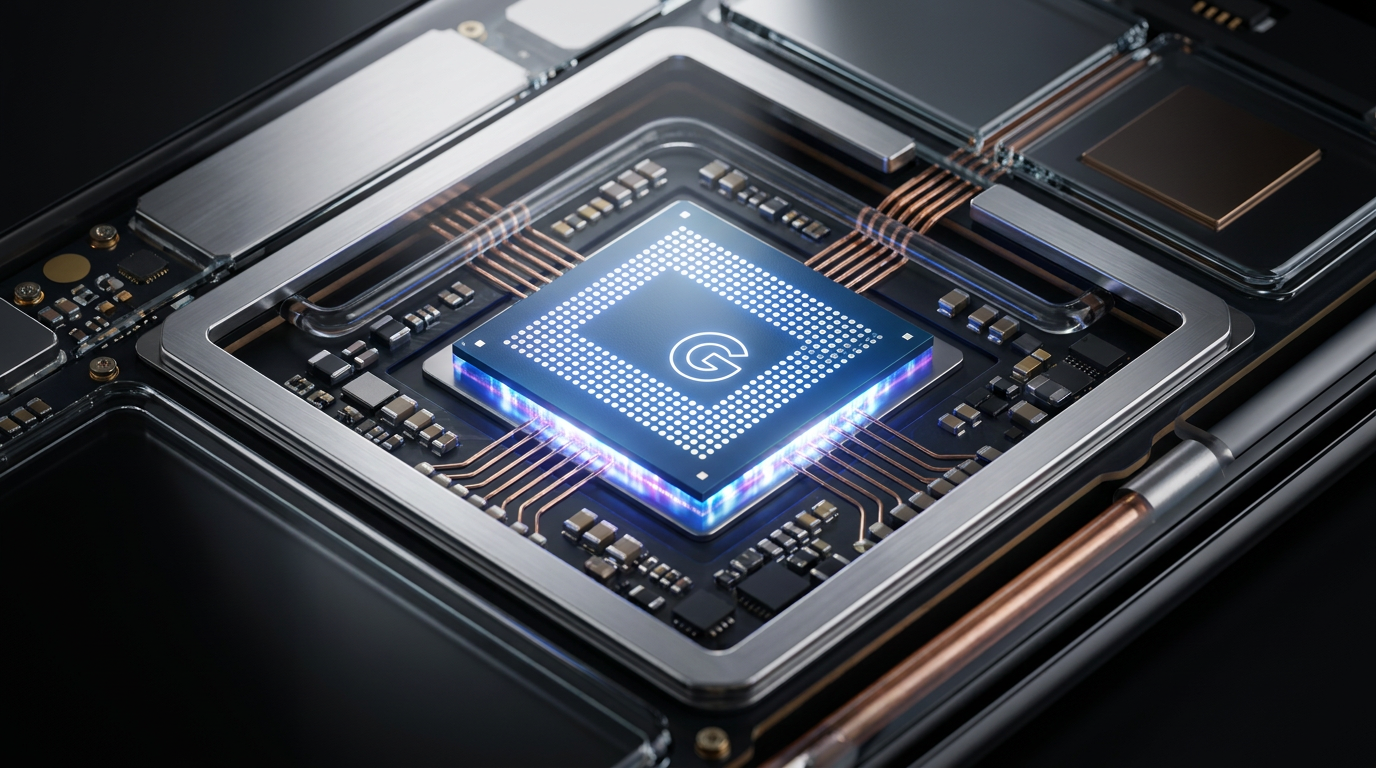
The mechanism driving this shift is the Neural Processing Unit, or NPU. While a phone's CPU handles general tasks and the GPU renders graphics, the NPU is a specialized microchip designed exclusively to run machine learning algorithms efficiently without melting the device.[1][4]

Why does this matter for your next purchase? The primary advantage of on-device AI is absolute privacy. When a phone processes live translation during a phone call or scans your messages to suggest replies, that highly sensitive data never leaves your physical device.[7]
Security advocates argue this local processing is a non-negotiable feature for the future of mobile computing. By keeping biometric data, personal photos, and daily routines out of centralized cloud servers, on-device AI eliminates the risk of that data being intercepted in transit or exposed in a massive server breach.[1][7]
The second major benefit is zero latency. Cloud AI is inherently limited by network speeds; a poor cellular connection means a slow, frustrating, or failed response. On-device AI, by contrast, operates instantly, regardless of your signal strength.[8]
This speed enables features that simply wouldn't work over the cloud. For instance, modern AI cameras use local processing to recognize scenes, adjust lighting, and stabilize video frame-by-frame in real time before you even press the shutter button.[5][8]
This speed enables features that simply wouldn't work over the cloud.
However, this localized intelligence comes with significant hardware demands, fundamentally changing the baseline specs you should look for when shopping. Because AI models are essentially massive files containing billions of parameters, they require immense storage space.[4]
Industry analysts note that 128GB of storage is no longer sufficient for a modern smartphone. With on-device AI models consuming up to 40 to 60 gigabytes of dedicated space just to exist on the phone, 256GB has become the new absolute minimum standard for buyers in 2026.[4]

Memory requirements have similarly skyrocketed. Running complex AI models locally requires the phone to hold vast amounts of data in its active memory. Consequently, 8GB of RAM is now considered the baseline for smooth daily operation, while power users are advised to seek 12GB to 16GB.[4]
Then there is the complex issue of battery life—perhaps the most contested aspect of the on-device AI revolution. On one hand, AI software is frequently used to optimize battery usage, learning your daily habits to freeze unused apps and manage power draw efficiently.[5][8]
On the other hand, the actual execution of generative AI tasks on a mobile device is incredibly power-hungry. Hardware researchers have demonstrated that running heavy processes, like generating images locally via models such as Stable Diffusion, can drain a battery up to 50 times faster than sending the same task to the cloud.[6]
This creates a paradox for smartphone manufacturers: the NPU makes the phone smarter and more private, but utilizing it heavily requires significantly larger batteries and advanced cooling systems to prevent overheating during intensive tasks.[6]

Because of these hardware limitations, the reality of 2026 smartphones is a hybrid approach. Devices do not rely exclusively on either method. Instead, they use "Agentic AI"—systems that intelligently decide where a task should be processed based on its complexity.[2][7]
For lightweight, privacy-sensitive tasks like predictive text, facial recognition, or organizing your photo gallery, the phone uses its local NPU. But if you ask your phone to generate a complex video or summarize a massive document, the operating system quietly routes that request to the cloud, where massive server GPUs can handle the heavy lifting.[2][7]
Market intelligence forecasts indicate that this AI-driven upgrade cycle is expected to fuel an 8% growth in the global telecom sector this year. Consumers are increasingly prioritizing these intelligent, seamless integrations over traditional hardware upgrades like slightly thinner bezels.[2]
Ultimately, when shopping for a smartphone in 2026, the "AI" label shouldn't be viewed as a single feature, but as a fundamental architectural shift. Buyers must weigh their desire for privacy and instant offline capabilities against the need for higher storage, more RAM, and the premium price tags that accompany these advanced local processors.[3][4]
How we got here
Early 2020s
AI features rely almost entirely on cloud processing, requiring constant internet connectivity and raising privacy concerns.
Late 2023
Hardware manufacturers begin integrating dedicated Neural Processing Units (NPUs) into flagship mobile processors.
2024-2025
The industry debates the trade-offs between the speed of on-device AI and the raw power of massive cloud-based models.
Early 2026
256GB storage and 8GB RAM become the baseline standard to accommodate the massive file sizes of local AI models.
Mid 2026
Agentic AI emerges as the standard, allowing phones to intelligently route tasks between local NPUs and cloud servers.
Viewpoints in depth
Privacy & Security Advocates
Prioritizing local processing to ensure sensitive user data never leaves the physical device.
This camp argues that the true value of 2026 smartphones lies in data sovereignty. By keeping tasks like voice transcription, biometric scanning, and message analysis strictly on the NPU, users are protected from mass data collection and server-side breaches. They view on-device AI not just as a speed enhancement, but as a fundamental human right to digital privacy in an increasingly tracked world.
Hardware & Performance Analysts
Focusing on the physical toll that local AI processing takes on smartphone components.
Hardware experts emphasize the hidden costs of the on-device AI revolution. They point out that running complex models locally requires massive amounts of RAM, vast storage capacities, and significant power draw. This camp warns consumers that while local AI is powerful, it necessitates buying more expensive, higher-spec devices and can lead to faster battery degradation if not managed properly by the operating system.
Consumer Market Researchers
Analyzing how AI features drive consumer purchasing decisions and market growth.
Market analysts view the shift toward AI smartphones as the catalyst for a massive industry upgrade cycle. They note that consumers are no longer excited by minor camera tweaks; instead, they are buying 'Agentic AI' capabilities that seamlessly orchestrate their digital lives. This perspective highlights that the most successful devices in 2026 are those that perfectly balance local and cloud processing to deliver a frictionless user experience.
What we don't know
- How quickly mid-range and budget smartphones will be able to adopt the expensive NPU hardware currently reserved for premium flagships.
- Whether future battery technology breakthroughs can keep pace with the massive power draw required by increasingly complex on-device AI models.
- How regulatory bodies will treat the distinction between local and cloud AI when drafting future data privacy legislation.
Key terms
- On-Device AI
- Artificial intelligence algorithms that run entirely on a smartphone's internal hardware rather than relying on internet-connected servers.
- Cloud AI
- Artificial intelligence processing that occurs on massive, remote server farms, requiring the device to send and receive data over the internet.
- NPU (Neural Processing Unit)
- A specialized microchip inside modern smartphones designed specifically to execute machine learning and AI tasks efficiently.
- Agentic AI
- Advanced AI systems that can interpret context and autonomously coordinate tasks across multiple apps or decide whether to process data locally or in the cloud.
- Generative AI
- A type of artificial intelligence capable of creating new content, such as text, images, or audio, based on user prompts.
Frequently asked
Can I use AI features without an internet connection?
Yes, if the feature relies on on-device AI. Tasks like live translation, predictive text, and basic photo editing are processed locally by the phone's NPU and work perfectly offline.
Why do 2026 smartphones need so much storage?
On-device AI models are essentially massive data files. They can take up 40 to 60 gigabytes of space permanently, making 256GB the new minimum recommended storage for new buyers.
Does on-device AI drain the battery faster?
It depends on the task. While AI helps optimize background app usage to save power, actively running heavy generative AI tasks locally requires immense processing power and can drain the battery significantly faster than cloud processing.
Is my data safer with on-device AI?
Yes. Because the data processing happens entirely on your phone's internal hardware, sensitive information like voice recordings, private messages, and biometric data never travels across the internet to external servers.
Sources
Source coverage
8 outlets
3 viewpoints surfaced








[1]DeviceDecodePrivacy & Security Advocates
On-Device AI vs Cloud AI: Understanding the Tech in Your Pocket
Read on DeviceDecode →[2]NielsenIQConsumer Market Researchers
2026 Smartphone Forecast: AI-Driven Upgrade Cycle
Read on NielsenIQ →[3]Mobile VerseConsumer Market Researchers
AI Smartphones 2026: Worth Buying or Just Hype?
Read on Mobile Verse →[4]TechInDeepHardware & Performance Analysts
AI-Powered Smartphones 2026: Your Complete Guide
Read on TechInDeep →[5]Boost MobileConsumer Market Researchers
Which Phone Has the Best AI Features?
Read on Boost Mobile →[6]EnovixHardware & Performance Analysts
The Hidden Cost of On-Device AI: Battery Demands
Read on Enovix →[7]Gadgets FocusPrivacy & Security Advocates
On-Device AI vs Cloud AI Privacy Comparison
Read on Gadgets Focus →[8]LAGENIOConsumer Market Researchers
Top 10 AI Features on Android Phones in 2026
Read on LAGENIO →


Every angle. Every day.
Get shopping stories with full source coverage and perspective breakdowns delivered to your inbox.