
U.S. and Iran Near Peace Deal to Reopen Strait of Hormuz, Though Timelines Clash
President Trump announced a U.S.-Iran peace agreement will be signed Sunday to end the three-month conflict and reopen the Strait of Hormuz, though Iranian officials caution a final date has not been set.
By Factlen Editorial Team
- U.S. Diplomatic View
- Emphasizes total nuclear disarmament and the immediate, unrestricted reopening of the Strait of Hormuz.
- Iranian Pragmatist View
- Seeks an end to the U.S. naval blockade and the unfreezing of assets while maintaining some regional leverage.
- Geopolitical Skeptics
- Focuses on the fragility of the truce, unresolved toll disputes, and domestic hardliner pushback in Iran.
What's not represented
- · Commercial Shipping Companies
- · Israeli Leadership
- · European Energy Importers
Why this matters
The reopening of the Strait of Hormuz would immediately relieve global oil and natural gas markets, which have been choked by the three-month conflict. A finalized deal would also halt direct military engagements in the Middle East and set the stage for new restrictions on Iran's nuclear program.
Key points
- President Trump announced a U.S.-Iran peace deal is scheduled for Sunday, promising to reopen the Strait of Hormuz.
- Iranian officials denied the Sunday timeline but acknowledged an agreement is likely in the coming days.
- Pakistani Prime Minister Shehbaz Sharif, mediating the talks, anticipated an electronic signing within 24 hours.
- The proposed memorandum would lift the U.S. naval blockade on Iranian ports and set a 60-day window for nuclear talks.
- Hardline factions in Iran have protested the emerging deal, accusing negotiators of making too many concessions.
The United States and Iran appear on the verge of signing a landmark memorandum of understanding to end their three-month military conflict, though the two nations remain at odds over the exact timeline. On Saturday, U.S. President Donald Trump announced that a peace deal was scheduled to be signed on Sunday, declaring that the agreement would permanently curb Tehran's nuclear ambitions and immediately reopen the strategic Strait of Hormuz to global shipping.[1][3][5]
Iranian officials swiftly pushed back on the Sunday timeline, injecting a note of caution into the diplomatic breakthrough. Iran's Foreign Ministry spokesperson Esmaeil Baqaei stated that while an agreement in the coming days could not be ruled out, the signing "will not be tomorrow." The conflicting messaging highlights the fragile nature of the negotiations as both sides attempt to project strength to their domestic audiences after 107 days of war.[2][4]
The diplomatic effort has been heavily mediated by Pakistan, which has served as the primary conduit between Washington and Tehran. Pakistani Prime Minister Shehbaz Sharif expressed high confidence in the process, stating that the deal was closer than ever and that Islamabad was preparing for an "electronic signing" within 24 hours. Sharif noted that this initial signing would be followed by technical-level talks the following week to iron out the complex logistics of the ceasefire.[1][6]

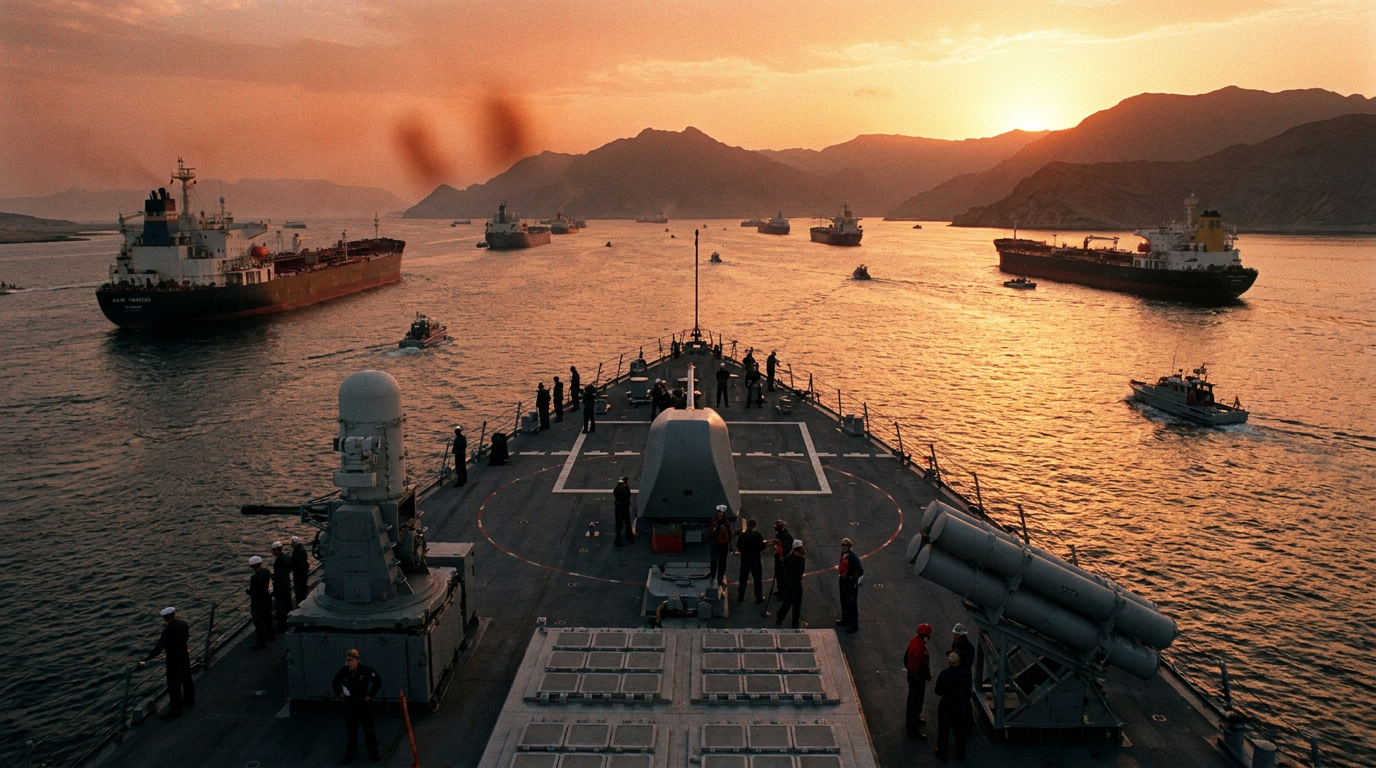
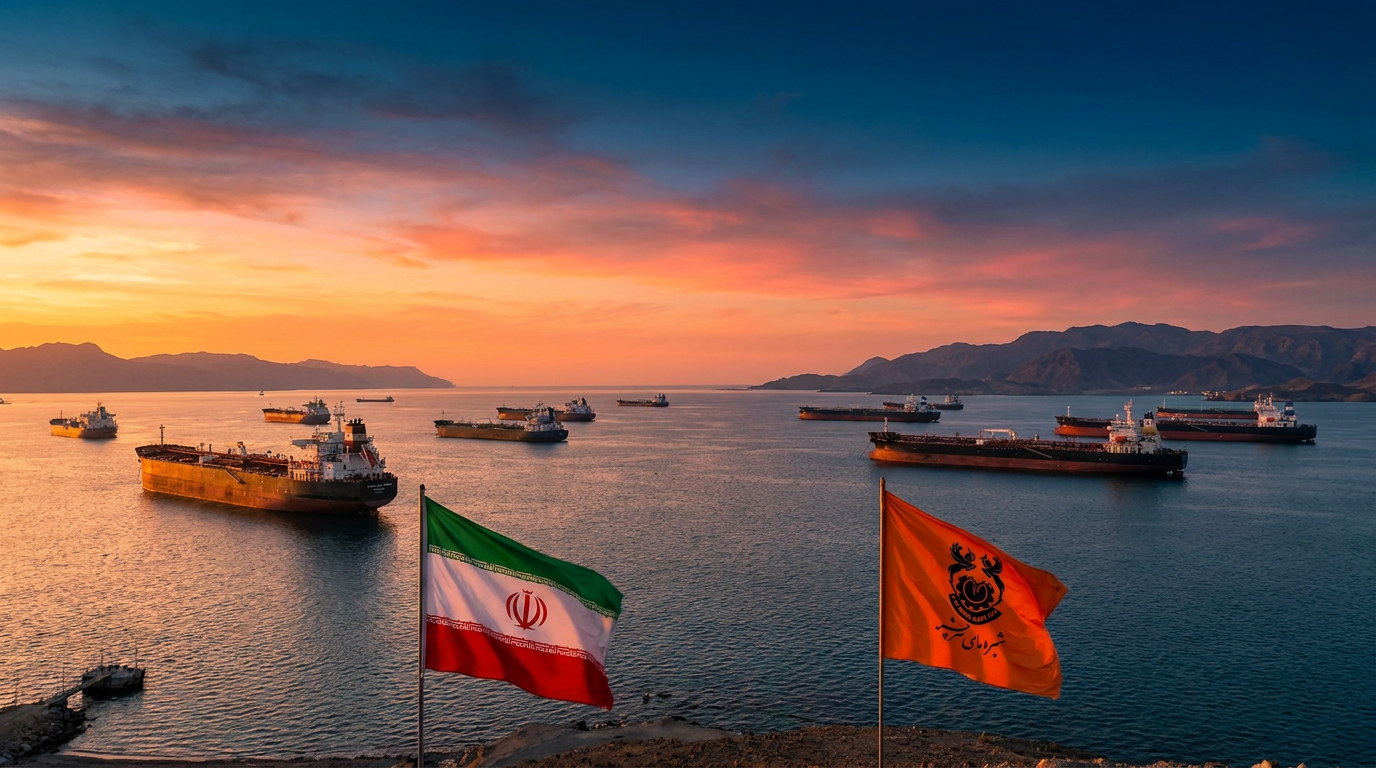
The most immediate global impact of the deal would be the reopening of the Strait of Hormuz, a vital maritime chokepoint that handles roughly one-fifth of the world's oil supply. Iran blockaded the waterway early in the conflict, sending energy markets into turmoil and prompting the U.S. to impose a retaliatory naval blockade on Iranian ports. Trump assured the public that the strait would be "open to all" immediately upon signing, with no mention of transit restrictions.[3][7]
Iran blockaded the waterway early in the conflict, sending energy markets into turmoil and prompting the U.S.
However, the administration of the waterway remains a deeply contested issue. Iranian Foreign Minister Abbas Araghchi recently stated that Iran expects to charge commercial ships "for services rendered" when transiting the strait, a toll system the U.S. and its allies have condemned as a violation of international law. Araghchi emphasized that the administration of the strait "will no longer be the same as before," framing it as a core instrument of Iranian deterrence.[3][6]

The nuclear component of the agreement also features starkly different public framings. Trump proclaimed the deal "A WALL TO NO NUCLEAR WEAPON," claiming Iran had agreed to abandon its nuclear program entirely. He added that the U.S. would eventually deploy B-2 bombers to retrieve and destroy Iranian enriched uranium "buried deep under the powerful sunken granite mountains." Iranian media, conversely, has framed the nuclear provisions as a 60-day window for renewed negotiations rather than an immediate capitulation.[3][7]
The proposed concessions have sparked fierce domestic backlash within Iran. Hardline factions organized protests outside a foreign ministry office in Mashhad, chanting slogans against Araghchi and accusing the negotiating team of surrendering Iran's strategic leverage over the Strait of Hormuz. These domestic pressures may explain Tehran's reluctance to commit to Trump's rapid Sunday timeline, as leadership navigates internal dissent.[3]

Despite the diplomatic optimism, the reality on the ground remains volatile. Early Saturday, the U.S. military's Central Command reported shooting down multiple Iranian one-way attack drones in the Strait of Hormuz that were allegedly targeting commercial vessels. The skirmishes underscore the urgency of finalizing the memorandum before sporadic violence derails the fragile truce that has largely held since early April.[3][5]
How we got here
Feb 2026
The U.S. and Israel launch military operations, sparking a regional war and the closure of the Strait of Hormuz.
April 8, 2026
A temporary truce pauses the worst of the direct military engagements between the warring parties.
June 12, 2026
Mediators indicate the U.S. and Iran are nearing a memorandum of understanding to extend the ceasefire.
June 13, 2026
President Trump announces the deal will be signed Sunday, a timeline Iranian officials quickly dispute.
Viewpoints in depth
The U.S. Administration's View
Washington frames the deal as a definitive victory that neutralizes Iran's nuclear threat and secures global shipping.
President Trump and U.S. officials are projecting absolute confidence that the memorandum of understanding achieves their primary war aims. By insisting the Strait of Hormuz will be 'open to all' immediately, the administration is signaling zero tolerance for Iran's proposed toll system. Furthermore, Trump's rhetoric about retrieving and destroying 'Nuclear Dust' frames the agreement not just as a ceasefire, but as the permanent dismantling of Iran's nuclear capabilities, fulfilling a long-standing U.S. strategic objective.
The Iranian Government's View
Tehran views the agreement as a necessary step to lift crippling blockades while preserving its regional deterrence.
For Iranian pragmatists and the Foreign Ministry, the immediate priority is ending the U.S. naval blockade on Iranian ports and unfreezing billions in assets. However, they are careful not to frame the deal as a surrender. By publicly contradicting Trump's Sunday timeline and insisting that the administration of the Strait of Hormuz 'will no longer be the same,' Iranian officials are attempting to project strength. They view the 60-day window for nuclear talks as a framework for negotiation, rather than an immediate capitulation.
Iranian Hardliners' View
Conservative factions in Iran view the proposed concessions as a dangerous surrender of strategic leverage.
Hardline elements within Iran are fiercely resisting the diplomatic breakthrough, viewing the loss of absolute control over the Strait of Hormuz as a strategic defeat. Protests outside the foreign ministry in Mashhad highlight the domestic political minefield the Iranian negotiating team must navigate. These factions argue that opening the strait without securing guaranteed toll revenues or a total U.S. withdrawal deprives Tehran of its most potent instrument of deterrence against future Western pressure.
What we don't know
- Whether Iran will be permitted to charge transit tolls in the Strait of Hormuz.
- The exact mechanism and timeline for the U.S. to retrieve and destroy Iranian enriched uranium.
- How the agreement will enforce a cessation of hostilities on the Israel-Hezbollah front.
Key terms
- Strait of Hormuz
- A critical maritime chokepoint between the Persian Gulf and the Gulf of Oman, through which roughly 20% of the world's oil passes.
- Memorandum of Understanding (MOU)
- A formal, non-binding agreement outlining the broad terms of a deal before technical specifics are finalized.
- Naval Blockade
- An act of war where a country uses its military to prevent vessels, goods, and people from entering or leaving another country's ports.
Frequently asked
Will the Strait of Hormuz reopen immediately?
President Trump stated the strait would open 'immediately' to all shipping upon signing. However, Iranian officials have previously demanded the right to charge transit tolls, leaving the exact mechanism contested.
Does this deal end Iran's nuclear program?
The U.S. claims the deal permanently prevents Iran from obtaining a nuclear weapon, with plans to destroy enriched uranium. Iranian sources describe it as a 60-day window for further nuclear negotiations.
Why is Pakistan involved in the talks?
Pakistan has acted as the primary diplomatic mediator between Washington and Tehran during the 107-day conflict, facilitating the proposed memorandum of understanding.
When will the agreement actually be signed?
While the U.S. announced a Sunday signing, Iran's Foreign Ministry stated it would not happen Sunday but could occur in the coming days. Pakistan anticipates an electronic signing within 24 hours.
Sources
Source coverage
7 outlets
3 viewpoints surfaced







[1]The GuardianGeopolitical Skeptics
Middle East crisis live: Trump says Iran deal will be signed today but Tehran casts doubt on timing
Read on The Guardian →[2]Al JazeeraIranian Pragmatist View
Iran war day 107: Washington, Tehran close to signing first stage of deal
Read on Al Jazeera →[3]CBS NewsU.S. Diplomatic View
Iran peace deal to be signed Sunday and strait reopened immediately, Trump says
Read on CBS News →[4]The HinduIranian Pragmatist View
West Asia war LIVE: Trump says U.S.-Iran deal to be signed today, Hormuz to open afterward
Read on The Hindu →[5]The NationalU.S. Diplomatic View
Trump says Strait of Hormuz will 'immediately open to all' after US-Iran deal is signed on Sunday
Read on The National →[6]PBSU.S. Diplomatic View
What to know about a possible U.S.-Iran deal to end the war
Read on PBS →[7]Council on Foreign RelationsGeopolitical Skeptics
The United States and Iran are reportedly close to a long-awaited agreement
Read on Council on Foreign Relations →

More in news politics
See all 7 stories →Media Literacy
Does 'Prebunking' Actually Work? The Evidence Behind the New Strategy to Fight Misinformation
0 sources

Shadow Fleet
UK Forces Seize Russian Shadow Fleet Oil Tanker in the English Channel
0 sources

Media Consolidation
Justice Department Approves $111 Billion Paramount and Warner Bros. Merger
0 sources
US-Iran Relations
U.S. and Iran Near Peace Deal to End War, But Timeline for Signing Remains Disputed
0 sources
Every angle. Every day.
Get news politics stories with full source coverage and perspective breakdowns delivered to your inbox.