
The Protégé Effect: Why Teaching Others is the Best Way to Learn
Cognitive science reveals that shifting from a passive student to an active teacher dramatically improves memory retention, comprehension, and academic performance.
By Nabil Faris

In short
- Teaching a concept to someone else is scientifically proven to be one of the most effective ways to learn it.
- The Protégé Effect forces the brain to organize information logically and exposes hidden gaps in understanding.
- Even the mere expectation of having to teach material changes how the brain encodes new information.
Every student and lifelong learner has experienced the illusion of competence. You read a chapter, highlight the key phrases, and nod along with the author’s logic. The material feels intuitive and fully grasped. Yet, when a blank exam page appears or a colleague asks a direct question, the knowledge evaporates. This happens because passive study methods—like re-reading and highlighting—excel at building recognition, but they fail to build retrieval. We confuse the ease of reading with the mastery of understanding.[4]
Cognitive science offers a powerful, uplifting alternative to this frustrating cycle: the Protégé Effect. This psychological phenomenon reveals that the single most effective way to learn a complex topic is to teach it to someone else. When individuals shift their mindset from being a passive consumer of information to an active educator, their brains process the material more deeply, organize it more logically, and retain it significantly longer.[1]
The core premise of the Protégé Effect is that teaching demands a higher cognitive standard than simply reading. To explain a concept to another person, you cannot hide behind vague assumptions or academic jargon. You are forced to actively engage with the material, break it down into its component parts, and reconstruct it in a way that makes sense to a novice. This rigorous mental workout exposes hidden gaps in your own understanding before they can sabotage you.[4]
The scientific foundation for this effect was solidified in a landmark 2009 study conducted by researchers at Stanford University. The team recruited eighth-grade students to learn biology concepts using a computer program called Betty’s Brain. The students were divided into two groups: one group was instructed to study the material for their own upcoming test, while the other group was told they needed to learn the material in order to teach it to a digital character named Betty.
The results of the Stanford experiment were striking. Even though both groups spent the exact same amount of time interacting with the identical biology curriculum, the students who were tasked with teaching the digital agent performed significantly better on post-lesson tests. The teaching group spent more time reading the source material, revised their own work more frequently, and demonstrated a much higher level of sustained engagement throughout the two 50-minute sessions.
Perhaps the most encouraging finding from the Betty’s Brain study was its impact on struggling learners. On the most difficult test questions, the historically low-performing students who had been assigned to the teaching group scored just as well as the high-achieving students who had been studying for themselves. The responsibility of teaching acted as a profound equalizer, elevating the effort and comprehension of students who typically struggled with traditional learning methods.[1]
Remarkably, you do not even need to follow through with the teaching to reap some of the cognitive benefits. A fascinating 2014 study published in Memory & Cognition demonstrated the power of expectation. Researchers found that simply telling students they would be required to teach the material after a study session—even if that teaching task was later canceled—resulted in significantly higher recall and better organization of the learned information compared to students who were simply expecting a standard test.[2]
This expectation alters the fundamental way the brain encodes new information. When we study for a test, we tend to memorize isolated facts and bullet points. But when we expect to teach, our brains automatically begin looking for the underlying narrative. We search for connections between concepts, anticipate potential points of confusion, and prioritize the most critical structural information. The brain shifts into a highly efficient, organizational mode.[2]
At the heart of this phenomenon is metacognition—the ability to monitor and regulate one’s own thinking. Teaching forces a constant metacognitive feedback loop. As you prepare to explain a topic, you must continuously ask yourself: "Do I actually understand this part? Does this step logically follow the previous one?" This internal auditing process prevents the illusion of competence from taking root, ensuring that your knowledge is structurally sound.[4]
Beyond the cognitive mechanics, the Protégé Effect is also driven by powerful social and emotional factors. Human beings are inherently social creatures with a deep-seated sense of responsibility toward others. When we know someone else is relying on us for accurate information, we exert extra effort to ensure we do not pass on errors. This empathy-driven motivation pushes learners to double-check their facts and refine their understanding in ways they rarely do for their own sake.[1]
For those studying alone, the principles of the Protégé Effect have been brilliantly operationalized into a practical study framework known as the Feynman Technique. Named after the Nobel Prize-winning physicist Richard Feynman—who was famous for his ability to distill mind-bending quantum mechanics into accessible lectures—this four-step method allows anyone to simulate the cognitive benefits of teaching, even without a physical audience.[3]
The first two steps of the Feynman Technique are deceptively simple. First, you isolate the concept you want to learn and write it at the top of a blank page. Second, you attempt to explain the concept out loud, or in writing, as if you were speaking to a complete novice—like a middle school student. The critical rule here is that you are forbidden from using academic jargon or complex vocabulary. If you cannot explain it in plain English, you do not truly understand it.[3]
The magic of the technique happens in the final two steps. As you attempt your simple explanation, you will inevitably stumble, hesitate, or realize you cannot clearly connect two ideas. This is step three: identifying the gaps. Instead of glossing over these weak points, you mark them. Step four requires you to return to your source material, relearn the specific missing pieces, and then refine your explanation until it flows seamlessly from start to finish.[3]
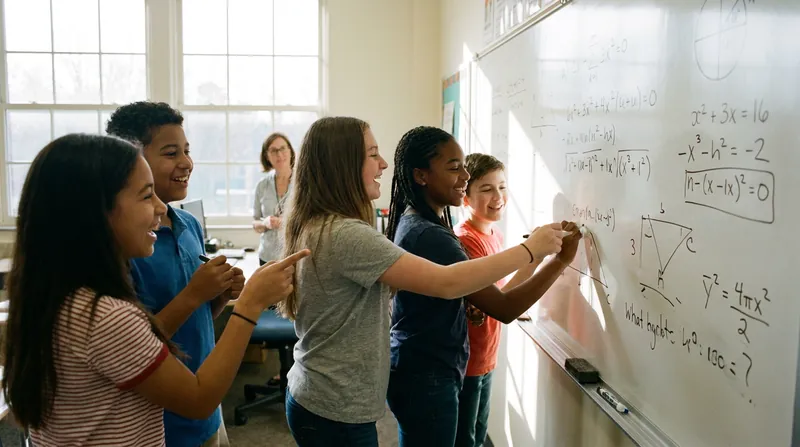
Educators have been leveraging these dynamics in physical classrooms for decades. In the early 1980s, a French teacher in Germany named Jean-Pol Martin pioneered a method called "Lernen durch Lehren" (learning by teaching). By assigning students the task of researching and presenting segments of the curriculum to their peers, Martin found that his students developed higher self-confidence, better communication skills, and a much deeper mastery of the subject matter than traditional lecturing could achieve.[1]
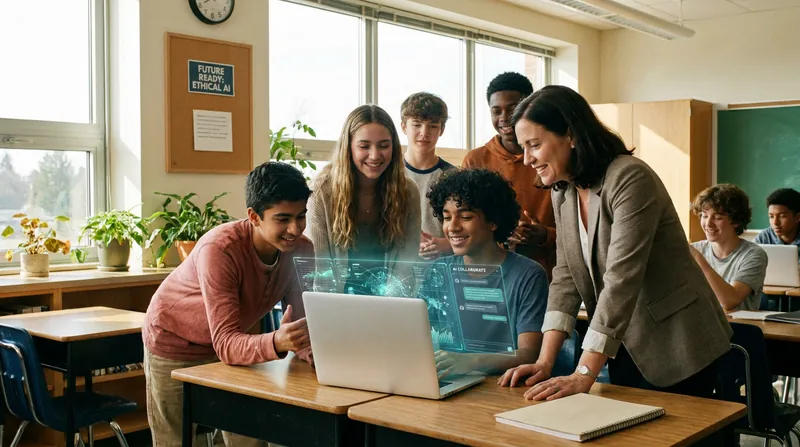
Today, the digital frontier is expanding the reach of the Protégé Effect. With the rise of generative artificial intelligence, students no longer need a willing classmate to act as their pupil. Learners are increasingly using AI chatbots as custom "study buddies," prompting the AI to act as a confused novice who needs a topic explained to them. This allows students to practice teaching and receive immediate, gentle pushback if their explanations are illogical or incomplete.[1]
This concept is already a beloved tradition in the world of software engineering, where it is known as "rubber duck debugging." When a programmer is stuck on a broken piece of code, they will place a literal rubber duck on their desk and explain the code to the toy, line by line. More often than not, the simple act of articulating the logic aloud to an inanimate object causes the programmer to suddenly spot the hidden error they had been staring past for hours.[1]
While incredibly powerful, learning by teaching is not a universal silver bullet. It is a cognitively demanding and time-consuming process. For tasks that require rote memorization of simple, disconnected facts—like learning the capitals of all fifty states or memorizing a list of vocabulary words—the Feynman Technique is overkill. The method shines brightest when applied to complex systems, cause-and-effect relationships, and deep conceptual frameworks.[3]
There is also a distinct risk involved if the feedback loop is ignored. If a student confidently teaches a concept incorrectly, and never returns to the source material to verify their explanation, they risk cementing that error into their long-term memory. The Protégé Effect must always be paired with intellectual humility and a willingness to double-check one's own assumptions against the facts.[4]
Despite these minor limitations, the overall efficacy of the method is undeniable. A comprehensive meta-analysis published in the Educational Psychology Review examined dozens of independent experiments on learning by teaching. The researchers concluded that the practice consistently yields significant improvements in learning, retention, and academic performance across diverse age groups and subject matters, cementing its status as a premier educational strategy.
Despite these minor limitations, the overall efficacy of the method is undeniable.
Ultimately, the Protégé Effect offers a hopeful and empowering message for anyone trying to master a difficult subject. You do not need to be a genius to understand complex material; you simply need to change your relationship with the information. By embracing the role of the teacher—whether for a classmate, a digital avatar, or a rubber duck—you unlock a deeper level of cognitive processing, transforming the struggle of learning into the shared joy of understanding.[4]
Key terms
- Protégé Effect
- The psychological phenomenon where individuals learn material better and exert more effort when they are learning it to teach someone else.
- Metacognition
- The awareness and understanding of one's own thought processes; effectively 'thinking about thinking.'
- Feynman Technique
- A four-step study method that involves explaining a concept in plain language to identify and patch gaps in understanding.
- Illusion of Competence
- The false belief that one deeply understands a topic, often caused by passive studying methods like re-reading or highlighting.
- Teachable Agent
- A digital character or AI designed to be 'taught' by a human student, leveraging the protégé effect in educational software.
Frequently asked
Does the person I'm teaching need to be real?
No. Studies show that teaching a digital avatar, an AI chatbot, or even an inanimate object like a rubber duck can trigger similar cognitive benefits by forcing you to articulate the material.
What if I accidentally teach the material incorrectly?
This is a known risk. The method works best when paired with a strict feedback loop—checking your explanation against the source material to correct errors before they solidify in your memory.
Does just expecting to teach help?
Yes. Research indicates that simply being told you will have to teach the material changes how your brain organizes the information while studying, prioritizing connections over rote facts.
Viewpoints in depth
Cognitive Psychologists
Focus on the internal mechanisms of memory retrieval and metacognition.
Cognitive psychologists view the Protégé Effect primarily as a triumph of metacognition and active retrieval. They argue that passive studying creates an 'illusion of competence' because the brain easily recognizes text it has seen before. Teaching, however, forces the brain to actively retrieve information from long-term memory and restructure it. Furthermore, researchers point out that the mere expectation of teaching shifts the brain's encoding strategy, prompting learners to look for structural connections and underlying narratives rather than isolated facts.
Instructional Designers
Advocate for practical classroom applications and peer-to-peer collaborative environments.
For instructional designers and educators, the value of the Protégé Effect lies in its ability to transform classroom dynamics. They advocate for moving away from traditional, passive lecture formats in favor of peer tutoring and 'Lernen durch Lehren' (learning by teaching) models. By assigning students the responsibility of mastering a topic well enough to present it to their peers, educators observe not only higher academic achievement but also increased empathy, better communication skills, and a more inclusive classroom culture where struggling students feel empowered.
EdTech Developers
Focus on scaling the effect through software using teachable agents and AI.
Technology developers approach the Protégé Effect as a scaling challenge. Recognizing that one-on-one peer tutoring isn't always feasible, they design software that simulates the experience. By creating 'teachable agents'—digital characters or AI personas that rely on the human student to feed them accurate information—developers can trigger the same sense of responsibility and cognitive engagement in students studying alone at home. They view generative AI as the ultimate tool to democratize this learning method.
- Cognitive Psychologists
- Focus on the internal mechanisms of memory retrieval, metacognition, and how the expectation of teaching alters brain encoding.
- Instructional Designers
- Advocate for practical classroom applications, emphasizing peer-to-peer tutoring and collaborative learning environments.
- EdTech Developers
- Focus on scaling the effect through software, using teachable agents and AI personas to democratize active learning.
Perspectives this story doesn't cover
- Students with severe learning disabilities who may struggle with the cognitive load of teaching
Sources
Source coverage
4 outlets
3 viewpoints surfaced




- [1]The GuardianInstructional Designers
New defence secretary wins another £1.5bn to boost drone spending
Read on The Guardian → - [2]Memory & CognitionCognitive Psychologists
Expecting to teach enhances learning and organization of knowledge in free recall
Read on Memory & Cognition → - [3]University of VirginiaInstructional Designers
Simplify to Master: Applying Richard Feynman's Learning Method in Legal Education
Read on University of Virginia → - [4]Factlen Editorial TeamInstructional Designers
Synthesis by Factlen editorial team
Read on Factlen Editorial Team →

More in Education
See all →Education Finance
The $190 Billion 'Fiscal Cliff': How the End of Pandemic Relief is Forcing Schools to Rethink EdTech
2 sources

Numeracy Mandates
The Evidence on Numeracy: How States Are Mandating Early Screening and Advanced Access to Combat Math Deficits
2 sources
AI Adoption
The Evidence on AI's Policy Gap: 90% of Students and Teachers Adopt AI Tools Ahead of Formal Guidance
7 sources
Screen Bans
The Evidence on Screen Bans: How LAUSD's Policy and State Mandates Are Rewiring K-12 Classroom Attention
3 sources

Comments
Every angle. Every day.
Get Education stories with full source coverage and perspective breakdowns, free every day.