
Office-to-Apartment Conversions Hit Record 90,000 Units as Adaptive Reuse Goes Mainstream
Driven by high office vacancy rates and a severe housing shortage, developers are transforming empty commercial towers into residential neighborhoods at an unprecedented scale.
By Factlen Editorial Team
- Commercial Developers & Investors
- Focus on the financial math, arguing that without significant tax abatements and streamlined zoning, the 'feasibility gap' makes these projects too risky.
- Urban Planners & City Officials
- Focus on downtown revitalization, increasing foot traffic, and replacing lost commercial property tax revenue with vibrant 24/7 neighborhoods.
- Housing & Affordability Advocates
- Welcome the new supply but heavily emphasize the need for affordability mandates, arguing that luxury conversions do not solve the housing crisis for middle- and lower-income residents.
- Architects & Engineers
- Focus on the physical constraints, cautioning that only a fraction of buildings have the right structural 'bones' for residential layouts.
What's not represented
- · Existing commercial tenants who face relocation when a partially occupied building is slated for conversion
- · Suburban commuters whose local tax burdens may shift as downtown commercial property tax revenues decline
Why this matters
The transformation of empty office buildings into housing offers a rare dual-solution to two of the decade's biggest urban challenges: revitalizing hollowed-out downtowns and expanding the national housing supply.
Key points
- A record 90,300 apartment units are currently in the U.S. pipeline for office-to-residential conversion in 2026.
- Adaptive reuse now accounts for 47% of all conversion projects nationwide, driven by near-20% office vacancy rates.
- Only about 24% of existing office buildings possess the necessary structural 'bones,' such as shallow floorplates, to be converted.
- Major engineering hurdles include replacing centralized commercial plumbing and oversized HVAC systems.
- Cities are bridging the 'feasibility gap' by offering tax abatements and streamlining zoning laws to encourage development.
- New York City leads the nation in total volume, while mid-sized markets like Denver and Philadelphia are seeing the fastest growth.
The contradiction of the 2020s American city is stark: millions of square feet of commercial office space sit entirely empty, while millions of prospective renters and buyers cannot find affordable housing. Across the country, downtown office towers remain half-lit and half-leased, their HVAC systems humming for workers who have permanently shifted to hybrid or remote schedules. At the exact same time, residential rents continue to climb in supply-constrained urban centers. This glaring imbalance has forced urban planners, developers, and city governments to ask a blunt question: how long can empty office buildings maintain the status quo instead of transforming into meaningful housing?[6]
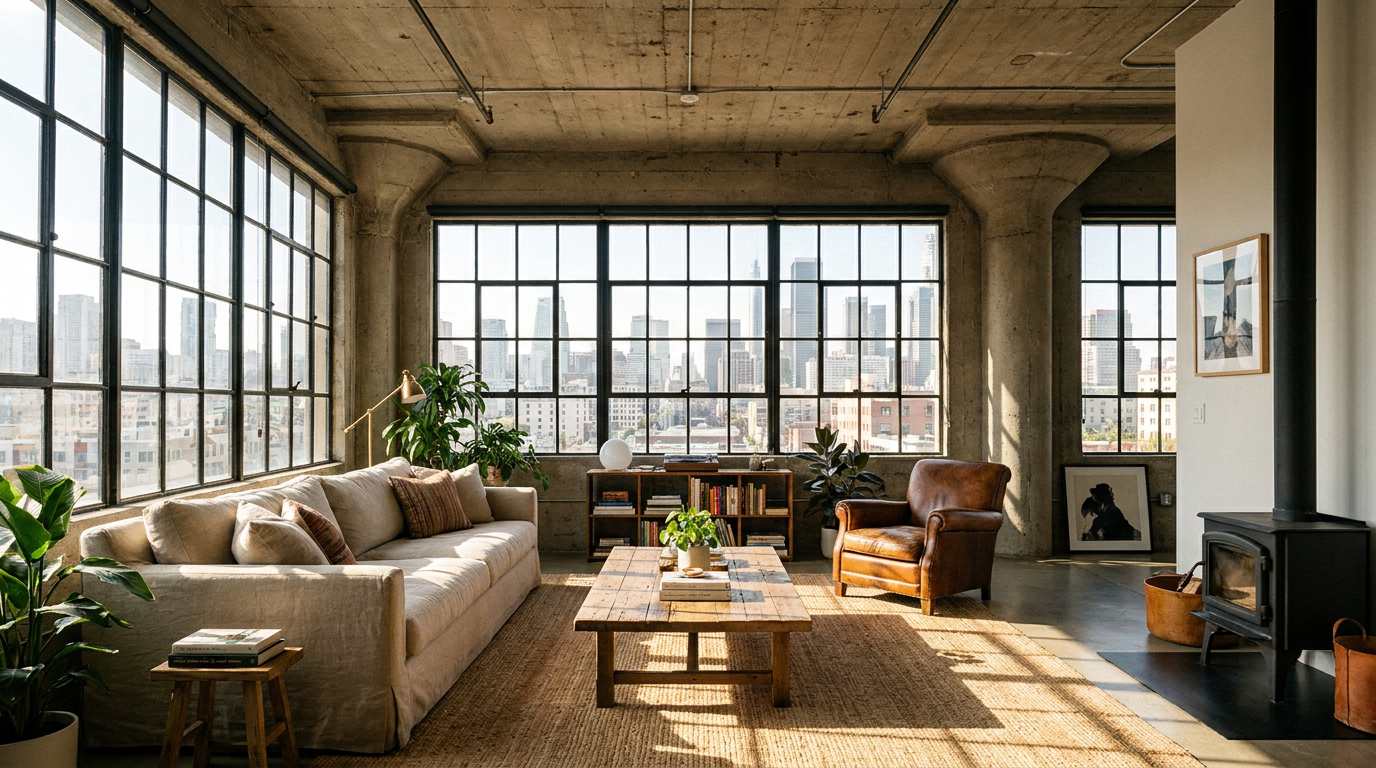
For decades, 'adaptive reuse'—the architectural practice of converting commercial structures into residential homes—was treated as a niche virtue. It was largely the domain of boutique developers turning historic brick warehouses into trendy, high-end lofts. Today, however, adaptive reuse has reached critical mass and is fundamentally reshaping the broader real estate market. It has successfully transitioned from a sustainable design concept into a mainstream, industrial-scale solution for urban revitalization, forcing the industry to rethink the purpose of the central business district.[1][6]
The underlying data reflects a dramatic acceleration in this sector. As of early 2026, real estate developers have a record-breaking 90,300 apartment units currently in the pipeline for conversion from former office buildings across the United States. This staggering figure represents a 28 percent year-over-year increase from 2025, and it is nearly four times the total volume recorded just four years ago in 2022, signaling a permanent shift in how developers view distressed commercial assets. The momentum shows no signs of slowing, as both major metropolitan areas and mid-sized cities embrace the strategy to solve local housing shortages.[1][8]
Office conversions now account for a massive 47 percent of all adaptive reuse projects nationwide, comfortably outpacing the conversion of hotels, factories, and industrial properties. This surge is being driven by a persistent macroeconomic reality: United States office vacancy rates currently hover near 20 percent, marking a historic high not seen since the early 1990s. With corporate leasing permanently altered by the remote work revolution, property owners are highly motivated to reposition their underperforming assets rather than let them sit vacant and bleed capital.[1][4][7]

But transforming a 1980s corporate tower into a 2026 residential community is not as simple as putting beds inside former cubicles. The physical mechanism of a successful conversion is strictly dictated by a building's 'bones'—specifically, its floorplate, which refers to the physical footprint and overall depth of a single floor. Understanding these structural constraints is the first step for any developer attempting to underwrite an adaptive reuse project, as the wrong floorplate can render a conversion entirely impossible. Architects must carefully evaluate the existing shell before drafting a single residential blueprint.[2][7]
Deep, rectangular office buildings are notoriously difficult to convert into apartments. Residential building codes strictly require bedrooms to have operable windows and direct access to natural light. In a deep office building, the distance from the exterior glass to the central elevator core is simply too vast, leaving the interior space dark and legally uninhabitable for residential use. Conversely, narrower buildings, or those with a shallow core depth, offer significantly more perimeter space per square foot, making them ideal candidates for modern apartment layouts.[2][9]
Beyond the geometry of the floorplate, plumbing presents a massive engineering hurdle that drives up construction costs. Commercial office buildings are traditionally designed with centralized core bathrooms on each floor, stacking the water supply and waste lines in one specific, highly concentrated location. Residential buildings, by contrast, require distributed plumbing lines running to individual kitchens, bathrooms, and laundry closets in every single unit. This structural reality necessitates significant concrete coring through the existing floors to run miles of new pipes.[9]
Beyond the geometry of the floorplate, plumbing presents a massive engineering hurdle that drives up construction costs.
Heating, ventilation, and air conditioning (HVAC) systems introduce yet another layer of complexity to the conversion process. While commercial HVAC systems are massive and powerful, they are designed to cool large, open-plan zones for hundreds of workers simultaneously. Residential units require individual climate control for each tenant. Furthermore, residential living generates significantly more humidity from daily activities like cooking, showering, and doing laundry. Existing commercial air conditioning systems are often oversized for residential cooling loads but completely unequipped to handle the increased moisture, meaning the entire system usually must be scrapped and replaced.[9]
Because of these strict physical and engineering constraints, only a fraction of the existing commercial inventory is actually viable for a second life as housing. Real estate industry analyses estimate that only about 24 percent of the total United States office inventory—roughly 1.9 billion square feet of space—is structurally suitable for residential conversion without requiring a complete, cost-prohibitive teardown. Identifying these prime candidates is a highly specialized skill that requires deep architectural and engineering expertise. Developers cannot simply buy any cheap, vacant office building and expect it to easily transform into profitable apartments.[5]

For the buildings that do possess the right structural bones, developers face a second, equally daunting hurdle: the 'feasibility gap.' This term describes the economic difference between the high capital cost of a structural conversion and the ultimate market value of the resulting apartments. Converting an office building is extraordinarily expensive, often rivaling the cost of ground-up construction, and in many markets, the financial math simply does not underwrite on its own without external assistance. Lenders are often hesitant to finance these complex projects without guaranteed returns.[3]
To bridge this critical financial gap, developers rely heavily on public-private partnerships and government incentives to build their capital stack. Programs like the federal Historic Tax Credit allow developers to significantly offset construction costs if the building has recognized historical significance. At the local level, municipalities are stepping in with aggressive property tax abatements and grants—such as Washington D.C.'s Housing in Downtown program—to make these capital-intensive projects financially viable for private investors. Without these subsidies, many of the planned 90,300 units would never break ground.[2][3]
Zoning reform is also acting as a major catalyst for the adaptive reuse boom. Historically, rigid municipal zoning laws strictly separated commercial business districts from residential neighborhoods, making conversions legally arduous and subject to years of community review. Now, cities facing acute housing shortages are actively rewriting these outdated rules to streamline the approval process, remove bureaucratic friction, and allow developers to bypass lengthy public hearings for conversion projects. This regulatory shift is proving just as important as financial incentives in getting projects off the ground.[3][4]
New York City is the undisputed national leader of this trend, boasting over 16,300 conversion units currently in its development pipeline. To maintain this momentum, the city is aggressively pushing forward its 'City of Yes' zoning amendment. This landmark policy is specifically designed to ease outdated restrictions and allow for the rapid adaptive reuse of commercial buildings constructed before 1999, effectively opening up millions of square feet of aging Manhattan office space to residential developers. The policy acknowledges that the city's economic engine requires housing just as much as it requires desk space.[1][4][8]
However, the geographic footprint of adaptive reuse is expanding far beyond traditional coastal gateway cities. While New York and Washington D.C. lead in raw volume, midwestern and sunbelt cities are experiencing the fastest proportional growth in the country. Denver, Philadelphia, and St. Louis all more than doubled their conversion pipelines over the past year, proving that the strategy is highly scalable across different regional economies and real estate markets. These cities are recognizing that empty downtowns are a liability that can be transformed into an asset.[1][6]

For these mid-sized markets, office conversions offer a powerful dual benefit. They provide a practical, market-driven strategy to breathe new life into central business districts that have suffered from reduced foot traffic and declining retail sales. Simultaneously, they expand housing options in downtown neighborhoods that already possess robust transit networks, utility infrastructure, and civic amenities, preventing the need for environmentally destructive suburban sprawl. By bringing residents back to the urban core, cities can support local restaurants, shops, and cultural institutions that previously relied on 9-to-5 office workers.[1][8]
Ultimately, office-to-residential conversions are not a magic silver bullet that will single-handedly solve the national housing shortage. The sheer scale of the American housing deficit—which is measured in the millions of units—far exceeds the number of viable, convertible office buildings available in the market. Even if every suitable office building were converted tomorrow, the country would still need massive investments in new, ground-up residential construction to fully meet consumer demand. Furthermore, the high cost of conversion means many of these new units will be priced at luxury rates, doing little to help low-income renters.[3][5]
Nevertheless, as a strategic urban planning tool, adaptive reuse is proving to be incredibly valuable. By simultaneously removing distressed commercial inventory from the market and adding much-needed residential supply, these conversions are actively reshaping the post-pandemic American city. They are turning obsolete, single-use corporate districts into resilient, vibrant, mixed-use neighborhoods where people can live, work, and play, ensuring that downtowns remain relevant in the 21st century. As the pipeline approaches 100,000 units, it is clear that the office building of the past is steadily becoming the neighborhood of the future.[3][6]
How we got here
Early 2020s
The shift to remote work empties downtown office districts, causing vacancy rates to spike.
2022
Office-to-residential conversions begin to gain traction, with roughly 23,100 units in the national pipeline.
2024
Cities like New York and Los Angeles begin introducing zoning amendments and tax incentives to encourage adaptive reuse.
Early 2026
The conversion pipeline hits a record 90,300 units, making it the dominant form of adaptive reuse in the United States.
Viewpoints in depth
Urban Planners & City Officials
Focus on downtown revitalization, increasing foot traffic, and replacing lost commercial property tax revenue with vibrant 24/7 neighborhoods.
For municipal governments, empty office buildings represent a looming fiscal crisis. As commercial property values plummet due to high vacancy rates, cities face massive shortfalls in property tax revenue. Urban planners argue that converting these spaces into residential units is the most effective way to stabilize the tax base while simultaneously addressing the housing shortage. They envision a shift from 9-to-5 business districts to 24/7 mixed-use neighborhoods, where new residents support local retail, restaurants, and transit systems that have struggled since the pandemic.
Commercial Developers & Investors
Focus on the financial math, arguing that without significant tax abatements and streamlined zoning, the 'feasibility gap' makes these projects too risky.
While developers recognize the opportunity in distressed office assets, they emphasize that the economics of conversion are brutal. The cost of gutting a commercial building, coring through concrete for new plumbing, and replacing entire HVAC systems often rivals the cost of ground-up construction. Developers argue that without aggressive public subsidies—such as property tax abatements, historic tax credits, and fast-tracked zoning approvals—the 'feasibility gap' makes these projects impossible to underwrite. They maintain that cities must share the financial risk if they want to see widespread adaptive reuse.
Housing & Affordability Advocates
Welcome the new supply but heavily emphasize the need for affordability mandates, arguing that luxury conversions do not solve the housing crisis for middle- and lower-income residents.
Housing advocates acknowledge that adding 90,000 units to the national supply is a positive step, but they are highly critical of who actually benefits from these conversions. Because the capital costs of adaptive reuse are so high, developers almost exclusively price the resulting apartments at luxury rates to recoup their investment. Advocates argue that without strict municipal mandates requiring a percentage of these units to be set aside for low- and middle-income renters, office conversions will do little to alleviate the most severe aspects of the housing crisis.
Architects & Engineers
Focus on the physical constraints, cautioning that only a fraction of buildings have the right structural 'bones' for residential layouts.
The architectural and engineering community views the conversion trend through a lens of structural pragmatism. They frequently caution against the narrative that any empty office can become an apartment. Engineers point out that deep, windowless floorplates, low ceiling heights, and centralized commercial plumbing cores make roughly 75% of the current office inventory structurally unsuited for residential living. They advocate for targeted, highly selective conversions, warning that forcing residential layouts into incompatible buildings results in substandard, dark apartments that fail to meet modern living standards.
What we don't know
- How many of the 90,300 planned units will actually secure the necessary financing to complete construction.
- Whether the influx of luxury conversion units will effectively lower rents in the broader housing market.
- How long local governments will continue to offer aggressive tax abatements once downtowns begin to stabilize.
Key terms
- Adaptive Reuse
- The process of repurposing an existing building for a use other than what it was originally designed for.
- Floorplate
- The total leasable square footage and physical shape of a single floor in a commercial building.
- Feasibility Gap
- The financial shortfall that occurs when the cost of converting a building exceeds the market value of the finished apartments.
- Core Depth
- The distance from the exterior windows to the center of the building, where elevators and stairs are usually located.
- Capital Stack
- The different layers of financing—such as loans, equity, and tax credits—used to fund a real estate project.
Frequently asked
Can any empty office building become an apartment?
No. Only about 24% of office buildings have the right structural dimensions, such as shallow floorplates that allow for adequate natural light in residential bedrooms.
Why is plumbing a major hurdle in these conversions?
Offices use centralized bathrooms on each floor, whereas apartments require distributed plumbing lines running to individual kitchens and bathrooms across the entire floor.
Are these new apartments affordable?
It varies. Because conversions are highly expensive, many result in luxury units, though some cities offer tax incentives to developers who include affordable housing tiers.
Which cities are doing this the most?
New York City and Washington D.C. lead the nation in total volume, but mid-sized cities like Denver, Philadelphia, and St. Louis are seeing the fastest year-over-year growth.
Sources
Source coverage
9 outlets
4 viewpoints surfaced









[1]CRE DailyCommercial Developers & Investors
Office Conversions Hit 90K, Boosting Adaptive Reuse
Read on CRE Daily →[2]J.P. MorganCommercial Developers & Investors
What to know about office-to-residential conversion
Read on J.P. Morgan →[3]Brookings InstitutionUrban Planners & City Officials
Understanding office-to-residential conversion
Read on Brookings Institution →[4]Cushman & WakefieldCommercial Developers & Investors
Office-to-Residential Conversions: A Trend Whose Time Has Come?
Read on Cushman & Wakefield →[5]Affordable Housing FinanceHousing & Affordability Advocates
Office-to-Apartment Conversions Surge as Pipeline Nears 100,000 Units
Read on Affordable Housing Finance →[6]Yanko DesignHousing & Affordability Advocates
90,300 Empty Offices Are Becoming Apartments Across the US. “Adaptive Reuse” Just Hit Critical Mass.
Read on Yanko Design →[7]RadCRECommercial Developers & Investors
Office-to-Residential Conversions Gain Traction Amid Vacancy Surge
Read on RadCRE →[8]RentCafeUrban Planners & City Officials
Adaptive Reuse Report: Office-to-Apartment Conversions Accelerate
Read on RentCafe →[9]The Vertex CompaniesArchitects & Engineers
Analysis: Here's what it would take to turn empty office buildings into residential housing
Read on The Vertex Companies →
Every angle. Every day.
Get real estate stories with full source coverage and perspective breakdowns delivered to your inbox.