
How Neuroaesthetics and Biophilic Design Are Reshaping the Modern Home
Emerging research in neuroscience is transforming interior design from a purely visual discipline into a tool for mental well-being. As 2026 approaches, homes are increasingly being engineered to lower stress, boost cognitive function, and regulate the nervous system.
By Factlen Editorial Team
- Neuroscience & Design Researchers
- Focus on empirical biometric data, arguing that aesthetic experiences are biological necessities that actively regulate stress hormones.
- Biophilic Architects
- Advocate for integrating functional natural systems and evolutionary psychology into the built environment to restore cognitive function.
- Trend Forecasters & Interior Designers
- Translate clinical findings into accessible home trends, prioritizing tactile warmth, meaningful maximalism, and emotional safety.
What's not represented
- · Low-income housing developers
- · Renters with limited modification rights
Why this matters
For decades, interior design was treated as a luxury focused on aesthetics and status. Understanding how room shapes, lighting, and textures physically alter brain chemistry empowers anyone to make evidence-based changes to their living space that actively reduce daily anxiety and improve focus.
Key points
- Neuroaesthetics uses biometric data to prove that interior design directly impacts heart rate, stress hormones, and cognitive function.
- Biophilic design integrates natural light, airflow, and fractal patterns to help the brain recover from cognitive fatigue.
- The 2026 design landscape is shifting toward 'broken plan' layouts that offer psychological safety and acoustic privacy.
- Tactile, bio-based materials like mycelium and hempcrete are replacing synthetic finishes for environmental and sensory comfort.
- 'Meaningful maximalism' is emerging as a counter-trend to sterile aesthetics, prioritizing personal history and emotional resonance.
For decades, interior design was largely treated as a visual and status-driven discipline—a pursuit of the perfect color palette or the most striking furniture silhouette. But a quiet revolution is reshaping how architects and homeowners approach the spaces they inhabit. Driven by advances in brain imaging and a post-pandemic reckoning with mental health, the focus has shifted from how a room looks to how a room actively regulates the human nervous system. Homes are no longer viewed merely as shelters or aesthetic showcases; they are increasingly engineered as active participants in preventive healthcare. This paradigm shift is bringing once-niche scientific concepts into the mainstream residential market, fundamentally altering the 2026 design landscape.[8]
At the center of this transformation is neuroaesthetics, a scientific discipline that explores how the human brain processes and responds to beauty, art, and spatial design. The field began to take shape in the 1990s when neurobiologist Semir Zeki discovered that perceiving something beautiful consistently activates a specific, unified area of the brain. Today, researchers like Anjan Chatterjee have expanded this framework to architecture, demonstrating that human-building interactions are governed by complex neural networks. These networks process sensory input, assign emotional value, and interpret the physical environment, proving that aesthetic experiences are not subjective luxuries but profound biological events.[2][5]
The biological mechanisms triggered by thoughtful design are both immediate and measurable. When a person enters a space that balances light, proportion, and texture, the brain's orbitofrontal cortex—a region linked to emotional regulation and decision-making—lights up. Clinical studies show that these pleasing environments can trigger a 15 to 20 percent reduction in stress hormones like cortisol. Simultaneously, heart rates slow, blood pressure drops, and the brain releases elevated levels of serotonin and dopamine. By designing interiors that cater to these neurological pathways, architects can actively lower a building occupant's baseline anxiety and foster a sustained positive affect.[2][4]

The transition from intuitive design to evidence-based architecture has been accelerated by wearable technology. For years, designers relied on a "feeling" that certain rooms made clients happier. Now, biometric data provides undeniable proof. A landmark moment occurred during the 2019 Salone del Mobile in Milan, where Google partnered with academic institutions to create "A Space for Being." Visitors wore custom wristbands that tracked their heart rate, skin conductivity, and body temperature as they moved through differently designed rooms. The data confirmed that aesthetic variations—from lighting temperature to furniture shape—provoke distinct, involuntary physiological responses, cementing the idea that our cells literally react to good design.[4][5]
Closely allied with neuroaesthetics is biophilic design, an approach that seeks to reconnect human beings with the natural world. While the concept is often reduced to the simple addition of potted houseplants, true biophilic architecture is far more comprehensive. It involves harnessing the functional aspects of natural ecosystems and integrating them into the built environment. This means prioritizing dynamic natural light, mimicking organic airflow, utilizing raw materials like timber and stone, and incorporating water features. Rather than merely copying nature's shapes—a practice known as biomorphism—biophilic design embeds the sensory variability of the outdoors into the indoor experience.[3][6]
The profound impact of biophilic design is rooted in evolutionary psychology. For millennia, human survival depended on close observation of the natural world; we evolved to seek out safe vantage points, clean water, and thriving vegetation. Modern, sterile indoor environments often place a subconscious strain on the brain, which is constantly scanning for these missing natural cues. According to Attention Restoration Theory, exposure to natural stimuli—such as fractal patterns found in leaves or the gentle movement of water—provides a "soft fascination" that allows the brain to rest. This restorative experience helps occupants recover from the directed attention fatigue caused by screens and deep cognitive work.[3][6]
The clinical and economic evidence supporting biophilic integration is substantial. The foundational proof emerged in 1984, when researcher Roger Ulrich demonstrated that hospital patients with views of nature recovered faster and required significantly less pain medication than those staring at a brick wall. Today, these principles are being applied to workspaces and homes with equally striking results. Studies indicate that employees working in biophilic offices report a 15 percent increase in productivity and a marked decrease in mental fatigue. In residential settings, these same design cues translate to improved mental clarity, enhanced creativity, and a greater sense of daily tranquility.[3][4]

The clinical and economic evidence supporting biophilic integration is substantial.
Beyond visual aesthetics, the emerging science of sensory ergonomics plays a critical role in nervous system regulation. The brain processes sensory inputs in a highly integrated manner; for example, the perception of sound can change depending on the visual context of a room. Unpredictable, harsh noises—like traffic or echoing footsteps—elevate cortisol and keep the body in a heightened state of stress. To combat this, modern interior design employs acoustic masking. Soft furnishings, intentional furniture placement, and ambient water sounds are used to absorb disruptive noise, creating a positive acoustic environment that lowers stress markers and improves concentration.[4]
Lighting is another crucial pillar of sensory ergonomics, directly influencing the body's circadian rhythms. The static, cool-toned artificial lighting that dominated the past decade is being replaced by dynamic systems that mimic the natural arc of the sun. Exposure to bright, natural daylight in the morning activates brain function, improves mental clarity, and regulates sleep-wake cycles. Conversely, warm, dim lighting in the evening signals the brain to produce melatonin. By prioritizing large windows, skylights, and circadian-aligned smart bulbs, designers are creating functional yet nurturing atmospheres that support both daytime alertness and restorative nighttime sleep.[3][6]
As these scientific principles filter into mainstream residential trends for 2026, the physical layout of the home is evolving. The cavernous, entirely open-plan living spaces that defined the 2010s are falling out of favor, replaced by the concept of "broken plan" living. Homeowners are seeking environments that offer psychological safety and definition without sacrificing natural light. Designers are achieving this by using glass partitions, slatted wooden dividers, open shelving units, and subtle changes in floor levels. This approach provides the acoustic privacy necessary for remote work and relaxation, creating distinct zones that cater to different emotional and functional needs.[7]

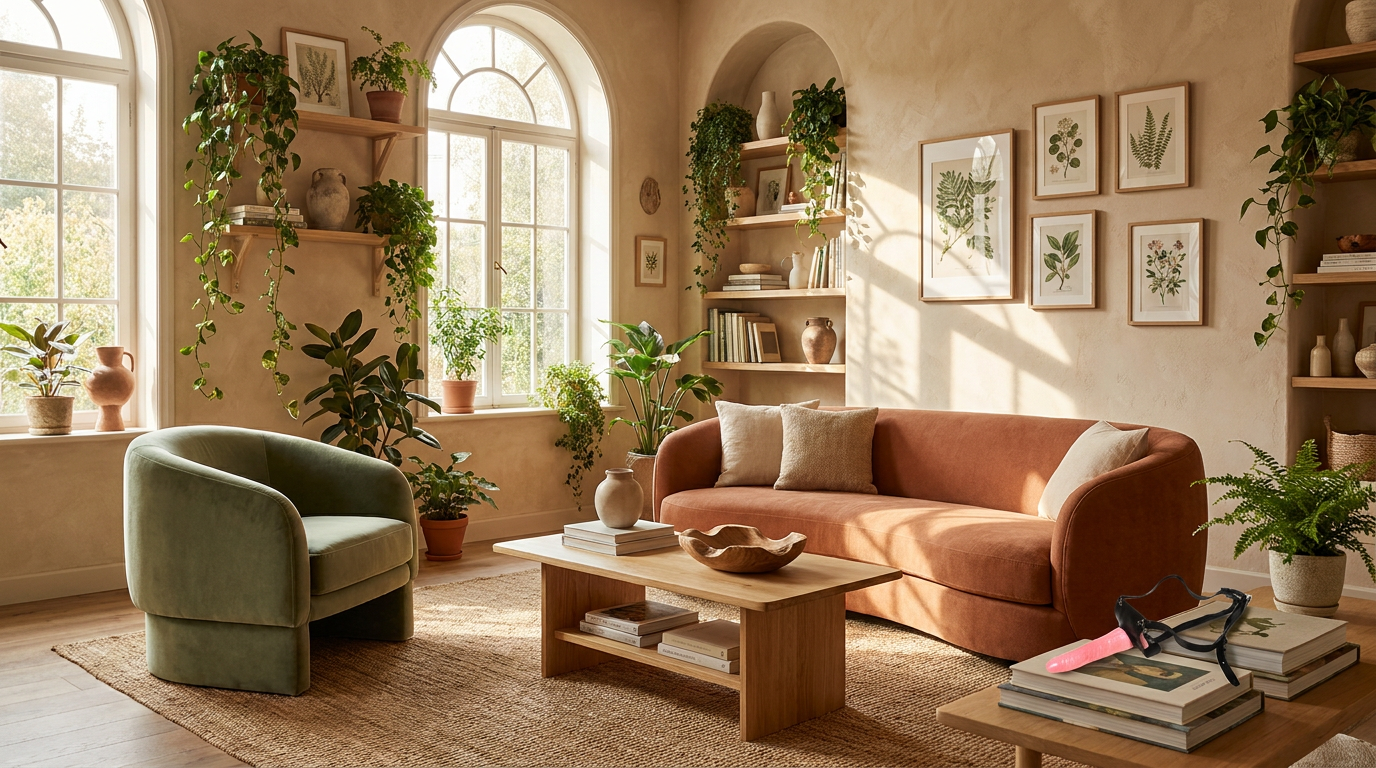
The shapes and silhouettes of furniture are also shifting to accommodate the nervous system. The human brain often perceives sharp, rigid edges as subconscious threats, requiring more cognitive energy to navigate around them. In response, 2026 is seeing a massive surge in curved and soft-edged furniture. Rounded sofas, circular coffee tables, and skirted upholstery are replacing boxy, minimalist case goods. These softer silhouettes reduce visual harshness and create a sense of grounded softness. The resulting atmosphere feels more sheltered, approachable, and emotionally supportive, allowing inhabitants to physically and mentally exhale.[8]
Tactile engagement is becoming just as important as visual appeal, driving a move away from high-gloss, synthetic perfection. The nervous system thrives on sensory richness, and flat, painted drywall offers little stimulation. Consequently, there is a rising demand for matte, chalky finishes like lime wash and artisanal plaster. These materials interact dynamically with natural light, creating shadows and atmospheric depth that feel organic rather than manufactured. By incorporating varied textures—from rough-hewn timber to soft boucle fabrics—designers provide the tactile variability that holds human interest and triggers positive neurological responses.[7][8]
This desire for organic texture is fueling a broader bio-materials revolution in 2026 architecture. Moving away from energy-intensive steel and synthetic plastics, the industry is embracing materials that are grown rather than mined. Hempcrete—a mixture of hemp hurds and lime—is gaining traction as a carbon-negative material that provides excellent thermal mass and naturally regulates indoor moisture. Similarly, mycelium (mushroom) insulation is being cultivated in molds to create fire-resistant, acoustic-dampening wall panels. These bio-based materials not only reduce a home's embodied carbon but also introduce a raw, earthy aesthetic that aligns perfectly with biophilic principles.[7]

Aesthetically, the sterile, Pinterest-perfect minimalism of recent years is being replaced by a trend experts are calling "meaningful maximalism." Rather than accumulating clutter, this approach focuses on intentionally curating personal, heritage-rich objects that tell a story. Vintage pieces, passed-down ceramics, and salon-style art walls are being used to layer spaces with personality and warmth. This shift reflects a deep psychological hunger for homes that feel established, safe, and uniquely personal. By blending these meaningful items with earthy color palettes—like terracotta, sage green, and warm caramel—designers are crafting memorable spaces that provide emotional comfort.[1]
Despite the clear benefits of neuroaesthetic design, the application of these principles requires nuance. Cultural context and individual neurodiversity play significant roles in how a space is perceived; a sensory-rich environment that feels calming to one person might feel overwhelming to another. Furthermore, there is a risk of superficial application, where designers rely on "biomorphism"—simply adding leaf motifs or green paint—without integrating the functional, restorative aspects of nature. True neuro-inclusive design demands a holistic approach that balances aesthetics with air quality, acoustics, and personalized emotional ergonomics.[6][8]
Ultimately, the convergence of neuroscience and interior design represents one of the most significant evolutions in the built environment. As the data continues to mount, the distinction between a beautiful home and a healthy home is dissolving. By leveraging the principles of neuroaesthetics and biophilia, architects and homeowners have the tools to transform static buildings into dynamic allies of human flourishing. In 2026 and beyond, the ultimate luxury in interior design will not be found in a brand name or a price tag, but in a room's measurable ability to heal, restore, and comfort the human mind.[2][8]
How we got here
1984
Roger Ulrich publishes a landmark study showing hospital patients with nature views recover faster and require less pain medication.
1990
Neurobiologist Semir Zeki discovers that perceiving beauty activates a unified area of the brain, laying the groundwork for neuroaesthetics.
2019
Google debuts 'A Space for Being' at Salone del Mobile, using wearable tech to prove interior designs trigger distinct physiological responses.
2025–2026
Neuro-inclusive design and 'broken plan' living become mainstream residential trends, prioritizing sensory comfort over stark minimalism.
Viewpoints in depth
Neuroscience & Design Researchers
Focus on the empirical biometric data of human-building interactions.
This camp views interior design as a biological intervention rather than a visual art. Relying on fMRI scans, cortisol measurements, and wearable biometric data, researchers argue that aesthetic experiences are physiological necessities. They emphasize that balancing light, proportion, and acoustics directly alters brain chemistry, making evidence-based design a critical tool for preventive mental healthcare.
Biophilic Architects
Focus on evolutionary alignment and functional natural systems.
Biophilic advocates argue that human biology is fundamentally mismatched with modern, sterile indoor environments. Their solution goes far beyond adding houseplants; they seek to integrate the functional aspects of ecosystems into architecture. By utilizing dynamic circadian lighting, acoustic masking, and fractal patterns, they aim to trigger the brain's innate Attention Restoration Theory, helping occupants recover from cognitive fatigue.
Trend Forecasters & Interior Designers
Focus on practical application, emotional resonance, and residential aesthetics.
This perspective translates clinical and architectural concepts into accessible home trends. Forecasters note that consumers are exhausted by the stark, open-plan minimalism of the 2010s. Instead, they are actively seeking 'meaningful maximalism,' tactile warmth, and 'broken plan' layouts. For designers, the goal is to craft spaces that feel emotionally safe, highly personal, and visually soft, using curved furniture and organic materials.
What we don't know
- How much daily exposure to biophilic elements is required to achieve a sustained, long-term reduction in baseline cortisol levels.
- Whether the cognitive benefits of simulated nature, such as digital screens showing landscapes, can ever fully replicate the neurological impact of authentic natural environments.
- How to effectively scale neuroaesthetic design principles for low-income and affordable housing, where space and natural light are often severely constrained.
Key terms
- Neuroaesthetics
- The scientific study of how the brain processes and responds to aesthetic experiences, beauty, and art.
- Biophilic Design
- An architectural approach that connects building occupants more closely to nature by integrating natural light, materials, and organic patterns.
- Attention Restoration Theory (ART)
- A psychological theory suggesting that exposure to natural environments helps the brain recover from cognitive fatigue and directed attention.
- Biomorphism
- The practice of designing objects or buildings that visually mimic the shapes and forms found in nature, without necessarily integrating natural ecosystems.
- Sensory Ergonomics
- The design of environments that support mental well-being by optimizing non-visual elements like acoustics, tactile surfaces, and ambient temperature.
- Broken Plan Living
- A floor plan layout that uses partial walls, screens, or varying floor levels to create distinct zones within a larger open space, balancing openness with privacy.
Frequently asked
What exactly is neuroaesthetics?
It is the scientific study of how the brain responds to beauty and art. In architecture, it measures how spatial design, lighting, and textures trigger biological responses like changes in heart rate and hormone levels.
Is biophilic design just about adding houseplants?
No. While plants are a component, true biophilic design integrates the functional aspects of nature—such as maximizing natural light, mimicking natural airflow, and using organic textures and fractal patterns.
What is 'broken plan' living?
It is a layout trend that replaces entirely open-concept spaces with subtle divisions—like glass partitions, shelving, or sunken floors—to provide acoustic privacy and psychological comfort without sacrificing light.
How do curved furniture and textures affect the nervous system?
The human brain often perceives sharp edges as subconscious threats. Curved silhouettes and soft, matte textures like lime wash reduce visual harshness, signaling safety and promoting relaxation.
Sources
Source coverage
8 outlets
3 viewpoints surfaced








[1]ForbesTrend Forecasters & Interior Designers
8 Interior Design Trends You'll See Everywhere In 2026
Read on Forbes →[2]ArchDailyNeuroscience & Design Researchers
Neuroesthetics: The Influence of Design on Human Experience
Read on ArchDaily →[3]Global Wellness InstituteBiophilic Architects
Biophilic Design
Read on Global Wellness Institute →[4]Science in DesignNeuroscience & Design Researchers
Neuroaesthetics for Interior Designers
Read on Science in Design →[5]Connections By FinsaNeuroscience & Design Researchers
Neuroaesthetics in interior design
Read on Connections By Finsa →[6]Arbor ArchitectsBiophilic Architects
Understanding Biophilic Design and Architecture
Read on Arbor Architects →[7]HackreaBiophilic Architects
Architectural Design Trends 2026: Regeneration & AI Guide
Read on Hackrea →[8]Factlen Editorial TeamTrend Forecasters & Interior Designers
Synthesis by Factlen editorial team
Read on Factlen Editorial Team →
Every angle. Every day.
Get home stories with full source coverage and perspective breakdowns delivered to your inbox.