
The 'Iron Path': How Via Ferratas Are Democratizing High-Alpine Adventure
Once a World War I military tactic, the via ferrata is experiencing a global tourism boom, offering hikers a safe, structured way to scale vertical cliffs without years of technical rock-climbing training.
By Factlen Editorial Team
- Recreational Adventurers
- Value the democratization of the mountains and the ability to safely experience extreme vertical exposure.
- Safety & Engineering Experts
- Focus on the physics of fall factors and the strict regulation of shock-absorbing equipment.
- Tourism & Conservation Researchers
- Scrutinize the environmental impact and call for sustainable management of the sport's rapid growth.
- High-Altitude Mountaineers
- View via ferrata infrastructure as a pragmatic tool to mitigate climate-induced risks on major peaks.
What's not represented
- · Local mountain rescue teams who manage the logistics of extracting injured or stranded via ferrata climbers.
- · Indigenous communities whose ancestral lands may be impacted by the commercial installation of iron routes.
Why this matters
As outdoor recreation surges post-pandemic, via ferratas are opening up previously inaccessible, jaw-dropping alpine terrain to everyday hikers. Understanding the mechanics and safety of these 'iron paths' is essential for anyone looking to safely elevate their mountain adventures.
Key points
- Via ferratas use fixed steel cables and iron rungs to allow hikers to safely scale vertical cliffs.
- Originally built during WWI to move troops through the Italian Dolomites, the routes are now a booming tourism sector.
- The sport requires a specialized lanyard with a progressive-tear shock absorber to prevent fatal impact forces during a fall.
- North America is experiencing a rapid expansion of via ferratas, primarily on private resort lands.
- New via ferrata infrastructure is being tested on Mount Everest to bypass the climate-destabilized Khumbu Icefall.
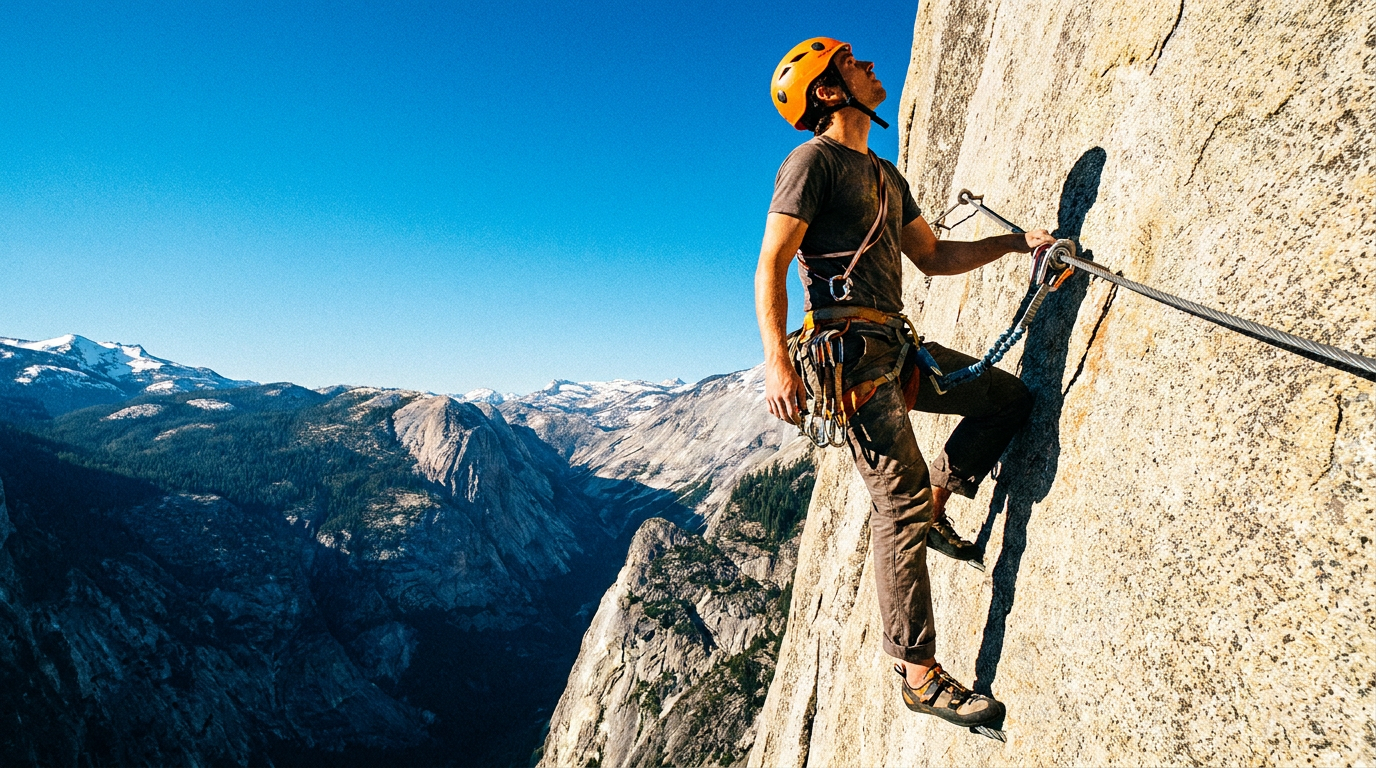
Imagine standing thousands of feet above a sweeping valley, your boots balanced on a sheer granite cliff face. Normally, this level of vertical exposure is reserved for elite rock climbers who have spent years mastering ropes, cams, and complex belay systems. But instead of wedging your hands into cracks, you are comfortably gripping a thick steel cable and stepping onto iron rungs bolted directly into the stone. This is the via ferrata, a hybrid alpine experience that is rapidly democratizing the world's most intimidating peaks.[6][7]
Translated from Italian as the 'iron path,' a via ferrata is a protected climbing route that bridges the vast gap between a strenuous hike and technical mountaineering. By utilizing a permanent, engineered infrastructure of steel cables, metal ladders, suspension bridges, and carved wooden steps, these routes allow individuals with basic fitness to safely navigate vertical terrain. Climbers wear a standard harness and helmet, but instead of relying on a partner to catch a fall with a dynamic rope, they manage their own safety by clipping specialized lanyards directly onto the continuous steel cable.[1][7]
The concept is currently experiencing a massive global tourism boom. While the European Alps have long been the epicenter of the sport—boasting over 1,000 established routes across Italy, France, Austria, and Switzerland—the phenomenon has recently exploded across North America. Driven by a post-pandemic surge in outdoor recreation, travelers are increasingly seeking out structured, highly photogenic adventures that deliver maximum adrenaline with manageable risk.[1][6]
Ski resorts, national parks, and private mountain lodges from the Colorado Rockies to the Alaskan wilderness are aggressively installing via ferratas to meet this surging demand. The appeal is moving beyond traditional mountain towns, as well; in 2022, the city of Columbus, Ohio, opened an 800-foot urban via ferrata inside an abandoned rock quarry, signaling the sport's transition into mainstream recreational infrastructure.[6]

Researchers are now classifying the via ferrata not merely as a sub-category of rock climbing, but as a distinct hybrid sport with its own unique participation pathways and destination impacts. A recent comprehensive study led by the University of Eastern Finland highlighted that the sport's rapid commercialization is outpacing the academic research needed to guide its sustainable development, urging land managers to recognize it as a specialized sector of adventure tourism.[2]
To truly understand the modern appeal of the iron path, one must look back at the sport's sobering origins. While the first rudimentary via ferratas appeared in the Austrian Alps in the 1840s, the infrastructure was truly born out of desperate necessity during the brutal high-altitude campaigns of World War I.[1]
In the jagged peaks of the Italian Dolomites, Austro-Hungarian and Italian troops fought a grueling vertical war. To move soldiers, heavy artillery, and vital supplies safely and quietly across the sheer limestone cliffs, military engineers bolted wooden ladders and thick steel lines directly into the rock faces. These perilous networks allowed troops to bypass exposed valleys and establish strategic observation posts above the clouds.[1]
Following the war, the military abandoned the routes, leaving the iron and wood to rust and rot in the alpine weather. However, local alpine clubs and volunteers soon began maintaining and upgrading these historic paths, recognizing their immense potential to attract visitors. Over the decades, the crude ropes were replaced with standardized, high-tensile steel cables, transforming a theater of war into a recreational playground.[1]

Today, the safety of a via ferrata relies entirely on a specialized piece of equipment known as a via ferrata set. This is where the mechanism of the sport diverges sharply from traditional rock climbing, and where understanding the physics of a fall becomes a matter of life and death.[3][4]
Today, the safety of a via ferrata relies entirely on a specialized piece of equipment known as a via ferrata set.
In traditional rock climbing, a long, dynamic rope stretches significantly to absorb the kinetic energy of a falling climber. On a via ferrata, however, the climber is attached to a static steel cable via a very short lanyard. If a climber slips, they will slide down the vertical cable until their carabiner violently hits the nearest steel anchor point bolted into the rock.[3][4]
Because the lanyard is short and the fall distance between anchors can be up to five meters, this creates what climbers call a high 'fall factor'—a ratio of the fall distance to the length of the rope arresting it. Without a specialized shock absorber, the sudden static stop against the steel anchor would generate a catastrophic impact force, easily snapping standard climbing slings and causing severe, potentially fatal spinal injuries.[3][4]
To mitigate this extreme physical risk, modern via ferrata sets feature a brilliant engineering solution: the progressive-tear energy absorber. Housed inside a small protective pouch on the lanyard is a length of heavy-duty webbing that has been folded and stitched together with precisely calibrated thread.[3]
In the event of a fall, as the carabiner hits the anchor and the lanyard pulls taut, these internal stitches begin to tear open sequentially. This controlled tearing acts as a mechanical braking system, lengthening the deceleration distance and absorbing the massive kinetic energy of the falling climber.[3]

European safety standards, which govern the global manufacturing of this gear, mandate that this tearing mechanism must limit the maximum impact force on the human body to less than 6 kilonewtons—roughly the maximum force the human frame can withstand without severe internal injury. Once a shock absorber has been deployed and torn open, the via ferrata set is permanently destroyed and must be discarded, having successfully traded its structural integrity for the climber's life.[3]
As the sport's safety mechanisms have been perfected, the application of via ferrata infrastructure is expanding far beyond weekend recreation. In the Himalayas, the iron path is currently being explored as a pragmatic climate adaptation strategy for the world's highest peaks.[5]
A pioneering expedition is currently equipping a new route on Mount Everest with permanent steel steps and fixed ropes designed to bypass the treacherous Khumbu Icefall. As rising global temperatures make the icefall increasingly unstable and deadly, this rock-based via ferrata offers a safer, more predictable path for the Sherpas who must navigate the mountain's lower reaches multiple times a season.[5]
Despite these safety and accessibility innovations, the rapid global expansion of via ferratas is not without controversy. Traditional mountaineers and environmental conservationists frequently debate the ethics of bolting permanent iron infrastructure into pristine, untouched alpine environments, arguing that it violates the foundational 'Leave No Trace' ethos of wilderness exploration.[2][6]

In the United States, the Wilderness Act of 1964 largely prohibits the installation of permanent climbing anchors on designated public lands. Consequently, the vast majority of North American via ferratas are currently built on private resort property, creating a stark contrast with the publicly maintained, open-access networks found throughout the European Alps.[6]
Land managers and policymakers are now tasked with a complex balancing act. They must weigh the undeniable economic benefits and the physical empowerment that via ferratas provide against the pressing need to protect sensitive high-altitude ecological zones from the pressures of over-tourism.[2]
Ultimately, the rise of the iron path represents a profound democratization of the mountains. By engineering a secure bridge between the horizontal hiking trail and the vertical rock wall, via ferratas are allowing a new generation of adventurers to safely experience the transformative awe of the high alpine.[6][7]
How we got here
1843
The first rudimentary via ferrata is installed on the Dachstein in the Austrian Alps.
1914–1918
Extensive via ferrata networks are built in the Dolomites during WWI for military transport.
1990s
The recreational popularity of via ferratas booms across France, Switzerland, and Italy.
2001
The first commercial via ferrata in the United States opens in Kentucky's Red River Gorge.
2020s
A post-pandemic outdoor recreation surge drives rapid via ferrata expansion across North American ski resorts.
2025
Expeditions begin installing via ferrata infrastructure on Mount Everest to bypass the melting Khumbu Icefall.
Viewpoints in depth
Recreational Climbers & Tourism Boards
Advocate for via ferratas as a safe, accessible way to democratize mountain adventure and boost local economies.
They argue that by providing structured, managed access, via ferratas allow everyday hikers to experience the physical and mental benefits of high-altitude exposure without the steep learning curve of traditional rock climbing. Tourism boards see them as a lucrative, year-round attraction that revitalizes mountain towns.
Traditional Mountaineers & Conservationists
Express concern over the environmental impact and the 'theme-parkification' of pristine alpine environments.
This camp argues that bolting permanent iron rungs and cables into rock faces violates the 'Leave No Trace' ethos. They worry that making vertical terrain too accessible brings large crowds to fragile ecosystems, increases rescue calls for underprepared tourists, and diminishes the raw, untamed nature of the wilderness.
Safety Engineers & Gear Manufacturers
Focus on standardizing equipment and route construction to mitigate the unique physical risks of the sport.
Their primary concern is the physics of the 'fall factor.' They emphasize that via ferratas are inherently dangerous without highly specialized, strictly regulated gear (like the progressive-tear energy absorber). They advocate for rigorous international standards (like EN 958) to ensure that commercial routes and consumer equipment can reliably prevent fatal injuries.
What we don't know
- How the long-term ecological impact of increased foot traffic on remote via ferrata routes will affect alpine wildlife.
- Whether public land management agencies in North America will eventually amend wilderness regulations to allow more via ferratas on public property.
- How the integration of via ferrata infrastructure on major peaks like Everest will alter the commercial mountaineering industry.
Key terms
- Via Ferrata
- Italian for 'iron path'; a mountain route equipped with fixed ladders, cables, and bridges to make climbing accessible to non-experts.
- Fall Factor
- A ratio used in climbing to measure the severity of a fall, calculated by dividing the fall distance by the length of the rope arresting it.
- Progressive-Tear Energy Absorber
- A safety device on a via ferrata lanyard containing stitched webbing that tears open during a fall to absorb kinetic energy and reduce impact force.
- Kilonewton (kN)
- A unit of force used to measure the impact a climber's body and gear sustain during a fall; 1 kN equals about 225 pounds of force.
- Carabiner
- A specialized metal loop with a spring-loaded gate used to connect a climber's harness to the safety cable.
Frequently asked
Do I need rock climbing experience to do a via ferrata?
No. Via ferratas are designed to be accessible to hikers with basic fitness and a head for heights, requiring no technical rope skills.
What happens if you fall on a via ferrata?
You will slide down the steel cable until your carabiner hits the nearest anchor point. Your specialized lanyard will then tear open to absorb the shock and prevent severe injury.
Can I use a regular climbing rope or sling instead of a via ferrata set?
Absolutely not. Using a static sling without a built-in shock absorber on a via ferrata can generate fatal impact forces and snap the equipment during a fall.
Why are there so few via ferratas on US public lands?
The Wilderness Act of 1964 largely prohibits the installation of permanent climbing anchors on designated public lands, restricting most US routes to private property.
Sources
Source coverage
7 outlets
4 viewpoints surfaced







[1]WikipediaRecreational Adventurers
Via ferrata
Read on Wikipedia →[2]University of Eastern FinlandTourism & Conservation Researchers
The next mountain tourism boom? Via Ferrata's global rise prompts call for industry collaboration
Read on University of Eastern Finland →[3]EdelridSafety & Engineering Experts
The function of the shock absorber of a via ferrata set
Read on Edelrid →[4]BarrabesSafety & Engineering Experts
Via Ferrata II. How to avoid the serious risk of a fall factor
Read on Barrabes →[5]Dialogue EarthHigh-Altitude Mountaineers
New Everest route seeks to make ascent less deadly
Read on Dialogue Earth →[6]National GeographicRecreational Adventurers
Why are via ferratas the new 'it' outdoor adventure in North America?
Read on National Geographic →[7]Factlen Editorial TeamRecreational Adventurers
Synthesis by Factlen editorial team
Read on Factlen Editorial Team →

Every angle. Every day.
Get travel stories with full source coverage and perspective breakdowns delivered to your inbox.