
US and Iran Near Historic Peace Deal to End 100-Day War and Reopen Strait of Hormuz
President Trump claims a memorandum of understanding will be signed Sunday to halt the conflict and reopen the vital shipping lane, though Iranian officials caution a final decision is still pending.
By Factlen Editorial Team
- U.S. Administration's View
- The U.S. frames the impending deal as a definitive victory that neutralizes Iran's nuclear threat.
- Iranian Leadership's View
- Tehran is downplaying the urgency of the deal, insisting that key concessions have yet to be finalized.
- International Mediators & Analysts
- Regional brokers are focused on the mechanical steps needed to prevent a return to open warfare.
What's not represented
- · European Energy Importers
- · Israeli Security Establishment
- · Lebanese Civilians
Why this matters
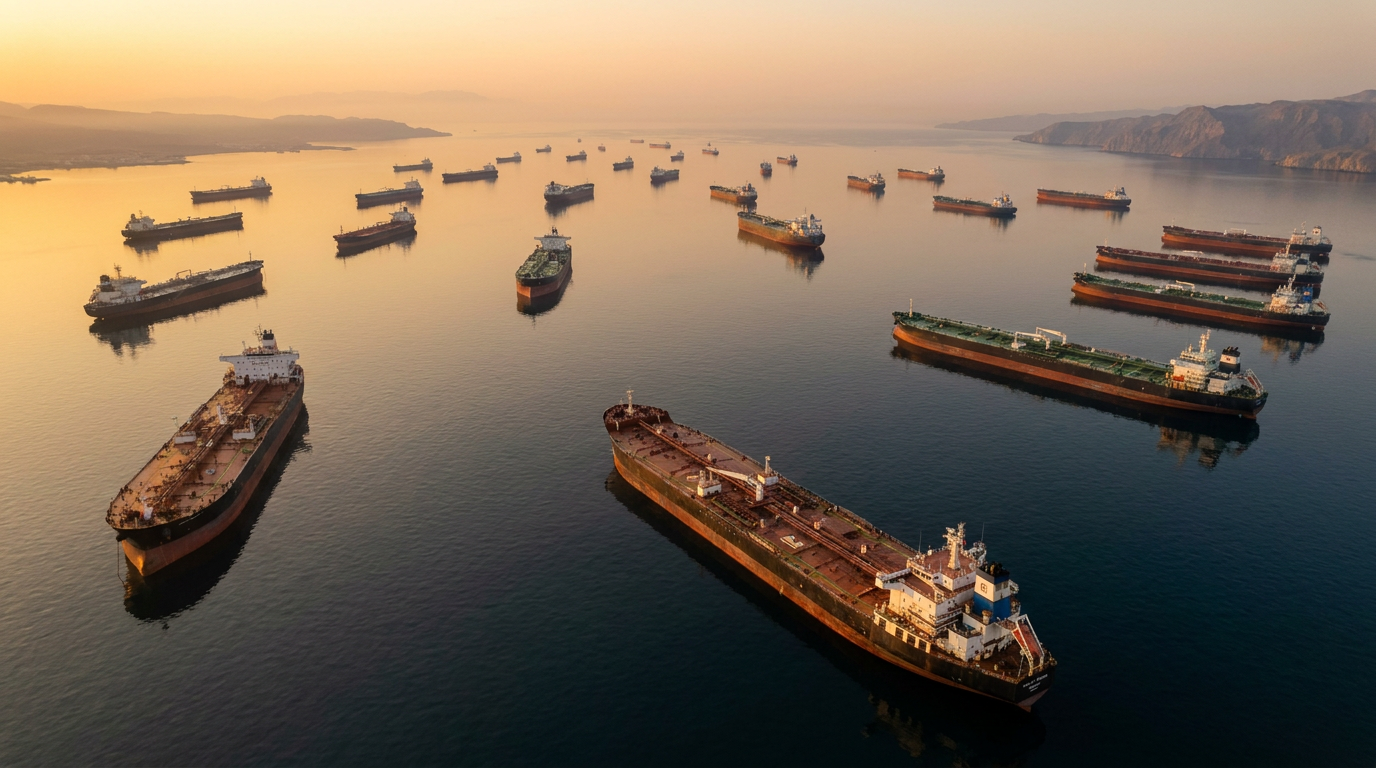
The reopening of the Strait of Hormuz would immediately ease a massive global energy shock that has driven up inflation and borrowing costs worldwide over the last 100 days. Furthermore, a finalized deal would pull the Middle East back from the brink of a broader, catastrophic regional war.
Key points
- The U.S. and Iran are finalizing a Memorandum of Understanding to extend the current ceasefire by 60 days.
- President Trump announced the deal will be signed electronically on Sunday, immediately reopening the Strait of Hormuz.
- Iranian officials denied the Sunday timeline, stating that a final decision has not yet been made.
- The agreement would lift the U.S. naval blockade on Iranian ports and initiate technical talks regarding Iran's nuclear program.
- Global oil prices dropped below $85 a barrel on Friday amid optimism that the 100-day energy shock is nearing an end.
The United States and Iran are on the precipice of signing a landmark agreement to halt a devastating 100-day war that has crippled global energy markets and reshaped the Middle East. After weeks of halting negotiations, mediators from Pakistan and Qatar have finalized the text of a Memorandum of Understanding (MoU) designed to extend the current ceasefire and reopen the vital Strait of Hormuz.[4][6]
U.S. President Donald Trump announced over the weekend that the agreement is scheduled to be signed electronically on Sunday. In a social media post, Trump claimed the deal would permanently prevent Tehran from obtaining a nuclear weapon and that the Strait of Hormuz would be "open to all" immediately after the virtual ink dries.[1][7]
However, Iranian officials quickly poured cold water on the Sunday timeline. Foreign Ministry spokesperson Esmaeil Baghaei stated that while an agreement in the coming days cannot be ruled out, a Sunday signing is premature. State-aligned media in Tehran emphasized that the Islamic Republic has not yet made a final decision, reflecting fierce internal debate among Iranian hardliners who fear giving up leverage too quickly.[2][3][8]

The conflicting timelines highlight the intense political pressure on both sides to frame the war's outcome as a victory. The conflict erupted on February 28, 2026, when U.S. and Israeli airstrikes killed Iran's Supreme Leader Ali Khamenei and targeted military infrastructure. Iran retaliated with massive missile barrages and effectively closed the Strait of Hormuz, choking off roughly one-fifth of the world's oil and natural gas supply.[5][9]
The proposed MoU is not a final peace treaty, but rather a framework to de-escalate the immediate crisis. If signed, it would extend the fragile ceasefire—which has been in place since early April—by an additional 60 days. During this window, the two sides would transition to technical-level talks in Geneva to hammer out the permanent details.[4][6]
The proposed MoU is not a final peace treaty, but rather a framework to de-escalate the immediate crisis.
The core trade-off in the initial memorandum involves maritime access. The United States would agree to lift its naval blockade of Iranian ports, a key demand from Tehran. In exchange, Iran would lift its toll system and military blockade of the Strait of Hormuz, allowing international shipping to resume normal operations.[1][2][7][8]
The economic stakes of reopening the strait are staggering. The 100-day closure sent global energy prices skyrocketing, forcing the World Bank to release up to $60 billion in emergency funds for developing nations hit hardest by the resulting inflation. Optimism over the impending deal provided immediate relief to markets on Friday, with the U.S. crude oil benchmark (WTI) dropping below $85 per barrel.[1]

The most contentious issue remains Iran's nuclear program. U.S. officials have briefed reporters that the MoU "leads to" the dismantling of Iran's enrichment capabilities and the removal of its highly enriched uranium stockpile. Trump has publicly touted the agreement as an ironclad guarantee against an Iranian nuclear weapon.[1][6][7]
Iranian negotiators, however, have pushed back against this framing. They insist that the MoU contains only broad references to the nuclear issue, leaving the actual parameters of enrichment and international inspections to be negotiated during the 60-day ceasefire window. Tehran maintains that its nuclear efforts are for peaceful purposes, though international monitors have been unable to verify the stockpile since the war began.[3][5]
The role of regional proxies also remains a delicate sticking point. Drafts of the agreement stipulate that hostilities must cease on all fronts, implicitly requiring Iran to rein in allied militant groups in Lebanon and Yemen. Israeli Prime Minister Benjamin Netanyahu has reportedly demanded strict enforcement of this clause, though Iran has historically resisted formal negotiations over its proxy network.[5][7]

The diplomatic heavy lifting has been managed by Pakistan and Qatar, who have shuttled between Washington and Tehran to bridge the gap. Pakistani Prime Minister Shehbaz Sharif expressed confidence that the framework is complete, noting that the virtual signing ceremony will be a simple video call connecting the two capitals without requiring physical travel.[4][6]
As the world watches to see if the electronic signing materializes, the underlying reality remains precarious. Even if the MoU is executed, the subsequent 60 days of technical negotiations will test whether the U.S. and Iran can translate a temporary truce into a lasting regional settlement, or if the Middle East will slide back into open warfare.[3][5]
How we got here
Feb 28, 2026
U.S. and Israeli airstrikes kill Iran's Supreme Leader, sparking a massive regional war.
March 2026
Iran retaliates with missile strikes and effectively closes the Strait of Hormuz, triggering a global energy crisis.
April 7, 2026
A fragile, temporary ceasefire goes into effect following mediation by Pakistan.
June 11, 2026
President Trump calls off renewed strikes, citing major progress on a peace framework.
June 13, 2026
Trump announces the deal will be signed Sunday, though Iranian officials deny the timeline.
Viewpoints in depth
U.S. Administration's View
The U.S. frames the impending deal as a definitive victory that neutralizes Iran's nuclear threat.
President Trump and U.S. officials are projecting confidence that the war has achieved its primary objectives. They emphasize that the Memorandum of Understanding will not only immediately reopen the Strait of Hormuz to global shipping but will also force the total dismantling of Iran's nuclear enrichment capabilities. By pushing for a rapid Sunday signing, the administration seeks to cement the narrative that its military and economic pressure campaign successfully forced Tehran to capitulate on long-standing red lines.
Iranian Leadership's View
Tehran is downplaying the urgency of the deal, insisting that key concessions have yet to be finalized.
Iranian officials and state media are actively resisting the U.S. timeline, framing the Sunday signing date as a unilateral American projection. For Tehran, the priority is securing the immediate lifting of the U.S. naval blockade on Iranian ports before committing to any binding nuclear concessions. Hardliners within the Iranian establishment are wary of giving up the immense leverage provided by the closure of the Strait of Hormuz, insisting that the upcoming 60-day window must be used to negotiate terms as equals rather than surrendering their nuclear infrastructure.
International Mediators' View
Regional brokers are focused on the mechanical steps needed to prevent a return to open warfare.
Mediators from Pakistan and Qatar are less concerned with the domestic political framing in Washington or Tehran and more focused on the practical mechanics of de-escalation. They view the electronic signing of the MoU as a critical circuit-breaker to halt the 100-day conflict. For these diplomats, the immediate goal is to extend the fragile ceasefire by 60 days and reopen the Strait of Hormuz to stabilize the global economy, buying crucial time for technical teams to tackle the intractable issues of uranium enrichment and regional proxies in Geneva.
What we don't know
- Whether Iranian hardliners will ultimately approve the concessions required to sign the memorandum.
- How strictly the agreement will enforce a cessation of hostilities among Iran's proxy network in Lebanon and Yemen.
- Whether the subsequent 60-day negotiation window will successfully produce a permanent treaty or merely delay further conflict.
Key terms
- Strait of Hormuz
- A narrow waterway between the Persian Gulf and the Gulf of Oman through which roughly 20% of the world's oil supply passes.
- Memorandum of Understanding (MoU)
- A non-binding agreement outlining the broad terms of a deal, serving as a framework for future detailed negotiations.
- Highly Enriched Uranium
- Uranium processed to a concentration suitable for use in nuclear weapons, a central focus of U.S. demands in the negotiations.
- Naval Blockade
- The use of naval forces to cut off a country's maritime access, which the U.S. imposed on Iranian ports during the conflict.
Frequently asked
Is the U.S.-Iran war completely over?
Not yet. The proposed agreement is a Memorandum of Understanding that extends the current ceasefire for 60 days to allow for technical negotiations.
Will gas prices go down?
Markets are optimistic. Crude oil prices have already begun to drop below $85 a barrel in anticipation of the Strait of Hormuz reopening.
Did Iran agree to give up its nuclear program?
The U.S. claims the deal will dismantle Iran's nuclear program, but Iranian officials say nuclear negotiations will only take place during the 60-day window following the initial signing.
How will the deal be signed?
Mediators have arranged for an electronic signing ceremony via a secure video call connecting Washington and Tehran, without requiring physical travel.
Sources
Source coverage
9 outlets
3 viewpoints surfaced









[1]CBS NewsU.S. Administration's View
Live Updates: U.S.-Iran peace deal to be signed Sunday, Trump says
Read on CBS News →[2]Al JazeeraIranian Leadership's View
Will the US-Iran deal be signed on Sunday? What we know so far
Read on Al Jazeera →[3]The GuardianIranian Leadership's View
Middle East crisis live: Trump says Iran deal will be signed today but sources tell media Tehran 'not yet' taken final decision
Read on The Guardian →[4]PBS NewsInternational Mediators & Analysts
What to know about a possible U.S.-Iran deal to end the war
Read on PBS News →[5]Council on Foreign RelationsInternational Mediators & Analysts
Is a U.S.-Iran Deal Within Reach? Six Key Issues That Could Shape a Ceasefire
Read on Council on Foreign Relations →[6]AxiosU.S. Administration's View
U.S., Iran expected to electronically sign agreement to end war Sunday
Read on Axios →[7]The National NewsU.S. Administration's View
Trump says Strait of Hormuz will 'immediately open to all' after US-Iran deal is signed on Sunday
Read on The National News →[8]The HinduIranian Leadership's View
West Asia war LIVE: Iran media says Tehran 'not yet' taken final decision on U.S. peace deal
Read on The Hindu →[9]WikipediaInternational Mediators & Analysts
2026 Iran war ceasefire
Read on Wikipedia →
More in news politics
See all 5 stories →Media Literacy
Does 'Prebunking' Actually Work? The Evidence Behind the New Strategy to Fight Misinformation
0 sources

Shadow Fleet
UK Forces Seize Russian Shadow Fleet Oil Tanker in the English Channel
0 sources
Media Consolidation
Justice Department Approves $111 Billion Paramount and Warner Bros. Merger
0 sources
Every angle. Every day.
Get news politics stories with full source coverage and perspective breakdowns delivered to your inbox.