
UK Forces Seize Russian 'Shadow Fleet' Oil Tanker in English Channel
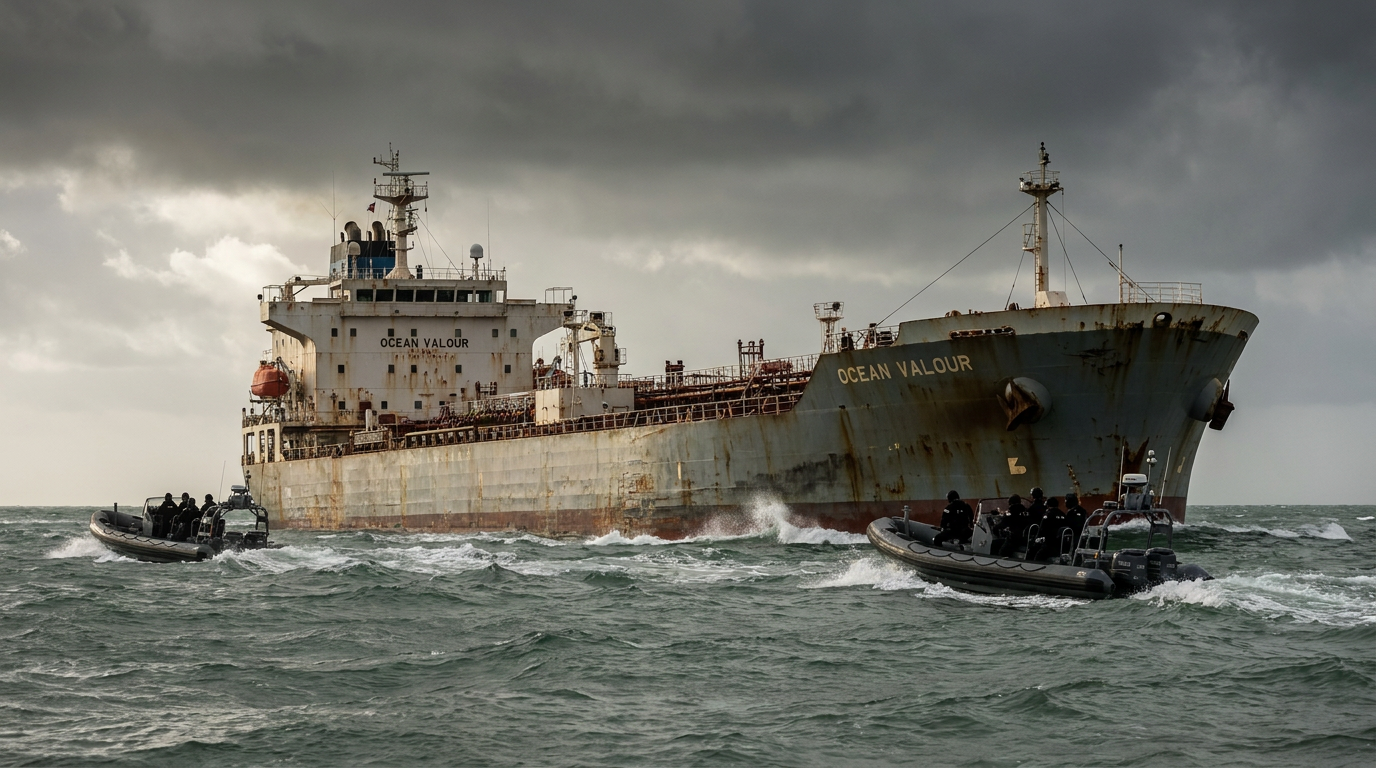
In a first-of-its-kind operation, British Royal Marines boarded and detained a sanctioned oil tanker suspected of illegally transporting Russian oil. The six-hour interception marks a major escalation in Western efforts to choke off funding for the war in Ukraine.
By Factlen Editorial Team
- UK Government & Allies
- Argue that intercepting the shadow fleet is legally justified and necessary to choke off the resources funding Russia's war in Ukraine.
- Maritime Security Analysts
- Focus on the environmental hazards and legal complexities of policing shell-company vessels in busy waterways.
- Russian Leadership
- View these interceptions as illegal acts of piracy and illegitimate Western overreach that violates maritime norms.
What's not represented
- · Environmental NGOs
- · Global Shipping Insurers
Why this matters
Russia's 'shadow fleet' is the primary financial engine keeping its wartime economy afloat despite Western sanctions. By moving from passive sanctions to active military interceptions in busy shipping lanes, the UK is testing a new legal and military framework that could drastically disrupt global energy markets.
Key points
- British forces intercepted the sanctioned oil tanker Smyrtos in the English Channel.
- The six-hour operation marks the first UK-led interception of a shadow fleet vessel in its waters.
- Russia uses the shadow fleet to bypass Western sanctions and fund its war in Ukraine.
- The vessel is being held off the south coast of England for investigation.
- Maritime experts warn the aging, under-insured ships pose a severe environmental risk.
British armed forces boarded and seized a sanctioned oil tanker in the English Channel on Sunday, marking the UK's first direct interception of a vessel belonging to Russia's so-called "shadow fleet."[1][4]
The six-hour operation involved Royal Marine Commandos and National Crime Agency officers boarding the Smyrtos. They were supported by a formidable array of air and naval assets, including Chinook helicopters, an RAF P-8 maritime patrol aircraft, and the frigates HMS Sutherland and HMS Ledbury.[2][5]
The vessel is being moved to an anchorage off the south coast of England, where authorities will monitor it for environmental and safety concerns while investigations continue.[3][4]
Prime Minister Keir Starmer, who directed the operation, framed the seizure as a direct strike against the financial arteries sustaining the war in Ukraine. "This successful operation delivers yet another blow to Russia and reminds those fueling Putin's war... that they cannot hide," Starmer stated.[1][6]

The interception represents a significant escalation in maritime enforcement. While the UK has previously supported French-led operations—such as the interception of the Tagor in the Atlantic in May and the Deyna in Marseille in March—this is the first time London has unilaterally detained a vessel in its own territorial waters.[3][5]
The interception represents a significant escalation in maritime enforcement.
The legal groundwork for Sunday's action was laid in March 2026, when Starmer's government announced that UK forces would begin actively detaining sanctioned vessels transiting British waters. Attorney General Lord Richard Hermer emphasized that the government is pursuing the fleet "under the full force of international law."[4][5]
Russia's shadow fleet—a sprawling network of hundreds of aging, often poorly maintained tankers—has become crucial to Moscow's economy. By utilizing shell companies and sailing under flags of convenience, these vessels bypass Western price caps and embargoes, exporting millions of barrels of oil to willing buyers.[1][4]

The UK Ministry of Defence estimates that sanctions targeting over 500 vessels have already contributed to a 24 percent decline in Russia's oil and gas revenues in 2025 compared to the previous year. Defence Secretary Dan Jarvis noted that the interdiction "delivers a blow to Putin's illegal war."[3][5]
However, the aggressive new enforcement strategy carries geopolitical risks. Russian President Vladimir Putin has previously condemned the capture of Russia-linked vessels as outright "piracy," raising concerns about potential retaliatory measures against Western shipping.[3]
Beyond the geopolitical stakes, maritime experts have long warned about the environmental threat posed by the shadow fleet. These aging tankers frequently operate without standard industry insurance, raising the specter of a catastrophic oil spill in heavily trafficked corridors like the English Channel, where accountability would be nearly impossible to trace through layers of shell companies.[4][5]

The National Crime Agency's involvement highlights the complex legal nature of the shadow fleet. Because these vessels frequently change names, flags, and registered holding companies, proving their direct link to the Russian state requires forensic financial investigation alongside military force.[4]
How we got here
March 2026
UK Prime Minister Keir Starmer announces forces will begin detaining sanctioned vessels in British waters.
March 2026
The Russian-linked tanker Deyna is detained in Marseille by French authorities.
May 31, 2026
The shadow fleet tanker Tagor is intercepted in the Atlantic Ocean in a French-led operation.
June 14, 2026
UK forces conduct their first unilateral interception, seizing the Smyrtos in the English Channel.
Viewpoints in depth
UK Government & Allies
Argue that intercepting the shadow fleet is legally justified and necessary to choke off the resources funding Russia's war in Ukraine.
British officials maintain that the shadow fleet operates in direct violation of international sanctions and poses a severe threat to European security. By utilizing the National Crime Agency alongside the Royal Marines, the UK is framing these interceptions not just as military maneuvers, but as maritime law enforcement against organized financial crime. Allies view these actions as essential to enforcing the Western price cap on Russian oil.
Russian Leadership
View these interceptions as illegal acts of piracy and illegitimate Western overreach that violates maritime norms.
Moscow has consistently rejected the legitimacy of Western sanctions, arguing that they are unilateral and not backed by the UN Security Council. Russian officials, including President Vladimir Putin, have categorized the seizure of commercial vessels as state-sponsored piracy. They argue that intercepting ships in international transit corridors like the English Channel violates the freedom of navigation and threatens global energy market stability.
Maritime Security Analysts
Focus on the environmental hazards and legal complexities of policing shell-company vessels in busy waterways.
Independent maritime experts are deeply concerned about the physical state of the shadow fleet. These aging tankers often operate without protection and indemnity (P&I) insurance from recognized Western providers. Analysts warn that a collision or structural failure in the English Channel could result in a catastrophic oil spill, leaving coastal nations to bear the cleanup costs because the ships' true owners are hidden behind layers of anonymous shell companies.
What we don't know
- Whether Russia will attempt retaliatory measures against British or allied commercial shipping.
- How the true ownership of the Smyrtos will be traced through its shell-company structure.
- If other European nations will follow the UK's lead and begin unilaterally detaining shadow fleet vessels in their waters.
Key terms
- Shadow fleet
- A network of aging, often under-insured commercial vessels used by a country to secretly export oil and evade international sanctions.
- Flag of convenience
- A business practice where a ship is registered in a country different from that of its owners, often to avoid strict financial or safety regulations.
- Shell company
- A corporate entity without active business operations or significant assets, frequently used to obscure the true ownership of a vessel.
Frequently asked
Why did the UK seize the Smyrtos?
The UK intercepted the Smyrtos because it is a sanctioned vessel suspected of transporting Russian oil in violation of international embargoes designed to defund the war in Ukraine.
Is this the first time a Russian tanker has been intercepted?
While France and other allies have previously intercepted shadow fleet vessels, this marks the first time the UK has led such an operation in its own territorial waters.
What happens to the seized tanker now?
The Smyrtos is being held at an anchorage off the south coast of England, where it will be monitored for environmental and safety risks while the National Crime Agency investigates.
Sources
Source coverage
6 outlets
3 viewpoints surfaced






[1]Associated PressUK Government & Allies
Britain detains sanctioned oil tanker believed to be linked to Russia's shadow fleet
Read on Associated Press →[2]The Moscow TimesRussian Leadership
U.K. Intercepts Russian Shadow Fleet Vessel in English Channel
Read on The Moscow Times →[3]Al JazeeraMaritime Security Analysts
UK boards and seizes Russian shadow fleet tanker in English Channel
Read on Al Jazeera →[4]The IndependentUK Government & Allies
UK armed forces board Russian shadow fleet tanker in English Channel
Read on The Independent →[5]European PravdaUK Government & Allies
UK reveals details of first operation to intercept Russian tanker
Read on European Pravda →[6]The Times of IsraelMaritime Security Analysts
UK forces intercept Russian shadow fleet oil tanker attempting to cross English Channel
Read on The Times of Israel →
More in news politics
See all 5 stories →Ukraine Accession
Ukraine and Moldova Start First Phase of EU Membership Negotiations After Hungary Lifts Veto
0 sources
Media Literacy
Does 'Prebunking' Actually Work? The Evidence Behind the New Strategy to Fight Misinformation
0 sources

Shadow Fleet
UK Forces Seize Russian Shadow Fleet Oil Tanker in the English Channel
0 sources
Every angle. Every day.
Get news politics stories with full source coverage and perspective breakdowns delivered to your inbox.