
The Solid-State Era Arrives: How Next-Gen Batteries Are Reshaping EVs in 2026
After years of laboratory promises, solid-state batteries are finally entering pilot production in 2026, promising 600-mile ranges, 10-minute charge times, and zero fire risk.
By Factlen Editorial Team
- Chinese Innovators
- Pushing aggressive timelines to maintain global dominance in battery manufacturing.
- Legacy Automakers
- Viewing solid-state technology as the key to leapfrogging current EV leaders.
- Battery Tech Startups
- Focusing on fundamental material breakthroughs to license to the broader industry.
- Industry Analysts
- Optimistic about the technology but cautious about the high manufacturing costs and scaling timelines.
What's not represented
- · Raw material miners
- · Independent repair shops
Why this matters
Solid-state batteries are widely considered the 'holy grail' of electric vehicle technology. By doubling energy density and eliminating flammable liquids, they promise to make EVs lighter, safer, and capable of traveling over 600 miles on a single 10-minute charge—effectively erasing range anxiety.
Key points
- Chinese automaker Dongfeng announced mass production of solid-state batteries for the second half of 2026.
- QuantumScape inaugurated its Eagle Line pilot facility in California to scale lithium-metal cell manufacturing.
- Toyota is targeting 2027 for solid-state EVs capable of 745 miles of range and 10-minute charging.
- Replacing liquid electrolytes with solid materials eliminates the fire risks associated with thermal runaway.
- Solid-state cells retain up to 74% of their charge in extreme cold, solving a major pain point for winter EV driving.
- Early solid-state batteries will likely be reserved for luxury and high-performance vehicles due to high manufacturing costs.
For the past decade, the electric vehicle industry has been chasing a singular, elusive breakthrough: the solid-state battery. Often described as the "holy grail" of energy storage, the technology promises to double driving ranges, slash charging times, and eliminate the fire risks associated with current lithium-ion cells.[7]
In 2026, that long-awaited future is finally bleeding onto the factory floor. After years of laboratory demonstrations and delayed timelines, major automakers and battery developers are breaking ground on pilot plants and announcing aggressive mass-production schedules.
The most recent shockwave came in June 2026 from Chinese automaker Dongfeng Motor. The company announced it will begin mass production of its solid-state batteries in the second half of the year, significantly accelerating the industry's expected timeline.[2][3]
Dongfeng claims its new battery achieves an energy density of 350 watt-hours per kilogram (Wh/kg)—a massive leap over the 200 to 260 Wh/kg average of conventional lithium-ion batteries. This density will allow vehicles to exceed a driving range of 1,000 kilometers (621 miles) on a single charge.[2][3][7]

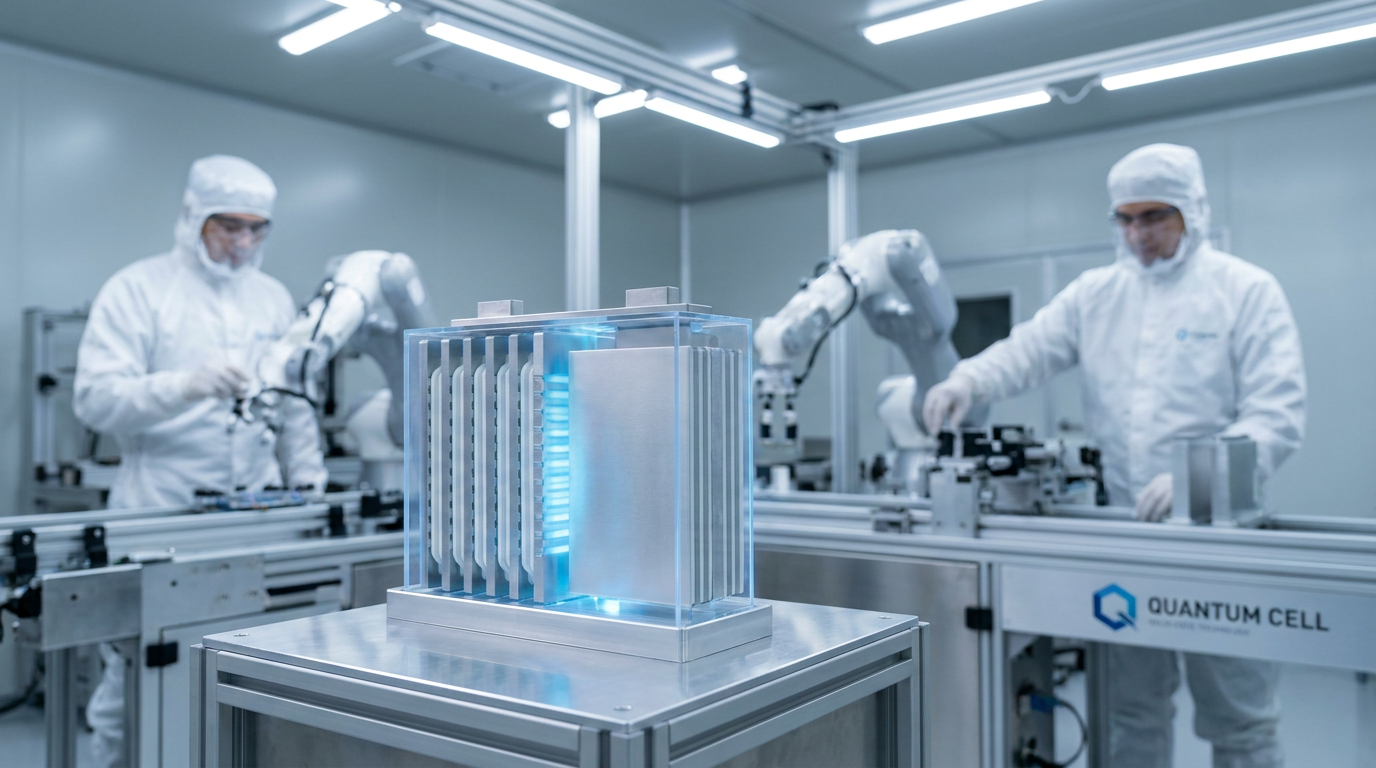
Across the Pacific, American battery developer QuantumScape marked its own major milestone in early 2026 by inaugurating its "Eagle Line" pilot facility in San Jose, California. The highly automated plant is designed to scale up the company's proprietary solid-state lithium-metal cells for automotive partners, including the Volkswagen Group.[1][5]
QuantumScape's facility utilizes a proprietary manufacturing technique dubbed the "Cobra process," which aims to solve one of the technology's biggest hurdles: producing the solid separator at a commercial scale without compromising quality.[5]
Meanwhile, legacy giant Toyota—which holds over 1,000 patents related to solid-state technology—is advancing its own roadmap. The Japanese automaker recently received government approval to build a large-scale solid electrolyte pilot plant in collaboration with petroleum company Idemitsu Kosan.[4]
Toyota is targeting 2027 or 2028 for the launch of its first solid-state EVs. The company claims these next-generation vehicles will be capable of traveling 1,200 kilometers (745 miles) and recharging in under 10 minutes, effectively matching the convenience of filling a gas tank.[4]

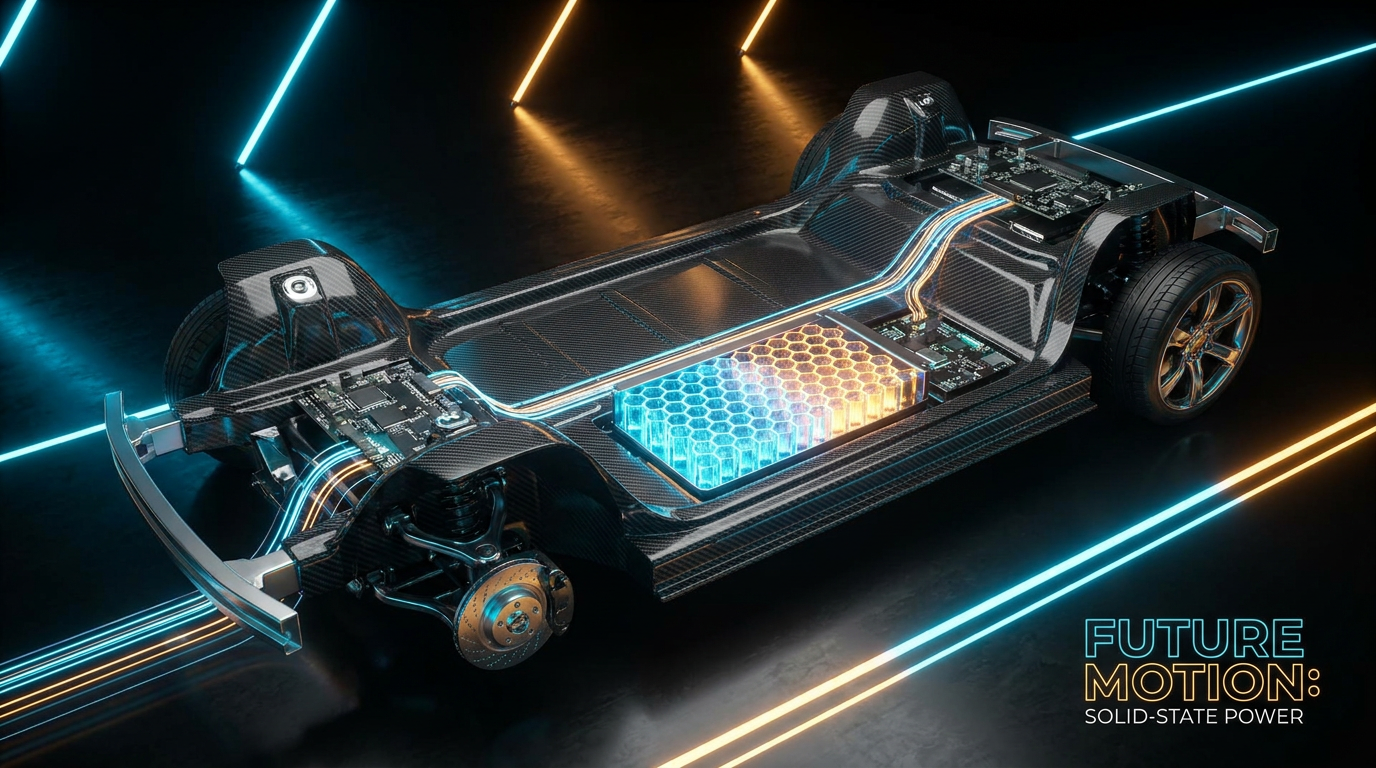
To understand why these numbers are possible, it helps to look inside the cell. A traditional lithium-ion battery relies on a liquid electrolyte—a chemical "soup" that allows lithium ions to flow back and forth between the anode and the cathode during charging and discharging.[7]
To understand why these numbers are possible, it helps to look inside the cell.
Solid-state batteries replace this liquid with a solid material, typically a ceramic, glass, or polymer sulfide. This single architectural swap unlocks a cascade of physical and chemical advantages that fundamentally alter how the battery performs.[6][7]
The most immediate benefit is safety. Liquid electrolytes are highly volatile and flammable, which is why damaged EV batteries can occasionally experience "thermal runaway" and catch fire. Solid electrolytes are inherently stable and non-combustible.[6][7]
Dongfeng recently subjected its solid-state prototypes to extreme safety testing, including heating the cells to 170 degrees Celsius and crushing them until they were deformed by 50 percent. The batteries continued to operate without emitting smoke or catching fire.[2]
Beyond safety, the solid separator allows engineers to swap out the traditional graphite anode for one made of pure lithium metal. Lithium metal can store up to ten times more capacity than graphite, which is the primary reason solid-state batteries can achieve such staggering energy densities.[5][7]

These batteries also solve the EV industry's cold-weather problem. Liquid electrolytes become viscous in freezing temperatures, slowing down the chemical reactions and severely reducing a vehicle's range. Solid-state cells are far more resilient to temperature extremes.[7]
During winter testing in Mohe, China—where temperatures plunged to -30 degrees Celsius (-22 Fahrenheit)—Dongfeng's solid-state prototype retained over 74 percent of its charge, maintaining a functional range that would leave traditional EVs stranded.[2]
Despite these massive advantages, the transition will not happen overnight. Manufacturing solid-state batteries requires unprecedented precision. The solid interfaces between the anode, cathode, and electrolyte must maintain perfect contact as the battery expands and contracts during charging.[6][7]
If microscopic gaps form, or if needle-like structures called "lithium dendrites" pierce the solid separator, the battery can short-circuit and fail. Solving these mechanical challenges at a gigawatt-hour manufacturing scale is why the technology has taken so long to commercialize.[6][7]
Because of these complex manufacturing requirements, early solid-state batteries will be expensive. Automakers like Toyota have explicitly stated that the first solid-state cells will be reserved for flagship luxury models and high-performance sports cars, rather than budget-friendly commuters.[4]
In the interim, the industry is relying on "semi-solid" batteries as a stepping stone. Companies like Chinese EV maker NIO are already deploying 150-kilowatt-hour packs that use a hybrid of solid and liquid materials, offering a bridge to the fully solid future.[7]

As manufacturing techniques mature and economies of scale take hold, the landscape will shift dramatically. Market intelligence firm IDTechEx projects that the global solid-state battery market will explode to $10 billion by 2036, ushering in an era where range anxiety is nothing more than a historical footnote.[6]
How we got here
2020
Toyota announces early solid-state prototypes but delays mass production due to manufacturing challenges.
2023
Toyota claims a breakthrough in solid electrolyte durability, revising its launch target to 2027.
Early 2026
QuantumScape inaugurates its Eagle Line pilot facility in California to scale lithium-metal cells.
Mid 2026
Dongfeng Motor announces mass production of solid-state batteries for the second half of the year.
2027-2028
Projected timeline for the first fully solid-state flagship vehicles from major legacy automakers to hit the consumer market.
Viewpoints in depth
Legacy Automakers
Viewing solid-state technology as the key to leapfrogging current EV leaders.
For traditional giants like Toyota and Volkswagen, solid-state batteries represent a reset button for the EV race. By bringing vehicles to market that can charge in 10 minutes and travel 700 miles, they hope to neutralize the advantages currently held by early EV pioneers. These automakers are investing billions in proprietary electrolyte research and pilot plants, betting that superior chemistry will ultimately win out over early market share.
Chinese Innovators
Pushing aggressive timelines to maintain global dominance in battery manufacturing.
Companies like Dongfeng, CATL, and NIO are determined not to lose their grip on the global battery supply chain. Rather than waiting for perfect all-solid-state cells, many Chinese firms have rapidly commercialized 'semi-solid' hybrid batteries as a stepping stone. Their strategy relies on iterative, high-volume manufacturing, pushing prototypes into extreme weather testing and real-world fleets years ahead of their Western and Japanese rivals.
Battery Tech Startups
Focusing on fundamental material breakthroughs to license to the broader industry.
Firms like QuantumScape operate fundamentally differently than automakers. Their goal is to solve the core physics problems—such as preventing lithium dendrites and scaling the production of ultra-thin ceramic separators. By developing proprietary manufacturing techniques like the 'Cobra process,' these startups aim to become the foundational technology providers, licensing their cell architectures to multiple automotive brands rather than building cars themselves.
What we don't know
- Exactly how much of a price premium the first generation of solid-state EVs will carry over traditional lithium-ion models.
- Whether startups like QuantumScape or legacy giants like Toyota will be the first to achieve true gigawatt-hour manufacturing scale.
- How quickly the global supply chain can pivot to source the specific ceramic and sulfide materials required for solid electrolytes.
Key terms
- Solid-State Battery
- A battery that uses a solid material, rather than a liquid, to conduct ions between its electrodes.
- Electrolyte
- The medium inside a battery that allows electrical charge (ions) to flow between the anode and cathode.
- Lithium-Metal Anode
- A negative electrode made of pure lithium, which stores significantly more energy than traditional graphite but requires a solid electrolyte to function safely.
- Thermal Runaway
- A dangerous chain reaction where a battery overheats and catches fire, typically caused by a short circuit igniting a liquid electrolyte.
- Energy Density
- The amount of energy a battery can store relative to its weight, usually measured in watt-hours per kilogram (Wh/kg).
- Lithium Dendrites
- Microscopic, needle-like structures that can grow inside a battery during charging, potentially piercing the separator and causing a short circuit.
Frequently asked
Will solid-state batteries make EVs cheaper?
Not initially. Because the manufacturing process requires extreme precision and new machinery, early solid-state batteries will be expensive and reserved for luxury vehicles. Prices are expected to drop as production scales up over the next decade.
Can I put a solid-state battery in my current EV?
No. Solid-state batteries require entirely different thermal management systems, charging architectures, and software controllers. They will only be available in new vehicles specifically designed for them.
Are solid-state batteries completely fireproof?
While no energy storage device is completely invincible, solid-state batteries are vastly safer than current lithium-ion cells. Because they lack flammable liquid electrolytes, they do not experience the explosive thermal runaway fires seen in traditional batteries.
What is a semi-solid battery?
A semi-solid battery is a hybrid technology that uses a mix of solid and liquid electrolytes. It serves as a stepping stone, offering better energy density and safety than traditional batteries while being easier to manufacture than pure solid-state cells.
Sources
Source coverage
7 outlets
4 viewpoints surfaced







[1]ElectrekBattery Tech Startups
QuantumScape inaugurates Eagle Line pilot for solid-state battery production
Read on Electrek →[2]CarNewsChinaChinese Innovators
Dongfeng Motor's solid-state batteries scheduled for mass production in H2 2026
Read on CarNewsChina →[3]CarsGuideChinese Innovators
Game-changing solid-state batteries are back on the agenda
Read on CarsGuide →[4]Green Car ReportsLegacy Automakers
Toyota will ramp up EV production, manufacture solid-state batteries in Japan
Read on Green Car Reports →[5]QuantumScapeBattery Tech Startups
QuantumScape Corporation Celebrates Inauguration of Eagle Line
Read on QuantumScape →[6]IDTechExIndustry Analysts
Solid-State Batteries 2026-2036: Technology, Forecasts, Players
Read on IDTechEx →[7]Bonnen BatteriesIndustry Analysts
Solid-State Batteries 2026: The Ultimate Guide
Read on Bonnen Batteries →
Every angle. Every day.
Get automotive stories with full source coverage and perspective breakdowns delivered to your inbox.