
How Solid-State Batteries Are Finally Moving From Lab to Assembly Line in 2026
After years of delays, solid-state batteries are entering pilot production, promising to double EV ranges and eliminate battery fires. Here is how the technology works and why scaling it remains a massive industrial challenge.
By Factlen Editorial Team
- Cautious Giants
- Established automakers acknowledging the chemistry breakthroughs but emphasizing the massive manufacturing and cost hurdles before mass adoption.
- Aggressive Innovators
- Startups and ambitious manufacturers pushing for immediate commercialization and touting ultra-fast charging breakthroughs.
- Battery Skeptics & Researchers
- Scientists demanding third-party verification of cycle-life claims and focusing on the physics challenges of solid-solid interfaces.
What's not represented
- · Raw material mining communities affected by the shift to metallic lithium
- · Independent auto repair shops facing entirely new battery architectures
Why this matters
Solid-state batteries represent the biggest leap in energy storage since the invention of lithium-ion. By drastically increasing range, eliminating fire risks, and reducing charging times to mere minutes, this technology is poised to remove the final hurdles to mainstream electric vehicle adoption.
Key points
- Solid-state batteries replace flammable liquid electrolytes with rigid, non-combustible materials like ceramics or polymers.
- The technology allows for metallic lithium anodes, pushing energy densities to 500 Wh/kg and potentially doubling EV range.
- Chinese manufacturers like GBT and BYD are moving from lab prototypes to pilot production lines in 2026 and 2027.
- Despite the breakthroughs, scaling production requires overcoming complex 'solid-solid interface' challenges and building entirely new assembly lines.
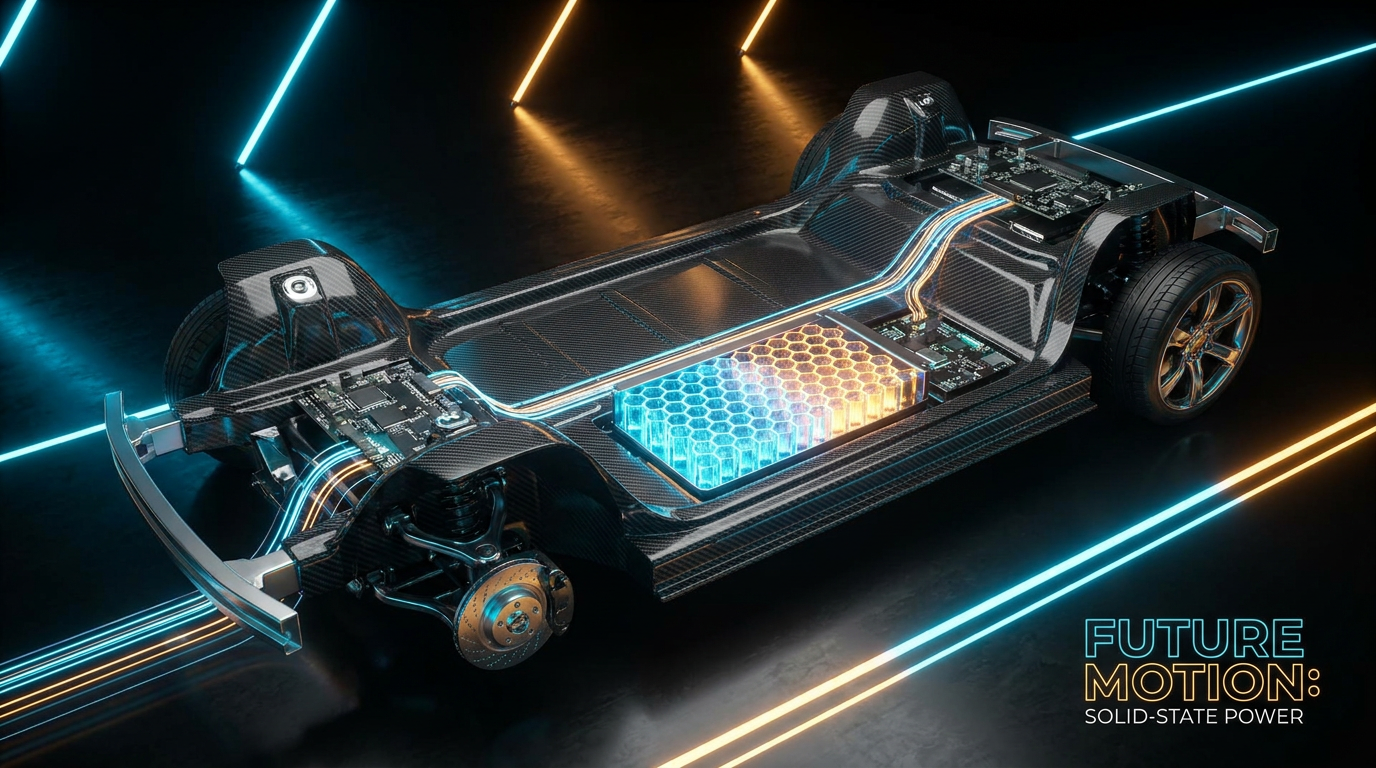
For over a decade, the electric vehicle industry has chased a singular, almost mythical holy grail: the solid-state battery. Promised as the technology that would finally cure range anxiety, eliminate battery fires, and reduce charging times to the length of a coffee break, it has perpetually remained 'five years away.' But in 2026, the narrative is shifting from laboratory hype to industrial reality. Major manufacturers are finally moving these next-generation power cells off the testing bench and onto factory floors, signaling a profound shift in how the world stores energy.[1][6]
Recent breakthroughs from major Chinese manufacturers and European startups suggest that the solid-state era is arriving faster than anticipated. Greater Bay Technology (GBT), a battery manufacturer backed by China's GAC Group, recently announced a major milestone: its first 'A-sample' all-solid-state battery cells have officially rolled off the production line. These advanced cells successfully passed rigorous needle penetration, extrusion, and thermal shock tests without igniting or exploding. This physical resilience has prompted the company to aggressively target GWh-level mass production for in-vehicle use by the end of 2026, a timeline that has stunned some industry observers.[1]
Meanwhile, industry giants are laying the groundwork for massive scale. BYD, the world's largest EV manufacturer, has confirmed that its solid-state development is currently at a 'critical breakthrough stage,' with pilot production targeted for 2027. The implications for everyday consumers are profound, promising to rewrite the rules of automotive design. Automakers are preparing for a near future where passenger vehicles are capable of traveling over 600 miles on a single charge, recharging at highway stations in under ten minutes, and operating flawlessly in extreme cold weather that typically cripples standard battery packs.[2][6]
To understand why this technology is so transformative, one must first understand the fundamental limitations of the batteries currently powering the world's electric vehicles, smartphones, and laptops. Traditional lithium-ion batteries consist of three main internal components: a positive electrode known as the cathode, a negative electrode known as the anode, and a liquid electrolyte separating them. This basic architecture has powered the mobile revolution for decades, enabling everything from the first smartphones to the current generation of electric cars, but it has finally reached its physical and chemical limits.[4][5]

When a conventional lithium-ion battery charges or discharges, lithium ions swim back and forth between the cathode and the anode through this liquid electrolyte. While highly effective at conducting ions, this liquid—typically a lithium salt dissolved in a volatile organic solvent—is inherently flawed for heavy-duty automotive applications. It adds significant weight to the vehicle, it degrades over time with repeated use, and most critically, it is highly flammable when exposed to oxygen, physical trauma, or extreme heat. This liquid vulnerability is the root cause of the intense thermal management systems required in modern EVs.[4][5]
If a conventional battery is damaged in a severe crash, overcharged by a faulty system, or exposed to extreme environmental heat, the liquid electrolyte can rapidly boil and ignite. This triggers a dangerous, self-sustaining chain reaction known as thermal runaway, leading to the intense, difficult-to-extinguish chemical fires occasionally associated with electric vehicles. Because of this risk, automakers must spend billions of dollars engineering heavy physical armor and complex liquid-cooling systems just to keep the battery pack stable, adding immense weight and cost to every vehicle produced.[4][5]
Solid-state batteries solve this fundamental vulnerability by entirely replacing the flammable liquid with a rigid solid material—typically a specialized advanced ceramic, glass, sulfide, or polymer compound. This solid electrolyte still allows lithium ions to pass through it efficiently during the charging and discharging cycles, but it acts as a rigid, non-combustible physical barrier between the anode and cathode. By removing the volatile liquid solvent entirely, the battery becomes fundamentally inert, eliminating the primary fuel source for thermal runaway and allowing engineers to strip away heavy protective cooling systems.[4][5]
The safety upgrade provided by this architectural shift is dramatic and highly measurable. Comparative laboratory testing shows that dangerous thermal events in solid-state systems do not even begin until internal temperatures reach approximately 247°C, compared to a fragile 90°C threshold for conventional liquid lithium-ion batteries. When manufacturers like GBT subjected their new solid-state cells to extreme extrusion and needle-penetration tests—designed to simulate the catastrophic forces of a high-speed vehicle crash—the batteries neither exploded nor caught fire, remaining completely stable and intact. For safety regulators and consumers alike, this represents a monumental leap forward.[1][6]
The safety upgrade provided by this architectural shift is dramatic and highly measurable.
But safety is only half the story; the other half is a massive, generational leap in energy density. Energy density, measured in watt-hours per kilogram (Wh/kg), dictates exactly how much power a battery can store relative to its physical weight and size. Today's absolute best liquid lithium-ion batteries max out between 200 and 300 Wh/kg, creating a hard ceiling on how far an electric car can drive without adding thousands of pounds of extra battery cells to the chassis. Solid-state technology shatters this ceiling entirely.[4][6]

Because solid electrolytes are physically robust and impenetrable, they allow battery engineers to swap out the traditional, heavy graphite anode for one made of pure metallic lithium. In a standard liquid battery, using a metallic lithium anode is impossible because it quickly forms 'dendrites'—microscopic, needle-like metal structures that grow across the liquid, pierce the delicate internal separator, and cause catastrophic short circuits. The rigid solid electrolyte physically suppresses the growth of these dendrites, safely unlocking the massive, previously untapped energy capacity of pure lithium metal for everyday use.[4][5]
The result of this chemical substitution is a staggering leap in performance metrics. Solid-state batteries are currently targeting commercial energy densities of 400 to 500 Wh/kg, nearly double the current industry standard. For automakers, this presents an incredible engineering choice: they can build an electric vehicle with the exact same weight that drives twice as far on a single charge, or they can build an EV with a standard 300-mile range that is hundreds of pounds lighter. This weight reduction vastly improves the vehicle's handling, braking distances, tire wear, and overall aerodynamic efficiency.[1][6]
Charging speeds are also poised to plummet, removing the final psychological barrier to widespread EV ownership. Because solid electrolytes can facilitate much faster ion transport without the risk of overheating, boiling, or degrading the cell, charging times could soon rival the five-minute experience of pumping liquid gas. Startups like Finland's Donut Lab claim their prototype solid-state cells can charge from zero to 80 percent in under five minutes. While such aggressive claims have been met with healthy industry skepticism, even conservative estimates suggest solid-state packs will cut current fast-charging times in half.[3][4]
Indeed, despite the rapid progress and flashy laboratory prototypes, significant industrial hurdles remain before solid-state batteries can replace liquid lithium-ion entirely. Manufacturing these advanced cells requires entirely new assembly lines, hyper-precise engineering environments, and massive capital investment from automakers. BYD's chief scientist, Lian Yubo, recently emphasized to industry stakeholders that while the fundamental chemistry is now proven, widespread commercialization remains heavily constrained by the sheer complexity of scaling up production. Moving from a perfect handmade cell in a lab to producing millions of flawless cells on an automated factory floor is a monumental task.[2]
A primary technical bottleneck currently frustrating engineers is a phenomenon known as 'solid-solid interface stability.' In a traditional liquid battery, the fluid electrolyte naturally flows into every microscopic crevice, perfectly coating the electrodes and ensuring flawless electrical contact. In a solid-state battery, pressing two rigid solid materials together can leave microscopic gaps at the atomic level. These tiny imperfections increase electrical resistance, generate unwanted internal heat, and severely degrade the battery's performance over time as the materials naturally expand and contract during charging cycles.[2][4]

Because of these immense manufacturing challenges, battery experts warn consumers against expecting an overnight revolution on dealership lots. When ambitious startups announce miracle batteries ready for immediate global scale, independent researchers consistently demand rigorous third-party testing to verify the claims. The scientific community wants concrete proof that these solid-state cells can survive the thousands of deep charge and discharge cycles required for a vehicle's 15-year lifespan, rather than just succeeding in a single, highly controlled fast-charge demonstration designed to attract venture capital.[3]
The consensus among established automakers is a phased, highly strategic rollout over the next decade. Early commercial solid-state batteries are actually already appearing in the real world today, powering niche applications like high-end commercial drones, premium e-bikes, and specialized industrial equipment. In these smaller formats, the high initial manufacturing costs are less of a barrier to entry, allowing battery companies to refine their production techniques, improve their yields, and gather real-world durability data before attempting to scale up to massive, highly complex automotive battery packs.[6]
For passenger vehicles, the transition will almost certainly begin at the very top of the automotive market. Premium luxury EVs, heavy-duty electric trucks, and high-performance hypercars will be the first to feature solid-state packs, as their high six-figure sticker prices can easily absorb the initial manufacturing premiums. As global production scales up, factory yields improve, and economies of scale take effect, the cost per kilowatt-hour will drop, allowing the technology to gradually trickle down to mass-market family sedans and affordable daily commuter crossovers.[2][6]

In the meantime, solid-state technology will not kill off existing battery chemistries immediately. Automakers anticipate a diverse, multi-chemistry future where different battery types serve entirely different consumer needs. Ultra-cheap sodium-ion batteries and highly refined, durable lithium iron phosphate (LFP) packs will continue to dominate the market for affordable, short-range urban vehicles where extreme energy density is less critical. Solid-state technology, meanwhile, will become the undisputed premium standard for long-haul transport, heavy-duty towing, and high-end automotive performance where weight and range are paramount.[2]
The year 2026 marks the definitive inflection point for this long-awaited, highly anticipated technology. With pilot lines now fully operational, A-sample cells passing extreme physical safety tests, and billions of dollars flowing into dedicated manufacturing infrastructure across the globe, the solid-state battery has finally graduated from the laboratory. While it will take years to fully saturate the market, the electric vehicle's biggest historical compromise—the heavy, flammable, slow-charging liquid battery—is on the verge of being engineered out of existence, paving the way for a cleaner, faster, and vastly safer transportation future.[1][2][6]
How we got here
1990s
Lithium-ion batteries with liquid electrolytes become the global standard for portable electronics.
2010s
Automakers begin heavily investing in solid-state research to overcome the range and safety limits of liquid batteries.
2024
Startups achieve record-breaking fast-charging times in laboratory settings using early solid-state prototypes.
Early 2026
Manufacturers like GBT successfully produce 'A-sample' solid-state cells that pass extreme safety tests without igniting.
Late 2026
The first small-scale mass production lines for automotive solid-state batteries are scheduled to come online.
2027
Major automakers like BYD plan to deploy their first pilot fleets of solid-state electric vehicles.
Viewpoints in depth
The Innovators' View
Startups and aggressive manufacturers believe the engineering hurdles have been cleared and mass production can begin immediately.
Companies like GBT and Donut Lab argue that the fundamental chemistry problems—such as dendrite formation—have been solved by new composite electrolytes. They point to successful A-sample tests and prototype charging speeds of under ten minutes as proof that the technology is ready for the road today, viewing legacy automakers as too slow to adapt to the breakthrough.
The Legacy Automakers' View
Established giants see solid-state as the future but warn that scaling production is a decade-long industrial challenge.
For companies like BYD and Toyota, building a working solid-state cell in a lab is only 10% of the battle. The real challenge lies in 'solid-solid interface stability' and manufacturing yield. They argue that building billions of these cells flawlessly requires entirely new assembly lines, meaning solid-state will coexist with cheaper lithium-iron-phosphate (LFP) batteries for years rather than replacing them overnight.
The Researchers' View
Battery scientists remain cautious of 'miracle' claims, demanding long-term cycle life data over flashy charging demonstrations.
Independent researchers emphasize that a battery must survive thousands of charge cycles in varying temperatures to be viable for a car. While a prototype might charge in five minutes once, doing so repeatedly often degrades the solid electrolyte. They advocate for rigorous third-party testing before declaring the liquid-electrolyte era over.
What we don't know
- How quickly the manufacturing costs of solid-state cells will drop to match current lithium-ion prices.
- Whether ultra-fast charging prototypes can maintain their performance over the thousands of cycles required for a car's lifespan.
- How the shift to metallic lithium anodes will impact global supply chains and raw material sourcing.
Key terms
- Electrolyte
- The medium inside a battery that allows ions to flow between the positive and negative sides during charging and discharging.
- Energy Density
- The amount of energy a battery can store relative to its weight, typically measured in watt-hours per kilogram (Wh/kg).
- Thermal Runaway
- A dangerous chain reaction in traditional batteries where excessive heat causes the liquid electrolyte to catch fire or explode.
- Dendrites
- Microscopic, needle-like metal structures that can grow inside liquid batteries, potentially piercing the separator and causing a short circuit.
- Solid-Solid Interface
- The physical boundary where two solid materials meet inside a solid-state battery, which must remain perfectly flush to allow electricity to flow efficiently.
Frequently asked
What makes a solid-state battery different from current EV batteries?
Current lithium-ion batteries use a liquid electrolyte to move energy, which is heavy and flammable. Solid-state batteries replace this liquid with a rigid, non-flammable solid material like ceramic or glass.
Will solid-state batteries increase EV range?
Yes. Because they are more energy-dense and can safely use metallic lithium anodes, they are expected to nearly double the range of current EVs, potentially exceeding 600 miles per charge.
When will solid-state EVs be available to buy?
Early mass production is beginning in 2026 and 2027, but the first vehicles to use them will likely be expensive premium models. Widespread, affordable availability is expected closer to 2030.
Do solid-state batteries catch fire?
They are vastly safer than liquid batteries. While no battery is entirely immune to extreme heat, solid electrolytes are non-flammable and can withstand temperatures up to 247°C without triggering thermal runaway.
Sources
Source coverage
6 outlets
3 viewpoints surfaced






[1]ElectrekAggressive Innovators
Solid-state EV batteries are coming sooner than expected after another breakthrough
Read on Electrek →[2]Car News ChinaCautious Giants
BYD chief scientist: solid-state battery at 'critical breakthrough stage' while commercialisation constrained
Read on Car News China →[3]SBS Swiss Business SchoolBattery Skeptics & Researchers
A Battery Breakthrough or Hype? Donut Lab's Bold Solid-State Claims…
Read on SBS Swiss Business School →[4]PatSnap EurekaBattery Skeptics & Researchers
What is a Solid-State Battery? Advantages and Challenges Explained
Read on PatSnap Eureka →[5]Flash BatteryBattery Skeptics & Researchers
Solid-state batteries: how they work
Read on Flash Battery →[6]Factlen Editorial TeamBattery Skeptics & Researchers
Synthesis by Factlen editorial team
Read on Factlen Editorial Team →

Every angle. Every day.
Get automotive stories with full source coverage and perspective breakdowns delivered to your inbox.