
The Rise of the 'Library of Things': How Communities Are Sharing More Than Just Books
A growing global movement is transforming how neighborhoods access tools, appliances, and gear by prioritizing shared access over individual ownership. These non-traditional libraries are reducing waste, saving residents money, and fostering stronger local connections.
By Factlen Editorial Team
- Circular Economy Advocates
- Focus on the environmental imperative of reducing manufacturing demand, minimizing landfill waste, and maximizing the lifecycle of existing products.
- Community Builders
- Emphasize the social benefits of sharing, including skill-building, neighborhood resilience, and equitable access to resources for low-income households.
- Public Library Administrators
- View non-traditional collections as a necessary evolution of civic services, while navigating the logistical challenges of funding, maintenance, and liability.
What's not represented
- · Retailers and manufacturers of consumer goods
- · Consumers who prioritize the immediate convenience of private ownership
Why this matters
By shifting from a culture of individual ownership to one of community access, neighborhoods are simultaneously reducing their environmental footprint and easing the financial burden on households. This model not only keeps functional items out of landfills but also revives local skill-sharing and social connection.
Key points
- Libraries of Things allow community members to borrow tools, appliances, and gear instead of purchasing them.
- The movement is driven by the circular economy, aiming to reduce manufacturing demand and landfill waste.
- Over 2,000 formally established Thing Libraries currently operate worldwide.
- Borrowing saves residents money, particularly during periods of high inflation and rising living costs.
- Many locations host repair cafes and workshops, fostering skill-sharing and neighborhood connection.
- Public libraries are increasingly integrating these collections, though they face logistical and maintenance challenges.
The average power drill is used for only a few minutes over its entire lifespan. Yet, millions of households purchase one, store it in a garage, and leave it untouched for years. This paradox of modern consumption is fueling a quiet revolution in neighborhoods around the world.[7]
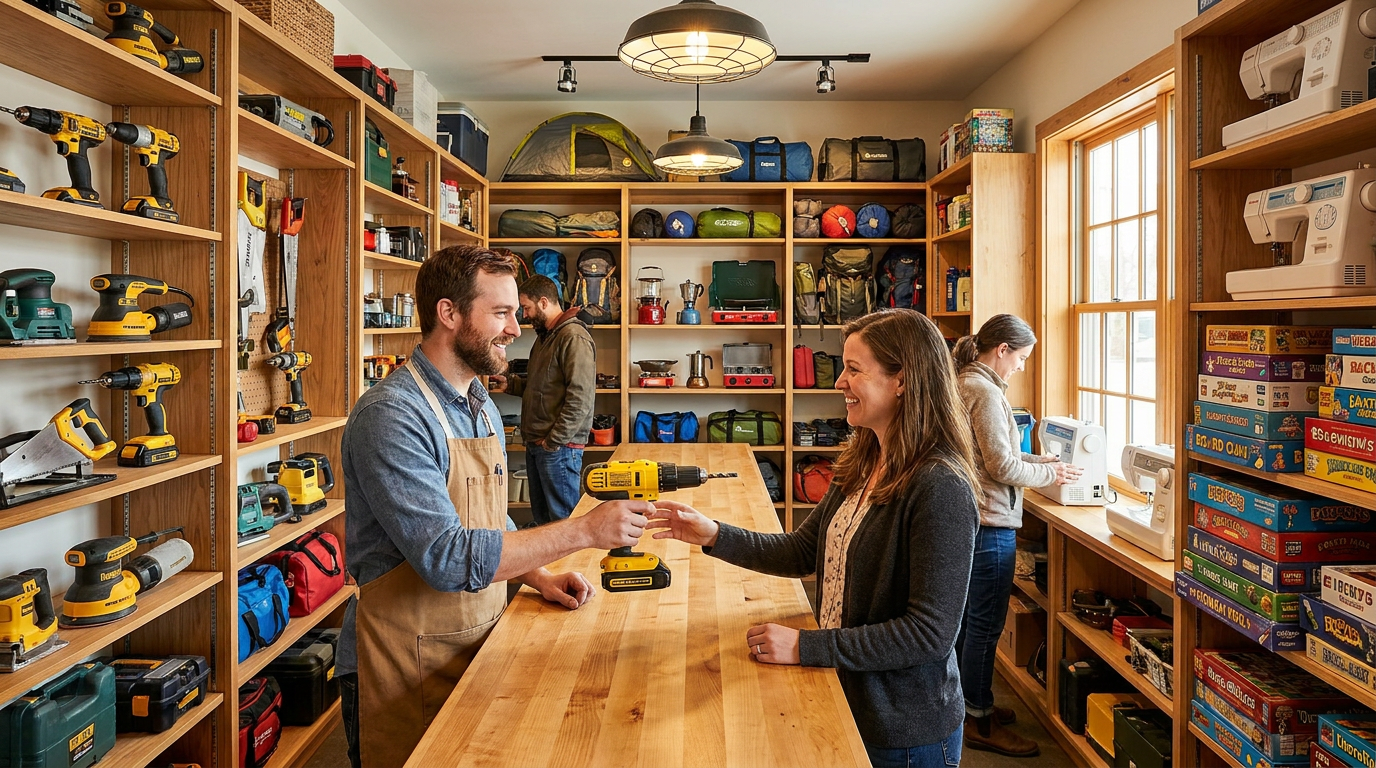
The concept, known as the "Library of Things" (LoT), is rapidly transforming how communities access the tools of daily life. Instead of checking out a paperback novel, patrons can borrow a sewing machine, a pressure washer, a camping tent, or a dehydrator.[2][7]
While the idea of lending non-book items has historical roots stretching back to the 1940s, the modern iteration has surged in popularity. Today, there are over 2,000 formally established Thing Libraries globally, operating as independent non-profits, community hubs, or extensions of traditional public libraries.[6][9]
The mechanism is straightforward but highly effective. Patrons typically sign up for a membership—often free or sliding-scale—and browse an online catalog of available items. They reserve the equipment, sign a liability waiver, and pick it up for a specified loan period, usually one to two weeks.[8][9]

In urban centers like London, the model has evolved into high-tech convenience. Self-service lockers installed in public spaces allow residents to retrieve and return items using digital codes, bypassing the need for volunteer-staffed desks. This network alone has facilitated over 70,000 rentals to tens of thousands of members.[1]
The driving force behind this movement is the "circular economy"—an economic model focused on minimizing waste and making the most of existing resources. By sharing a single ladder or carpet cleaner among fifty households, communities drastically reduce the demand for new manufacturing.[7]

The environmental mathematics are compelling. The average item rented from a Library of Things weighs roughly seven kilograms. Every time a rental prevents a new purchase, it eliminates the carbon emissions, water usage, and raw material extraction required to produce, package, and ship that item.[7][10]
Beyond environmental sustainability, the financial benefits are increasingly relevant. As inflation and the rising cost of living squeeze household budgets, the ability to borrow rather than buy provides immediate economic relief. A home repair project that might have been delayed due to the cost of specialized tools suddenly becomes accessible.[8]
Beyond environmental sustainability, the financial benefits are increasingly relevant.
This democratization of access is a core tenet for community builders. Tool libraries remove financial barriers, allowing under-resourced residents to maintain their homes, cultivate gardens, and pursue creative projects without incurring debt.[8]
However, the impact extends far beyond the transaction of borrowing. These spaces frequently serve as community anchors, hosting "repair cafes" and skill-sharing workshops. Neighbors gather to learn basic plumbing, machine sewing, or electronics repair, transforming passive consumers into capable creators.[2][8]

Surveys indicate that this collaborative environment fosters broader behavioral shifts. A significant majority of Library of Things users report that they are more likely to reuse, repair, or recycle other items after engaging with the service, highlighting a ripple effect in community habits.[10]
Despite the enthusiasm, the movement faces structural challenges. Operating a Library of Things requires rigorous maintenance. Unlike a book, a power saw or a drone requires safety checks, cleaning, and occasional repairs between loans.[5]
Funding and space also present ongoing hurdles. Independent tool libraries often rely heavily on volunteer labor and grant funding, which can be precarious. Storing bulky items like lawnmowers and extension ladders requires substantial physical space, which is at a premium in dense urban areas.[1]
To ensure long-term viability, many independent initiatives are seeking integration with established municipal systems. Public libraries, already trusted community institutions, are increasingly absorbing these collections into their standard offerings.[3][4]

By 2026, industry analysts note that expanding non-traditional collections has become a top priority for library services globally. This shift aligns with broader institutional goals of sustainability and community resilience, moving libraries from mere information repositories to comprehensive civic hubs.[3][4]
The transition is not without friction. Library administrators must navigate complex insurance liabilities, develop new cataloging standards for multi-part kits, and train staff to handle unfamiliar equipment.[5]
Yet, the momentum appears irreversible. As climate concerns deepen and economic pressures persist, the logic of collaborative consumption is moving from the fringe to the mainstream. The simple act of sharing a chainsaw or a pasta maker is proving to be a profound statement about how society values its resources.[7]
How we got here
1943
The first documented tool library opens in Grosse Pointe Farms, Michigan, to offer training and resources to young people.
1978
The Berkeley Tool Library is established in California, eventually becoming the longest-running continuous tool library in the world.
2008
The Great Recession sparks a rapid surge in tool-lending libraries across the United States as communities seek economic relief.
2014
The term 'Library of Things' is popularized by a grassroots community experiment operating out of a shipping container in South London.
2026
Expanding non-traditional lending collections becomes a formalized priority for major public library systems globally.
Viewpoints in depth
The Environmental Imperative
Advocates argue that the current model of hyper-consumption is ecologically unsustainable.
For circular economy advocates, the Library of Things is a direct intervention against the 'take-make-waste' pipeline. They point out that manufacturing a single power drill requires significant raw material extraction, water usage, and carbon emissions—only for the tool to sit idle in a garage for 99% of its lifespan. By facilitating the shared use of a single item among dozens of households, these advocates argue that communities can drastically reduce their collective carbon footprint and divert tons of functional equipment from local landfills.
The Social Equity Lens
Community organizers view shared resources as a tool for economic justice and neighborhood resilience.
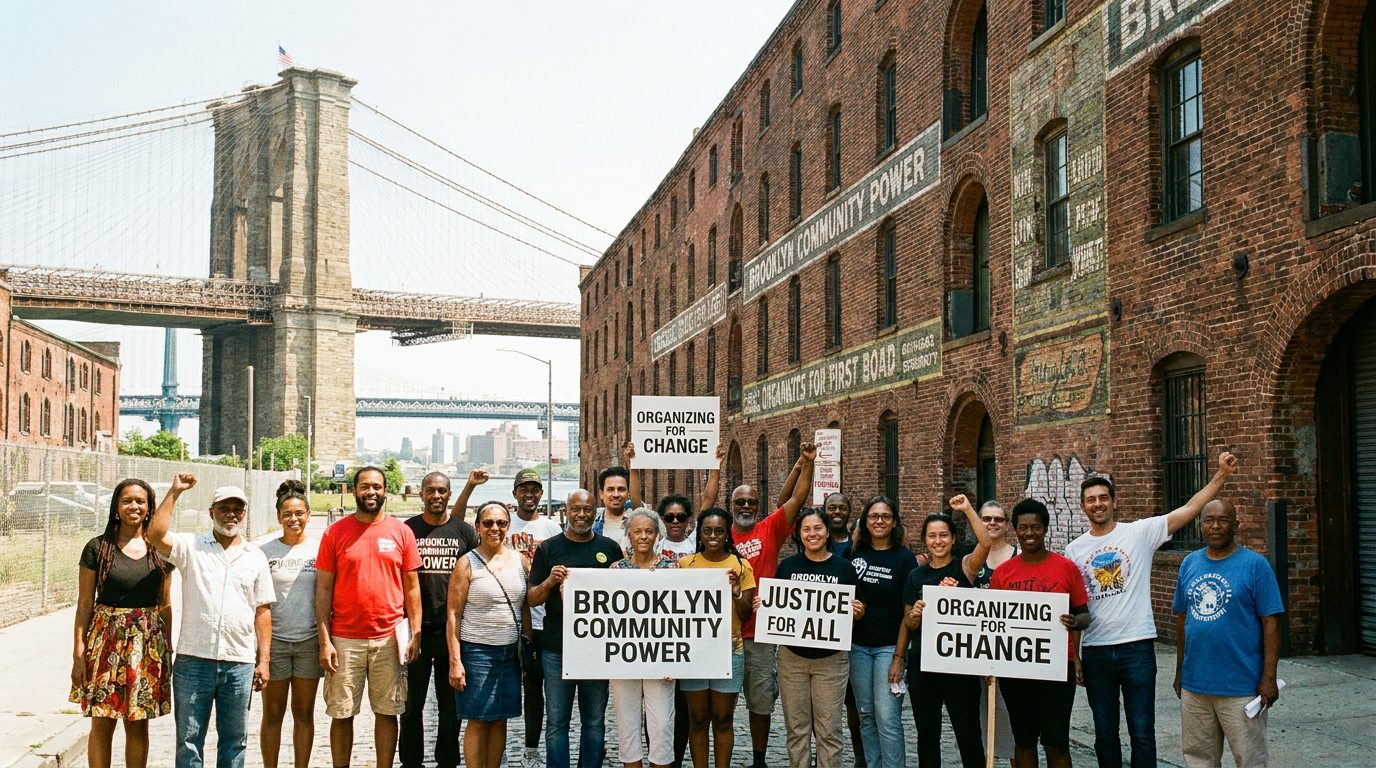
Community builders focus on the democratization of access. In an era of rising inflation and stagnant wages, purchasing specialized tools or expensive appliances is a luxury many cannot afford. Tool libraries and sharing hubs remove this financial barrier, allowing under-resourced residents to repair their homes, cultivate urban gardens, or start small side businesses. Furthermore, these organizers emphasize that the physical spaces where sharing occurs—often paired with repair cafes and workshops—combat social isolation by forcing neighbors to interact, collaborate, and share skills.
The Institutional Reality
Library administrators must balance the soaring public demand for these services with stark logistical realities.
While public library directors are largely enthusiastic about expanding into non-traditional collections, they face significant operational hurdles. Books are uniform, easy to stack, and relatively simple to repair. A donated pressure washer or a 50-piece robotics kit, however, requires rigorous safety testing, specialized cleaning protocols, and complex cataloging. Administrators are currently wrestling with how to secure sustainable funding for the ongoing maintenance of these items, as well as how to navigate the insurance liabilities associated with lending power tools to the general public.
What we don't know
- How municipal insurance policies will adapt long-term to the liability of lending heavy machinery and power tools.
- Whether the volunteer-driven maintenance model of many independent libraries can scale sustainably as demand grows.
- The exact volume of carbon emissions offset globally by the collective borrowing of household items.
Key terms
- Circular Economy
- An economic system aimed at eliminating waste and the continual use of resources by reusing, repairing, refurbishing, and recycling existing materials.
- Library of Things (LoT)
- A collection of non-book items—such as tools, appliances, and electronics—made available for community members to borrow.
- Collaborative Consumption
- An economic model based on sharing, swapping, trading, or renting products and services, rather than individual ownership.
- Repair Cafe
- A community gathering where people bring broken household items and work with skilled volunteers to fix them, rather than throwing them away.
- Makerspace
- A collaborative workspace inside a school, library, or separate public facility for making, learning, exploring, and sharing, often equipped with high-tech tools.
Frequently asked
What happens if an item breaks while I am using it?
Most Libraries of Things expect normal wear and tear. If an item breaks during standard use, patrons are usually asked to return it with a note so it can be fixed by volunteers; penalties typically only apply for intentional damage or loss.
Do I need a special membership to borrow items?
It varies by location. Some operate within public libraries and only require a standard library card, while independent tool libraries often charge a small annual fee or offer sliding-scale memberships based on income.
What are the most commonly borrowed items?
Power drills, carpet cleaners, sewing machines, gardening equipment, and camping gear are consistently among the most popular items, as they are expensive to buy and rarely used.
How are the items cleaned and maintained?
Patrons are generally required to clean items before returning them. Additionally, staff or volunteers perform routine safety checks, maintenance, and sanitization between loans.
Sources
Source coverage
10 outlets
3 viewpoints surfaced








[1]Cooperative CityCommunity Builders
Inside the Library of Things UK: The UK's Fast-Growing Sharing Network
Read on Cooperative City →[2]SBS NewsCommunity Builders
Libraries of things are helping communities share household items
Read on SBS News →[3]The Digital LibrarianPublic Library Administrators
Library Tech Trends for 2026
Read on The Digital Librarian →[4]LiblimePublic Library Administrators
Top 15 Topics in Library Services for 2026
Read on Liblime →[5]International Federation of Library AssociationsCircular Economy Advocates
The IFLA ENSULIB Webinar Series: Library of Things – A Critical Component of Libraries
Read on International Federation of Library Associations →[6]WikipediaPublic Library Administrators
Library of things
Read on Wikipedia →[7]Active SustainabilityCircular Economy Advocates
What is the Library of Things and how does it work?
Read on Active Sustainability →[8]Sierra Service ProjectCommunity Builders
Tool Libraries: Why Your Community Needs One
Read on Sierra Service Project →[9]The Institute for Community SustainabilityPublic Library Administrators
About the Thing Library
Read on The Institute for Community Sustainability →[10]One Borough VoiceCircular Economy Advocates
Library of Things
Read on One Borough Voice →
Every angle. Every day.
Get community stories with full source coverage and perspective breakdowns delivered to your inbox.