
Community Land Trusts Hit Historic Milestones as Neighborhoods Buy Back Their Blocks
From a groundbreaking commercial purchase in Brooklyn to a first-time homeowner in Fort Worth, the community land trust movement is securing permanent affordability across the U.S.
By Factlen Editorial Team
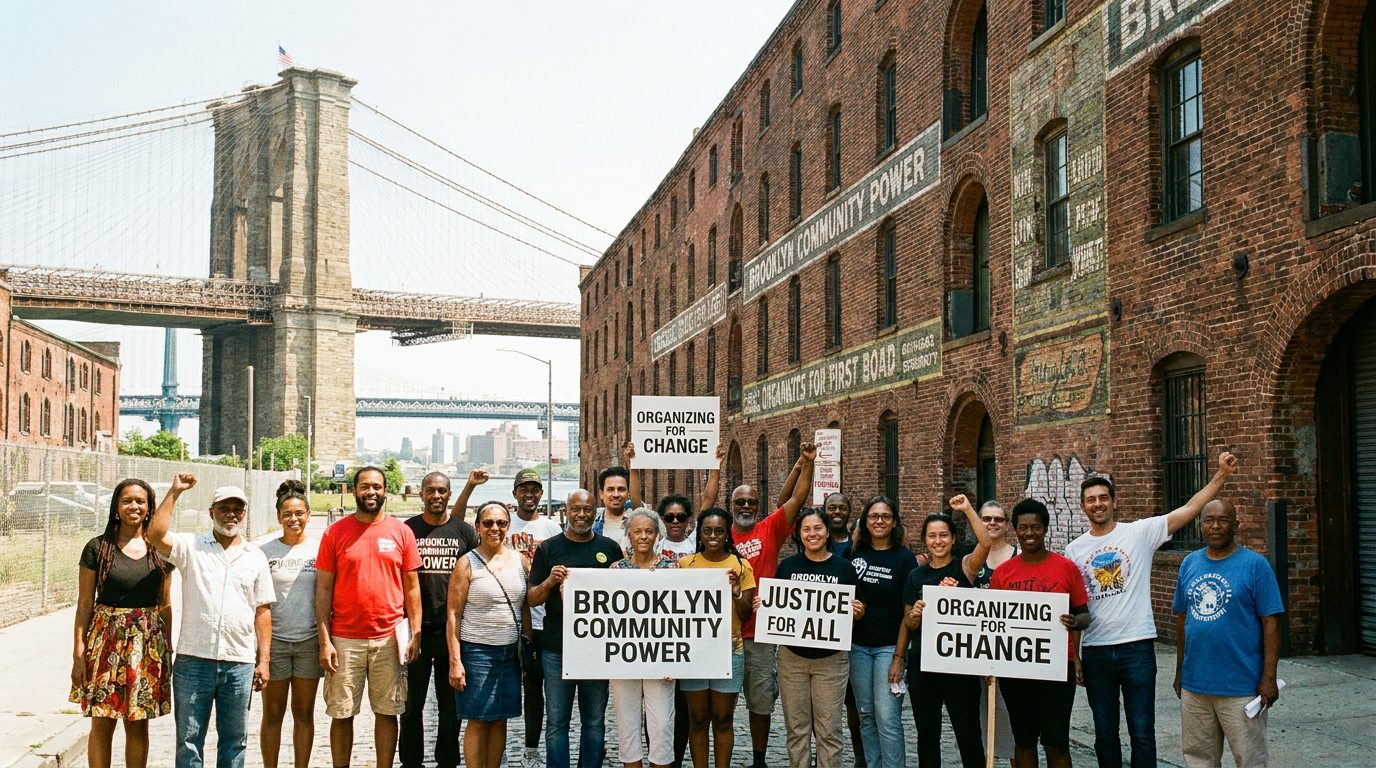
- Community Organizers
- Argue that housing and commercial space should be treated as human rights rather than speculative assets, viewing CLTs as vital for preventing displacement.
- First-Time Homebuyers
- Value the CLT model for lowering the barrier to entry, prioritizing the immediate stability of homeownership even if resale profits are capped.
- Philanthropic Partners
- See CLTs as a scalable, high-impact investment that provides a permanent return by keeping subsidized properties affordable forever.
What's not represented
- · Private real estate developers
- · Municipal tax authorities
Why this matters
As housing costs and gentrification displace working-class families nationwide, the community land trust model offers a proven, permanent solution. By removing land from the speculative market, neighborhoods are ensuring that homes and commercial spaces remain affordable for generations, allowing residents to build equity without being priced out.
Key points
- The East New York Community Land Trust is buying a $2.3 million warehouse to create a community and commercial hub.
- Fort Worth's first CLT homeowner closed on her house in May, backed by a new $1.1 million philanthropic grant.
- The Bolinas CLT in California purchased a ranch to build permanent housing for 60 displaced residents.
- The community land trust model separates land ownership from building ownership to ensure permanent affordability.
The community land trust (CLT) movement is crossing historic thresholds this summer, transforming from a niche housing concept into a formidable tool for neighborhood preservation. In cities and rural towns alike, residents are pooling resources to buy back their blocks from speculative markets, ensuring that local families and businesses are not displaced by rising real estate costs.[1][2][4]
In June 2026, the East New York Community Land Trust (ENYCLT) is set to become the first in New York City history to purchase a commercial property off the private market. The organization is finalizing the acquisition of a $2.3 million, two-story brick warehouse on Jamaica Avenue, marking a major evolution in how urban communities secure space.[1][6]
The building will be transformed into the "East Brooklyn Liberation Center," providing deeply affordable office and workshop space for local businesses, worker cooperatives, and cultural groups like Preserving East New York. ENYCLT President Boris Santos noted that the purchase is about more than real estate; removing land from the speculative market is fundamentally about "building power in the neighborhood."[1][6]
The mechanism of a community land trust is elegantly simple but profoundly disruptive to traditional real estate. A nonprofit trust acquires and holds the land in perpetuity, while residents or businesses purchase or lease the structures built upon it at below-market rates. Because the cost of the land is removed from the purchase price, the barrier to entry plummets. When a homeowner eventually sells, a formula caps their profit, ensuring the home remains affordable for the next buyer.[1][3]

While the model is experiencing a modern renaissance, its roots run deep in the American Civil Rights movement. The first CLT, New Communities Inc., was founded in rural Georgia in 1969 by Black farmers seeking economic independence and secure land tenure. Today, that legacy is being honored and adapted by a new generation of organizers facing an unprecedented national housing crisis.[5]
While the model is experiencing a modern renaissance, its roots run deep in the American Civil Rights movement.
The model's momentum extends far beyond New York. In May 2026, the Fort Worth Community Land Trust (FWCLT) celebrated its very first homeowner. Ashley Guinn, a single mother and banking professional, purchased a home in the Morningside neighborhood. For Guinn, the milestone broke what she described as "the generational curse of not owning a home or having anything to leave your kids."[2][3]
Guinn's purchase marks the beginning of a much larger expansion in North Texas. The FWCLT is currently advancing Carroll Park, a South Fort Worth development expected to eventually include over 200 permanently affordable homes. The initiative represents a critical bulwark against displacement in a region where housing costs have skyrocketed over the past decade.[2][3]

To accelerate this growth, the FWCLT recently received a $1.1 million philanthropic grant from JPMorganChase. The funding is specifically designed to support community-based builders and nonprofit developers engaged in infill housing—rehabilitating deteriorated housing stock and building on vacant lots to increase the supply of attainable homes across established neighborhoods.[3]
The model is proving equally vital in rural, high-cost areas. On the West Coast, the Bolinas Community Land Trust recently finalized the purchase of the 160-acre Tacherra Ranch. The April 2026 acquisition will replace temporary, condemned housing with permanent, affordable homes for roughly 60 longtime residents, preserving both the community fabric and local agricultural open space in Marin County.[4]
These local victories coincide with a broader international push. From May to June 2026, practitioners from Australia to Scotland gathered for the Global Community Land Trust Virtual Summit. The six-week event, anchored by World CLT Day, highlighted how the model is being adapted globally to combat the housing affordability crisis, sharing strategies for financing acquisitions and building sustainable operating models.[5]

Despite these successes, community land trusts still face steep challenges. In hot real estate markets, nonprofit trusts often struggle to compete with cash-rich private developers who can close deals rapidly. Organizers emphasize that without access to flexible capital and municipal support, acquiring land before it is lost to speculation remains a constant uphill battle.[1][3]
As the movement scales, the focus is shifting toward securing robust public policy integration. With major cities like New York officially incorporating CLTs into their municipal housing plans, the conversation has moved from proving that the model works to ensuring it is funded at a scale capable of fundamentally altering the housing landscape.[1]
How we got here
2024
East New York CLT becomes the first in NYC to buy a multifamily apartment building off the private market.
April 2026
Bolinas Community Land Trust finalizes the purchase of Tacherra Ranch in California.
May 2026
Fort Worth Community Land Trust celebrates its first homeowner and a $1.1 million expansion grant.
May-June 2026
The first-ever Global Community Land Trust Virtual Summit convenes practitioners worldwide.
June 2026
East New York CLT prepares to close on its first commercial property, the East Brooklyn Liberation Center.
Viewpoints in depth
Community Organizers
Advocates who view the decommodification of land as essential for neighborhood survival.
For community organizers, the speculative real estate market is an engine of displacement that actively harms working-class neighborhoods. They argue that housing and commercial spaces should be treated as fundamental human rights rather than investment vehicles. By utilizing the CLT model, organizers believe they are not just providing affordable housing, but actively transferring power and self-determination back to the residents who built the community's culture in the first place.
First-Time Homebuyers
Working families who prioritize immediate stability over maximum resale profit.
For many working-class families, traditional homeownership has become mathematically impossible. These buyers value the CLT model because it drastically lowers the barrier to entry, allowing them to secure a stable home, build modest equity, and keep their children in the same school district. While they must agree to cap their profits when they eventually sell the home, they view this trade-off as a necessary and fair exchange for the immediate security of owning their own property.
Philanthropic Partners
Financial institutions and foundations that view CLTs as a highly efficient, permanent investment.
Philanthropic organizations and banks are increasingly backing CLTs because of the model's structural efficiency. Traditional affordable housing subsidies often expire after 15 to 30 years, requiring governments or foundations to pay again to keep the units affordable. Because a CLT retains ownership of the land in perpetuity, a single initial grant or subsidy ensures that the property remains affordable forever, providing a permanent return on their social investment.
What we don't know
- How quickly CLTs can scale to meet the massive nationwide demand for affordable housing.
- Whether local governments will provide the sustained, large-scale funding required for CLTs to compete with private real estate developers in hot markets.
Key terms
- Community Land Trust (CLT)
- A nonprofit organization that acquires and holds land on behalf of a community to ensure it remains permanently affordable for housing or commercial use.
- Speculative Market
- Real estate buying and selling driven by the expectation of future price increases, which often drives up costs and displaces long-term residents.
- Shared-Equity Cooperative
- A housing model where residents own shares in the building and agree to limit the profit they make upon selling, keeping the units affordable for future buyers.
- Decommodification
- The process of removing land or housing from the open market so it is treated as a social good rather than an asset for profit.
Frequently asked
How does a community land trust make homes cheaper?
By removing the cost of the land from the purchase price. The buyer only pays for the house itself, while leasing the land from the trust at a nominal monthly rate.
Can you build wealth if you buy a CLT home?
Yes. Homeowners build equity as they pay down their mortgage, but they agree to a resale formula that caps their profit to ensure the home remains affordable for the next buyer.
Do CLTs only provide housing?
No. While housing is the most common use, CLTs also secure land for community gardens, commercial spaces for local businesses, and cultural centers.
Sources
Source coverage
6 outlets
3 viewpoints surfaced





[1]Next CityCommunity Organizers
A Community Land Trust Is Purchasing Commercial Property in NYC for the First Time
Read on Next City →[2]Dallas WeeklyFirst-Time Homebuyers
Rising Housing Costs in North Texas Prompt Call for Collaborative Solutions
Read on Dallas Weekly →[3]JPMorganChasePhilanthropic Partners
Fort Worth Community Land Trust celebrates first homeowner, expands access to affordable homeownership
Read on JPMorganChase →[4]Bolinas Community Land Trust
Bolinas Community Land Trust Finalizes Tacherra Ranch Purchase
Read on Bolinas Community Land Trust →[5]International Center for Community Land TrustsCommunity Organizers
2026 Global Community Land Trust Virtual Summit
Read on International Center for Community Land Trusts →[6]East New York CLTCommunity Organizers
East Brooklyn Liberation Center
Read on East New York CLT →
Every angle. Every day.
Get community stories with full source coverage and perspective breakdowns delivered to your inbox.