
What the Science Actually Says About Viral Dietary Supplements
As social media drives a surge in supplement popularity, medical professionals are urging patients to look at the clinical evidence. Here is the definitive breakdown of what works, what doesn't, and what remains unproven for turmeric, magnesium, and St. John's wort.
By Factlen Editorial Team
- Medical Consensus
- Argues that supplements should be used primarily to treat documented deficiencies and warns against dangerous drug interactions.
- Frontline Clinicians
- Focuses on the practical challenge of combating viral misinformation and ensuring patient safety in everyday medical practice.
- Integrative Health Advocates
- Emphasizes the genuine therapeutic potential of natural compounds when used correctly and supported by emerging research.
What's not represented
- · Supplement Manufacturers
- · Social Media Platform Moderators
Why this matters
With billions spent annually on over-the-counter supplements, understanding the gap between social media claims and clinical reality saves you money and protects your health. Knowing which supplements have genuine clinical backing empowers you to make safer, more effective wellness decisions.
Key points
- Frontline healthcare workers are increasingly spending appointment time debunking viral supplement claims.
- Turmeric shows promise for osteoarthritis pain, but standard powders lack the bioavailability to be effective.
- Magnesium is essential for health, but evidence supporting it as a cure for insomnia remains weak.
- St. John's wort is clinically effective for mild depression but carries severe risks of drug interactions.
- Supplements are most effective when treating documented nutritional deficiencies rather than replacing medical care.
Social media algorithms have effectively become the world's most active, yet unregulated, pharmacists. Across platforms like TikTok and Instagram, wellness influencers routinely tout natural supplements as definitive cures for everything from chronic fatigue to severe depression. This digital word-of-mouth has tangible real-world consequences. A recent report highlights that two out of five frontline National Health Service (NHS) workers in the UK now encounter patients raising inaccurate or misleading supplement claims at least once a week, forcing doctors to spend valuable appointment time debunking viral videos.[1]
The sheer volume of health information available online can be overwhelming for consumers trying to make proactive choices. In the United States alone, dietary supplement use has climbed steadily over the past decade, with more than half of all adults now taking at least one supplement daily. Yet, unlike prescription medications, dietary supplements are not required by regulatory bodies to prove their efficacy before hitting pharmacy shelves, leaving consumers to navigate a maze of marketing claims largely on their own.[5]
To bridge the gap between viral wellness claims and clinical reality, it is necessary to evaluate the data behind the most widely discussed supplements. By mapping popular claims against peer-reviewed systematic reviews and government health databases, a clearer picture emerges of where the science is robust, where it is weak, and where it is entirely absent. This evidence pack evaluates three of the most prominent supplements currently dominating social media feeds: turmeric, magnesium, and St. John's wort.[6]

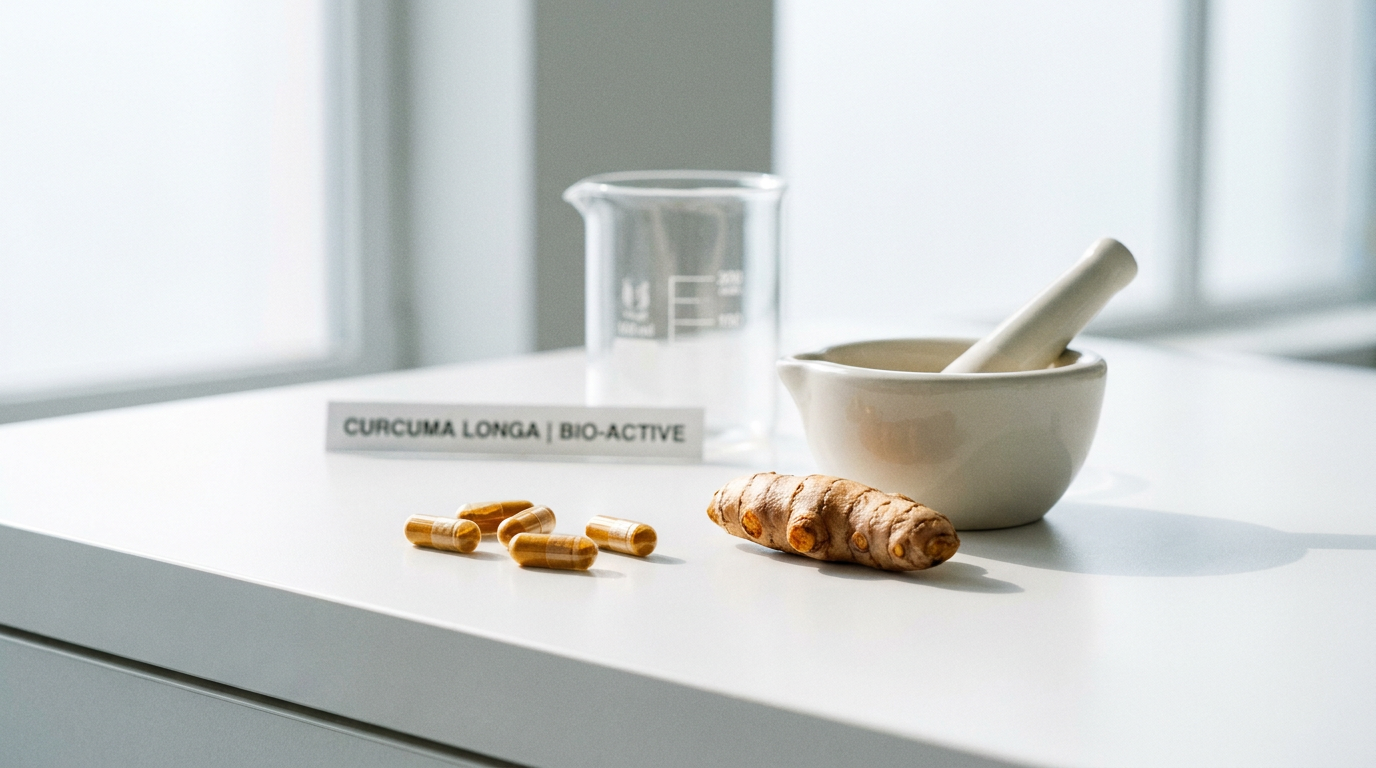
The first major claim surrounds turmeric, and specifically its active compound, curcumin. It is frequently marketed online as a powerful anti-inflammatory agent capable of treating arthritis, preventing cancer, and curing daily joint pain. Social media posts often suggest that a daily turmeric shot or capsule can entirely replace over-the-counter pain relievers like ibuprofen, presenting it as a natural panacea for any inflammatory condition.[1][3]
Clinical data offers a mixed but cautiously optimistic picture for specific, targeted uses of curcumin. According to the National Center for Complementary and Integrative Health (NCCIH), curcumin does show genuine promise in reducing osteoarthritis pain. Several randomized controlled trials indicate that high-quality, highly concentrated curcumin extracts can perform similarly to nonsteroidal anti-inflammatory drugs (NSAIDs) for managing knee osteoarthritis, providing a legitimate alternative for patients who cannot tolerate standard pain medications.[3]
However, the clinical evidence falls significantly short for the broader, more miraculous claims. There is no robust proof that turmeric prevents or cures cancer. Furthermore, curcumin has notoriously poor bioavailability, meaning that consuming it in standard food or powder form results in very little of the active compound actually reaching the bloodstream. Without specialized formulations—such as pairing it with black pepper extract—standard turmeric supplements often function as little more than expensive placebos.[3]
However, the clinical evidence falls significantly short for the broader, more miraculous claims.
Magnesium is currently enjoying a massive surge in popularity, frequently dubbed the "miracle mineral" for sleep, anxiety, and muscle recovery. Viral videos routinely advise taking specific formulations, such as magnesium glycinate, right before bed to cure clinical insomnia and eliminate daily stress. The narrative suggests that modern diets are entirely devoid of the mineral, making supplementation a universal necessity.[1][2]
The foundational science behind magnesium's importance is undeniable. It is essential for human health, playing a critical role in over 300 enzymatic reactions, including muscle function, nerve transmission, and energy production. The National Institutes of Health (NIH) notes that a significant portion of the population does indeed fail to meet the recommended dietary allowance for magnesium through food alone, making targeted supplementation highly beneficial for correcting actual deficiencies.[2]

Yet, for the specific claims regarding sleep and anxiety, the clinical evidence is surprisingly thin. While some small-scale studies suggest magnesium supplementation might modestly improve sleep quality in older adults suffering from insomnia, large-scale, high-quality trials proving it acts as a reliable sleep aid are lacking. The mineral is highly effective for treating documented clinical deficiencies and certain types of constipation, but it is not a guaranteed, evidence-backed cure for clinical anxiety or chronic sleep disorders.[2]
St. John's wort presents a different scenario entirely. It is widely promoted as a natural, side-effect-free alternative to prescription antidepressants for treating low mood and clinical depression. Because it is derived from a plant, many consumers assume it carries none of the risks associated with pharmaceutical interventions.[1][4]
Of the three supplements examined, St. John's wort actually has some of the most substantial clinical backing for its primary claim. A comprehensive review published by the Cochrane Library found that St. John's wort extracts are superior to a placebo in patients with major depression. Furthermore, the data shows it is similarly effective as standard prescription antidepressants for mild to moderate depression, often with fewer patient-reported side effects.[4]

The critical danger, which social media influencers frequently omit, lies in the plant's severe drug interactions. St. John's wort is a potent inducer of liver enzymes, meaning it dramatically accelerates the rate at which the body breaks down many life-saving medications. This includes birth control pills, blood thinners, and standard antidepressants—potentially rendering these vital drugs ineffective or, in the case of other serotonergic drugs, causing a dangerous and potentially fatal condition known as serotonin syndrome.[1][4]
This complex landscape explains why healthcare providers are increasingly vocal about supplement safety. Clinicians are not universally opposed to natural compounds; rather, they are battling the absolute certainty with which highly nuanced medical interventions are presented online. Compounds like curcumin and St. John's wort possess genuine pharmacological activity, but they are not magic bullets. The strongest evidence consistently points back to a foundational truth: supplements are most effective when they are actually supplementing a documented deficiency, rather than attempting to out-medicate a lifestyle.[1][6]
How we got here
1994
The US passes legislation allowing dietary supplements to be sold without FDA pre-approval for efficacy.
2008
The Cochrane Library publishes a major systematic review confirming St. John's wort's efficacy for major depression.
2020-2023
Social media platforms experience a massive surge in wellness influencers promoting daily, multi-supplement routines.
June 2026
Reports highlight that 40% of NHS frontline staff now routinely battle supplement misinformation from patients.
Viewpoints in depth
Frontline Healthcare Workers
Doctors and nurses view the supplement trend as a growing barrier to effective patient care.
For clinicians, the primary frustration is not the supplements themselves, but the absolute certainty with which unverified claims are presented online. Doctors report spending significant portions of standard 15-minute appointments debunking TikTok videos rather than diagnosing underlying conditions. They warn that this 'shadow healthcare system' leads patients to delay seeking proven medical treatments while spending hundreds of dollars on ineffective powders and pills.
Clinical Researchers
Scientists emphasize that while the marketing is often wrong, the underlying compounds possess real pharmacological value.
Researchers studying pharmacognosy (medicine derived from plants) are often frustrated that exaggerated social media claims overshadow legitimate, targeted uses for these compounds. They point to robust data showing that high-quality extracts of curcumin and St. John's wort have genuine, measurable effects on the human body. Their goal is to separate the hyperbole from the science, advocating for standardized dosing and rigorous clinical trials to prove exactly when and how these natural interventions should be used.
Wellness Consumers
Patients turn to supplements seeking empowerment and alternatives to a strained traditional healthcare system.
From the consumer perspective, the appeal of dietary supplements is deeply tied to the desire for preventative care and bodily autonomy. Many patients turn to natural remedies after experiencing long wait times, dismissive medical encounters, or frustration with the side effects of prescription drugs. For these individuals, researching and selecting supplements feels like taking proactive control of their own health outcomes, even if the clinical evidence supporting their choices is still evolving.
What we don't know
- The long-term physiological effects of taking multiple, highly concentrated herbal extracts simultaneously.
- Exactly which specific formulations of magnesium are most optimal for neurological benefits versus muscular benefits.
- How social media algorithms will adapt to increasing pressure from medical boards to flag unverified health claims.
Key terms
- Bioavailability
- The proportion of a substance that enters the bloodstream when introduced into the body and is able to have an active clinical effect.
- Systematic Review
- A rigorous scientific study that collects and analyzes all available clinical trials on a specific topic to draw a highly reliable conclusion.
- Enzyme Inducer
- A substance that increases the activity of enzymes in the liver, causing the body to process and eliminate other medications much more quickly.
Frequently asked
Is turmeric better than ibuprofen for pain?
High-quality curcumin extracts have shown similar efficacy to ibuprofen for specific conditions like knee osteoarthritis, but standard turmeric powder is poorly absorbed by the body.
Does magnesium cure insomnia?
While magnesium helps regulate systems involved in sleep, large-scale clinical evidence proving it cures insomnia is currently lacking, though it may offer modest benefits for some older adults.
Why do doctors warn against St. John's wort?
It accelerates the breakdown of many prescription medications in the liver, potentially rendering vital drugs like birth control and blood thinners completely ineffective.
Sources
Source coverage
6 outlets
3 viewpoints surfaced






[1]The GuardianFrontline Clinicians
NHS staff battling wave of food supplement disinformation
Read on The Guardian →[2]National Institutes of HealthMedical Consensus
Magnesium: Fact Sheet for Health Professionals
Read on National Institutes of Health →[3]National Center for Complementary and Integrative HealthMedical Consensus
Turmeric: What You Need To Know
Read on National Center for Complementary and Integrative Health →[4]Cochrane LibraryMedical Consensus
St. John's wort for major depression
Read on Cochrane Library →[5]JAMA Network OpenIntegrative Health Advocates
Estimated Use of Dietary Supplements Among US Adults
Read on JAMA Network Open →[6]Factlen Editorial TeamIntegrative Health Advocates
Synthesis by Factlen editorial team
Read on Factlen Editorial Team →

More in news politics
See all 5 stories →Strait of Hormuz
US and Iran Near Historic Peace Deal to End 100-Day War and Reopen Strait of Hormuz
0 sources

Strait of Hormuz
U.S. and Iran Near Peace Deal to Reopen Strait of Hormuz, Though Timing Remains Disputed
0 sources

Strait of Hormuz
U.S. and Iran Near Peace Deal to Reopen Strait of Hormuz, Though Timelines Clash
0 sources

Every angle. Every day.
Get news politics stories with full source coverage and perspective breakdowns delivered to your inbox.