
How 100 Days of the Iran War Have Reshaped Global Economic Policy
As the Middle East conflict crosses the 100-day mark, global central banks are freezing interest rates to navigate a complex web of supply chain disruptions and persistent inflation risks.
By Factlen Editorial Team
- Central Bank Policymakers
- Argue that interest rates must remain elevated to prevent war-driven supply shocks from embedding permanent inflation into the economy.
- Industrial & Supply Chain Operators
- Focus on the physical reality of moving goods, warning that monetary policy cannot fix physical shortages of ships, fuel, or critical components.
- Macroeconomic Optimists
- Highlight the resilience of consumer spending and job growth, particularly in the US, suggesting the global economy can withstand the geopolitical stress.
What's not represented
- · Emerging market economies facing debt crises due to a strong US dollar
- · Small business owners struggling with sustained high borrowing costs
Why this matters
The prolonged conflict is forcing central banks to keep interest rates higher for longer, directly impacting mortgage rates, corporate borrowing, and job markets worldwide. Understanding this dynamic explains why borrowing costs aren't dropping despite broader economic stabilization.
Key points
- The Federal Reserve and Bank of England are holding interest rates steady as the Iran conflict hits 100 days.
- Disrupted shipping lanes and elevated oil prices are creating persistent inflationary pressure globally.
- Physical supply chains are breaking down, exemplified by Australia's critical shortage of industrial lubricants.
- The US economy remains surprisingly resilient due to domestic energy production, while the UK faces stagflation risks.
- Central banks are abandoning long-term forecasts, relying strictly on real-time data to navigate the unpredictable geopolitical landscape.
One hundred days into the conflict in Iran, the global economy finds itself in a precarious holding pattern. What began as a localized geopolitical crisis has steadily metastasized into a structural macroeconomic challenge, forcing the world's most powerful financial institutions to rewrite their playbooks for the year. The initial shockwaves of the war have subsided, but they have been replaced by a grinding reality of disrupted supply chains and persistent inflationary pressure.[1][4]
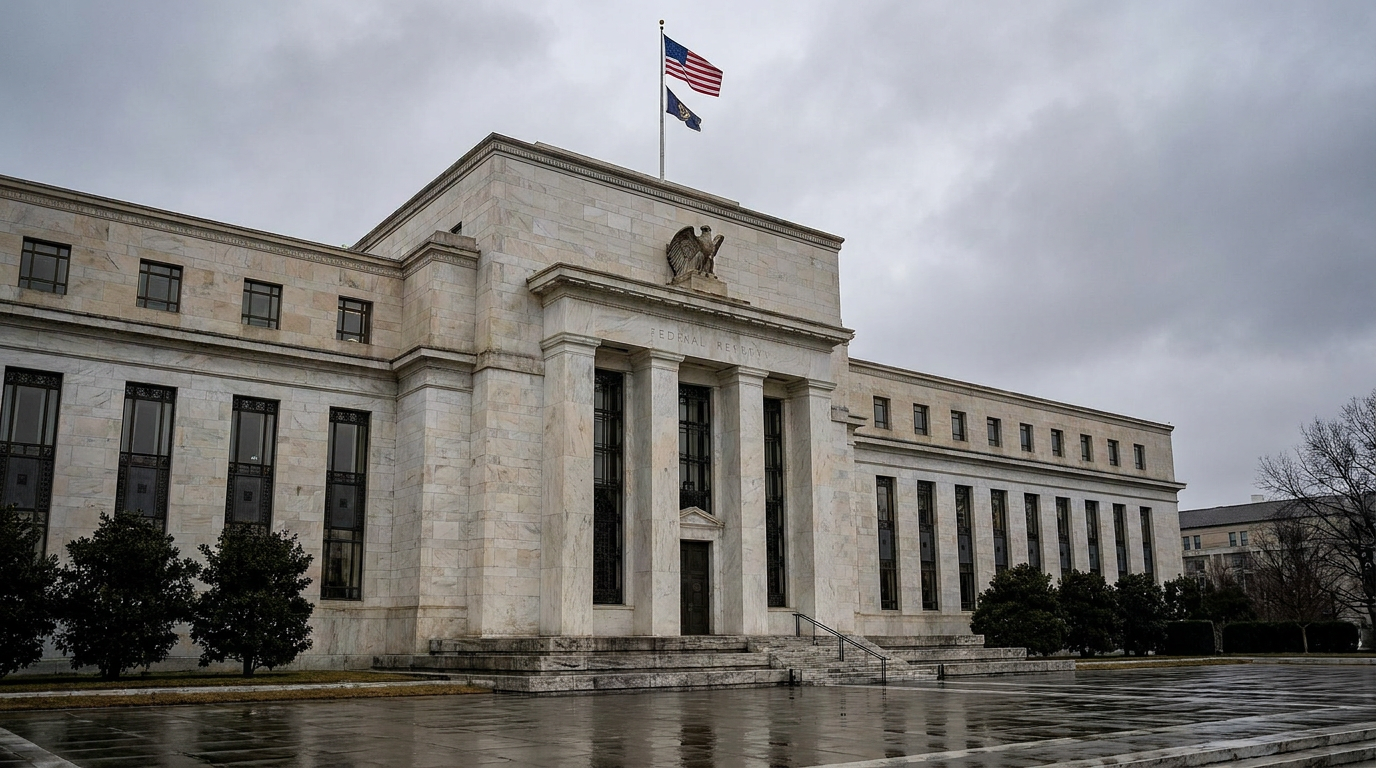
At the center of this economic standoff are the Federal Reserve and the Bank of England. Both central banks are signaling that benchmark interest rates will remain elevated, shelving earlier hopes for a series of rate cuts in 2026. Policymakers are caught in a classic macroeconomic bind: they must choose between cutting rates to support domestic growth or holding them high to fight the imported inflation driven by the war.[1][5]
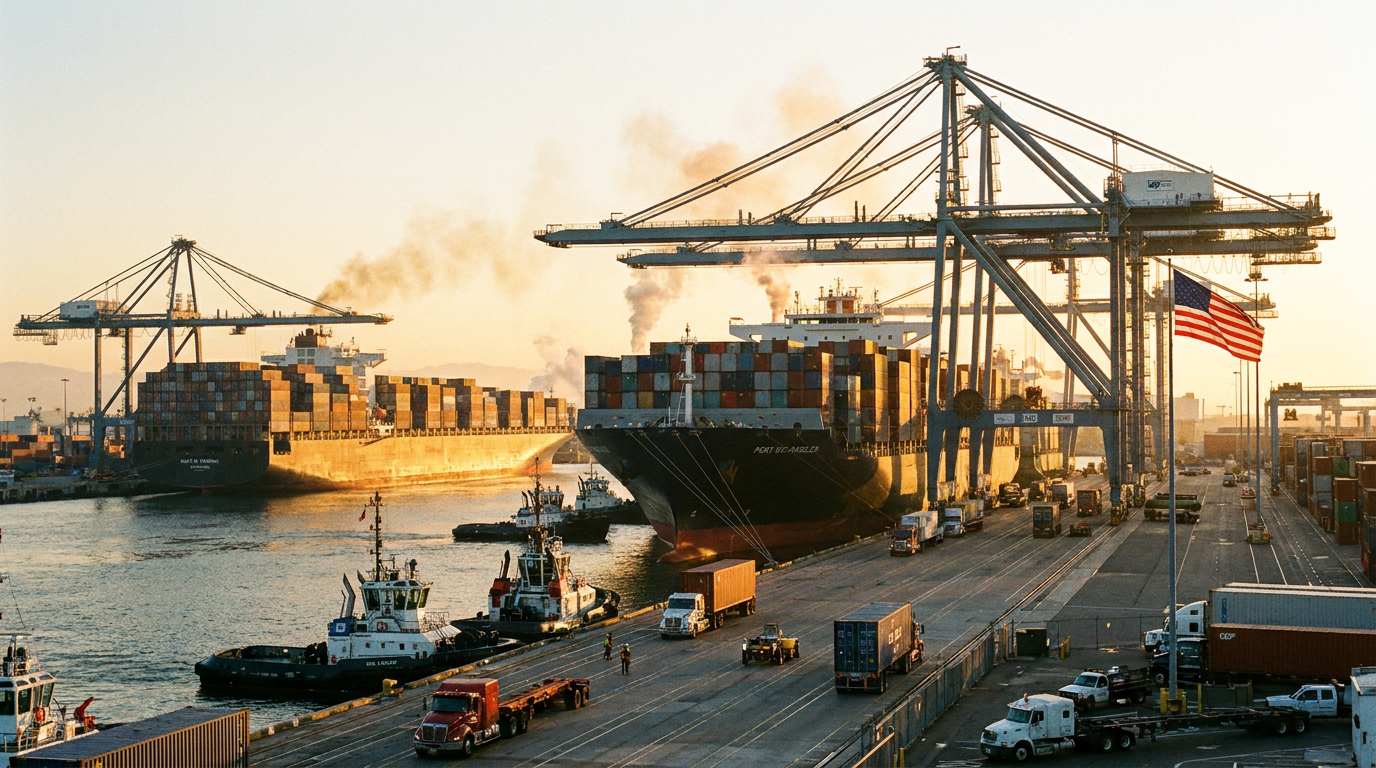
The mechanism driving this inflation threat stems directly from the Strait of Hormuz and broader Middle Eastern shipping lanes. As the conflict drags on, the cost of moving goods across the globe has spiked dramatically. Commercial vessels are being forced to take longer, more expensive routes to avoid conflict zones, adding weeks to delivery times and thousands of dollars to the cost of a single shipping container.[4][6]
Energy markets are the most visible metric of this disruption. Brent crude has hovered near $94 a barrel, acting as a persistent, unavoidable tax on global consumers and businesses. Every time oil prices settle at these elevated levels, the cost of manufacturing, transportation, and agricultural production rises, slowly bleeding into the consumer price index.[6][7]

But the economic fallout extends far beyond the price of crude oil at the pump. Niche but critical industrial components are facing severe bottlenecks, illustrating the fragility of just-in-time global manufacturing. When a single region experiences prolonged instability, the ripple effects can paralyze industries half a world away.[3][8]
Australia provides a stark example of this interconnectedness. The country is currently facing a critical shortage of industrial lubricants—specialized fluids essential for operating everything from heavy mining equipment to agricultural machinery. This shortage is directly linked to the Middle East fallout, as the chemical precursors required to manufacture these lubricants are trapped in disrupted supply chains.[3]
This dynamic illustrates the "bullwhip effect" in global trade. A localized conflict disrupts the flow of a specific chemical precursor, which then threatens to halt heavy industry and resource extraction on another continent. Central banks cannot print more industrial lubricants or clear shipping lanes, making monetary policy a blunt instrument against these specific physical shortages.[3][5][8]

This dynamic illustrates the "bullwhip effect" in global trade.
Despite these mounting global headwinds, the United States economy has continued to defy expectations. American consumer spending remains robust, and job growth has consistently outpaced forecasts, presenting a paradox for economists who predicted that higher interest rates and global instability would trigger a domestic slowdown.[2]
This American exceptionalism complicates the global picture. The US is relatively insulated from energy shocks due to its massive domestic oil and gas production. Unlike Europe and the UK, which rely heavily on imported energy traversing contested waters, the US economy can absorb geopolitical energy shocks with far less structural damage.[2][5]
The Bank of England, however, faces a much darker scenario: the looming threat of "stagflation." UK economic growth remains anemic, but the imported inflation from energy and shipping costs prevents the central bank from lowering rates to stimulate the economy. Cutting rates now could cause the British pound to weaken, making imported energy even more expensive.[1][5]

Faced with these diverging realities, central bankers are abandoning long-term forecasting models in favor of hyper-vigilant, data-dependent approaches. They acknowledge that geopolitical events are inherently unpredictable, and any forward guidance provided today could be rendered obsolete by a sudden escalation or a breakthrough peace deal tomorrow.[1]
The World Bank has issued stark warnings about the road ahead. If the conflict expands further, drawing in neighboring oil-producing nations, commodity markets could experience a shock comparable to the energy crises of the 1970s. Such an event would force central banks to hike rates even further, almost certainly triggering a synchronized global recession.[7]
For now, however, financial markets have largely priced in the current level of disruption. The initial panic that characterized the early days of the war has subsided into a grueling war of economic attrition. Investors are betting that the conflict will remain contained, even if it remains unresolved.[4][6]

Looking ahead, the focus shifts to whether diplomatic efforts can secure a ceasefire before structural, irreversible damage is done to global manufacturing capacity. Every additional month of elevated shipping costs and delayed components forces companies to rethink their supply chains, potentially accelerating the trend of "nearshoring" production closer to home.[1][4]
Until a diplomatic resolution is reached, businesses and consumers must navigate an era of "higher for longer" interest rates. Central banks will refuse to declare victory over inflation while war rages, meaning the cost of borrowing—from corporate bonds to residential mortgages—will remain a heavy burden on the global economy.[1][5]
How we got here
March 2026
Conflict begins, causing an immediate spike in global oil futures and market volatility.
April 2026
Middle Eastern shipping lanes are heavily disrupted, causing global freight rates to double.
May 2026
US economic data shows surprise resilience in Q1, complicating global rate-cut expectations.
June 2026
At the 100-day mark, the Fed and BOE signal that interest rates will remain elevated to fight war-driven inflation.
Viewpoints in depth
Inflation Hawks
Argue that central banks must maintain high rates to prevent supply shocks from becoming permanent inflation.
This camp, heavily represented among central bank policymakers and conservative economists, argues that the origin of inflation matters less than its psychological effect. Even if price spikes are caused by physical shipping delays rather than excessive consumer demand, allowing those prices to rise unchecked will cause workers to demand higher wages, creating a permanent inflationary spiral. They point to the 1970s as a cautionary tale of what happens when central banks cut rates too early during an energy crisis.
Growth Advocates
Warn that holding rates too high for too long will trigger an unnecessary recession.
Economists focused on growth and employment argue that monetary policy is the wrong tool for this crisis. Raising interest rates makes it more expensive for a company to build a new factory, but it does absolutely nothing to clear a blocked shipping lane or produce more industrial lubricants. By keeping rates elevated, they argue, central banks are punishing domestic businesses and consumers for geopolitical events entirely outside their control, risking a severe recession to fight inflation they cannot actually cure.
Supply Chain Managers
Focus on the physical reality of moving goods, viewing monetary policy as secondary to logistics.
For logistics experts and industrial operators, the debate over interest rates is secondary to the physical breakdown of global trade. They emphasize the "bullwhip effect," noting that modern manufacturing relies on thousands of specialized components arriving exactly on time. When a conflict disrupts the flow of a single chemical precursor—like the ingredients for Australian mining lubricants—entire industries grind to a halt. This camp advocates for massive investments in "nearshoring" and building redundant domestic supply chains, arguing that the era of hyper-efficient, fragile global trade is over.
What we don't know
- Whether diplomatic efforts will secure a ceasefire before structural damage is done to global manufacturing.
- How long the US consumer can continue to spend robustly in the face of sustained high interest rates.
- If the conflict will expand to directly impact major oil production facilities, which would trigger a much larger energy shock.
Key terms
- Stagflation
- A toxic economic combination of stagnant growth, high unemployment, and high inflation, making it difficult for central banks to act without worsening one of the problems.
- Bullwhip Effect
- A supply chain phenomenon where small disruptions or demand changes at the source cause progressively larger, more severe disruptions further down the manufacturing line.
- Benchmark Interest Rate
- The baseline interest rate set by a central bank (like the Fed or BOE) that influences all other borrowing costs in the economy, from credit cards to corporate loans.
- Brent Crude
- The major trading classification of sweet light crude oil that serves as the primary benchmark price for purchases of oil worldwide.
Frequently asked
Why does a war in the Middle East affect my mortgage?
The conflict disrupts oil supplies and shipping lanes, driving up the cost of goods. To fight this resulting inflation, central banks keep interest rates high, which directly keeps mortgage rates elevated.
Why is the US economy doing better than the UK?
The US produces a massive amount of its own energy and is less reliant on Middle Eastern shipping lanes. The UK and Europe must import more energy, making them highly vulnerable to price spikes.
Will prices go down if the war ends?
Energy and shipping costs would likely drop quickly, but broader consumer prices may simply stop rising as fast rather than falling outright, a phenomenon known as disinflation.
Sources
Source coverage
8 outlets
3 viewpoints surfaced








[1]BloombergCentral Bank Policymakers
Fed and BOE Stay Guarded After 100 Days of Iran War
Read on Bloomberg →[2]BBCMacroeconomic Optimists
Why the US economy keeps defying the odds
Read on BBC →[3]The GuardianIndustrial & Supply Chain Operators
Australia is facing a shortage of critical lubricants. How do we stop everything grinding to a halt?
Read on The Guardian →[4]ReutersIndustrial & Supply Chain Operators
Global supply chains strain under Middle East conflict
Read on Reuters →[5]Financial TimesCentral Bank Policymakers
Central banks caught between inflation and stagnation as Iran conflict drags on
Read on Financial Times →[6]Wall Street JournalMacroeconomic Optimists
Oil markets brace for prolonged disruption; Brent crude hovers near $100
Read on Wall Street Journal →[7]World BankIndustrial & Supply Chain Operators
Commodity Markets Outlook: Conflict Risks and Supply Chain Pressures
Read on World Bank →[8]St. Louis Fed
Global Supply Chain Pressure Index
Read on St. Louis Fed →
Every angle. Every day.
Get business stories with full source coverage and perspective breakdowns delivered to your inbox.