
How Mass Timber is Rewriting the Rules of High-Rise Architecture
Engineered wood products like cross-laminated timber are replacing concrete and steel, offering a faster, low-carbon way to build the cities of the future.
By Factlen Editorial Team
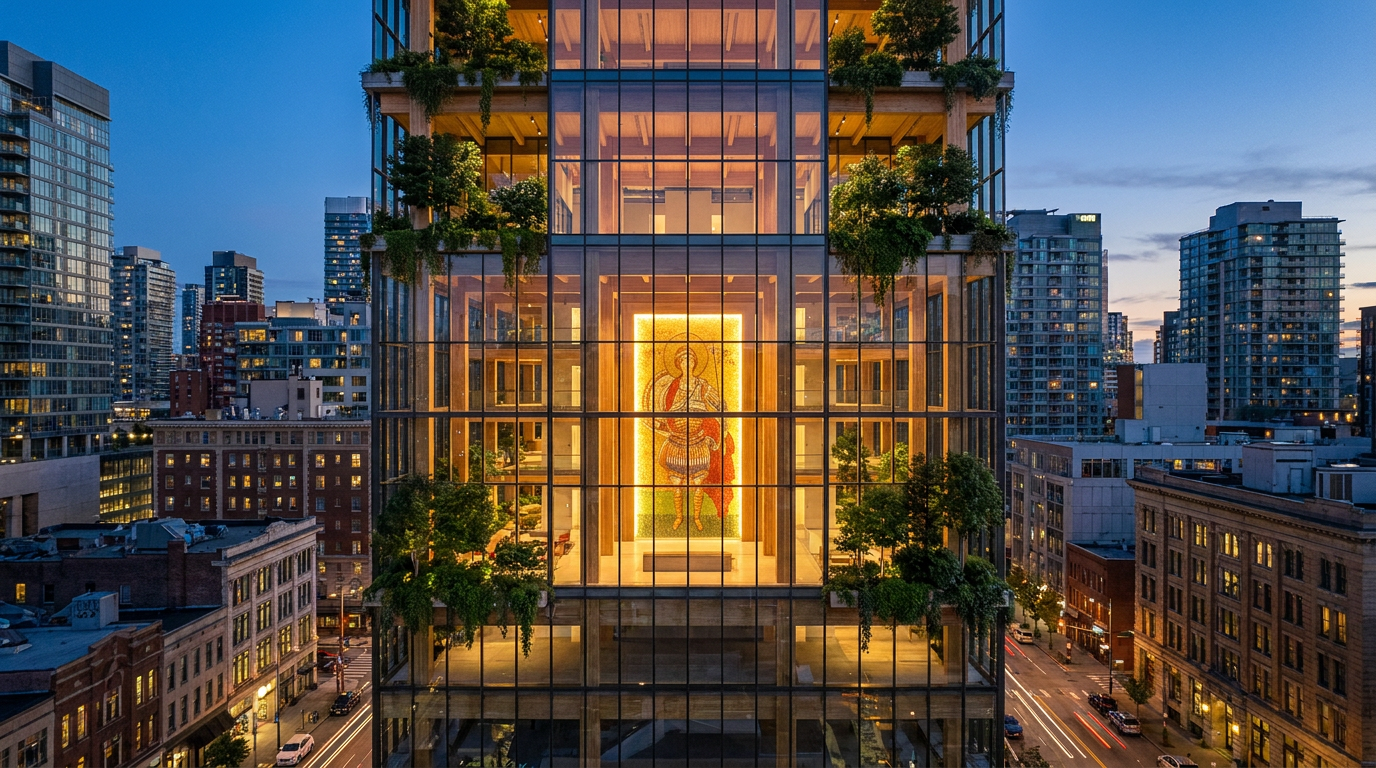
- Sustainable Architects & Engineers
- Advocates focused on decarbonizing the construction industry and improving occupant well-being.
- Urban Developers & Contractors
- Industry professionals prioritizing construction speed, site efficiency, and project economics.
- Forestry & Rural Economies
- Stakeholders focused on land management, sustainable harvesting, and rural job creation.
- Environmental Regulators & Safety Officials
- Authorities tasked with ensuring building safety, fire resistance, and ecological protection.
What's not represented
- · Traditional Concrete & Steel Manufacturers
- · Affordable Housing Advocates
Why this matters
The construction industry is one of the world's largest polluters, heavily reliant on carbon-intensive concrete and steel. Mass timber offers a viable, scalable alternative that not only slashes emissions but actively stores carbon, fundamentally changing how we build our cities and manage our forests.
Key points
- Mass timber uses engineered wood like CLT to replace concrete and steel in high-rise construction.
- The material acts as a carbon sink, significantly reducing the embodied carbon of new buildings.
- Prefabricated timber components allow for faster construction timelines and smaller, quieter work crews.
- Mass timber is highly fire-resistant, charring on the outside to protect its structural core.
- Milwaukee is currently the global leader in mass timber high-rises, hosting the current and future record-holders.
For over a century, the skylines of the world's major cities have been forged from concrete and steel. These materials built the modern urban landscape, offering unparalleled strength and the ability to reach dizzying heights. However, as the global focus shifts toward decarbonization, the architectural world is undergoing a quiet but profound revolution. A new generation of high-rises is sprouting up, built not from carbon-intensive industrial materials, but from engineered wood.[8]
The driving force behind this shift is the urgent need to address the climate crisis. The cement and steel industries are notoriously energy-intensive, accounting for a massive portion of global greenhouse gas emissions. Cement alone is responsible for roughly 8% of all global carbon emissions. In the quest to build more sustainably, architects and engineers have turned to mass timber—a family of highly engineered wood products capable of matching the structural integrity of traditional materials while offering a radically different environmental footprint.[3][6]
At the heart of this movement is Cross-Laminated Timber, or CLT. Unlike traditional light wood framing used in single-family homes, CLT is designed for massive structural loads. It is created by bonding together several layers of kiln-dried lumber, with each layer oriented at a right angle to the one below it. This crosswise arrangement gives the resulting panels exceptional strength, dimensional stability, and rigidity in both directions.[1][8]
Alongside CLT, builders rely on glued-laminated timber (glulam) for beams and columns. Together, these mass timber products form the structural skeleton of a building. Because they are manufactured in controlled factory settings using precise computer numerical control (CNC) machines, the components arrive at the construction site cut to exact specifications, complete with pre-drilled holes for connections and routing for utilities.[2][8]

The environmental mathematics of mass timber are compelling. Trees naturally sequester carbon dioxide from the atmosphere as they grow. When that wood is harvested and turned into mass timber, the carbon remains locked inside the building's structure for decades, effectively turning the high-rise into a massive, permanent carbon sink.[3][8]
Beyond sequestration, mass timber offers significant emissions displacement. By replacing concrete and steel, builders avoid the heavy carbon toll of manufacturing those materials. Studies indicate that building with mass timber can reduce the emissions associated with building materials by 13% to over 26%, and in some high-density urban projects, overall greenhouse gas emissions can be cut by up to 60% compared to conventional construction.[2][3]

The benefits extend directly to the construction site. Because mass timber components are prefabricated off-site, buildings can be assembled much like a giant piece of flat-pack furniture. This dramatically accelerates construction timelines, allowing developers to bring projects to market faster. The process requires smaller crews and generates significantly less noise and waste than a traditional concrete pour.[1][8]
Because mass timber components are prefabricated off-site, buildings can be assembled much like a giant piece of flat-pack furniture.
Furthermore, mass timber is significantly lighter than concrete and steel. This high strength-to-weight ratio means that buildings require smaller, less resource-intensive foundations. In urban environments, this translates to less excavation, fewer soil removal trucks, and a reduced impact on the surrounding neighborhood during the initial phases of construction.[1]
Despite these advantages, the most common question raised by the public and regulators alike is one of safety: What happens in a fire? Counterintuitively, mass timber performs exceptionally well under extreme heat. Unlike light wood framing that ignites quickly, large mass timber elements are designed to char on the outside. This char layer acts as an insulator, protecting the unburnt structural core and allowing the building to maintain its load-bearing capacity for hours.[3][8]
Building codes have evolved to reflect this safety profile. In 2021, the International Building Code (IBC) officially approved standards allowing mass timber structures to reach up to 18 stories in the United States. Since then, developers have been pushing the boundaries of what is possible, utilizing hybrid systems that combine timber with concrete cores to reach even greater heights.[2]
The epicenter of this vertical race is unexpectedly found in Milwaukee, Wisconsin. The city is currently home to Ascent MKE, a 25-story luxury apartment building that stands at 284 feet. Completed in 2022, Ascent holds the current title for the tallest mass timber building in the world, proving that engineered wood can compete in the luxury high-rise market.[5][6]
But Ascent's record is already being challenged in its own backyard. Construction recently broke ground on "The Edison," a 31-story mass timber tower located less than a mile away in downtown Milwaukee. Slated to reach 362 feet by 2026, The Edison utilizes a hybrid structural system and will feature 350 residential units, pushing the engineering limits of CLT and glulam even further.[4][7]

The ambitions do not stop there. Developers in Milwaukee have proposed an even larger project at the Marcus Performing Arts Center, which would feature a staggering 55-story mass timber hybrid tower. Globally, projects like the Atlassian Central tower in Sydney, Australia, are also vying for the title, signaling that the race to build the tallest wooden skyscraper is rapidly accelerating.[6][7]
Beyond the structural and environmental triumphs, mass timber is fundamentally changing how interior spaces feel. The natural beauty of the wood is often left exposed, a principle known as biophilic design. Research suggests that incorporating natural materials into living and working environments can reduce stress, lower heart rates, and improve the overall mental health of occupants.[1][8]

The economic ripple effects are equally significant. A robust mass timber industry creates a financial incentive for sustainable forest management. By creating a market for small-diameter trees and excess timber, the industry can help fund the thinning of overstocked forests, which in turn reduces the risk of catastrophic wildfires. This circular economy supports rural forestry jobs while supplying materials for dense urban housing.[1][3]
However, the industry still faces hurdles. Wood is naturally susceptible to moisture, requiring meticulous planning to protect the timber from rain during construction and condensation over its lifespan. Additionally, the density of wood presents acoustic challenges; without proper insulation and detailing, sound can travel easily between floors, requiring architects to balance exposed wood aesthetics with acoustic performance.[8]
Ultimately, the success of mass timber hinges on responsible sourcing. To ensure that the environmental benefits are not offset by deforestation, developers must rely on timber certified by organizations like the Forest Stewardship Council (FSC). As long as the supply chain remains sustainable, mass timber stands poised to redefine the architecture of the 21st century, proving that the cities of the future can be grown in the forests of today.[8]
How we got here
2009
The first 9-story mass timber residential building is completed, proving the viability of modern engineered wood.
2021
The International Building Code (IBC) is updated to officially allow mass timber structures up to 18 stories in the United States.
2022
Ascent MKE is completed in Milwaukee, setting the global record for the tallest mass timber building at 25 stories.
2025
Construction begins on The Edison in Milwaukee, a 31-story tower poised to break the current height record.
2026
Proposals for 50+ story mass timber hybrid mega-towers gain traction in the US and Australia.
Viewpoints in depth
Sustainable Architects & Engineers
Advocates focused on decarbonizing the construction industry and improving occupant well-being.
For this camp, mass timber is the holy grail of sustainable design. They emphasize that the built environment is responsible for a massive share of global emissions, primarily due to the energy-intensive production of concrete and steel. By switching to engineered wood, architects can transform buildings from carbon emitters into active carbon sinks. Furthermore, they champion the psychological benefits of biophilic design, arguing that exposing natural wood grain in urban environments significantly improves the mental health and productivity of the people living and working inside.
Urban Developers & Contractors
Industry professionals prioritizing construction speed, site efficiency, and project economics.
Developers view mass timber through the lens of efficiency and speed to market. Because CLT panels and glulam beams are prefabricated off-site with millimeter precision, buildings can be assembled rapidly with smaller crews. This 'flat-pack' approach reduces labor costs, minimizes disruptive noise in dense neighborhoods, and requires fewer truck deliveries. While the raw materials can sometimes carry a premium, contractors argue that the savings from accelerated timelines and lighter foundation requirements make mass timber highly cost-competitive.
Forestry & Rural Economies
Stakeholders focused on land management, sustainable harvesting, and rural job creation.
Forestry experts see the mass timber boom as a vital economic engine for rural communities and a tool for environmental stewardship. They argue that a strong market for engineered wood incentivizes landowners to keep forests intact rather than selling them for agricultural or commercial development. Additionally, mass timber production often utilizes small-diameter trees that are traditionally considered low-value. Harvesting these smaller trees helps thin overstocked forests, significantly reducing the fuel loads that contribute to catastrophic wildfires.
Environmental Regulators & Safety Officials
Authorities tasked with ensuring building safety, fire resistance, and ecological protection.
While supportive of the decarbonization goals, regulators maintain a cautious, evidence-based approach to the mass timber revolution. Their primary focus has been rigorously testing the fire resistance of CLT and glulam, ensuring that the charring effect reliably protects structural cores during extreme heat. Ecologically, this camp is hyper-focused on the supply chain. They warn that the environmental benefits of mass timber are entirely dependent on sustainable forestry practices, stressing that widespread adoption must be strictly tied to certifications like the FSC to prevent the depletion of old-growth forests.
What we don't know
- How global supply chains will scale to meet the surging demand for FSC-certified mass timber without straining regional forests.
- The long-term acoustic performance and maintenance costs of exposed timber in ultra-tall 50+ story hybrid towers.
- Whether the cost of mass timber will drop significantly enough to replace concrete in standard, non-luxury residential developments.
Key terms
- Cross-Laminated Timber (CLT)
- An engineered wood panel made by gluing layers of lumber at right angles to maximize structural strength.
- Glulam (Glued-Laminated Timber)
- Structural beams and columns made by gluing layers of wood parallel to the grain.
- Embodied Carbon
- The total greenhouse gas emissions generated by manufacturing, transporting, and assembling building materials.
- Biophilic Design
- An architectural approach that connects building occupants more closely to nature, often using exposed natural materials to improve mental well-being.
- Carbon Sequestration
- The process by which trees capture and store carbon dioxide from the atmosphere, keeping it locked away.
Frequently asked
Is mass timber safe in a fire?
Yes. Large mass timber elements are designed to char on the outside during a fire. This char layer acts as an insulator, protecting the structural core and allowing the building to maintain its load-bearing capacity.
Does mass timber construction cause deforestation?
When sourced responsibly, it actually promotes healthy forest management. It creates a market for small-diameter trees, which incentivizes the thinning of overstocked forests and reduces wildfire risks.
Is mass timber cheaper than concrete and steel?
While raw material costs can be similar, mass timber often reduces overall project costs. Prefabricated components lead to faster construction timelines, smaller crews, and lighter foundation requirements.
Sources
Source coverage
8 outlets
4 viewpoints surfaced








[1]Texas A&M UniversityForestry & Rural Economies
Mass timber takes root in Texas architecture
Read on Texas A&M University →[2]The Skyscraper MuseumSustainable Architects & Engineers
Mass Timber: The New High-Rise Standard
Read on The Skyscraper Museum →[3]Environmental and Energy Study InstituteEnvironmental Regulators & Safety Officials
The Environmental Impact of Mass Timber Construction
Read on Environmental and Energy Study Institute →[4]Construction DiveUrban Developers & Contractors
Neutral Edison, 31-story mass timber tower, breaks ground in Milwaukee
Read on Construction Dive →[5]Construction BriefingUrban Developers & Contractors
Construction starts on world's tallest mass timber building
Read on Construction Briefing →[6]The GuardianEnvironmental Regulators & Safety Officials
Milwaukee plans to build tallest timber building in the world
Read on The Guardian →[7]Engineering News-RecordUrban Developers & Contractors
Title of Tallest Mass Timber Building Could Come Back to Milwaukee
Read on Engineering News-Record →[8]Factlen Editorial TeamSustainable Architects & Engineers
Synthesis by Factlen editorial team
Read on Factlen Editorial Team →

Every angle. Every day.
Get culture stories with full source coverage and perspective breakdowns delivered to your inbox.