
How Precision Fermentation is Brewing Cow-Free Dairy
Advances in microbial brewing are allowing food tech companies to produce bio-identical milk proteins without animals. As regulatory approvals accelerate, the technology promises a massive reduction in dairy's environmental footprint, provided it can scale economically.
By Factlen Editorial Team
- Biotech Innovators
- Argue that precision fermentation is the only way to meet global protein demand sustainably while matching the taste and texture of real dairy.
- Environmental Analysts
- Caution that the climate benefits of fermentation depend entirely on using renewable energy and sustainable sugar feedstocks.
- Alternative Protein Advocates
- View the technology as a crucial tool to diversify the food system and reduce reliance on industrial animal agriculture.
What's not represented
- · Traditional dairy farmers facing disruption
- · Allergy sufferers navigating new 'animal-free' labels
Why this matters
Precision fermentation promises to decouple our favorite foods from the massive environmental footprint of animal agriculture. If it scales successfully, consumers will soon be able to buy real, meltable cheese and creamy ice cream that require a fraction of the land, water, and emissions to produce.
Key points
- Precision fermentation uses programmed microbes to 'brew' bio-identical dairy proteins without using animals.
- German startup Formo recently received FDA clearance to sell its cow-free casein protein in the US market.
- The resulting proteins are lactose-free and cholesterol-free, but still trigger dairy allergies.
- Life Cycle Assessments show the technology can reduce greenhouse gas emissions by over 90% compared to conventional dairy.
- Scaling the technology requires significant capital, renewable energy, and sustainable sugar feedstocks to realize its full climate potential.
The future of dairy might not start on a farm, but inside a stainless-steel brewing tank. In early June 2026, the US Food and Drug Administration (FDA) issued a "no questions" letter to German food-tech startup Formo, acknowledging the safety of its precision-fermented casein protein.[3][5][8]
This regulatory green light marks a critical milestone for the alternative protein industry, clearing the path for bio-identical, cow-free dairy ingredients to enter the American market. For years, plant-based milks and cheeses have struggled to perfectly replicate the sensory experience of conventional dairy. The missing link has always been the specific proteins—whey and casein—that give milk its nutritional profile and cheese its unique ability to melt, stretch, and bind.[3][8]
By utilizing precision fermentation, companies are now producing these exact proteins without involving a single animal. The mechanism behind precision fermentation is a highly specialized form of brewing. Scientists isolate the genetic sequence that codes for a specific dairy protein, such as αS1-casein, which makes up about 40% of the protein content in cow's milk.[1][3][5][9]

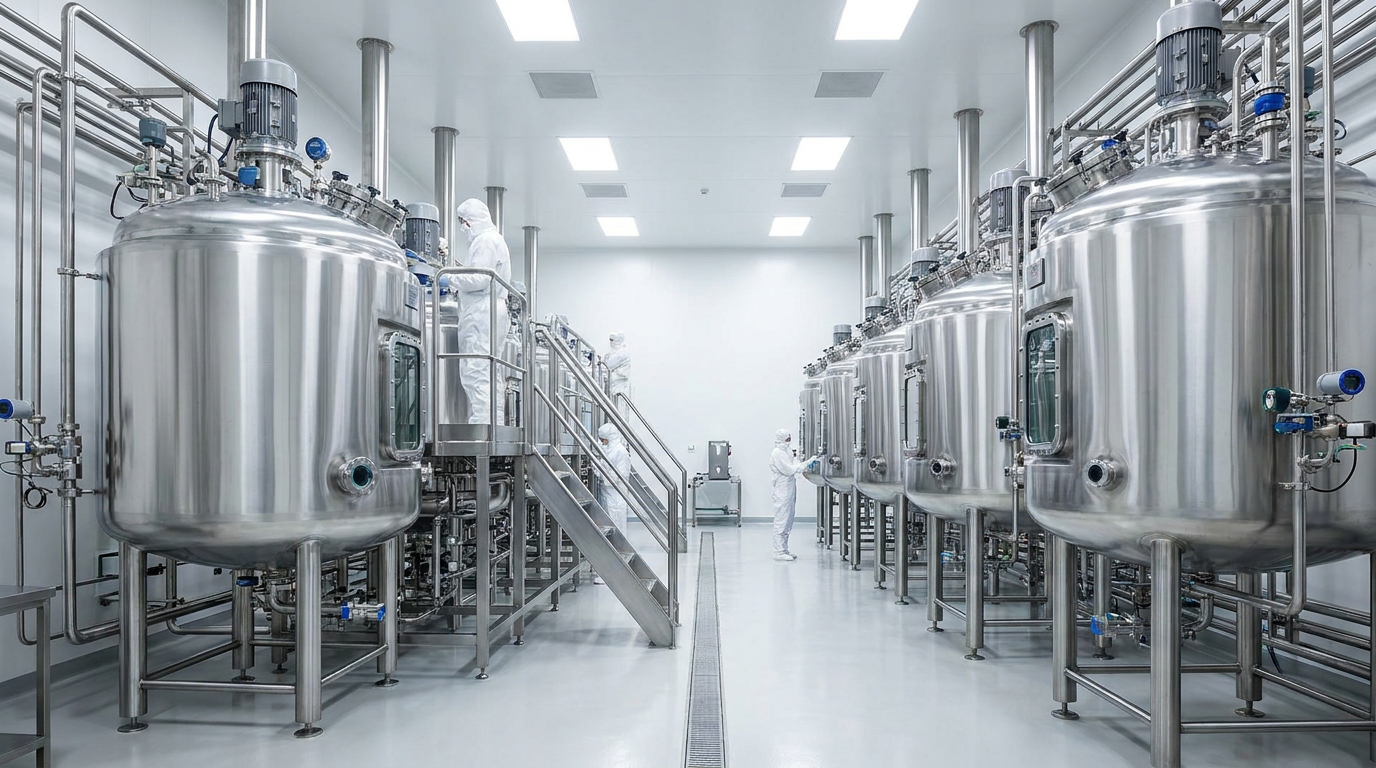
This genetic blueprint is then inserted into a food-grade microorganism, typically a strain of yeast or bacteria. Once programmed, these microbes are placed into large industrial bioreactors—similar to those used for brewing beer or making kombucha—and fed a steady diet of simple sugars and plant-based nutrients.[1][5][9]
As the microbes consume the sugars, they act as microscopic factories, churning out the target dairy protein. After the fermentation cycle is complete, the mixture undergoes a rigorous purification process. The target proteins are separated from the microbial biomass through cell lysis and filtration, resulting in a pure protein isolate.[5][9]
Crucially, the final ingredient contains no living microorganisms and no detectable genetic material from the host microbe. It is simply a highly purified, functional protein that is biologically identical to the one found in cow's milk.[1][5][8]
Because the process builds the dairy profile from the ground up, the resulting ingredients offer unique health advantages. Precision-fermented dairy is naturally free of lactose, cholesterol, and the hormones or antibiotics sometimes associated with conventional animal agriculture. However, because the proteins are bio-identical, they will still trigger dairy allergies, requiring strict labeling and challenging consumers' traditional understanding of the term "vegan."[1][8]
Because the process builds the dairy profile from the ground up, the resulting ingredients offer unique health advantages.
Beyond functional performance, the primary driver behind the precision fermentation boom is its potential to drastically reduce the environmental footprint of global protein production. Traditional animal agriculture is highly resource-intensive, requiring massive amounts of land and water while generating significant greenhouse gas emissions.[2][7]

Early Life Cycle Assessments (LCAs) of precision-fermented proteins show staggering environmental benefits. A 2021 ISO-reviewed LCA from Perfect Day, a pioneer in animal-free whey, found that its fermentation process reduced greenhouse gas emissions by 91% to 97% compared to conventional dairy whey. The same study reported massive reductions in water consumption.[2]
However, environmental analysts caution that these footprints are not static and depend heavily on how the technology is deployed at scale. The two largest contributors to precision fermentation's environmental impact are the electricity required to power and cool the massive bioreactors, and the agricultural footprint of the sugar feedstock used to feed the microbes.[2][4][6]
If a fermentation facility is powered by a coal-heavy electrical grid and feeds its microbes sugar derived from heavily fertilized, monoculture crops, the environmental benefits quickly narrow. One anticipatory study noted that freshwater eutrophication—pollution caused by agricultural runoff—could actually be higher for fermented proteins if the sugar feedstock relies on intensive fertilizer use.[4][6]
To realize the technology's true climate promise, the industry must pair its bioreactors with renewable energy grids and transition to sustainable, low-impact carbon feedstocks. Researchers are already exploring the use of agricultural side-streams and food waste as alternative food sources for the microbes, which would further circularize the production process.[2][4]

The next major hurdle for the industry is economic scalability. While the science of precision fermentation is proven, transitioning from pilot-scale batches to massive commercial production involves complex engineering and steep capital costs. Techno-economic analyses highlight that optimizing the microbes to produce higher yields of protein per batch is essential to bringing costs down.[4]
To circumvent the high costs of building dedicated facilities, the industry is increasingly shifting toward shared fermentation platforms. Rather than every startup building its own factory, companies are partnering with established biomanufacturing hubs to rent bioreactor capacity, allowing them to scale production faster and more efficiently.[10]
The market momentum is undeniable. Industry analysts project the global precision fermentation ingredients market to surge from roughly $5 billion in 2025 to over $36 billion by 2030, driven by intense demand from food and beverage manufacturers seeking sustainable, high-performance ingredients.[7]
As regulatory bodies in the US and eventually Europe establish clear pathways for these novel foods, precision fermentation is poised to move from a niche food-tech experiment to a foundational pillar of the global food system. The era of "dairy plus fermentation" has arrived, promising a future where our favorite foods require fewer resources and zero animals.[3][8]

How we got here
2021
Perfect Day publishes an ISO-reviewed Life Cycle Assessment showing its animal-free whey reduces greenhouse gas emissions by up to 97%.
December 2024
German startup Formo self-affirms its precision-fermented casein as Generally Recognized as Safe (GRAS) in the US.
June 2026
Formo receives a 'no questions' letter from the FDA, clearing the path for commercial sales of recombinant casein to US food manufacturers.
Viewpoints in depth
Biotech Innovators
Focus on the functional superiority and scalability of fermented proteins.
Companies like Formo and Perfect Day argue that plant-based alternatives have hit a ceiling in consumer acceptance because they cannot replicate the exact molecular structure of dairy. By brewing bio-identical casein and whey, they believe they can decouple the global protein supply from the structural constraints and biological risks of animal agriculture, offering a product that melts and stretches exactly like traditional cheese.
Environmental Analysts
Emphasize that the climate benefits are conditional on energy and feedstock choices.
While top-line emission reductions look promising, sustainability researchers point out that precision fermentation simply shifts the burden from animals to bioreactors. If those bioreactors are powered by fossil fuels and fed with sugar from deforestation-linked agriculture, the net environmental gain is negligible. They advocate for integrating renewable energy and upcycled agricultural waste into the fermentation process to ensure true ecological benefits.
Food Regulators & Advocates
Focus on the challenges of labeling, allergen safety, and consumer transparency.
Because precision-fermented proteins are molecularly identical to cow's milk, they trigger the exact same dairy allergies. Consumer protection groups and regulators stress that these products must carry clear allergen warnings, despite being 'animal-free.' This paradox is forcing a reevaluation of terms like 'vegan' and 'plant-based,' requiring new labeling standards to ensure consumers understand exactly what they are eating.
What we don't know
- Whether the cost of scaling up massive stainless-steel bioreactors will allow these proteins to reach price parity with heavily subsidized conventional dairy.
- How traditional dairy consumers will react to 'animal-free dairy' labeling once the products hit mainstream grocery shelves.
- The long-term environmental impact of sourcing the massive quantities of sugar required to feed industrial-scale microbial fermentation.
Key terms
- Precision Fermentation
- A process that uses genetically programmed microorganisms, like yeast or bacteria, to produce specific complex molecules such as dairy proteins.
- Casein
- The primary family of proteins in milk that gives cheese its ability to melt, stretch, and form a solid structure.
- Life Cycle Assessment (LCA)
- A method used to evaluate the environmental impact of a product through its entire life, from raw material extraction to final production.
- GRAS (Generally Recognized as Safe)
- A US Food and Drug Administration designation indicating that a chemical or substance added to food is considered safe by experts.
- Eutrophication
- The pollution of water bodies by excessive nutrients, often from agricultural fertilizer runoff, which causes dense plant growth and animal death from lack of oxygen.
Frequently asked
Is precision-fermented dairy vegan?
Yes, in the sense that no animals are used or harmed in the production process. However, because the proteins are biologically identical to cow's milk, it challenges traditional definitions and cannot be consumed by those with dairy allergies.
Does this dairy contain lactose?
No. The microbes are programmed to produce only specific proteins like whey or casein, meaning the final product is naturally lactose-free and cholesterol-free.
Are there live microbes in the final food?
No. The target proteins are separated and highly purified after the fermentation process, leaving no living microorganisms or detectable genetic material in the final ingredient.
Sources
Source coverage
10 outlets
3 viewpoints surfaced










[1]Food FrontierAlternative Protein Advocates
What is 'animal-free dairy'? Change Foods explains
Read on Food Frontier →[2]Sustainable Nutrition InitiativeEnvironmental Analysts
Do the environmental impacts of fermentation-produced protein outweigh those of conventional protein sources?
Read on Sustainable Nutrition Initiative →[3]Green QueenBiotech Innovators
Exclusive: Formo Cleared to Sell Cow-Free Casein in US
Read on Green Queen →[4]ResearchGateEnvironmental Analysts
The role of techno-economic and life cycle assessment in guiding precision fermentation towards sustainable food production
Read on ResearchGate →[5]MycoStoriesBiotech Innovators
Formo Wins US GRAS Clearance for Precision-Fermented Casein Protein
Read on MycoStories →[6]The VRG BlogEnvironmental Analysts
The Environmental Impacts of Precision Fermentation: Part 1
Read on The VRG Blog →[7]MarketsandMarketsBiotech Innovators
Precision Fermentation Ingredients Market: Driving the Future of Food and Sustainability
Read on MarketsandMarkets →[8]FoodNavigator-USABiotech Innovators
Precision-fermented casein from Formo advances toward US market after FDA GRAS
Read on FoodNavigator-USA →[9]GFI EuropeAlternative Protein Advocates
What is precision fermentation?
Read on GFI Europe →[10]ICL GroupBiotech Innovators
Food Tech Trends 2026: Smarter, Leaner, More Sustainable
Read on ICL Group →
Every angle. Every day.
Get food drink stories with full source coverage and perspective breakdowns delivered to your inbox.