
Next-Generation Geothermal Startups Are Finally Unlocking Earth's Limitless Clean Energy
A new wave of energy startups is adapting oil and gas drilling techniques to harvest geothermal heat anywhere on the planet, promising a reliable, 24/7 complement to wind and solar.
By Factlen Editorial Team
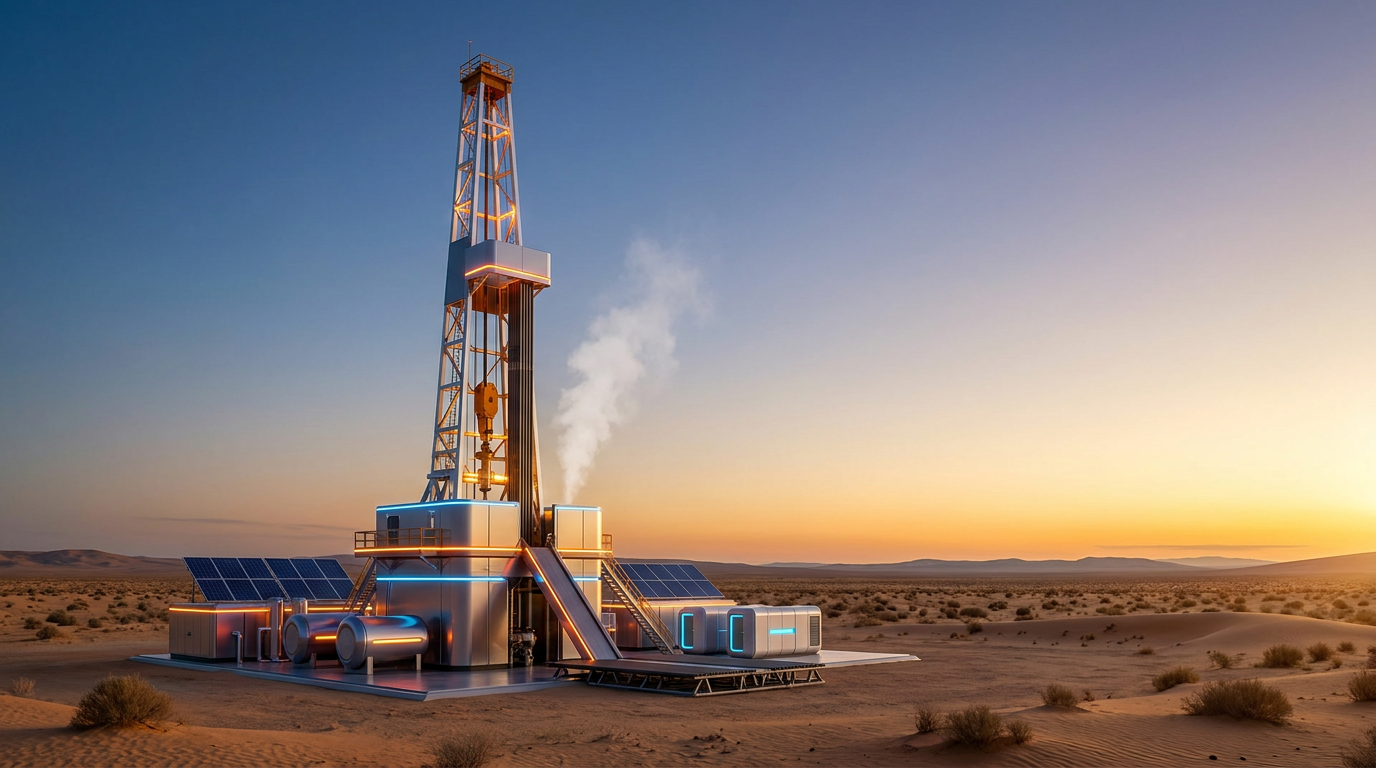
- Geothermal Innovators
- Argue that leveraging existing fossil-fuel drilling tech is the fastest path to scaling clean baseload power.
- Climate Policy Advocates
- Emphasize that firm, always-on clean energy is the missing puzzle piece for a fully decarbonized grid.
- Energy Economists
- Caution that deep drilling remains highly capital-intensive and must prove it can compete on price with solar-plus-storage.
What's not represented
- · Local communities near drilling sites
- · Traditional fossil fuel executives
Why this matters
While wind and solar are cheap, their intermittency requires massive battery storage to keep the grid stable. Next-generation geothermal offers 'always-on' clean baseload power that could definitively solve the grid's reliability problem without carbon emissions, directly utilizing the existing skills of the oil and gas workforce.
Key points
- Next-generation startups are adapting oil and gas drilling techniques to harvest geothermal heat anywhere on Earth.
- Enhanced Geothermal Systems (EGS) provide 24/7 clean baseload power, solving the intermittency problem of wind and solar.
- The U.S. Department of Energy aims to cut the cost of advanced geothermal by 90% by 2035.
- Startups are transitioning from pilot projects to commercial grid connections in 2026.
- The sector offers a direct workforce transition for existing oil and gas professionals.
The global push for decarbonization has largely been a story of wind and solar. But as grids become increasingly saturated with these intermittent sources, a glaring vulnerability has emerged: what happens when the sun sets and the wind stops blowing?[1][6]
For years, the default answer has been massive lithium-ion battery banks. Yet, a quiet revolution is brewing beneath the surface. A new generation of energy startups is racing to unlock the holy grail of the energy transition: clean, inexhaustible, "always-on" baseload power sourced directly from the heat of the Earth.[1][2]
Traditional geothermal energy is a proven concept, but it has historically been geographically constrained. It required a rare geological trifecta: hot rock, permeable ground, and underground water, limiting plants to volcanic regions like Iceland or specific fault lines in California.[3]
Today’s geothermal startups are rewriting those geological rules. By leveraging advanced drilling technologies, they are engineering artificial geothermal reservoirs in hot, dry rock—a resource that exists virtually everywhere on the planet if you drill deep enough.[1][4]

The profound irony of this clean energy breakthrough is its origin. Companies are directly adapting the horizontal drilling and hydraulic fracturing techniques pioneered by the oil and gas industry over the last two decades.[3][4]
Instead of extracting hydrocarbons, these startups inject cold water deep underground, allow the subterranean heat to boil it, and bring it back to the surface to drive steam turbines. This process, known as Enhanced Geothermal Systems (EGS), effectively turns the Earth's crust into a massive, zero-carbon radiator.[2][4]
The momentum in 2026 is palpable. Startups like Fervo Energy have successfully transitioned from pilot projects to commercial-scale grid connections, proving that the technology works outside the laboratory.[4][5]
Venture capital has taken notice. After years of viewing heavy industrial drilling as too capital-intensive, Silicon Valley and climate-focused funds are pouring hundreds of millions of dollars into the sector, recognizing the massive total addressable market for firm clean power.[5]

The U.S. Department of Energy has thrown its weight behind the movement, launching the "Enhanced Geothermal Earthshot" with the explicit goal of slashing the cost of EGS by 90% to $45 per megawatt-hour by 2035. If achieved, this would make geothermal highly competitive with fossil fuels.[2]
If achieved, this would make geothermal highly competitive with fossil fuels.
But the engineering challenges remain formidable. Drilling through ultra-hot, ultra-hard crystalline granite at depths of 10,000 feet or more destroys conventional drill bits and melts standard electronics.[3][8]
To overcome this, some startups are pursuing radical innovations. Quaise Energy, an MIT spin-off, is developing millimeter-wave technology—essentially directed energy beams—to vaporize rock, theoretically allowing them to drill deeper and hotter than mechanical bits ever could.[3][7]

The economic viability of these advanced systems is still being stress-tested. Skeptics point out that while the fuel is free, the upfront capital expenditures for deep drilling are astronomical, and the technology must compete with the rapidly falling costs of solar-plus-storage.[5][8]
However, grid operators are increasingly desperate for firm power. The explosive growth of AI data centers and the broad electrification of transport and heating are driving unprecedented spikes in electricity demand, making 24/7 reliability a premium asset.[1][6]

Beyond the electrons, the geothermal boom offers a compelling socioeconomic narrative. It provides a direct, high-paying transition path for the existing fossil fuel workforce, utilizing the exact skills—drilling, reservoir engineering, and fluid dynamics—that oil and gas workers already possess.[2][4]
As these startups scale their operations and drive down the learning curve, the promise is staggering. If advanced geothermal can be deployed anywhere, it won't just supplement the clean energy transition—it could fundamentally anchor it, tapping into a literal inexhaustible battery beneath our feet.[1][8]
How we got here
1970s-1980s
Early government-funded experiments in hot dry rock geothermal prove the concept but fail to achieve commercial viability.
2000s-2010s
The shale boom drives massive advancements in horizontal drilling and hydraulic fracturing, inadvertently creating the tools needed for advanced geothermal.
Sept 2022
The U.S. Department of Energy launches the Enhanced Geothermal Shot to reduce costs by 90%.
July 2023
Fervo Energy successfully completes a 30-day commercial pilot, proving EGS can generate grid-scale electricity.
2026
A wave of geothermal startups transition from pilot phases to active grid connections and commercial scaling.
Viewpoints in depth
Geothermal Innovators
Argue that leveraging existing fossil-fuel drilling tech is the fastest path to scaling clean baseload power.
Founders and engineers in this space view the oil and gas industry not as an enemy, but as an unwitting R&D lab for the clean energy transition. By repurposing decades of advancements in horizontal drilling and high-temperature sensors, they argue that geothermal can scale faster than any other emerging clean technology. They believe that once the initial capital hurdles are cleared, the marginal cost of extracting Earth's heat will plummet, making it the ultimate baseload solution.
Climate Policy Advocates
Emphasize that firm, always-on clean energy is the missing puzzle piece for a fully decarbonized grid.
Policy experts and international energy agencies stress that while wind, solar, and batteries will do the heavy lifting of decarbonization, the last 20% of the grid is the hardest to clean up. They view advanced geothermal as the critical 'firm' power needed to replace coal and natural gas plants. Furthermore, they highlight the political and social benefits of offering a direct, high-paying transition path for the existing fossil fuel workforce.
Energy Economists
Caution that deep drilling remains highly capital-intensive and must prove it can compete on price with solar-plus-storage.
Financial analysts and energy economists maintain a cautious outlook. While the physics of advanced geothermal are proven, the economics remain challenging. Deep drilling is inherently risky and expensive, with high upfront capital expenditures. Economists warn that these startups are racing against a moving target: the rapidly falling costs of utility-scale solar paired with long-duration battery storage, which could undercut geothermal's business model before it reaches scale.
What we don't know
- Whether advanced geothermal can scale fast enough to compete with rapidly falling solar and battery costs.
- How effectively startups can mitigate the risk of induced seismicity near populated areas.
- If radical drilling technologies, like millimeter-wave rock vaporization, can succeed outside the laboratory.
Key terms
- Enhanced Geothermal Systems (EGS)
- A technology that creates artificial geothermal reservoirs by injecting water into hot, impermeable rock deep underground.
- Baseload Power
- The minimum amount of electric power needed to be supplied to the electrical grid at any given time, requiring energy sources that can run continuously.
- Horizontal Drilling
- A drilling technique that turns the drill bit horizontally deep underground, vastly increasing the surface area exposed to the well.
- Induced Seismicity
- Minor earthquakes or tremors caused by human activity, such as injecting fluids into the Earth's crust.
Frequently asked
What is the difference between traditional and advanced geothermal?
Traditional geothermal requires natural hot springs and permeable rock. Advanced geothermal (EGS) engineers artificial reservoirs by injecting water into hot, dry rock, allowing it to be built almost anywhere.
Is this the same as fracking?
It uses similar horizontal drilling and fluid injection techniques developed by the oil and gas industry, but it injects water to harvest heat rather than extracting hydrocarbons.
Can geothermal replace solar and wind?
No, it is designed to complement them. Solar and wind are cheaper for bulk energy, while geothermal provides the 'firm' baseload power needed when the sun sets or wind stops.
What are the environmental risks?
The primary concerns are induced seismicity (minor earthquakes caused by fluid injection) and high water usage, both of which startups are mitigating through advanced seismic monitoring and closed-loop systems.
Sources
Source coverage
8 outlets
3 viewpoints surfaced








[1]Factlen Editorial TeamClimate Policy Advocates
Synthesis by Factlen editorial team
Read on Factlen Editorial Team →[2]U.S. Department of EnergyClimate Policy Advocates
Enhanced Geothermal Earthshot Initiative
Read on U.S. Department of Energy →[3]MIT Energy InitiativeGeothermal Innovators
The Future of Geothermal Energy: Deep Drilling Technologies
Read on MIT Energy Initiative →[4]Fervo EnergyGeothermal Innovators
Commercializing Enhanced Geothermal Systems
Read on Fervo Energy →[5]BloombergNEFEnergy Economists
Clean Energy Investment and Geothermal Scaling
Read on BloombergNEF →[6]International Energy AgencyClimate Policy Advocates
Geothermal Power Tracking Report 2026
Read on International Energy Agency →[7]Quaise EnergyGeothermal Innovators
Millimeter-Wave Drilling for Deep Geothermal
Read on Quaise Energy →[8]Stanford University Precourt Institute for EnergyEnergy Economists
Economic Viability of Advanced Geothermal
Read on Stanford University Precourt Institute for Energy →

Every angle. Every day.
Get business stories with full source coverage and perspective breakdowns delivered to your inbox.