
Why Metabolically Healthy People Are Tracking Their Blood Sugar: The Science of CGMs
Continuous glucose monitors are moving from diabetes management to mainstream biohacking. Here is what the science says about tracking blood sugar for longevity, and where the evidence falls short.
By Factlen Editorial Team
- Metabolic Optimization Advocates
- Argue that tracking glucose variability provides crucial personalized data to prevent chronic disease.
- Medical Skeptics
- Emphasize the lack of long-term outcome data and warn against medicalizing normal physiological responses.
- Clinical Researchers
- Focus on establishing baseline normative data for healthy populations to improve future diagnostics.
What's not represented
- · Insurance providers
- · Low-income patient advocates
Why this matters
Understanding your unique metabolic response to food and stress can help prevent chronic inflammation and cardiovascular disease long before standard blood tests show a problem.
Key points
- The FDA approved over-the-counter continuous glucose monitors for non-diabetics in 2024.
- Standard tests like fasting glucose and A1c measure averages, missing daily blood sugar spikes.
- High glucose variability is linked to increased risks of cardiovascular disease and inflammation.
- Research shows that individuals have vastly different metabolic responses to the exact same foods.
- Skeptics warn that constant monitoring can cause unnecessary anxiety over normal physiological responses.
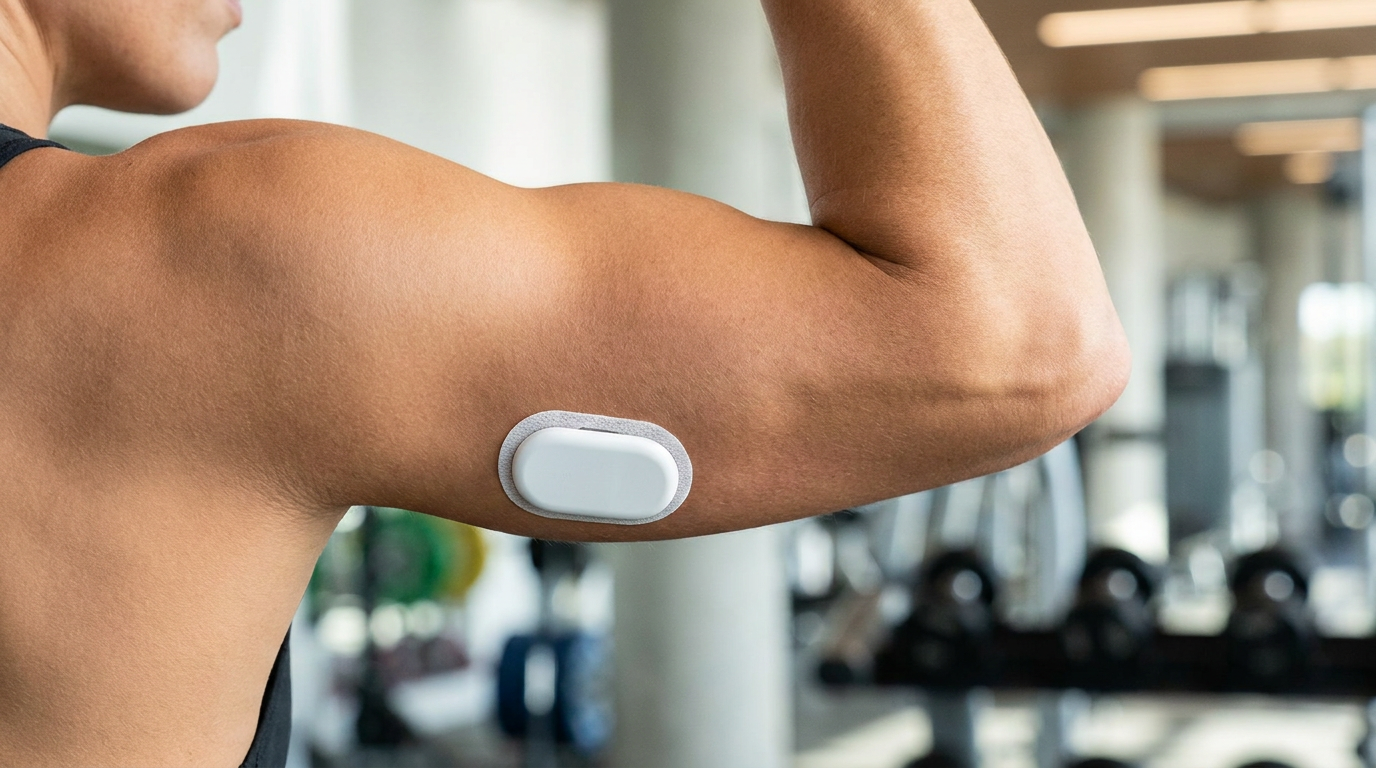
For decades, keeping tabs on blood sugar was the exclusive domain of people managing diabetes. But a quiet shift in wearable technology has transformed the continuous glucose monitor (CGM) from a specialized medical device into a mainstream tool for metabolic optimization. Following the FDA's 2024 approval of over-the-counter CGMs for non-diabetics, the small white patches have become increasingly visible on the arms of athletes, executives, and wellness enthusiasts. The appeal lies in the promise of real-time, personalized data. Instead of waiting for an annual physical to get a single snapshot of metabolic health, users can watch their body's internal chemistry react minute-by-minute to a bowl of oatmeal, a stressful meeting, or a poor night of sleep.[7]
A continuous glucose monitor works by inserting a microscopic filament just beneath the skin, typically on the back of the upper arm or the abdomen. Rather than measuring blood directly, the sensor measures glucose levels in the interstitial fluid—the fluid that surrounds the body's cells. The device takes a reading every few minutes and transmits the data via Bluetooth to a smartphone app, creating a continuous line graph of the user's metabolic state. Most sensors are water-resistant, painless to apply, and last for 10 to 14 days before they need to be replaced. For people without diabetes, this constant stream of data offers a window into a physiological process that is usually entirely invisible until something goes wrong.[3]
The central argument for non-diabetic CGM use stems from the limitations of standard medical testing. During a routine physical, doctors typically assess metabolic health using two metrics: fasting blood glucose and Hemoglobin A1c (HbA1c). Fasting glucose provides a snapshot of blood sugar after a night of not eating, while HbA1c estimates the average blood sugar level over the previous three months. While these tests are excellent for diagnosing clinical diabetes, longevity experts argue they are backward-looking metrics that miss the early, subtle signs of metabolic dysfunction. A patient can have a perfectly normal fasting glucose and A1c while still experiencing massive, damaging spikes in blood sugar throughout the day.[1]
To understand why averages fall short, physicians often use a driving analogy. If one car drives at a steady 50 miles per hour, and another car wildly accelerates to 100 miles per hour before slamming on the brakes to hit zero, both cars have an average speed of 50 miles per hour. However, the wear and tear on the second car's engine and brakes will be vastly different. The same principle applies to the human vascular system. Two people can share an identical, healthy A1c of 5.2%, but one might have a stable "flat" glucose profile, while the other experiences a daily rollercoaster of severe spikes and crashes. Standard blood panels cannot differentiate between the two.[1][6]

This rollercoaster effect is clinically known as glycemic variability, and a growing body of evidence suggests it matters deeply for long-term health. Dr. Peter Attia, a prominent longevity physician, has argued extensively that high glucose variability in non-diabetics is independently associated with an accelerated onset of chronic disease. Frequent, severe spikes in blood sugar drive chronic low-grade inflammation, increase oxidative stress, and contribute to arterial damage over time. Prospective studies have linked this high variability to an increased risk of cardiovascular disease, Alzheimer's disease, and all-cause mortality, leading many preventative medicine advocates to conclude that flattening the glucose curve is a crucial pillar of longevity.[1]
Beyond disease prevention, CGMs have upended decades of generic nutritional advice by revealing the sheer scale of individual biological variation. For years, dietitians relied on the Glycemic Index to predict how certain foods would affect blood sugar. But a landmark study published in the journal Cell by researchers Eran Elinav and Eran Segal tracked 800 participants and found that individual glycemic responses to identical foods varied enormously. The researchers discovered that a person's unique gut microbiome, genetics, and lifestyle factors dictate their metabolic response far more than the carbohydrate content of the food itself.[5]
The practical implications of this individual variation are profound. In the Cell study, researchers observed that a standard bowl of oatmeal might cause a negligible glucose rise in one participant, while sending another participant's blood sugar soaring into pre-diabetic ranges. Conversely, the second participant might eat a banana with zero adverse metabolic effect, while the first participant experiences a massive spike. This data suggests that the concept of a universally "healthy" diet is fundamentally flawed. By wearing a CGM, individuals can map their own unique "glucotype" and tailor their nutrition to their specific biology, rather than relying on generalized food pyramids.[5]

The practical implications of this individual variation are profound.
The insights provided by continuous monitoring extend far beyond the kitchen. The 2025 CGM-HYPE study, published in PLOS Digital Health, monitored healthy young adults through controlled dietary, exercise, and stress challenges. The researchers found that psychological stress and poor sleep profoundly degrade the body's ability to manage carbohydrates. A meal that produces a gentle, healthy glucose curve after a full eight hours of sleep might trigger a severe, prolonged spike if the user is sleep-deprived or facing a high-pressure deadline at work. For many biohackers, seeing the undeniable, quantified impact of stress on their metabolic health becomes the ultimate catalyst for prioritizing sleep and recovery.[4]
The data also highlights physiological nuances that can easily confuse new users, particularly regarding exercise. High-intensity anaerobic workouts—like sprinting or heavy weightlifting—often cause a sharp spike in blood sugar. Without context, a user might view this spike as a negative event. In reality, this is a healthy, adaptive response: the liver is rapidly dumping stored glycogen into the bloodstream to fuel the intense muscular effort. Unlike a spike caused by eating a donut, an exercise-induced spike is not driven by a lack of insulin sensitivity and does not carry the same long-term inflammatory risks.[4]
Perhaps the most powerful benefit of CGM use in healthy populations is its role as a behavioral feedback loop. Real-time data has a unique ability to drive habit change. When a user sees their blood sugar climbing rapidly after a heavy lunch, they are highly motivated to take action. Studies have shown that nearly half of healthy CGM users report that seeing a high glucose reading increases their likelihood of taking a brisk 15-minute walk, which effectively blunts the spike by allowing muscles to absorb the excess glucose independent of insulin. This immediate accountability loop turns abstract health advice into a tangible, gamified daily practice.[1][4]
Despite the enthusiasm from the biohacking community, the mainstream medical establishment remains highly skeptical of widespread CGM use for healthy individuals. Experts at institutions like Harvard Medical School point out a glaring gap in the literature: there are currently no long-term randomized controlled trials proving that continuous glucose monitoring actually improves health outcomes or extends lifespan in non-diabetics. While the physiological theories regarding glycemic variability are sound, skeptics argue that optimizing a system that is already functioning properly may be a waste of time, money, and mental energy.[2][3]
Furthermore, researchers studying wearable health data warn that providing clinical-grade diagnostics to the general public can cause unnecessary anxiety. The user interfaces of most CGM apps were originally designed for diabetics, featuring bright red warning alerts when blood sugar crosses certain thresholds. For a healthy person, a temporary spike to 160 mg/dL after eating a slice of pizza is a normal physiological response, not a medical emergency. Nutritionists have raised concerns that hyper-fixating on these numbers can lead to "pathological stress," orthorexia, and the avoidance of perfectly healthy foods like fruit and legumes simply because they cause a natural, temporary rise in glucose.[3]
Technical limitations also complicate the interpretation of consumer CGM data. The sensors measure interstitial fluid, which lags behind actual blood glucose by roughly 10 to 15 minutes. Additionally, even the best consumer devices have a Mean Absolute Relative Difference (MARD) of roughly 8 to 9 percent, meaning a reading of 100 mg/dL could actually be anywhere from 91 to 109. Users also frequently experience "compression lows"—false alarms triggered in the middle of the night simply because the person rolled over and slept on the sensor, restricting the fluid flow around the filament.[3]

To help clinicians and users separate signal from noise, researchers have worked to define what a "normal" CGM profile actually looks like. A multicenter prospective study published in the Journal of Clinical Endocrinology & Metabolism tracked 153 healthy, non-diabetic participants across various age groups. The study found that healthy individuals spend an average of 96 percent of their day with their glucose in the target range of 70 to 140 mg/dL. They also found that brief excursions above 140 mg/dL are entirely normal, accounting for about 30 minutes of an average healthy person's day.[6]
Given the balance of benefits and drawbacks, a consensus is emerging among preventative medicine practitioners regarding the optimal use of CGMs for non-diabetics. Rather than wearing the devices perpetually, many experts recommend a short-term "discovery phase" of two to four weeks, repeated perhaps once or twice a year. This limited window provides ample time to identify personal dietary triggers, understand the impact of sleep and stress, and establish new habits, without the financial burden or psychological fatigue of constant, year-round tracking.[1][7]
Ultimately, continuous glucose monitors represent a significant leap forward in the democratization of personal health data. They offer an unprecedented, individualized look at how our daily choices impact our internal chemistry, moving nutrition away from generic guidelines and toward precision biology. While they are not a magic bullet—and certainly not a replacement for the foundational pillars of a healthy diet and regular exercise—they serve as a powerful, illuminating tool for those looking to take an active, data-driven role in their long-term metabolic health.[7]
How we got here
1999
The FDA approves the first professional continuous glucose monitor, intended strictly for clinical use by doctors treating diabetes.
2015
A landmark study in the journal Cell demonstrates that healthy individuals have wildly different glucose responses to the exact same foods.
March 2024
The FDA clears the first over-the-counter continuous glucose monitor for use by adults without diabetes.
Viewpoints in depth
Metabolic Optimization Advocates
Preventative medicine experts who view CGMs as essential longevity tools.
This camp, led by longevity physicians and biohackers, argues that modern medicine waits too long to treat metabolic dysfunction. They point to data showing that insulin resistance and high glucose variability begin damaging blood vessels and increasing Alzheimer's risk decades before a formal diabetes diagnosis. By using a CGM, they argue, individuals can identify their unique dietary triggers and make behavioral changes—like walking after meals or prioritizing sleep—long before their fasting glucose ever crosses a clinical threshold.
Medical Skeptics
Traditional clinicians and nutritionists who warn against over-monitoring.
Skeptics argue that the enthusiasm for consumer CGMs has vastly outpaced the clinical evidence. They emphasize that there are no long-term randomized controlled trials proving that flattening the glucose curve in a healthy person actually extends lifespan. Furthermore, they warn that giving clinical-grade data to the general public often leads to 'pathological stress' and disordered eating, as users become afraid to eat healthy foods like fruit simply because it causes a normal, temporary rise in blood sugar.
Clinical Researchers
Scientists focused on mapping the baseline metabolism of healthy populations.
For researchers, the explosion of consumer CGM use is a massive data-gathering opportunity. Historically, science only knew what diabetic blood sugar patterns looked like. Now, researchers are publishing large-scale studies to define the 'normative' ranges for healthy individuals. Their goal is not necessarily to optimize every meal, but to build sophisticated algorithms that can detect the earliest subclinical signatures of metabolic disease, paving the way for better diagnostic tools in the future.
What we don't know
- Whether flattening the glucose curve in a healthy person actually extends lifespan or prevents disease in the long term.
- How to perfectly differentiate between a harmful dietary glucose spike and a harmless stress or exercise-induced spike using consumer software.
Key terms
- Continuous Glucose Monitor (CGM)
- A wearable sensor that measures glucose levels in the body's interstitial fluid every few minutes.
- Interstitial Fluid
- The fluid found in the spaces around cells, which CGMs measure instead of direct blood.
- Glycemic Variability
- The degree to which a person's blood sugar fluctuates between high peaks and low crashes throughout the day.
- Hemoglobin A1c (HbA1c)
- A standard blood test that measures a person's average blood sugar levels over the past three months.
- Postprandial Hyperglycemia
- A temporary spike in blood sugar that occurs after eating a meal.
Frequently asked
Do I need a prescription to get a CGM?
As of 2024, the FDA has approved several over-the-counter continuous glucose monitors in the United States, meaning adults without diabetes can purchase them without a prescription.
Does inserting the sensor hurt?
Most users report that applying the sensor is painless. The device uses a tiny, flexible filament that sits just under the skin, applied with a spring-loaded applicator.
Is it normal for my blood sugar to spike when I exercise?
Yes. High-intensity anaerobic exercise, like sprinting or weightlifting, causes the liver to release stored glucose to fuel your muscles, resulting in a natural and harmless spike.
How long does a single sensor last?
Depending on the brand, most consumer CGM sensors are designed to be worn continuously for 10 to 14 days before they expire and must be replaced.
Sources
Source coverage
7 outlets
3 viewpoints surfaced







[1]Peter Attia DriveMetabolic Optimization Advocates
Are continuous glucose monitors a waste of time for people without diabetes?
Read on Peter Attia Drive →[2]Harvard HealthMedical Skeptics
Is blood sugar monitoring without diabetes worthwhile?
Read on Harvard Health →[3]The Washington PostMedical Skeptics
I study wearable health data. Here's what continuous glucose monitors miss.
Read on The Washington Post →[4]PLOS Digital HealthClinical Researchers
Continuous Glucose Monitoring under standardised conditions regarding diet, exercise and stress in Healthy Young People (CGM-HYPE study)
Read on PLOS Digital Health →[5]CellMetabolic Optimization Advocates
Personalized Nutrition by Prediction of Glycemic Responses
Read on Cell →[6]Journal of Clinical Endocrinology & MetabolismClinical Researchers
Continuous Glucose Monitoring Profiles in Healthy Nondiabetic Participants: A Multicenter Prospective Study
Read on Journal of Clinical Endocrinology & Metabolism →[7]Factlen Editorial TeamClinical Researchers
Synthesis by Factlen editorial team
Read on Factlen Editorial Team →



Every angle. Every day.
Get health stories with full source coverage and perspective breakdowns delivered to your inbox.