
U.S. and Iran Signal Imminent Peace Deal to End Conflict, but Timelines Clash
President Trump announced a peace agreement to end the U.S.-Iran conflict will be signed Sunday, though Iranian officials and mediators caution that final technical details may delay the timeline. The potential breakthrough, heavily brokered by Pakistan, has already sent global oil prices plummeting as markets anticipate an end to hostilities.
By Factlen Editorial Team
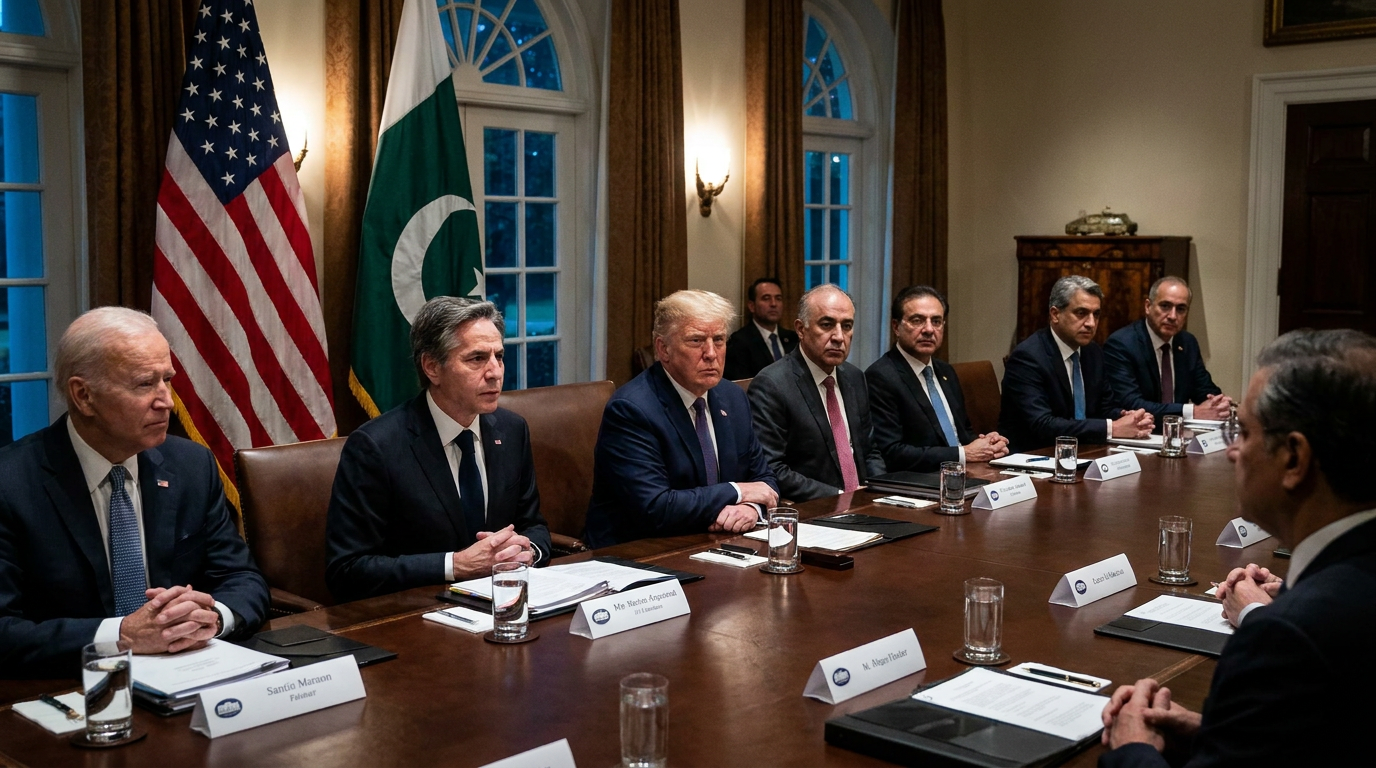
- U.S. Administration
- Eager to claim a historic diplomatic victory and definitively end the military engagement on an accelerated timeline.
- Iranian Leadership
- Balancing the urgent need for economic sanctions relief with domestic pressure to avoid appearing to capitulate to U.S. demands.
- Diplomatic Mediators
- Focused on bridging the communication gap and finalizing procedural mechanics to secure a lasting ceasefire.
- Regional & Market Observers
- Evaluating the deal based on its impact on global energy supply chains and long-term Middle Eastern security.
What's not represented
- · Iranian civilian population
- · European Union diplomats
Why this matters
An official end to the U.S.-Iran conflict would immediately stabilize global energy markets and reduce the threat of a broader regional war. The exact terms of the deal will dictate the balance of power in the Middle East for the next decade, directly impacting international security and global inflation.
Key points
- President Trump announced a Sunday signing for a U.S.-Iran peace agreement.
- Iran's Foreign Ministry cautioned that the timeline will likely be slower due to unresolved details.
- Pakistan is acting as the primary mediator, hosting back-channel talks in Islamabad.
- The proposed deal involves a phased 'compliance-for-compliance' de-escalation.
- Global oil prices plummeted as markets anticipated a reduction in Middle Eastern risk.
- U.S. lawmakers are demanding strict oversight of the agreement's enforcement mechanisms.
The United States and Iran appear to be on the precipice of a historic peace agreement to end their ongoing military conflict, though the two nations are broadcasting starkly different timelines for the final signature. President Donald Trump announced that a comprehensive deal would be signed on Sunday, framing the moment as a definitive and immediate end to hostilities.[1][3]
The announcement marks a potential turning point in a conflict that has destabilized the Middle East and roiled global supply chains. However, the path to a finalized treaty remains fraught with diplomatic friction, as Iranian officials quickly pushed back against the White House's accelerated schedule.[1][4]
Iran’s Foreign Ministry cautioned that while significant progress has been made, the timeline for a finalized agreement is likely slower than the Sunday deadline proposed by Washington. Tehran insists that critical technical details regarding the sequencing of sanctions relief and military repositioning remain unresolved, requiring further deliberation.[1][4]
The diplomatic breakthrough has been heavily brokered by Pakistan, which has emerged as the primary intermediary between Washington and Tehran. Pakistan's Prime Minister, acting as the key mediator, stated on Saturday that a peace deal was closer "than ever before" and suggested it could be finalized "in the next 24 hours."[2][6]

Islamabad's role has been crucial in bridging the communication gap, hosting back-channel negotiations that bypassed traditional European mediators. Pakistani officials have expressed cautious optimism that the remaining hurdles are largely procedural rather than ideological, focusing on the exact mechanics of implementation.[2][6]
The core mechanism of the proposed agreement reportedly involves a phased, simultaneous de-escalation. According to preliminary outlines, the U.S. would agree to halt targeted military strikes and begin a gradual unfreezing of specific Iranian assets, contingent upon verifiable pullbacks of Iranian allied forces and a strict freeze on high-level uranium enrichment.[7][8]
The core mechanism of the proposed agreement reportedly involves a phased, simultaneous de-escalation.
This "compliance-for-compliance" structure is designed to prevent either side from feeling they have capitulated. However, the sequencing of these steps—specifically who moves first and how compliance is independently verified—remains the exact sticking point causing the current timeline dispute between the two capitals.[4][8]
Global markets reacted immediately to the prospect of peace. Brent crude oil prices, which had spiked significantly during the height of the conflict, plummeted by over $6 a barrel in early trading following the dual announcements from Washington and Islamabad.[5]

Energy analysts note that an official cessation of hostilities would remove a massive risk premium from the oil market. The conflict had raised persistent fears concerning the security of the Strait of Hormuz, a critical maritime chokepoint through which a substantial portion of the world's energy supplies passes.[5][8]
Domestically, the accelerated timeline has triggered immediate demands for oversight from the U.S. Congress. Lawmakers from both parties are insisting on a thorough review of the terms, particularly regarding any concessions made on sanctions enforcement and long-term nuclear monitoring.[7]
Skeptics in Washington argue that a rushed Sunday signing might leave critical enforcement mechanisms vaguely defined. There is bipartisan concern that an overly hasty agreement could allow Tehran to exploit loopholes once the immediate military pressure is lifted.[3][7]

Regionally, U.S. allies including Israel and the Gulf States are watching the developments with intense scrutiny. These nations have historically opposed agreements that provide Iran with economic relief without permanently dismantling its proxy networks across the Middle East, fearing a resurgence of regional instability.[8]
For the Iranian leadership, the domestic political calculus is equally complex. The government desperately needs the economic relief that would come from a cessation of hostilities, but it cannot afford to present the agreement to its hardline factions as a surrender to American military pressure.[4][8]
As the Sunday deadline approaches, the international community remains in a state of high alert. Whether the day ends with a historic signing ceremony or a continuation of tense, protracted negotiations, the diplomatic architecture established this weekend will fundamentally alter the trajectory of the Middle East.[1][2][8]
How we got here
Early 2026
Direct military engagements escalate between U.S. and Iranian forces in the region.
May 2026
Pakistan opens back-channel diplomatic negotiations in Islamabad to bypass stalled European efforts.
June 13, 2026
Pakistan's Prime Minister announces a peace deal is closer 'than ever before.'
June 14, 2026
President Trump declares a Sunday signing, while Iran cautions that technical details remain unresolved.
Viewpoints in depth
U.S. Administration
Eager to claim a historic diplomatic victory and definitively end the military engagement.
The White House is framing the accelerated timeline as a testament to decisive leadership and maximum pressure tactics. By pushing for a Sunday signing, the administration aims to quickly pivot away from a costly Middle Eastern conflict and present a major foreign policy victory to the domestic electorate. Officials argue that the rapid pace prevents the negotiations from bogging down in endless bureaucratic delays.
Iranian Leadership
Balancing the urgent need for economic relief with domestic pressure to avoid appearing to capitulate.
Tehran is operating under immense economic strain and desperately needs the unfreezing of assets and lifting of sanctions. However, the government must carefully manage the optics of the deal for its hardline domestic factions. By pushing back on the Sunday timeline, Iranian diplomats are signaling that they are not simply accepting dictated terms, but are rigorously negotiating the sequencing of compliance to protect their national sovereignty.
Regional Allies
Deeply concerned about the enforcement mechanisms and Iran's post-war capabilities.
Nations like Israel and the Gulf States view any rapid agreement with profound skepticism. Their primary concern is that a rushed deal will fail to permanently dismantle the network of proxy forces Iran supports across the region. They argue that providing Tehran with immediate economic relief without ironclad, verifiable security guarantees will only fund future regional instability once the current spotlight fades.
What we don't know
- The exact sequencing of who will take the first verifiable step in the de-escalation process.
- Whether the Sunday deadline will be met, or if negotiations will extend into the coming weeks.
- The specific mechanisms that will be used to monitor and enforce the freeze on uranium enrichment.
Key terms
- Compliance-for-compliance
- A diplomatic framework where both nations take simultaneous, verifiable steps to de-escalate, ensuring neither side moves without a guarantee from the other.
- Strait of Hormuz
- A vital maritime chokepoint between the Persian Gulf and the Gulf of Oman through which a significant portion of the world's oil passes.
- Sanctions Relief
- The unfreezing of assets or lifting of trade restrictions previously imposed as an economic penalty.
Frequently asked
When is the peace deal expected to be signed?
President Trump announced a Sunday signing, but Iranian officials and mediators suggest the final technical details may delay the timeline.
Who is mediating the negotiations?
Pakistan has emerged as the primary intermediary, with its Prime Minister hosting back-channel talks in Islamabad.
How are global markets reacting?
Oil prices, specifically Brent crude, dropped significantly in response to the potential easing of Middle Eastern tensions and the securing of maritime trade routes.
What are the core terms of the agreement?
The deal reportedly involves a phased de-escalation where the U.S. halts strikes and unfreezes assets in exchange for Iran pulling back allied forces and freezing high-level uranium enrichment.
Sources
Source coverage
8 outlets
4 viewpoints surfaced








[1]NYTRegional & Market Observers
Iran War Live Updates: U.S. and Tehran Send Mixed Signals on Emerging Peace Agreement
Read on NYT →[2]NPRDiplomatic Mediators
Trump says deal to end Iran war will be signed Sunday, as Iran disagrees on timing
Read on NPR →[3]Fox NewsU.S. Administration
Trump announces historic Sunday signing for Iran peace deal
Read on Fox News →[4]Al JazeeraIranian Leadership
Tehran urges caution as Washington rushes to declare end to hostilities
Read on Al Jazeera →[5]ReutersRegional & Market Observers
Oil prices plummet as U.S.-Iran peace agreement appears imminent
Read on Reuters →[6]DawnDiplomatic Mediators
Prime Minister cites 'unprecedented progress' in Islamabad-brokered U.S.-Iran talks
Read on Dawn →[7]The Washington PostRegional & Market Observers
Congress demands oversight as White House accelerates Iran peace timeline
Read on The Washington Post →[8]Center for Strategic and International StudiesRegional & Market Observers
The Architecture of a Ceasefire: Evaluating the 2026 U.S.-Iran Terms
Read on Center for Strategic and International Studies →

More in news politics
See all 6 stories →Platform Liability
UK Politicians Demand Social Media Platforms Pay for Belfast Riot Damages
0 sources
US-Iran Conflict
U.S. and Iran Signal Imminent Peace Agreement, but Clash Over Timeline and Terms
0 sources

Dietary Supplements
Evidence Pack: What the Science Actually Says About Turmeric, Magnesium, and St. John's Wort
0 sources

Middle East Peace
U.S. and Iran Send Mixed Signals on Emerging Peace Agreement
0 sources
Every angle. Every day.
Get news politics stories with full source coverage and perspective breakdowns delivered to your inbox.