
The Science of Awe: How Micro-Moments of Wonder Measurably Improve Mental Health
Emerging psychological research demonstrates that experiencing daily moments of awe—whether through nature, art, or human connection—can significantly lower stress, reduce inflammation, and increase prosocial behavior.
By Factlen Editorial Team

- Clinical Psychologists
- Focus on awe as a measurable intervention to deactivate the brain's rumination networks and treat anxiety.
- Neuroscientists
- Examine the physiological evidence, such as vagal tone stimulation and the reduction of inflammatory cytokines.
- Public Health Advocates
- View awe as a free, scalable tool to increase community cohesion, empathy, and prosocial behavior.
What's not represented
- · Urban Planners (designing cities to facilitate everyday awe)
- · Educators (incorporating awe into childhood development)
Why this matters
Incorporating small, intentional moments of wonder into a daily routine offers a free, accessible, and scientifically validated tool to combat chronic stress and improve emotional resilience.
Key points
- Awe is a measurable emotional state that deactivates the brain's rumination centers.
- Weekly 15-minute 'awe walks' significantly reduce daily distress and increase positive emotions.
- Experiencing awe physically lowers markers of systemic inflammation in the body.
- Awe induces the 'small self' effect, making personal stressors feel more manageable.
- People who experience awe are more likely to exhibit helpful, prosocial behaviors.
For decades, mental health interventions have primarily focused on inward reflection—mindfulness, cognitive restructuring, and unpacking personal history. But a growing body of evidence suggests that looking outward might be just as critical for psychological well-being.[1][6]
Enter the science of "awe." Once considered a purely philosophical or spiritual concept, awe has been operationalized by clinical psychologists and neuroscientists as a measurable emotional state. It is defined as the feeling we get in the presence of something vast that challenges our understanding of the world.[3]
This vastness does not require a trip to the Grand Canyon or a total solar eclipse. Researchers have increasingly focused on "everyday awe"—micro-moments of wonder triggered by a complex piece of music, the intricate pattern of a leaf, or witnessing an act of profound moral courage.[2][3]
The evidence pack supporting awe as a clinical tool is robust. When individuals experience awe, functional magnetic resonance imaging (fMRI) shows a significant deactivation in the brain's Default Mode Network (DMN). The DMN is the neural pathway associated with self-referential thought, ego, and, crucially, the repetitive rumination that drives anxiety and depression.[3][6]

By quieting the DMN, awe induces what psychologists call the "small self" effect. When confronted with vastness, our personal concerns and daily stressors subjectively shrink, allowing for a broader perspective on life's challenges.[5]
A landmark study conducted by researchers at the University of California, San Francisco, and UC Berkeley tested this mechanism in a real-world setting. They prescribed 15-minute weekly "awe walks" to a group of healthy older adults.[4]
The instructions were simple: walk in a new location, or look at a familiar location with fresh eyes, deliberately seeking out details that inspire wonder. A control group was asked to take identical 15-minute walks but without the awe-seeking prompt.[1][4]
The instructions were simple: walk in a new location, or look at a familiar location with fresh eyes, deliberately seeking out details that inspire wonder.
Over eight weeks, the results diverged significantly. The awe-walk group reported greater increases in positive prosocial emotions—such as compassion and gratitude—and a measurable decrease in daily distress compared to the control group.[4]

Intriguingly, the researchers also analyzed selfies taken by the participants during their walks. Over the course of the study, the awe group physically shrank themselves in their own photos, allowing the landscape to dominate the frame—a literal, visual manifestation of the "small self" effect.[1][4]
The benefits of awe extend beyond subjective emotional reporting into measurable physiological changes. Studies have linked frequent experiences of awe to lower levels of interleukin-6 (IL-6), a pro-inflammatory cytokine.[3]
Elevated levels of IL-6 are associated with chronic systemic inflammation, which is a known risk factor for clinical depression, cardiovascular disease, and autoimmune disorders. While joy and contentment also promote health, awe is uniquely correlated with this specific reduction in inflammatory markers.[3][6]
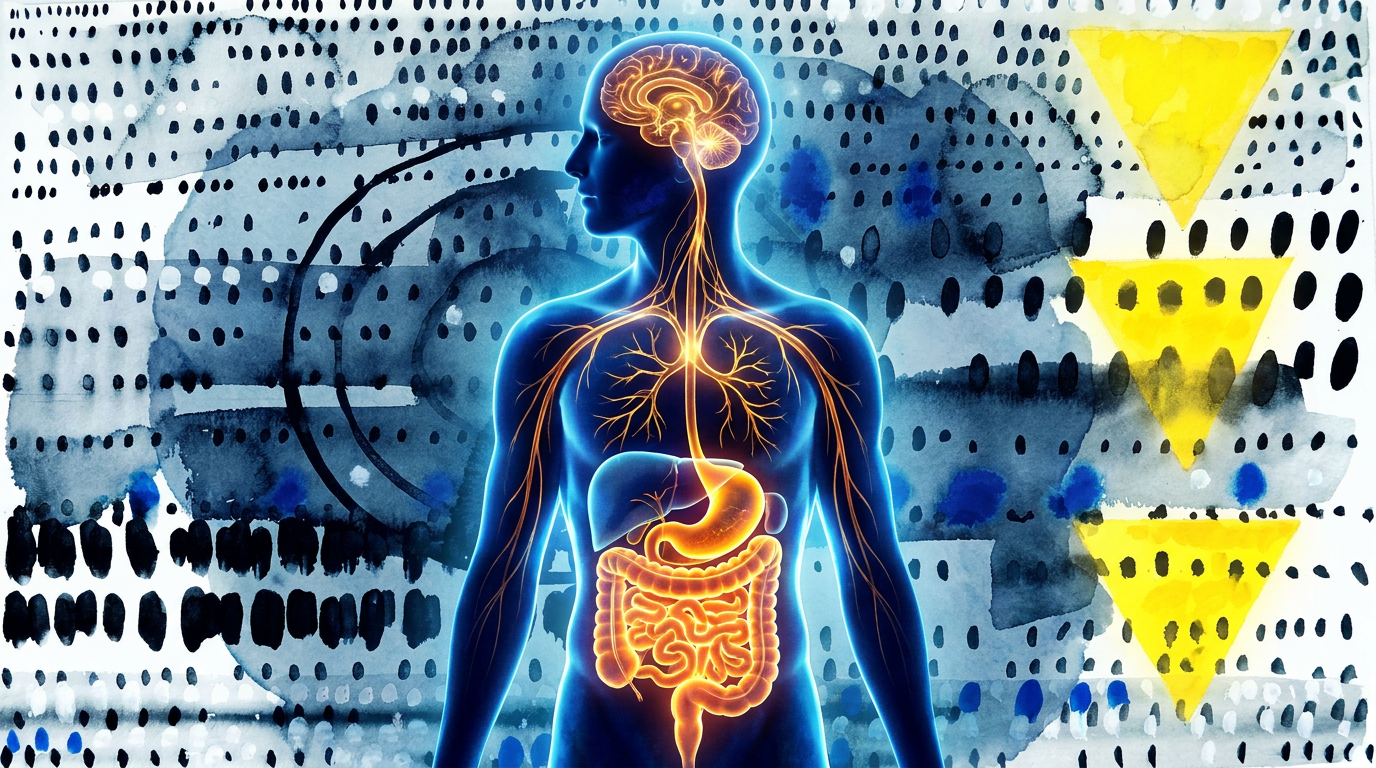
Furthermore, awe stimulates vagal tone—the activity of the vagus nerve, which regulates the parasympathetic nervous system. This activation slows the heart rate, deepens breathing, and shifts the body out of the "fight or flight" sympathetic response, providing a physiological reset.[2][5]

The prosocial benefits of awe are equally well-documented. Because awe diminishes the ego, it naturally bridges the gap between the self and others, fostering a sense of interconnectedness.[5]
In laboratory experiments, participants who were primed to feel awe—by staring up at towering eucalyptus trees rather than a tall building—were subsequently more likely to help a stranger pick up dropped items and exhibited less entitlement in behavioral games.[2][5]
This evidence suggests that awe is not just a personal luxury, but a social glue. In an era marked by isolation and hyper-individualism, cultivating awe could serve as a public health intervention to increase community cohesion and empathy.[6]
However, researchers are careful to note the boundaries of this evidence. Not all awe is positive; "threat-based awe," such as witnessing a destructive tornado, triggers a fear response rather than a restorative one. The clinical benefits are strictly tied to positive or transcendent awe.[3]

Ultimately, the synthesis of this research points to a highly accessible mental health tool. Awe is free, requires no equipment, and can be practiced in almost any environment. By deliberately seeking out micro-moments of wonder, individuals can actively rewire their nervous systems for resilience.[6]
Viewpoints in depth
Clinical Psychologists
Focus on awe as a measurable intervention to deactivate the brain's rumination networks.
For clinical psychologists, the value of awe lies in its ability to disrupt the Default Mode Network (DMN). Traditional therapies often require patients to actively fight or reframe their anxious thoughts, which takes significant cognitive effort. Awe, however, acts as a bottom-up intervention. By presenting the brain with something vast, the DMN naturally quiets down, providing immediate relief from the loop of self-referential rumination without requiring the patient to 'work' at feeling better.
Neuroscientists
Examine the physiological evidence, such as vagal tone stimulation and the reduction of inflammatory cytokines.
Neuroscientists and immunologists are primarily interested in how a subjective emotion translates into objective biological markers. The discovery that awe correlates with lower levels of interleukin-6 (IL-6) bridges the gap between psychology and physical medicine. Because chronic inflammation is a root cause of numerous age-related diseases, neuroscientists view awe not just as a mood enhancer, but as a potential preventative health measure that actively regulates the parasympathetic nervous system.
Public Health Advocates
View awe as a free, scalable tool to increase community cohesion and empathy.
From a public health perspective, the most vital aspect of awe is its prosocial outcome. Because awe diminishes the ego (the 'small self' effect), it naturally increases a person's willingness to cooperate, share, and assist others. Public health advocates argue that in societies suffering from an epidemic of loneliness and polarization, encouraging collective awe—through public art, accessible green spaces, and community events—could serve as a structural intervention to rebuild social trust.
What we don't know
- The exact 'dosage' of awe required for long-term clinical benefits.
- How the physiological benefits of awe vary across different cultural backgrounds.
- The long-term durability of the 'small self' effect after an awe walk concludes.
Key terms
- Default Mode Network (DMN)
- A network of interacting brain regions that is active when a person is not focused on the outside world, heavily associated with daydreaming, ego, and anxious rumination.
- Prosocial Behavior
- Voluntary actions intended to help or benefit others, such as sharing, comforting, rescuing, and cooperating.
- Vagal Tone
- An internal biological process representing the activity of the vagus nerve, which helps regulate the body's resting state and heart rate.
- Cytokines
- Small proteins crucial in controlling the growth and activity of other immune system cells and blood cells; some, like IL-6, promote inflammation.
Frequently asked
What exactly is an 'awe walk'?
An awe walk is a 15-minute stroll where you intentionally shift your focus outward, looking for things that inspire wonder, vastness, or intricate beauty, rather than thinking about your daily stressors.
Do I need to go to a national park to experience awe?
No. Research emphasizes 'everyday awe,' which can be found in local parks, by looking closely at a plant, listening to complex music, or observing impressive human architecture.
How does awe reduce inflammation?
Experiencing positive awe stimulates the vagus nerve, which activates the parasympathetic nervous system. This physiological shift has been linked to lower levels of interleukin-6, a marker of systemic inflammation.
Is all awe good for mental health?
No. 'Threat-based awe,' such as witnessing a terrifying natural disaster, triggers a fear and stress response. The mental health benefits are specifically linked to positive, transcendent awe.
Sources
Source coverage
6 outlets
3 viewpoints surfaced




[1]The New York TimesNeuroscientists
How a Little Bit of Awe Can Improve Your Health
Read on The New York Times →[2]Greater Good MagazinePublic Health Advocates
Eight Reasons Why Awe Makes Your Life Better
Read on Greater Good Magazine →[3]American Psychological AssociationClinical Psychologists
The science of awe
Read on American Psychological Association →Big smile, small self: Awe walks promote prosocial positive emotions in older adults
Read on Emotion →Awe, the small self, and prosocial behavior
Read on Journal of Personality and Social Psychology →[6]Factlen Editorial TeamPublic Health Advocates
Synthesis by Factlen editorial team
Read on Factlen Editorial Team →


Every angle. Every day.
Get health stories with full source coverage and perspective breakdowns delivered to your inbox.