
The Science of Eccentric Training: Why the 'Lowering' Phase Builds More Muscle and Prevents Injury
Exercise physiologists and longevity researchers are shifting focus to eccentric muscle contractions—the 'lowering' phase of movement—as a potent biological trigger for hypertrophy, tendon repair, and fall prevention.
By Factlen Editorial Team
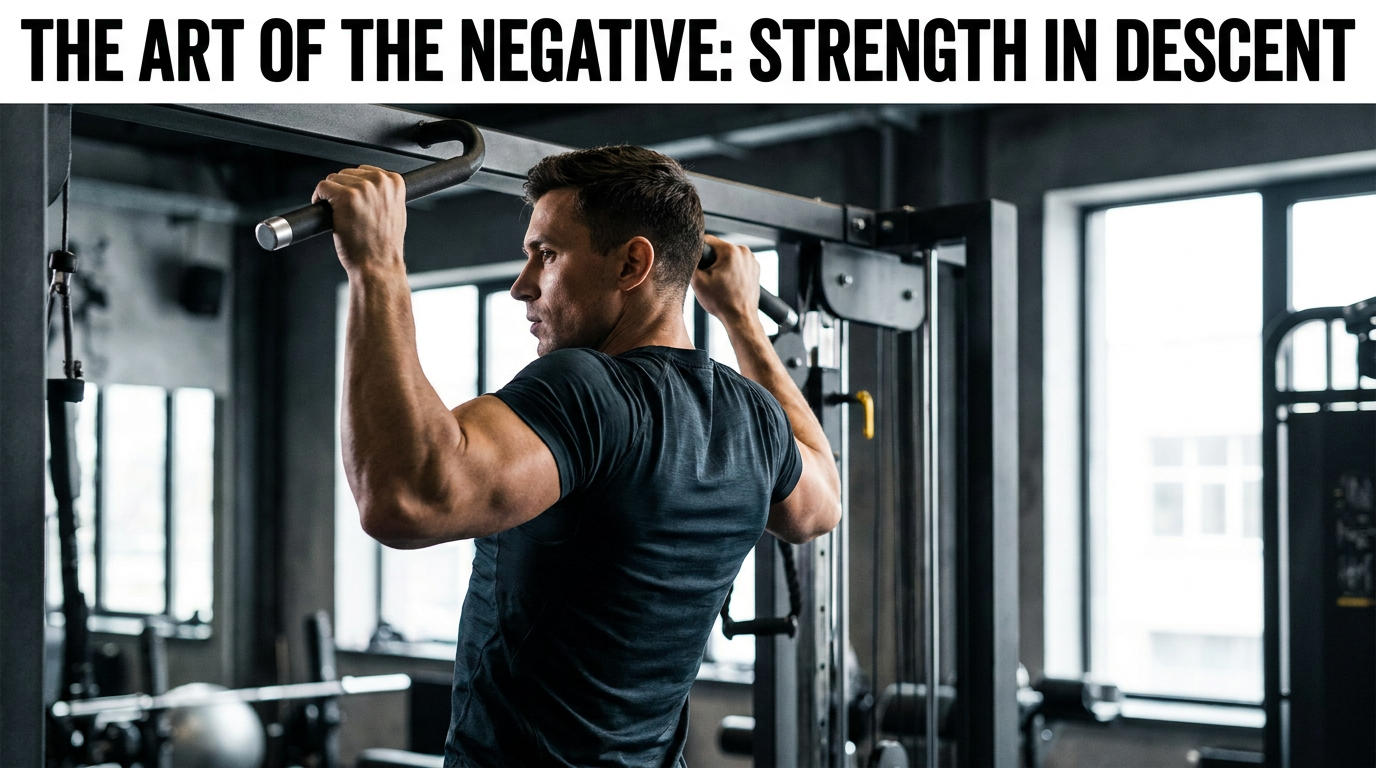
- Exercise Physiologists
- Focus on the biomechanics of titin, mechanical tension, and maximizing muscle hypertrophy.
- Rehabilitation Specialists
- Prioritize eccentric loading for rebuilding collagen, treating tendinopathy, and preventing sports injuries.
- Longevity Researchers
- View eccentric strength as a critical tool for preventing falls, combating sarcopenia, and maintaining independence in aging populations.
What's not represented
- · General Fitness Enthusiasts
- · Equipment Manufacturers
Why this matters
Most fitness routines focus entirely on lifting weights, but the science shows that controlling the descent is actually more effective for building resilient joints and preventing age-related falls. Incorporating just a few minutes of eccentric movement can drastically improve long-term physical independence.
Key points
- Eccentric contractions occur when a muscle lengthens under tension, such as lowering a weight or walking downstairs.
- The giant protein titin acts like a spring during eccentric movements, generating high force with low energy cost.
- Eccentric training is highly effective for muscle hypertrophy and structurally lengthens muscle fascicles.
- Heavy, slow eccentric loading is the clinical gold standard for rehabilitating damaged tendons and synthesizing collagen.
- For older adults, eccentric strength is critical for deceleration, drastically reducing the risk of catastrophic falls.
Walk into any gym, and the focus is almost entirely on the lift. The grunt of pressing a barbell overhead, the strain of pulling a deadlift from the floor, or the triumph of curling a dumbbell upward—these are the moments celebrated in fitness culture. But exercise physiologists and longevity researchers are increasingly pointing to the opposite phase of movement as the true driver of long-term health. The act of lowering a weight, known as an eccentric muscle contraction, is stepping out of the shadows. Far from being just the 'reset' between repetitions, eccentric training is now recognized as a potent biological trigger for muscle hypertrophy, tendon repair, and injury prevention.[6]
To understand why the lowering phase matters, it helps to define how muscles interact with gravity. When a muscle shortens to overcome a load—like the biceps curling a dumbbell toward the shoulder—it performs a concentric contraction. When the muscle lengthens while still producing force to resist that load—like the biceps slowly lowering the dumbbell back down—it performs an eccentric contraction. In everyday life, eccentric movements act as the body's shock absorbers. Every time a person walks down a flight of stairs, sits gently into a chair, or hikes down a steep trail, their muscles are lengthening under tension to decelerate their mass and prevent them from collapsing to the ground.[1][2]
For decades, the exact mechanics of how a muscle could produce force while lengthening baffled scientists. The classic 'sliding filament theory' taught in biology classes perfectly explains concentric lifting: tiny myosin cross-bridges grab onto actin filaments and pull them closer together, shortening the muscle. But this model falls apart during eccentric movements, where the muscle is actively pulled apart. If the filaments are sliding away from each other, how does the muscle maintain tension without tearing completely?[2]

The answer lies in a microscopic structure that was largely ignored until recent years: titin. Titin is a giant, spring-like protein woven into the fabric of muscle fibers. During an eccentric contraction, as the actin and myosin filaments are pulled apart, titin binds to the actin and stretches like a heavy-duty bungee cord. This mechanical stretching generates immense passive force without requiring the chemical energy, or ATP, that active concentric lifting demands.[1][2]
This titin-driven mechanism creates a unique physiological paradox: eccentric contractions can generate up to 20 to 50 percent more force than concentric contractions, yet they consume significantly less oxygen and energy. Because the muscle can handle heavier loads on the way down than it can on the way up, eccentric training places an extraordinary degree of mechanical tension on the muscle fibers. This tension is the primary catalyst for cellular adaptation and growth.[2][4]
When it comes to building muscle mass, or hypertrophy, the evidence heavily favors incorporating deliberate eccentric overload. A comprehensive meta-analysis of resistance training studies found that while both lifting and lowering build muscle, eccentric-focused training consistently produces moderate to large improvements in muscle cross-sectional area, sometimes outpacing concentric-only regimens. Because eccentric movements recruit fewer motor units to handle heavier loads, the active fibers experience profound mechanical stress.[1][4]

This stress triggers a cascade of genetic and metabolic responses. Eccentric exercise uniquely stimulates the activation of genes responsible for cellular growth and satellite cell proliferation—the building blocks of new muscle tissue. Furthermore, while concentric training tends to make muscle fibers thicker by adding sarcomeres in parallel, eccentric training actually lengthens the muscle fascicles by adding new sarcomeres in series. This structural lengthening makes the muscle more robust and flexible, fundamentally changing its architecture.[1][2]
This stress triggers a cascade of genetic and metabolic responses.
Beyond aesthetics and raw strength, the most profound applications of eccentric training lie in injury prevention and rehabilitation. Sports medicine professionals have long utilized eccentric protocols to bulletproof athletes against soft-tissue tears. The majority of non-contact sports injuries, such as hamstring tears or ACL ruptures, occur during rapid deceleration—when the athlete is sprinting and suddenly stops or changes direction. If the muscles lack the eccentric strength to absorb that massive kinetic energy, the connective tissue fails.[2][5]
By training the body to handle high-force lengthening, athletes build a muscular braking system. Research demonstrates that dedicated eccentric hamstring protocols can reduce the incidence of hamstring injuries in soccer players by up to 70 percent. The muscle becomes accustomed to absorbing shock, ensuring that when a sudden deceleration occurs on the field, the tissue stretches safely rather than snapping.[2][6]
The benefits extend deeply into the tendons, the fibrous cords that attach muscle to bone. For individuals suffering from chronic tendinopathy—such as Achilles tendonitis or 'jumper's knee' (patellar tendinopathy)—traditional rest and anti-inflammatory drugs often fail to provide long-term relief. Tendons have poor blood supply, making them notoriously slow to heal. However, clinical trials have established heavy, slow eccentric loading as the gold standard for tendon rehabilitation.[5]
When a damaged tendon is subjected to controlled eccentric stress, the tensile force physically stimulates the tendon cells, known as tenocytes, to synthesize new Type I collagen. This process, known as mechanotransduction, literally remodels the disorganized, painful tendon tissue into a healthy, aligned structure. Patients who perform daily eccentric heel drops or slow squats often see dramatic reductions in pain and improvements in structural tendon health that outlast the effects of corticosteroid injections.[5][6]
While athletes use eccentric training to stay on the field, longevity researchers view it as a critical tool for preserving independence in older adults. As the human body ages, it naturally loses muscle mass and strength—a condition known as sarcopenia. This decline disproportionately affects fast-twitch muscle fibers and the neuromuscular control required for deceleration. Consequently, older adults often struggle not with lifting themselves up, but with lowering themselves down safely.[2][6]

The inability to control eccentric descent is a primary driver of falls in the elderly. When an older adult cannot eccentrically brake their body weight while walking downstairs or lowering into a chair, gravity takes over, leading to catastrophic fractures. Because eccentric exercise requires less cardiovascular exertion and lower oxygen consumption, it is uniquely suited for older or deconditioned populations who might struggle with high-intensity aerobic or traditional concentric lifting.[2][4]
The barrier to entry for reaping these longevity benefits is surprisingly low. A 2025 study conducted by researchers at Edith Cowan University demonstrated that as little as five minutes a day of targeted eccentric exercise—using simple, home-based bodyweight movements—yielded significant improvements in physical fitness, body composition, and functional strength in sedentary individuals. The researchers noted that while 150 minutes of weekly exercise remains the gold standard, a five-minute daily 'minimum effective dose' of eccentric lowering can drastically improve an individual's health trajectory.[3]
Despite its clear benefits, eccentric training does come with a notable side effect: Delayed Onset Muscle Soreness (DOMS). Because eccentric contractions cause microscopic disruptions to the muscle fibers and connective tissue, unaccustomed individuals often experience profound stiffness and soreness 24 to 48 hours after a workout. While this micro-damage is part of the growth process, it requires careful programming. Experts advise starting with very low volume and gradually increasing the eccentric load over several weeks to allow the nervous system and tissues to adapt without debilitating soreness.[4][6]
Implementing eccentric training does not require specialized equipment, though advanced tools like flywheel devices are popular in elite sports. For the general public, it simply requires a shift in tempo. Instead of dropping a weight quickly after lifting it, a practitioner might take three to five seconds to slowly lower the dumbbell, control the descent of a push-up, or slowly sit back into a squat. This deliberate 'time under tension' forces the titin proteins to engage and maximizes the mechanical stimulus.[1][6]
Ultimately, the science of eccentric muscle contraction forces a reevaluation of how we view physical exertion. By shifting the focus from the triumph of the lift to the control of the descent, individuals can tap into a biological mechanism that builds denser muscle, remodels aging tendons, and constructs a resilient body capable of absorbing the shocks of a long, active life.[6]
How we got here
1924
Physiologist Wallace Fenn first observes that muscles require less energy when stretched while active, hinting at the unique efficiency of eccentric contractions.
1953
Researcher Erling Asmussen formally introduces the concept of 'excentric' training to the scientific community.
1990s
The sliding filament theory is challenged as researchers realize it cannot fully explain how muscles generate force while lengthening.
2010s
The discovery of titin's active role in muscle stretching solves the biological mystery of eccentric force generation.
2025
Edith Cowan University publishes research showing that just five minutes of daily eccentric exercise significantly improves health in sedentary individuals.
Viewpoints in depth
Exercise Physiologists
Focus on the biomechanics of titin, mechanical tension, and maximizing muscle hypertrophy.
For exercise physiologists, the appeal of eccentric training lies in its unique ability to bypass the limitations of the sliding filament theory. By leveraging the giant elastic protein titin, athletes can subject their muscle fibers to mechanical loads that far exceed their concentric lifting capacity. This camp emphasizes that the resulting micro-trauma and subsequent satellite cell proliferation are the most efficient pathways to increasing muscle cross-sectional area and adding sarcomeres in series, fundamentally altering muscle architecture for greater power output.
Rehabilitation Specialists
Prioritize eccentric loading for rebuilding collagen, treating tendinopathy, and preventing sports injuries.
Physical therapists and sports medicine professionals view eccentric exercise primarily as a structural remodeling tool. Rather than focusing on muscle size, this camp utilizes heavy, slow eccentric protocols to treat chronic conditions like Achilles and patellar tendinopathy. They point to clinical evidence showing that the tensile forces generated during a slow descent physically stimulate tenocytes to synthesize new Type I collagen, realigning disorganized tissue and creating a biological 'braking system' that prevents catastrophic soft-tissue tears during rapid deceleration.
Longevity Researchers
View eccentric strength as a critical tool for preventing falls, combating sarcopenia, and maintaining independence in aging populations.
Researchers focused on aging argue that the fitness industry's obsession with lifting weights ignores the actual functional deficits that threaten older adults. This camp highlights that the age-related loss of fast-twitch muscle fibers disproportionately impairs a person's ability to safely decelerate their body weight. By prescribing low-metabolic-cost eccentric exercises—such as slowly sitting into a chair or walking downstairs—they aim to restore the neuromuscular control necessary to prevent falls, thereby extending functional independence and compressing morbidity in the elderly.
What we don't know
- The exact upper limit of eccentric volume before the benefits of mechanical tension are outweighed by the detriments of severe muscle damage and overtraining.
- How individual genetic differences in titin expression affect a person's natural eccentric strength and susceptibility to tendinopathy.
Key terms
- Concentric Contraction
- The phase of an exercise where the muscle shortens to overcome a load, such as lifting a weight upward.
- Eccentric Contraction
- The phase of an exercise where the muscle lengthens while resisting a load, such as slowly lowering a weight or walking downstairs.
- Titin
- A giant, spring-like protein in muscle fibers that stretches during eccentric movements to generate high force without using chemical energy.
- Hypertrophy
- The increase in the size and mass of muscle tissue, typically achieved through targeted resistance training.
- Tendinopathy
- A chronic condition characterized by pain and structural degeneration in a tendon, often treated effectively with slow eccentric exercises.
- Sarcopenia
- The age-related loss of skeletal muscle mass and strength, which can lead to frailty and a higher risk of falls.
Frequently asked
What is an eccentric muscle contraction?
An eccentric contraction occurs when a muscle lengthens while under tension, such as the lowering phase of a bicep curl or walking downhill. It acts as a shock absorber to decelerate the body.
Does eccentric training build more muscle?
Yes, studies show eccentric training is highly effective for hypertrophy. It places immense mechanical tension on muscle fibers and can actually lengthen muscle fascicles by adding new sarcomeres.
Why does eccentric exercise make you so sore?
Eccentric movements cause microscopic disruptions to muscle fibers and connective tissue, leading to Delayed Onset Muscle Soreness (DOMS). This micro-damage triggers the body's repair and growth processes.
How can older adults benefit from eccentric training?
Eccentric strength improves the neuromuscular control needed for deceleration, making it easier to walk downstairs or sit in a chair safely, which dramatically reduces the risk of falls.
Sources
Source coverage
6 outlets
3 viewpoints surfaced






[1]Frontiers in PhysiologyExercise Physiologists
Hypertrophic Effects of Eccentric Resistance Training
Read on Frontiers in Physiology →[2]National Institutes of HealthLongevity Researchers
Eccentric Muscle Contractions: Their Contribution to Injury, Prevention, Rehabilitation, and Sport
Read on National Institutes of Health →[3]ScienceDailyLongevity Researchers
Five minutes a day eccentric exercise can improve your life
Read on ScienceDaily →[4]MDPIExercise Physiologists
Effects of Eccentric Exercise on Muscle Hypertrophy and Strength
Read on MDPI →[5]British Journal of Sports MedicineRehabilitation Specialists
Superior results with eccentric compared to concentric training in tendinopathy
Read on British Journal of Sports Medicine →[6]Factlen Editorial TeamRehabilitation Specialists
Synthesis by Factlen editorial team
Read on Factlen Editorial Team →


Every angle. Every day.
Get fitness stories with full source coverage and perspective breakdowns delivered to your inbox.