
U.S. and Iran Near 60-Day Peace Framework to End 100-Day War
The U.S. and Iran are finalizing a preliminary memorandum of understanding that would trigger a 60-day ceasefire and reopen the Strait of Hormuz. However, the two sides remain sharply divided over the timing of the signing and the release of $24 billion in frozen Iranian assets.
By Factlen Editorial Team
- US Administration
- Argues the deal is a definitive victory that neutralizes Iran's nuclear threat and restores global shipping without upfront financial concessions.
- Iranian Negotiators
- Views the memorandum as a preliminary framework that must lead to the unfreezing of $24 billion in assets and an end to the US naval blockade.
- Iranian Hardliners
- Opposes the agreement, arguing that reopening the Strait of Hormuz surrenders Tehran's primary strategic leverage for insufficient guarantees.
- Israeli Security Establishment
- Deeply concerned that the reported terms concede too much to Tehran and fail to adequately address the threat posed by Hezbollah in Lebanon.
- International Mediators
- Focused on the urgent need to restore global economic stability and freedom of navigation through swift diplomatic resolution.
What's not represented
- · Global shipping companies affected by the Strait of Hormuz closure
- · Lebanese civilians impacted by the Hezbollah-Israel conflict
Why this matters
The resolution of the 100-day U.S.-Iran war would immediately reopen the world's most critical oil chokepoint, stabilizing global energy markets and averting a broader regional conflict in the Middle East.
Key points
- The U.S. and Iran are nearing a memorandum of understanding to pause their 100-day war.
- The agreement would trigger a 60-day window for technical negotiations.
- The U.S. would lift its naval blockade, and Iran would reopen the Strait of Hormuz.
- President Trump claims the deal will be signed Sunday, but Iran disputes the timeline.
- The release of $24 billion in frozen Iranian assets remains a major point of contention.
- Israeli officials have expressed deep concern over the reported terms of the framework.
After more than 100 days of direct military conflict that has reshaped the Middle East and disrupted global energy markets, the United States and Iran are on the precipice of a fragile peace agreement. President Donald Trump announced that a memorandum of understanding is scheduled to be signed on Sunday, a move he claims will immediately reopen the critical Strait of Hormuz to global shipping. The proposed signing date coincides with the U.S. president's 80th birthday, adding a layer of symbolic timing to the high-stakes diplomacy.[1][3][5]
The emerging agreement is not a comprehensive peace treaty, but rather a preliminary framework designed to de-escalate immediate hostilities and create space for broader negotiations. According to diplomatic sources, the signing would trigger a 60-day ceasefire window. During this period, the core mechanism involves a synchronized stand-down: the U.S. would lift its crippling naval blockade on Iranian ports, while Tehran would reopen the Strait of Hormuz to commercial vessels without charging transit fees.[5][6][9]
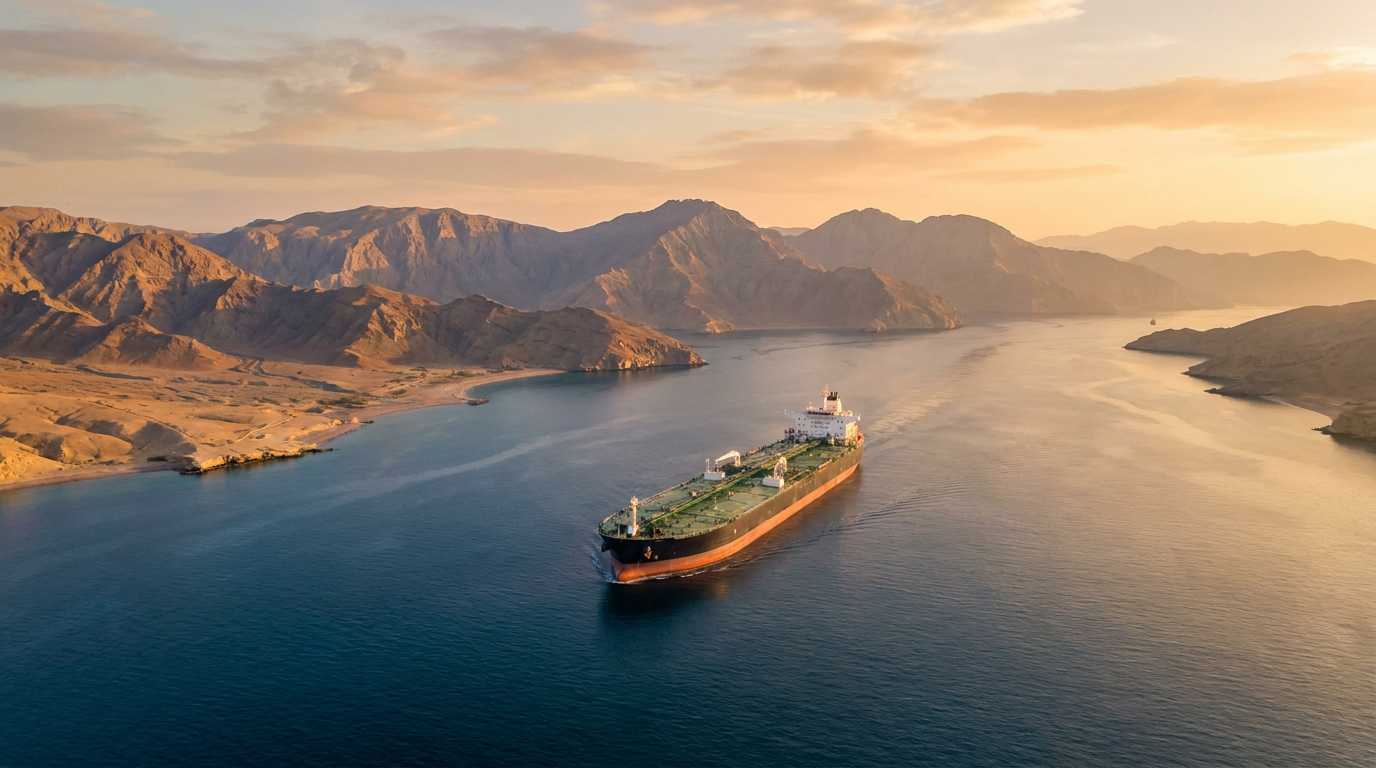
The Strait of Hormuz serves as the transit chokepoint for roughly a fifth of the world's daily oil consumption. Iran effectively closed the strait shortly after the war began in late February, deploying mines and drone swarms that virtually shut down oil and natural gas shipments. The U.S. responded by blockading Iranian ports, leading to a grueling economic and military standoff that has battered global markets.[1][6][7]

Trump has framed the impending memorandum as a definitive end to Iran's nuclear ambitions, describing the deal as a "wall to no nuclear weapon." He asserted over the weekend that Iran has agreed to abandon its pursuit of nuclear arms entirely, whether through domestic development or foreign procurement. However, the actual mechanism for ensuring this disarmament remains a subject of intense, ongoing negotiation rather than a settled fact.[1][6][8][10]
While the White House and Pakistani mediators—who have played a central role in brokering the talks—expressed confidence in a Sunday electronic signing, Tehran has forcefully pushed back on the timeline. Iranian Foreign Ministry spokesperson Esmaeil Baghaei stated that no final agreement would be signed on Sunday, characterizing the current text as merely a framework for continuing talks. "As for the exact timing of the memorandum's signing, we must wait," Baghaei said, though he did not rule out a signing in the coming days.[4][5][6][8]
A major area of uncertainty and conflicting claims revolves around $24 billion in Iranian assets currently frozen under U.S. sanctions. The U.S. administration, including Vice President JD Vance, insists that no money will be released upfront simply for signing the memorandum or attending meetings. Washington maintains that any economic benefits will only flow if Iran meets strict, verifiable obligations over the 60-day window.[1][6]
Conversely, Iranian officials maintain that the unfreezing of these funds is an "integral" condition of any lasting agreement. Tehran has demanded access to the $24 billion during the initial 60-day period, along with immediate upfront economic relief. This fundamental disconnect over the sequencing of sanctions relief versus nuclear compliance threatens to complicate the technical-level talks scheduled to follow the initial signing.[6][7]

Conversely, Iranian officials maintain that the unfreezing of these funds is an "integral" condition of any lasting agreement.
The prospect of an agreement has ignited fierce domestic opposition within Iran, complicating the negotiating team's mandate. Over the weekend, dozens of protesters gathered outside a foreign ministry office in the northeastern city of Mashhad, chanting slogans against Foreign Minister Abbas Araghchi. Hardline factions argue that reopening the Strait of Hormuz deprives Tehran of its most potent strategic leverage and accuse negotiators of making unacceptable concessions to Washington.[8]
For Iranian hardliners, the waterway is not just a transit route but a primary instrument of deterrence. Araghchi attempted to assuage these concerns in a televised interview, noting that the administration of the Strait of Hormuz "will no longer be the same as before" and emphasizing that the deal requires the lifting of the U.S. naval blockade. Nevertheless, the domestic backlash highlights the political tightrope Tehran's leadership is walking.[8]
The framework has also triggered deep alarm in Israel, introducing another layer of regional complexity. While Prime Minister Benjamin Netanyahu previously stated he was in "full agreement" with Trump on the necessity of preventing a nuclear Iran, senior Israeli officials have warned that the reported terms of the memorandum could severely endanger national security. The Israeli security cabinet is expected to convene to discuss the ramifications of the U.S. concessions.[9]
A critical unresolved issue driving Israeli anxiety is the geographic scope of the ceasefire. Iranian sources indicate that Tehran is demanding the cessation of hostilities on all fronts, including in Lebanon. Israel has been engaged in heavy fighting with the Iran-backed Hezbollah militia, recently announcing the elimination of multiple Hezbollah field commanders. It remains unclear if the U.S. can guarantee a broader regional truce that restrains Israeli military operations in the Levant.[2][9]

Adding to the technical complexity of the nuclear file, Trump suggested that the U.S. would eventually recover and destroy highly enriched uranium buried deep underground in Iran once the region is calmer. This references the U.S. B-2 bomber strikes carried out earlier in the conflict, which targeted subterranean nuclear facilities. Tehran has not publicly agreed to any physical removal of its nuclear material by American forces, making this a likely flashpoint in future talks.[7][11]
The logistical implementation of the peace deal will rely heavily on international partners. Pakistan has emerged as the primary conduit for the negotiations, with Prime Minister Shehbaz Sharif preparing Islamabad to host the electronic signing and subsequent technical discussions. Sharif has been a vocal proponent of the deal, publicly touting that an agreement was imminent and ready for signatures.[1][7][8]
European allies are also preparing to step in once the ink is dry. British Prime Minister Keir Starmer and French officials have signaled readiness to assist in implementing the agreement, specifically by deploying military vessels to help demine the Strait of Hormuz. Restoring freedom of navigation is a top priority for European capitals, which have suffered significant economic blowback from the disruption of global energy supplies.[7][11]

Despite the diplomatic progress, the situation on the water remains highly volatile. Just hours before the proposed Sunday signing, the U.S. military shot down several Iranian attack drones in the Strait of Hormuz. The drones were apparently targeting commercial ships, eliciting a sharp response from Trump, who called the drone activity "totally unacceptable."[2][8]
If the memorandum is signed—whether on Sunday or later in the week—it will merely mark the beginning of a grueling diplomatic sprint. Negotiators will have 60 days to bridge massive gaps on sanctions relief, nuclear decommissioning, and the funding of proxy militias. Both sides will have to navigate intense domestic political pressure, proving that while ending a 100-day war is difficult, securing a lasting peace may be even harder.[6][8]
How we got here
Late Feb 2026
The U.S. launches Operation Epic Fury; Iran closes the Strait of Hormuz.
April 7, 2026
A tenuous ceasefire pauses the worst of the direct military fighting.
June 13, 2026
President Trump announces a peace deal is finalized and ready for signature.
June 14, 2026
The proposed date for the electronic signing of the memorandum of understanding.
Viewpoints in depth
US Administration's View
The framework is a definitive victory that neutralizes the nuclear threat and restores global commerce.
The White House views the impending memorandum as a total vindication of its maximum pressure strategy. President Trump and Vice President JD Vance argue that the deal forces Iran to abandon its nuclear ambitions entirely without the U.S. having to release billions in frozen assets upfront. By securing the reopening of the Strait of Hormuz, the administration believes it has stabilized global energy markets while maintaining economic leverage over Tehran for the upcoming 60-day negotiation window.
Iranian Negotiators' View
The memorandum is merely a starting point that must lead to immediate sanctions relief.
Tehran's diplomatic corps, led by Foreign Minister Abbas Araghchi, insists that the current text is not a final peace treaty but a framework to facilitate further talks. They argue that reopening the Strait of Hormuz is a major concession that must be met with the immediate lifting of the U.S. naval blockade and the unfreezing of $24 billion in assets. Negotiators are walking a fine line, attempting to secure economic relief while fending off domestic accusations that they surrendered Iran's primary strategic leverage.
Israeli Security Establishment's View
The reported concessions to Tehran pose an unacceptable risk to regional security.
While Prime Minister Benjamin Netanyahu has publicly aligned with Trump on the goal of a non-nuclear Iran, the Israeli security apparatus is deeply alarmed by the specifics of the framework. Officials fear that lifting the naval blockade and unfreezing assets will embolden Tehran and allow it to rearm proxy groups, particularly Hezbollah in Lebanon. Israel is demanding assurances that the ceasefire will not restrict its own military operations against Iranian proxies in the Levant.
What we don't know
- Whether the memorandum will actually be signed on Sunday or delayed by Iranian hardliner opposition.
- How the $24 billion in frozen Iranian assets will be sequenced during the 60-day negotiation window.
- Whether the ceasefire will extend to Lebanon and halt the fighting between Israel and Hezbollah.
- The specific mechanisms by which Iran's nuclear program will be decommissioned or monitored.
Key terms
- Strait of Hormuz
- A narrow waterway between the Persian Gulf and the Gulf of Oman, serving as the transit point for roughly a fifth of the world's oil.
- Memorandum of Understanding (MoU)
- A preliminary agreement outlining the framework for future, more detailed negotiations.
- Naval Blockade
- An act of war wherein one party prevents goods or vessels from entering or leaving a specific area, such as the US blockade of Iranian ports.
Frequently asked
Is the US-Iran war officially over?
Not yet. The proposed agreement is a memorandum of understanding that would initiate a 60-day ceasefire, during which detailed technical negotiations would take place.
Will Iran receive its frozen assets?
This is highly disputed. Iran demands the release of $24 billion during the 60-day window, while the US insists no money will be released upfront simply for signing the framework.
What happens to the Strait of Hormuz?
Under the proposed framework, Iran would reopen the strait to commercial shipping without charging transit fees, while the US would lift its naval blockade on Iranian ports.
Sources
Source coverage
11 outlets
5 viewpoints surfaced











[1]ForbesUS Administration
Trump Says U.S.-Iran Peace Deal To Be Signed Sunday
Read on Forbes →[2]Channel News AsiaInternational Mediators
US-Iran peace memorandum could be signed on Sunday in Geneva: Source
Read on Channel News Asia →[3]NYTInternational Mediators
Iran War Live Updates: U.S. and Tehran Send Mixed Signals on Emerging Peace Agreement
Read on NYT →[4]NPRUS Administration
Trump says deal to end Iran war will be signed Sunday, as Iran disagrees on timing
Read on NPR →[5]NDTVIranian Negotiators
US-Iran War LIVE Updates: Trump Says Peace Deal To Be Signed Today, Iran Denies
Read on NDTV →[6]Iran InternationalIranian Negotiators
US, Pakistan say Iran deal set for Sunday signing; Tehran pushes back
Read on Iran International →[7]Global NewsInternational Mediators
Trump says deal to end U.S.-Iran war expected Sunday, Strait of Hormuz to reopen
Read on Global News →[8]CBS NewsIranian Hardliners
Live Updates: U.S.-Iran peace deal to be signed Sunday, Trump says
Read on CBS News →[9]Fox NewsIsraeli Security Establishment
Trump says US-Iran deal will be signed on Sunday, with Strait of Hormuz to reopen
Read on Fox News →[10]The GuardianInternational Mediators
Trump says Iran peace deal could be signed by Sunday, with strait of Hormuz to open shortly after
Read on The Guardian →[11]The New ArabInternational Mediators
Trump says US-Iran deal to be signed Sunday, Hormuz to open afterwards
Read on The New Arab →
More in news politics
See all 6 stories →Strait of Hormuz
U.S. and Iran Near Historic Peace Deal to Reopen Strait of Hormuz, but Disagree on Signing Timeline
0 sources
Education Policy
Universal Free School Meals: Fact-Checking the Impact of a Growing State Trend
0 sources

Workplace Policy
Fact-Checking the Four-Day Workweek: What the 2026 Evidence Actually Shows
0 sources

Iran Conflict
U.S. and Iran Signal Imminent Peace Deal to End Conflict, but Timelines Clash
0 sources
Every angle. Every day.
Get news politics stories with full source coverage and perspective breakdowns delivered to your inbox.