
How Dark Sky Parks Are Saving the Night: The Rise of Astrotourism
As light pollution erases the stars for 80% of the population, national parks are adopting rigorous Dark Sky certifications to protect nocturnal ecosystems and fuel a booming astrotourism economy.
By Factlen Editorial Team
- Conservationists & Ecologists
- Focus on protecting nocturnal wildlife and reducing the ecological harm caused by artificial light.
- Astrotourism Advocates
- Emphasize the economic benefits for rural communities and the importance of public access to the cosmos.
- Park Administrators
- Focus on the practical challenges of balancing visitor infrastructure needs with strict lighting compliance.
What's not represented
- · Satellite Constellation Operators
- · Local Gateway Community Developers
Why this matters
With artificial light expanding globally, natural darkness is becoming a rare commodity. Understanding how parks protect the night sky empowers travelers to find pristine stargazing spots while supporting the ecological health of nocturnal wildlife.
Key points
- Astrotourism is surging as 80% of North Americans can no longer see the Milky Way from home.
- Over 100 parks worldwide have earned Dark Sky certification by strictly managing artificial light.
- Preserving natural darkness is critical for the 70% of wildlife species that are nocturnal.
- Gateway communities are reaping millions in economic benefits from winter stargazing tourism.
- Satellite mega-constellations and urban sprawl remain persistent threats to pristine night skies.
For generations, the allure of the world's national parks was defined almost entirely by what could be seen under the midday sun: the plunging depths of the Grand Canyon, the geothermal geysers of Yellowstone, or the rugged peaks of Snowdonia. But a profound shift in modern travel is turning that paradigm upside down. A rapidly growing demographic of visitors is now arriving just as the sun dips below the horizon, seeking a natural resource that has become critically endangered in the industrialized world: absolute, unpolluted darkness. This movement, known as astrotourism, is transforming how protected lands are managed and marketed across the globe.[7]
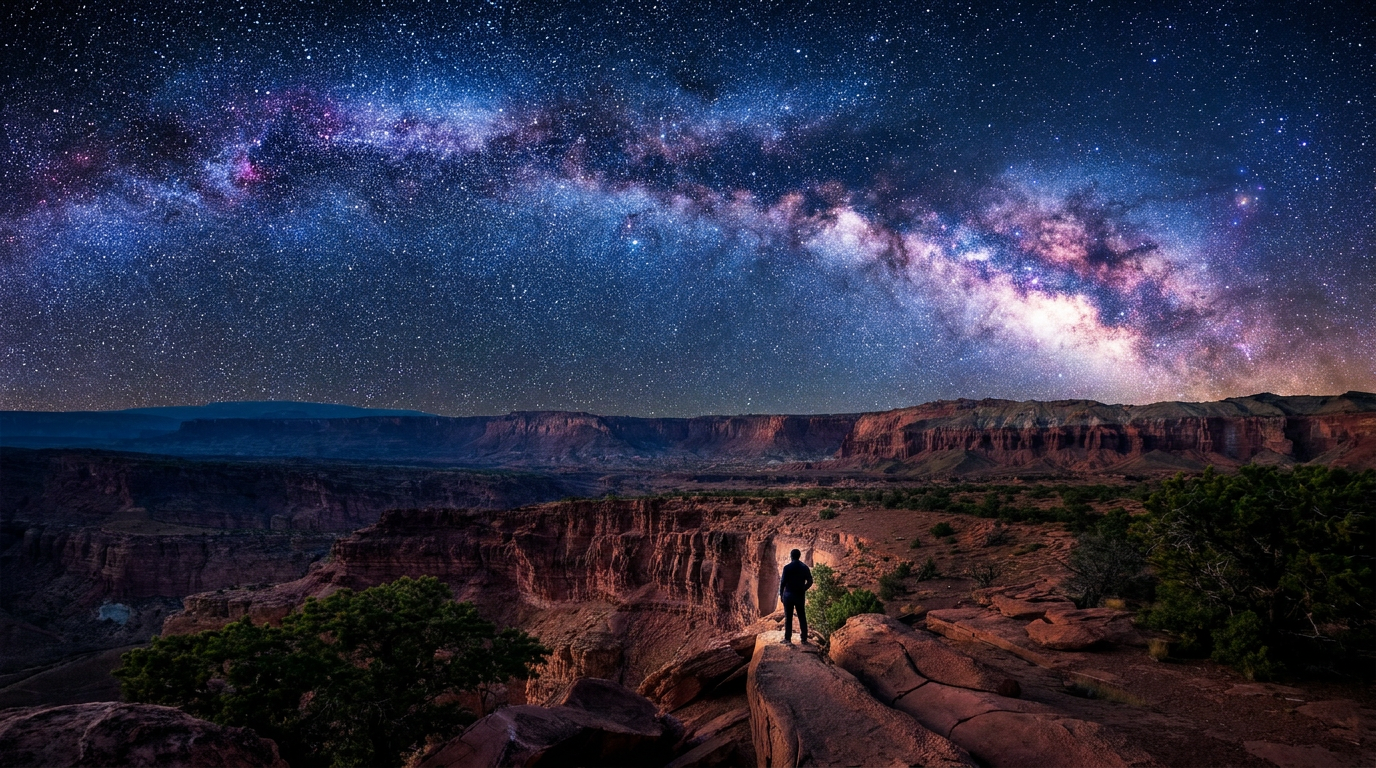
The surge in astrotourism is driven by a stark modern reality. Due to the pervasive spread of artificial light at night, an estimated 80 percent of North Americans and Europeans can no longer see the Milky Way from their homes. As urban sky glow swallows the stars, travelers are increasingly willing to journey thousands of miles to experience the nocturnal environment exactly as our ancestors did for millennia. National parks, already bastions of daytime conservation, have emerged as the frontline defenders of the night sky.[6][7]
At the center of this movement is the International Dark Sky Places program, spearheaded by DarkSky International. Founded in 2001, the program was modeled after UNESCO World Heritage designations to formally recognize and protect areas with exceptional starry nights. To date, the organization has certified over 100 Dark Sky Parks worldwide, creating a global network of nocturnal sanctuaries that prioritize the preservation of darkness just as fiercely as they protect clean water and ancient forests.[2][6]
Achieving International Dark Sky Park status is not simply a matter of geographic isolation. While being located far from urban centers is a prerequisite, the certification demands a rigorous, multi-year commitment to active light management. Park administrators must conduct comprehensive audits of every man-made light source within their boundaries. They are required to retrofit or replace non-compliant fixtures with "night-sky friendly" alternatives—lights that are fully shielded, directed downward, and utilize warmer color temperatures to minimize atmospheric scattering.[1][2]
Voyageurs National Park in northern Minnesota offers a prime example of this exhaustive process. To secure its certification, park staff collaborated with the National Park Service’s Natural Sounds and Night Skies Division to monitor sky quality and identify offending light sources. By replacing glaring parking lot lamps with shielded, downward-facing fixtures, the park successfully eliminated localized sky glow, ensuring that the aurora borealis and dense star fields remained vividly visible to visitors.[1]
To quantify the quality of the night sky, astronomers and park rangers rely on a specific metric known as the Bortle Dark Sky Scale. Created in 2001 by amateur astronomer John E. Bortle, the nine-level scale measures the astronomical observability of celestial objects and the interference caused by light pollution. A Class 9 sky represents an inner-city environment where only the brightest planets and a handful of stars pierce the haze. Conversely, a Class 1 sky represents pristine, natural darkness—a state that is becoming exceedingly rare.[3][6]

In a Bortle Class 1 or 2 environment, the night sky is so luminous with starlight that the Milky Way appears highly structured and can actually cast faint shadows on the ground. Visitors to these elite dark sky locations can observe the Andromeda Galaxy, the Orion Nebula, and thousands of individual stars with the naked eye. To maintain their Dark Sky Park certification, locations must regularly demonstrate measurable darkness using Sky Quality Meters, typically achieving readings of 21.2 magnitudes per square arc second or darker.[3][6]
Visitors to these elite dark sky locations can observe the Andromeda Galaxy, the Orion Nebula, and thousands of individual stars with the naked eye.
While the spectacular visual display is the primary draw for astrotourists, the preservation of dark skies serves a critical ecological function. Nearly 70 percent of all wildlife species are nocturnal, relying on the natural rhythms of light and dark to govern their feeding, mating, migration, and predator-evasion behaviors. Artificial light at night severely disrupts these circadian rhythms, disorienting migratory birds, altering the hunting patterns of nocturnal predators, and disrupting the reproductive cycles of amphibians.[6][7]
By enforcing strict lighting ordinances, Dark Sky Parks create vital ecological havens where these natural behaviors can continue undisturbed. The reduction of artificial light also yields significant energy savings. DarkSky International estimates that at least 30 percent of all outdoor lighting in the United States is wasted by being directed upward into the sky, resulting in billions of dollars in lost energy and unnecessary carbon emissions annually.[2][6]

The economic incentives for gateway communities surrounding these parks are equally compelling. Astrotourism extends the traditional tourist season, drawing visitors during the colder, darker winter months when skies are often clearest. In Utah, which boasts the highest concentration of certified International Dark Sky Places in the world, astrotourism generates an estimated $2.5 million annually in local economic benefits. Towns like Moab have actively embraced the movement, passing their own outdoor lighting ordinances to protect the lucrative dark skies above nearby Arches and Canyonlands National Parks.[4][6]
The dark sky movement is not limited to the vast deserts of the American West. In the United Kingdom, where dense populations make finding true darkness challenging, national parks have aggressively pursued certification. Northumberland National Park became England’s first International Dark Sky Park, while regions like Eryri (Snowdonia) and the Yorkshire Dales have secured Dark Sky Reserve status. These designations have transformed the UK's rural winter tourism economy, proving that dark sky preservation is viable even in heavily developed nations.[5]

The International Dark Sky Places program categorizes its protected areas into several distinct tiers to accommodate different environments. While Dark Sky Parks are typically publicly owned conservation areas, Dark Sky Reserves consist of a dark "core" zone surrounded by populated peripheral areas that agree to strict lighting controls. Dark Sky Sanctuaries are the most remote and fragile designations, while Dark Sky Communities recognize towns and cities that have shown exceptional dedication to mitigating their own light pollution.[2][7]
Despite the success of the certification program, the future of the night sky faces unprecedented new threats that cannot be solved by local lighting ordinances. The rapid deployment of satellite mega-constellations is fundamentally altering the visual landscape of the night sky. Even in the most remote Bortle Class 1 sanctuaries on Earth, astrophotographers and stargazers now frequently observe trains of bright satellites streaking across the cosmos, introducing a form of light pollution that originates from low Earth orbit.[7]
Furthermore, the relentless expansion of urban sprawl continues to push the boundaries of sky glow further into the wilderness. As gateway communities grow to accommodate the influx of astrotourists, they must carefully balance economic development with the strict lighting regulations required to maintain the very darkness that attracts their visitors. It is a delicate paradox: the popularity of dark skies brings development that inherently threatens them.[4][7]
Ultimately, the rise of Dark Sky Parks represents a profound shift in how humanity values the natural world. It is a recognition that the environment extends upward, beyond the tree line and the atmosphere, into the cosmos itself. By retrofitting a single light bulb at a time, park rangers, astronomers, and local communities are working to ensure that future generations will still be able to look up and feel the humbling, awe-inspiring weight of a universe that has not yet been erased by the glow of human progress.[1][6][7]

How we got here
2001
The International Dark-Sky Association launches the Dark Sky Places program to protect nocturnal environments.
2007
Natural Bridge National Monument in Utah becomes the world's first certified International Dark Sky Park.
2015
Eryri (Snowdonia) in Wales is designated as an International Dark Sky Reserve, proving the model works in Europe.
2020
Voyageurs National Park secures its certification after extensive, multi-year lighting retrofits.
2024
Moab, Utah officially becomes a Dark Sky Community, protecting the skies above nearby Arches and Canyonlands.
Viewpoints in depth
Conservationists & Ecologists
Advocates focused on the biological necessity of natural darkness.
For ecologists, the dark sky movement is fundamentally about habitat preservation. Nearly 70 percent of wildlife is nocturnal, and artificial light at night (ALAN) acts as a severe ecological pollutant. Conservationists point to data showing that unshielded lights disrupt the migratory patterns of birds, alter the hunting advantages of predators, and interfere with the reproductive cycles of amphibians. From this perspective, retrofitting a park's lighting is just as critical to wildlife management as preventing water pollution or stopping deforestation.
Astrotourism Advocates
Proponents highlighting the economic and cultural value of stargazing.
Astrotourism advocates view pristine night skies as a highly lucrative, sustainable natural resource. They emphasize that stargazing extends the traditional tourist season into the darker, colder winter months, providing a vital economic lifeline to rural gateway communities. Furthermore, they argue that experiencing the cosmos is a fundamental human right that has been erased by modern infrastructure. By creating certified Dark Sky Parks, they believe we are democratizing access to the universe and inspiring the next generation of scientists and astronomers.
Park Administrators
Officials tasked with balancing strict lighting rules against visitor safety and infrastructure.
For the administrators managing these protected lands, Dark Sky certification presents a complex logistical challenge. They must balance the strict requirements of the certification—such as eliminating upward light spill and utilizing specific color temperatures—with the practical needs of visitor safety, parking lot navigation, and facility security. Administrators often face budget constraints when tasked with auditing and replacing hundreds of legacy light fixtures, requiring them to seek external grants and partnerships with non-profits to achieve compliance.
What we don't know
- How severely low-Earth orbit satellite constellations will ultimately degrade the viewing experience in Bortle Class 1 areas.
- Whether gateway communities can sustain their dark sky ordinances as their populations and infrastructure expand to accommodate more tourists.
Key terms
- Astrotourism
- A form of nature-based tourism specifically focused on traveling to destinations with low light pollution to observe the night sky.
- Bortle Scale
- A nine-level metric used by astronomers to measure the darkness of the night sky and the visibility of celestial objects.
- Artificial Light at Night (ALAN)
- Man-made illumination that alters the natural patterns of light and dark in ecosystems, often disrupting nocturnal wildlife.
- Sky Glow
- The brightening of the night sky over inhabited areas caused by artificial light scattering in the atmosphere.
- Sky Quality Meter
- A scientific instrument used to measure the luminance of the night sky, helping parks prove they meet the darkness thresholds required for certification.
Frequently asked
What is the Bortle Scale?
The Bortle Scale is a nine-level numeric scale that measures the night sky's brightness and the astronomical observability of celestial objects. Class 1 represents the darkest, most pristine skies, while Class 9 represents heavily light-polluted inner-city skies.
Can I see the Milky Way from a Dark Sky Park?
Yes. In certified Dark Sky Parks, which typically rank as Class 1 or 2 on the Bortle Scale, the Milky Way is highly visible to the naked eye and can even cast faint shadows on the ground during moonless nights.
Does Dark Sky certification restrict park access?
No. The certification does not carry legal or regulatory authority over public access. Instead, it requires the park to manage its own lighting infrastructure and offer educational astronomy programs to visitors.
How do parks reduce light pollution?
Parks conduct lighting audits and replace non-compliant fixtures with "night-sky friendly" alternatives. These lights are fully shielded to direct light downward and use warmer color temperatures to prevent light from scattering into the atmosphere.
Sources
Source coverage
7 outlets
3 viewpoints surfaced





[1]National Park ServicePark Administrators
International Dark Sky Park Certification
Read on National Park Service →[2]DarkSky InternationalPark Administrators
International Dark Sky Places Program
Read on DarkSky International →[3]Go AstronomyAstrotourism Advocates
Bortle Class 1 & 2 Locations | U.S. Dark Sky Parks
Read on Go Astronomy →[4]Visit UtahAstrotourism Advocates
Stargazing in Utah: Dark Sky Parks
Read on Visit Utah →[5]National Parks UKAstrotourism Advocates
The best places in the world to stargaze
Read on National Parks UK →[6]Dark Sky OverlandConservationists & Ecologists
What is a Dark Sky Park?
Read on Dark Sky Overland →[7]Factlen Editorial TeamConservationists & Ecologists
Synthesis by Factlen editorial team
Read on Factlen Editorial Team →
Every angle. Every day.
Get travel stories with full source coverage and perspective breakdowns delivered to your inbox.