
How Hydrogen, Solar Sails, and Giant Batteries Are Decarbonizing Cruise Ships in 2026
The cruise industry is launching its first truly zero-emission vessels in 2026, utilizing liquid hydrogen, retractable solar sails, and advanced battery arrays to replace heavy fossil fuels.
By Irina Belova

The year 2026 marks a watershed moment for maritime travel. After decades of relying on heavy fuel oil, the cruise industry is officially putting its first generation of zero-emission vessels into the water. Driven by tightening environmental regulations and a demand for sustainable tourism, shipbuilders are moving beyond incremental efficiency tweaks. Instead, they are fundamentally reimagining how massive steel vessels propel themselves across the ocean, swapping combustion engines for liquid hydrogen, massive battery arrays, and high-tech solar sails.[2][7]
The stakes for this transition are immense. Cruising has historically been one of the most carbon-intensive forms of leisure travel, and operators face mounting pressure to decarbonize. This pressure is particularly acute in pristine environments like the Norwegian fjords and the polar regions, where local governments are beginning to mandate zero-emission entry requirements. To maintain access to these spectacular landscapes, the industry's luxury and expedition tiers are acting as the vanguard, absorbing the massive research and development costs required to pioneer clean propulsion.[3]
The most significant milestone of the year arrives in late 2026 with the debut of the Viking Libra. Built by Italian shipbuilding giant Fincantieri, the Libra holds the distinction of being the world's first cruise ship powered entirely by liquid hydrogen. While other vessels have utilized hydrogen for auxiliary power, the Viking Libra is designed to store enough hydrogen onboard to handle both its main propulsion and its extensive hotel operations.[1][6]
The mechanism behind this breakthrough relies on polymer electrolyte membrane, or PEM, fuel cells. Unlike traditional marine engines that burn fossil fuels, fuel cells generate electricity through a direct chemical reaction between liquid hydrogen and oxygen. The only byproducts of this process are heat and pure water, eliminating the plumes of carbon dioxide, sulfur, and nitrogen oxides that have long characterized ocean liners.[1]
Scaling this chemistry to power a floating luxury hotel is a monumental engineering feat. The Viking Libra's advanced fuel cell system is capable of producing six megawatts of power. This output is sufficient to propel the 54,300-ton vessel and support the energy needs of its 998 passengers and 499 staterooms. By achieving this capacity, the ship can navigate environmentally sensitive marine sanctuaries with a completely invisible carbon footprint.[1][6]
However, the physics of hydrogen present unique logistical hurdles. Liquid hydrogen must be stored at cryogenic temperatures and requires significantly more physical space than traditional marine fuels. This spatial premium is precisely why hydrogen propulsion is making its debut on a smaller, premium vessel rather than a mass-market mega-ship. Engineers had to design first-of-their-kind containerized storage systems to safely load and house the volatile fuel directly onboard.
While hydrogen represents the cutting edge of chemical energy, other operators are looking backward to move forward, resurrecting wind power with a modern twist. French expedition operator Selar is launching the Captain Arctic in late 2026, a 70-meter vessel that relies primarily on the elements. Designed for intimate polar expeditions with just 36 guests, the ship aims to provide a nearly silent, vibration-free voyage that does not disturb local wildlife.[2]
The Captain Arctic achieves this through five massive, solid sails that are entirely clad in solar panels. Covering nearly 20,000 square feet, these rigid sails harness both wind propulsion and solar electricity simultaneously. Because the sails are retractable, the ship can fold them down like a Swiss Army knife to navigate under bridges or through tight, height-restricted anchorages.[2]
Looking slightly further ahead, Norwegian coastal operator Hurtigruten is actively testing the physical components for its ambitious Sea Zero project. While the final ship is slated for a 2030 launch, the digital simulations and physical tank testing occurring throughout 2025 and 2026 are defining the blueprint for the industry's future. Hurtigruten's goal is to build a fully electric ship capable of sailing the rugged Norwegian coast entirely on battery power.[4][5]
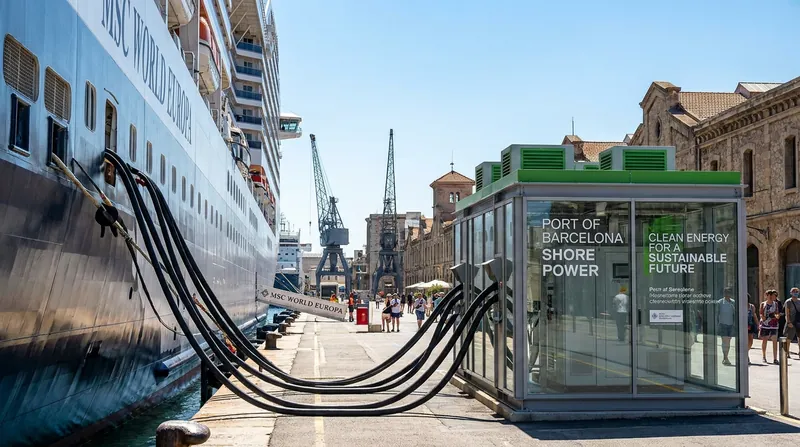
The core of the Sea Zero concept is a staggering 60-megawatt-hour battery pack. Because Norway's national electrical grid is powered 98 percent by renewable energy, the ship will utilize cold ironing—plugging into shore power while docked—to recharge its massive batteries cleanly. This allows the vessel to operate as a closed-loop, zero-emission system as it travels between coastal ports.[5]
Shipbuilders like VARD, who are partnering on the Sea Zero project, emphasize that you cannot simply swap a diesel engine for a battery; you have to change the physics of the ship itself. To make battery power viable, the vessel's overall energy demand must be drastically reduced. Engineers are redesigning hulls to be longer and lower, optimizing them to slice through ocean currents with minimal resistance.
One of the most fascinating innovations being deployed to achieve this efficiency is air lubrication. Ships are equipped with systems that pump a continuous carpet of micro-bubbles beneath the hull. This layer of air reduces the friction between the steel and the water, allowing the ship to glide more easily. Combined with advanced anti-fouling coatings, air lubrication can cut a vessel's energy consumption by five to ten percent.[4]
While hydrogen, solar sails, and massive batteries represent the zero-emission ideal, the broader mass-market industry is navigating a slower transition. For larger vessels, Liquefied Natural Gas, or LNG, has become the dominant stepping stone. Ships like Explora Journeys' Explora III, launching in August 2026, are utilizing LNG to immediately eliminate sulfur emissions and significantly reduce their carbon output compared to traditional heavy fuel oil.[2][7]
The reliance on LNG remains a subject of intense debate within maritime circles. Proponents view it as the only currently scalable alternative for massive ships, while environmentalists caution that it is still a fossil fuel. Furthermore, the combustion of LNG carries the risk of methane slip—the release of unburned methane, a potent greenhouse gas, into the atmosphere—making it a temporary bridge rather than a permanent destination.[3]
Beyond propulsion, engineers are aggressively targeting the other half of a ship's energy equation: hotel operations. Heating, cooling, lighting, and dining can consume up to 50 percent of a cruise ship's total power. To achieve true sustainability, the 2026 fleet is treating every watt of electricity and drop of water as a precious resource.[5]
New vessels are utilizing artificial intelligence to predict passenger flows, automatically adjusting HVAC systems in empty dining rooms or theaters. Ships like the Captain Arctic are installing pellet boilers fed by recycled wooden waste, while others utilize advanced reverse osmosis to turn seawater into fresh drinking water. Even the heat generated by the ship's mechanical systems is captured and repurposed to warm the onboard swimming pools.[2][5]
The lingering uncertainty for the industry is the timeline for scalability. Today's zero-emission breakthroughs are exclusively happening within the boutique yacht and luxury expedition sectors. In these markets, high ticket prices help subsidize the immense research and development costs, and smaller passenger capacities make alternative fuels physically viable to store.[3]
Scaling a 60-megawatt-hour battery or a cryogenic liquid hydrogen plant to safely power a 6,000-passenger floating city remains a monumental engineering hurdle. Yet, the launches of 2026 prove that the fundamental technologies work. Zero-emission cruising is no longer a theoretical concept confined to digital renderings; it is officially in the water, charting a new course for the future of global travel.[1][2]
Key points
- Viking Cruises is launching the Viking Libra in late 2026, the world's first cruise ship powered entirely by liquid hydrogen.
- French operator Selar will debut the Captain Arctic, utilizing retractable solid sails covered in 20,000 square feet of solar panels.
- Norwegian line Hurtigruten is testing a 60-megawatt-hour battery system for its Sea Zero project, aiming for fully electric coastal voyages by 2030.
- Shipbuilders are deploying physical hull innovations, such as air lubrication bubbles, to reduce a vessel's energy drag by up to 10 percent.
Open questions
- Whether liquid hydrogen supply chains can scale globally to support a massive fleet of zero-emission vessels across all major ports.
- How quickly the mass-market mega-ships carrying upwards of 6,000 passengers will be able to transition away from Liquefied Natural Gas (LNG) to true zero-emission power.
- The long-term maintenance costs and durability of retractable solar sails in extreme polar weather conditions.
Timeline
March 2022
Hurtigruten officially unveils the Sea Zero project, aiming to develop the world's most energy-efficient cruise ship.
April 2025
Viking Cruises and Fincantieri announce the Viking Libra, the world's first hydrogen-powered cruise ship.
March 2026
The Viking Libra is officially launched at the Ancona shipyard in Italy to begin its final outfitting.
August 2026
Explora Journeys debuts the Explora III, utilizing Liquefied Natural Gas (LNG) as a lower-emission transition fuel.
December 2026
The Viking Libra and Selar's Captain Arctic are scheduled to welcome their first passengers for zero-emission voyages.
- Expedition & Luxury Operators
- Premium cruise lines leveraging their smaller ship sizes and higher margins to pioneer zero-emission propulsion.
- Sustainable Maritime Innovators
- Shipbuilders and engineering firms focused on developing and testing the physical technologies required to eliminate marine emissions.
- Industry Pragmatists
- Analysts and operators balancing the push for zero emissions with the logistical realities of scaling these technologies to mass-market mega-ships.
Perspectives this story doesn't cover
- Port Authorities
- Local Coastal Communities
Sources
Source coverage
7 outlets
3 viewpoints surfaced







- [1]The IndependentExpedition & Luxury Operators
Viking’s new hydrogen-powered ship promises zero-emission cruises
Read on The Independent → - [2]ForbesExpedition & Luxury Operators
Shell LNG Outlook 2026: The Hormuz Shock And The Coming Supply Crunch
Read on Forbes → - [3]Seatrade Cruise NewsIndustry Pragmatists
Luxury cruises play vanguard in sustainable sailing
Read on Seatrade Cruise News → - [4]Marine LogExpedition & Luxury Operators
Hurtigruten releases new Sea Zero details
Read on Marine Log → - [5]gCaptainExpedition & Luxury Operators
Hurtigruten Reveals Plans for Zero-Emission Cruise Ship
Read on gCaptain → - [6]EuropaWireSustainable Maritime Innovators
Viking Libra Launch Marks Major Step in Zero Emission Cruise Ship Development
Read on EuropaWire → - [7]TravelAge WestIndustry Pragmatists
Here Are All the New Ocean Cruise Ships Coming in 2026
Read on TravelAge West →
More in Travel
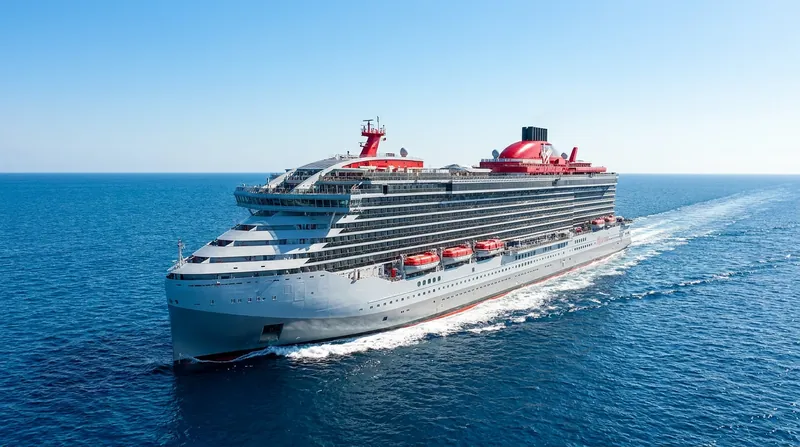
See all →Fjord Conservation
The Mechanics of Norway's Zero-Emissions Mandate: How the 2026 Fjord Ban Will Force Cruise Lines to Reroute or Refit Fleets
3 sources
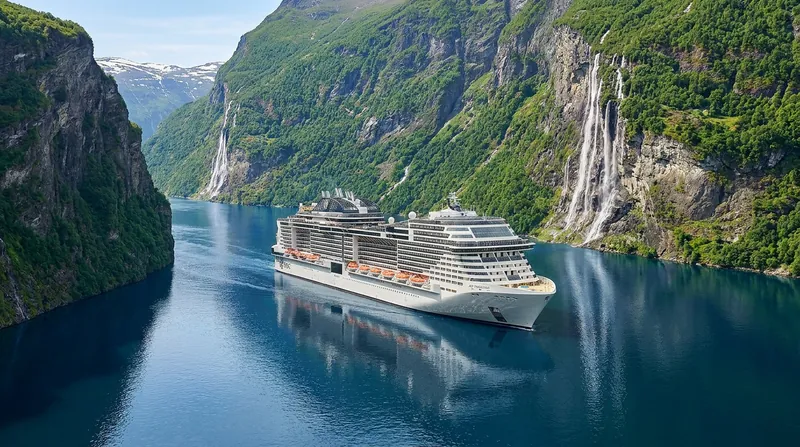
Regenerative Tourism
The Mechanics of Hawaii's 14% Cruise Tax: How the State is Funding Climate Resilience
4 sources
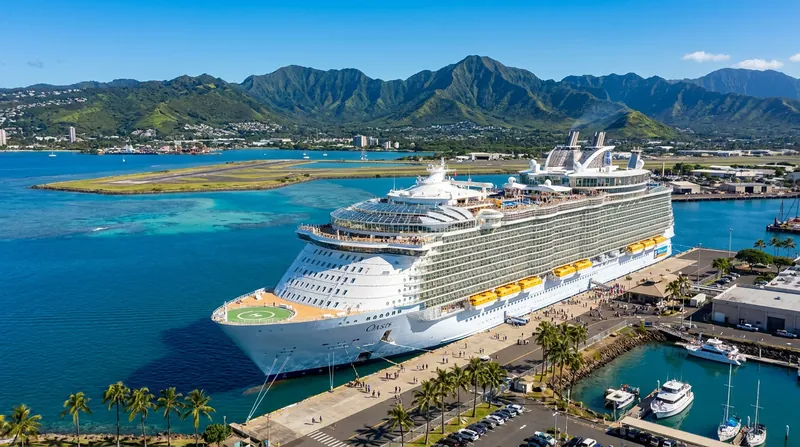
Maritime Tech
The Engineering of Zero-Emissions Cruising: Inside the World's First Hydrogen-Powered Ship, the Viking Libra
2 sources
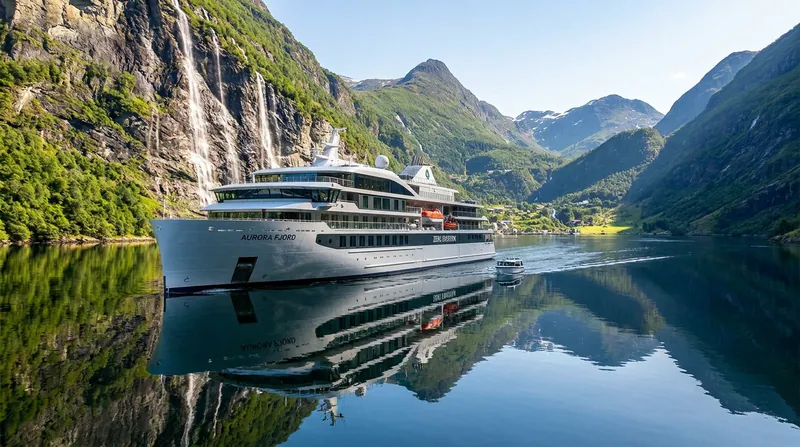
Carbon Mandate
The Economics of Europe's Carbon Mandate: How the EU ETS and Shore Power Rules Are Rewriting Cruise Fares and Itineraries
3 sources
Comments
Every angle. Every day.
Get Travel stories with full source coverage and perspective breakdowns, free every day.