
How Fungi Are Rewriting the Rules of High Fashion
Mycelium leather has moved from the laboratory to luxury runways, offering a circular alternative to animal hides. But as production scales, life-cycle assessments reveal that growing sustainable materials requires solving an energy-intensive catch.
By Factlen Editorial Team
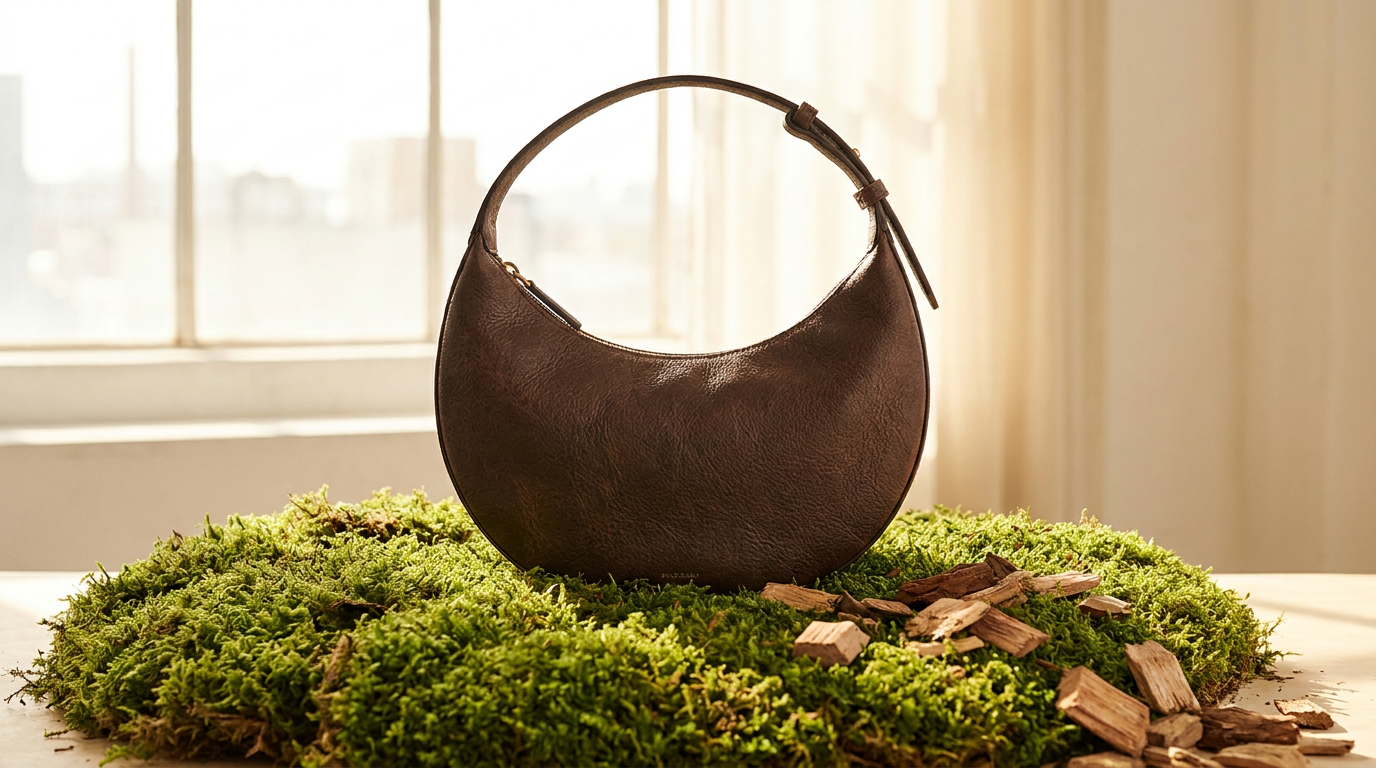
- Biomaterial Innovators
- Startups and material scientists focused on replacing extractive supply chains with circular, grown materials.
- Environmental Analysts
- Researchers evaluating the full life-cycle impact of new materials to prevent greenwashing.
- Luxury Fashion Brands
- High-end design houses balancing consumer demand for sustainability with strict quality and aesthetic standards.
What's not represented
- · Traditional leather tanners and livestock farmers facing industry disruption
- · Garment workers transitioning to bio-fabrication facilities
Why this matters
As the fashion industry moves away from environmentally destructive animal hides and petroleum-based plastics, bio-fabricated materials are entering the mainstream. Understanding the true environmental footprint of these innovations helps consumers separate genuine sustainability from greenwashing when purchasing their next pair of shoes or handbag.
Key points
- Mycelium leather is grown from the root structure of fungi using agricultural waste as a nutrient base.
- The material requires up to 90% less water than traditional leather and avoids the ethical concerns of animal agriculture.
- Major luxury brands and sportswear companies have adopted the material as EU regulations push for greater supply chain traceability.
- Life Cycle Assessments reveal that the climate-controlled environments required to grow fungi demand significant electricity.
- The true sustainability of mycelium leather depends heavily on whether the production facilities are powered by renewable energy.
The fashion industry has long struggled with the environmental toll of traditional leather, which relies heavily on animal agriculture, massive water consumption, and toxic tanning chemicals like chromium. For years, the default alternative was synthetic "vegan leather"—typically derived from petroleum-based plastics like polyurethane, which take centuries to decompose.[1][2]
In 2026, a biological revolution has moved from the laboratory to the runway. Brands ranging from Stella McCartney and Hermès to Adidas and Lululemon are increasingly adopting mycelium leather, a bio-fabricated material grown from the root structure of fungi.[2][6]
To understand the shift, it is necessary to look underground. Mycelium is the microscopic, branching network that supports fungi—the "roots" to the mushroom's "fruit." When cultivated in controlled environments, these hyphae threads naturally bind together, forming dense, interlocking structures that closely mirror the collagen fibers found in animal skin.[1][6]

The growth process is a masterclass in circularity. Companies like Bolt Threads, MycoWorks, and Indonesian startup MYCL begin with agricultural waste—such as sawdust, hemp hurd, or corn stalks—which serves as a nutrient-rich substrate.[3][5]
Mushroom spores are introduced to this waste in vertical farming trays. Over the course of two to three weeks, the mycelium consumes the organic matter, growing into a thick, uniform foam-like mat.[6][7]
Once harvested, the mat is compressed, dried, and treated using natural dyes and chromium-free finishes. The resulting textile is durable, flexible, and water-resistant, achieving tensile strengths that rival traditional hides without the need for livestock.[3][7]
The environmental claims driving this shift are substantial. Because mycelium derives its nutrients from agricultural byproducts, it requires up to 90 percent less water than conventional leather processing. Furthermore, at the end of its lifecycle, pure mycelium leather is fully biodegradable and compostable, returning safely to the soil.[1][7]

The environmental claims driving this shift are substantial.
The market has responded aggressively to these metrics. Driven by consumer demand and impending European Union regulations on deforestation and material traceability, the global mycelium leather market is projected to approach $3 billion in 2026.[7][8]
However, as production scales from boutique capsule collections to industrial supply chains, material scientists are introducing a necessary dose of nuance. Life Cycle Assessments (LCAs) reveal that bio-fabricated materials are not automatically carbon-neutral.[4][5]
The hidden environmental cost lies in the cultivation environment. Fungi require highly specific, consistent levels of humidity, temperature, and airflow to grow uniformly. Maintaining these strict parameters inside massive vertical farming facilities demands continuous, significant electricity inputs.[4][5]
A recent LCA study analyzing mycelium leather production in Indonesia found that manufacturing one square meter of the material generated over 57 kilograms of carbon dioxide equivalent. The vast majority of this footprint—nearly 46 kilograms—stemmed directly from the electricity required to power the climate-controlled growth chambers.[4][5]

This energy-intensive reality means that the true sustainability of mushroom leather depends entirely on the local power grid. If a facility relies on coal or natural gas, the carbon emissions can rival or even exceed those of traditional synthetic leathers.[4]
Industry leaders are actively working to close this gap. Facilities are increasingly transitioning to solar and hydropower to run their climate systems, which dramatically slashes the final carbon footprint and aligns the manufacturing process with the material's eco-friendly promise.[4]
Additionally, innovators are experimenting with hybrid composites, blending mycelium with natural fibers like flax and hemp to improve durability without requiring thicker, more energy-intensive fungal mats.[7]

The trajectory of mycelium leather represents a broader shift in how humanity approaches manufacturing. Rather than extracting finite resources or raising millions of animals, the fashion industry is learning to grow its materials from the waste of other industries.[6]
How we got here
2018
Early biomaterial startups begin experimenting with fungal root structures as a textile alternative.
2021
Luxury houses like Hermès and Stella McCartney announce their first prototype products using mycelium leather.
2023
Pilot-scale production facilities open across North America, Europe, and Southeast Asia.
2025
The EU introduces stricter Digital Product Passport regulations, accelerating brand adoption of traceable bio-materials.
2026
Mycelium leather reaches commercial scale, with the global market approaching $3 billion.
Viewpoints in depth
Biomaterial Innovators
Startups and material scientists focused on replacing extractive supply chains with circular, grown materials.
This camp argues that the fashion industry cannot continue to rely on the massive land and water footprint of animal agriculture, nor the fossil-fuel dependency of polyurethane synthetics. By utilizing agricultural waste as a growth substrate, they view mycelium as a truly regenerative material that solves both the front-end resource problem and the back-end waste problem, as the final product is fully compostable.
Environmental Analysts
Researchers evaluating the full life-cycle impact of new materials to prevent greenwashing.
While acknowledging the water and land-use benefits of mycelium, these analysts caution against treating bio-fabricated materials as a flawless silver bullet. They point to Life Cycle Assessments demonstrating that the strict temperature and humidity controls required for fungal growth demand immense electricity. They argue that unless these vertical farms are powered entirely by renewable energy, the carbon footprint of mycelium leather could rival the synthetic plastics it aims to replace.
Luxury Fashion Brands
High-end design houses balancing consumer demand for sustainability with strict quality and aesthetic standards.
For luxury brands, the appeal of mycelium leather lies in its ability to replicate the tactile richness, durability, and exclusivity of animal hides without the associated ethical and environmental baggage. Facing tightening EU regulations on deforestation and material traceability, these companies view bio-materials as a necessary strategic pivot to future-proof their supply chains while maintaining premium price points.
What we don't know
- How quickly the industry can transition all vertical farming facilities to 100% renewable energy to mitigate the high electricity demands.
- Whether mycelium leather can achieve the exact same decades-long lifespan and weathering characteristics as premium full-grain animal leather.
- How the material will perform at a mass-market price point, as current production is largely focused on premium and luxury tiers.
Key terms
- Mycelium
- The branching, underground root-like structure of fungi that absorbs nutrients and binds organic matter.
- Substrate
- The underlying material or surface—such as sawdust or agricultural waste—on which an organism like mycelium grows and feeds.
- Life Cycle Assessment (LCA)
- A scientific methodology used to evaluate the total environmental impacts of a product from raw material extraction through to its final disposal.
- Polyurethane (PU)
- A synthetic plastic polymer commonly used to make traditional "vegan leather," which relies on fossil fuels and is not biodegradable.
- Circular Economy
- An economic system aimed at eliminating waste and the continual use of resources by designing products to be reused, repaired, or composted.
Frequently asked
Is mushroom leather actually made from mushrooms?
No. It is made from mycelium, which is the microscopic, underground root-like network of fungi, rather than the visible mushroom cap that fruits above ground.
Does mycelium leather feel like real animal leather?
Yes. When cultivated and processed correctly, the interlocking fungal threads closely mimic the collagen structure of animal skin, providing similar durability, flexibility, and texture.
Is mushroom leather completely carbon neutral?
Not automatically. While it saves massive amounts of water and land, growing mycelium requires strict climate control. If the facility is powered by fossil fuels, the electricity use can result in a significant carbon footprint.
Can mushroom leather be composted?
Yes. Unlike synthetic polyurethane leathers, pure mycelium leather is fully biodegradable and can be safely composted at the end of its lifecycle, provided it hasn't been coated in plastic finishes.
Sources
Source coverage
8 outlets
3 viewpoints surfaced








[1]Sentient MediaLuxury Fashion Brands
What Is Mushroom Leather? The Sustainable Alternative Explained
Read on Sentient Media →[2]Immaculate VeganLuxury Fashion Brands
Is Mushroom Leather the Future of Sustainable Fashion?
Read on Immaculate Vegan →[3]Asia Media CentreBiomaterial Innovators
How Indonesian startup MYCL is turning mushrooms into sustainable leather
Read on Asia Media Centre →[4]ResearchGateEnvironmental Analysts
Life cycle assessment of mycelium-based leather production
Read on ResearchGate →[5]APLFEnvironmental Analysts
Mycelium-Based Leather: The Hidden Environmental Costs and Scaling Challenges
Read on APLF →[6]BSL AssociationBiomaterial Innovators
Mycelium Leather: How Grown Materials Are Redefining the Future of Leather Alternatives
Read on BSL Association →[7]Market Reports WorldBiomaterial Innovators
Global Mushroom Mycelium Leather Market Overview 2026
Read on Market Reports World →[8]HeuritechLuxury Fashion Brands
Fabric innovations: The future of textiles for 2026
Read on Heuritech →
Every angle. Every day.
Get lifestyle stories with full source coverage and perspective breakdowns delivered to your inbox.