
How Radar and AI Are Revolutionizing Motorcycle Safety in 2026
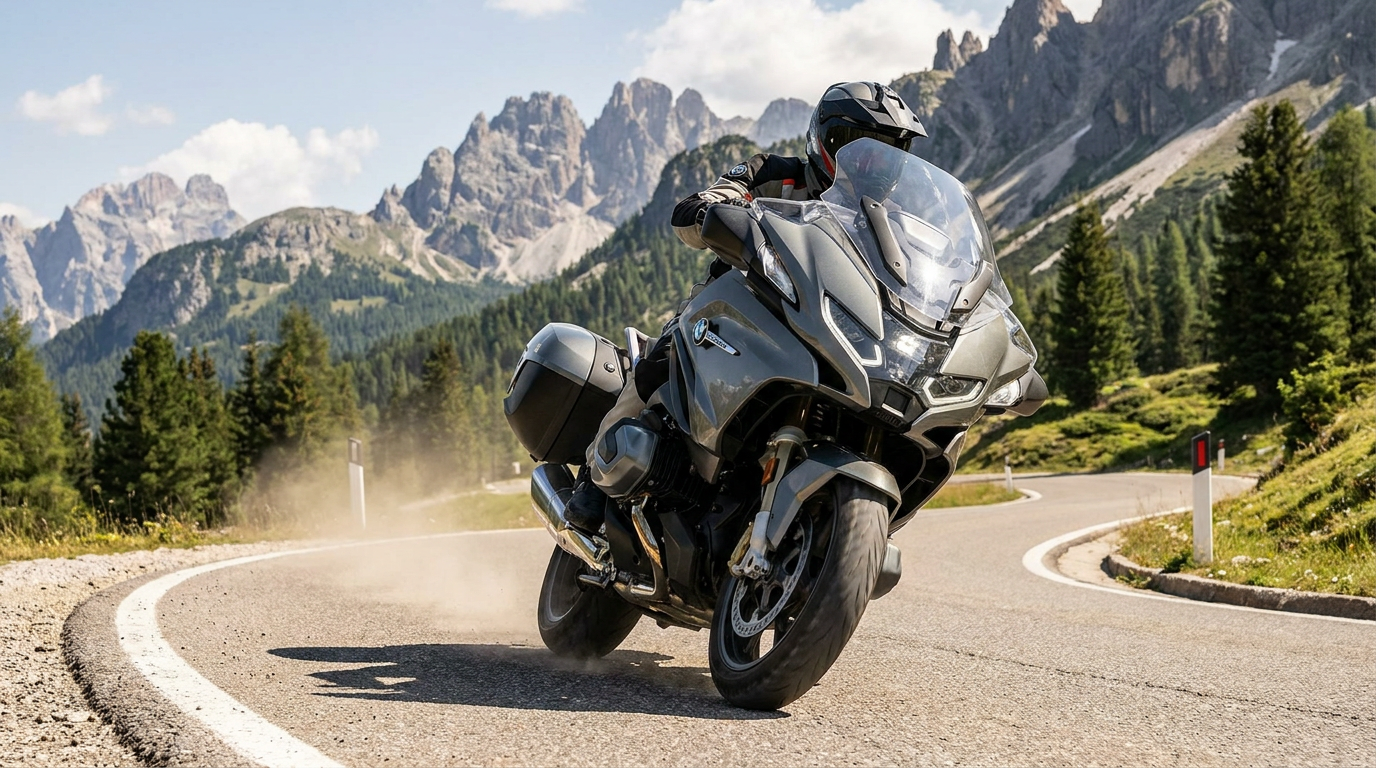
Advanced Rider Assistance Systems (ARAS), powered by compact radar and inertial sensors, are bringing car-like safety features to motorcycles without compromising the thrill of the ride.
By Factlen Editorial Team
- Safety Engineers
- Focus on reducing fatalities through active technological intervention.
- Touring Enthusiasts
- Value the reduction in mental and physical fatigue on long rides.
- Analog Purists
- Prefer raw, unassisted riding and worry about skill degradation.
What's not represented
- · Insurance Actuaries
- · Motorcycle Mechanics
Why this matters
Motorcyclists have historically lacked the active safety nets standard in modern cars. The integration of radar and lean-sensitive electronics means riders can now survive panic-braking in corners and avoid rear-end collisions, fundamentally changing the survival rate on two wheels.
Key points
- Advanced Rider Assistance Systems (ARAS) use radar and AI to bring car-like safety features to motorcycles.
- Six-axis Inertial Measurement Units (IMUs) enable Cornering ABS, preventing crashes during mid-corner panic braking.
- Second-generation radar units are 30% smaller, enabling Stop-and-Go Adaptive Cruise Control.
- Emergency Brake Assist can automatically boost braking pressure if a rider fails to brake hard enough.
- New algorithms can track staggered group formations, solving a major issue with early motorcycle cruise control.
Riding a motorcycle is fundamentally about freedom and an unfiltered connection with the road, but the physical vulnerability of the rider is an undeniable reality. For decades, the motorcycle industry's approach to safety was almost entirely passive, relying on incremental improvements in helmet materials, thicker abrasion-resistant leathers, and impact-absorbing foam armor. While gear remains critical, the paradigm heading into 2026 has shifted dramatically toward active accident prevention. Instead of merely mitigating the damage of a crash, modern technology is stepping in to ensure the crash never happens in the first place.[7]
Enter Advanced Rider Assistance Systems (ARAS). Borrowing heavily from the automotive world—where automatic braking and lane-keep assist have become standard—engineers have completely re-imagined these technologies for the unique physics of two wheels. Unlike a car, a motorcycle leans to turn, has a vastly different power-to-weight ratio, and requires the rider to maintain delicate balance. ARAS utilizes a sophisticated network of miniaturized radar units, cameras, and artificial intelligence to create a 360-degree digital safety net around the rider, constantly monitoring the environment for threats that human eyes might miss.[1][2]
At the absolute heart of this electronic revolution is the Inertial Measurement Unit, universally referred to as the IMU. Often described as the digital brain of modern motorcycle stability, a six-axis IMU is a tiny sensor suite that constantly measures the motorcycle's physical orientation in space. It tracks pitch (whether the bike is wheelieing or nose-diving), yaw (sliding sideways), and roll (the lean angle), alongside acceleration in every possible direction. Operating at hundreds of calculations per second, the IMU knows exactly what the chassis is doing at any given microsecond.[5]
This constant stream of telemetry enables Cornering ABS, arguably the most significant safety leap since the invention of the original anti-lock brake system. Traditional ABS is designed for riding in a straight line; if a rider grabs a handful of front brake while leaned over in a corner, traditional ABS can cause the motorcycle to violently stand up, lose its steering geometry, and wash out the front tire. Cornering ABS solves this terrifying scenario by factoring in the exact lean angle provided by the IMU.[4]

By understanding how far the bike is leaned over, Cornering ABS dynamically modulates the braking pressure to keep the chassis perfectly stable. Riders can apply maximum emergency braking force while dragging a knee through a decreasing-radius turn, and the computer ensures the tires maintain their limited traction. It is a feat of physics management that previously required the skill of a professional racer, now packaged as a digital safety net that catches everyday riders when they make a mistake or encounter a sudden obstacle mid-corner.[4][6]
While the IMU handles the internal physics of the motorcycle, radar acts as the vehicle's external eyes. Companies like Bosch have spearheaded the development of second-generation radar sensors specifically designed for motorcycles. These new units are 30 percent smaller and lighter than their predecessors, allowing designers to seamlessly integrate them into the front fairings and rear tail sections of modern bikes without ruining the aesthetics. They also use less power and feature advanced chirp sequences to precisely measure the distance, velocity, and angle of multiple surrounding vehicles.[1][3]
While the IMU handles the internal physics of the motorcycle, radar acts as the vehicle's external eyes.
The front-facing radar primarily powers Adaptive Cruise Control (ACC). Just like in a modern luxury car, the rider sets a desired cruising speed and a comfortable following distance. As the motorcycle approaches a slower-moving vehicle, the radar detects the speed differential, and the bike's computer automatically rolls off the throttle or gently applies the brakes to maintain that exact gap. When the vehicle ahead moves out of the way, the motorcycle smoothly accelerates back to the preset speed.[1][6]
The latest iteration of this technology introduces Stop-and-Go functionality, a massive boon for touring riders and daily commuters. In heavy, crawling traffic, the motorcycle can bring itself to a complete halt behind a stopping car. The rider simply puts their feet down. When the traffic begins to move again, a quick press of a button on the handlebars or a slight blip of the throttle tells the motorcycle to resume following the car ahead, drastically reducing the physical and mental fatigue of clutch-and-brake traffic jams.[1]

Beyond convenience, the front radar enables critical safety features like Forward Collision Warning (FCW) and Emergency Brake Assist (EBA). If the system detects an imminent rear-end collision, it flashes bright warnings on the dashboard and pulses the brakes to alert the rider. If the rider initiates braking but fails to apply enough pressure to stop in time, the EBA system instantly boosts the hydraulic braking force to maximize stopping power. Crucially, it acts as an amplifier rather than an autonomous driver—it will not brake unless the rider initiates the action.[1][2]
Meanwhile, the rear-facing radar provides a feature that riders have begged for: Blind Spot Detection. Motorcyclists traditionally rely on head checks to ensure a lane is clear, but taking eyes off the road ahead can be dangerous in dense traffic. When a vehicle enters the rider's blind spot or approaches rapidly from behind, the rear radar detects it and illuminates a bright LED warning light integrated into the corresponding rearview mirror, preventing disastrous lane changes.[3][6]

Software engineers are also solving edge-case problems unique to motorcycling culture, such as group riding. Standard adaptive cruise control systems struggle when following a staggered formation of motorcycles, often getting confused by the offset positioning. New Group Ride Assist algorithms can track multiple single-track vehicles simultaneously. The system recognizes the staggered pack and maintains a safe distance from the group as a whole, rather than locking onto just one lead bike and ignoring the rest.[2]
Despite these undeniable safety advancements, the integration of AI and radar has sparked debate within the motorcycling community. Some purists worry that electronic intervention dilutes the raw, analog experience of riding, arguing that over-reliance on technology degrades fundamental riding skills. Manufacturers counter this by emphasizing that these systems are designed strictly as safety backups. The rider remains in ultimate control of the machine; the electronics are simply there to intervene in the fractions of a second where human reflexes fall short.[2][4]
Ultimately, the goal of Advanced Rider Assistance Systems is to free up the rider's mental bandwidth. By outsourcing the exhausting anxiety of monitoring blind spots, managing stop-and-go traffic, and calculating mid-corner braking physics to radar and AI, motorcyclists can focus more on the pure joy of the road. With these digital safety nets becoming standard equipment, the industry is proving that making motorcycles safer doesn't have to mean making them any less thrilling.[6]
How we got here
2013
Bosch introduces the first Motorcycle Stability Control (MSC) system, bringing Cornering ABS to production.
2020
Ducati debuts the Multistrada V4, the first production motorcycle equipped with front and rear radar.
2024
Second-generation radar systems introduce Stop-and-Go ACC and Emergency Brake Assist.
2026
ARAS technology begins trickling down from premium flagship models to mid-range commuter motorcycles.
Viewpoints in depth
Safety Engineers
Advocates for maximum technological intervention to reduce fatalities.
Engineers and safety researchers argue that human error is the leading cause of motorcycle crashes, particularly in panic-braking situations. They view ARAS not as a luxury, but as a necessary evolution to bring motorcycle safety on par with modern automobiles. By utilizing sensors that never blink and algorithms that react in milliseconds, they believe technology can fundamentally alter the grim statistics associated with two-wheeled travel.
Touring Enthusiasts
Riders who prioritize comfort and endurance on long journeys.
For riders who regularly cover hundreds of miles a day, the mental fatigue of constantly monitoring blind spots and managing throttle in traffic is a significant safety hazard in itself. This camp embraces radar-assisted cruise control and blind-spot monitoring as tools that extend their riding longevity. By outsourcing routine spatial awareness to the bike's computer, they can stay fresher and more alert for the enjoyable, twisty sections of their route.
Analog Purists
Traditionalists who prefer raw, unassisted mechanical connection.
A vocal segment of the motorcycling community remains skeptical of heavy electronic intervention. They argue that motorcycling is inherently about personal responsibility, skill development, and a raw mechanical connection to the machine. This camp worries that over-reliance on cornering ABS and radar will degrade fundamental riding skills, creating a false sense of security while adding unnecessary weight, cost, and complexity to the vehicles.
What we don't know
- How quickly these premium safety features will become standard equipment on entry-level, budget-friendly motorcycles.
- Whether long-term reliance on electronic safety nets will negatively impact the fundamental hazard-avoidance skills of new riders.
Key terms
- IMU (Inertial Measurement Unit)
- An electronic sensor suite that measures a motorcycle's lean angle, acceleration, and rotation across multiple axes.
- Cornering ABS
- An advanced braking system that adjusts brake pressure based on the bike's lean angle to prevent wheel lockup mid-turn.
- Adaptive Cruise Control (ACC)
- A radar-based system that automatically adjusts the motorcycle's speed to maintain a safe distance from the vehicle ahead.
- Blind Spot Detection (BSD)
- A rear-facing radar system that alerts the rider via mirror lights when a vehicle is in their blind spot.
Frequently asked
Does Cornering ABS mean I can't crash in a turn?
No. While it drastically reduces the chance of losing front-wheel traction under braking, it cannot defy the laws of physics if you enter a corner with too much speed.
Will Emergency Brake Assist brake for me automatically?
No. On current motorcycles, EBA only boosts braking pressure if the rider has already initiated braking but isn't applying enough force to avoid a collision.
Can the radar see other motorcycles?
Yes. The latest generation of radar and software, such as Group Ride Assist, can detect and track multiple narrow-track vehicles, even in staggered formations.
Sources
Source coverage
7 outlets
3 viewpoints surfaced







[1]Cycle WorldTouring Enthusiasts
Testing Bosch's Latest Advanced Rider Assistance Systems
Read on Cycle World →[2]RevZillaAnalog Purists
Bosch introduces six new radar-based rider aids
Read on RevZilla →[3]Bosch MobilitySafety Engineers
Advanced rider assistance systems for motorcycles
Read on Bosch Mobility →[4]Motorcycle.comAnalog Purists
Cornering ABS and IMU Technology Explained
Read on Motorcycle.com →[5]Asphalt & RubberAnalog Purists
Why Cornering ABS is the Future of Motorcycles
Read on Asphalt & Rubber →[6]MotoFomoTouring Enthusiasts
Motorcycles with Cornering ABS and IMUs
Read on MotoFomo →[7]Bike n RiderSafety Engineers
The Future of Motorcycle Safety Gear: Innovations to Watch in 2026
Read on Bike n Rider →
Every angle. Every day.
Get automotive stories with full source coverage and perspective breakdowns delivered to your inbox.