
The Ultimate Guide to Buying an E-Bike in 2026
As electric bikes mature into legitimate car replacements, navigating the jargon of motors, batteries, and classes is essential. Here is how to find the perfect e-bike for your commute, budget, and lifestyle.
By Factlen Editorial Team
- Urban Commuters
- Prioritize utility, speed, and replacing car trips with fully equipped Class 3 models.
- Recreational & Fitness Riders
- Value the natural cycling feel of mid-drive motors and torque sensors to enhance their workouts.
- Cargo & Family Haulers
- Focus on heavy payload capacities, dual-battery setups, and stability for safely transporting children and goods.
- Budget-Conscious Buyers
- Seek maximum value, portability, and reliable hub motors in the sub-$1,000 market segment.
What's not represented
- · Traditional analog bicycle purists
- · Pedestrian advocacy groups concerned about trail speeds
Why this matters
Purchasing an e-bike is a significant investment that can transform your daily commute, improve your cardiovascular health, and drastically reduce your carbon footprint. Understanding the underlying technology ensures you buy a reliable vehicle rather than an expensive toy.
Key points
- The e-bike market in 2026 offers unprecedented value, with premium features like torque sensors and hydraulic brakes now available on sub-$1,000 models.
- Buyers must choose between three e-bike classes, which dictate top speeds and whether the bike includes a throttle mechanism.
- Mid-drive motors offer superior hill-climbing ability and a natural feel, while hub motors provide cost-effective power for flat terrain.
- Battery capacity, measured in Watt-hours (Wh), is the most critical factor in determining an e-bike's real-world riding range.
- Ensuring a battery is UL-certified is a non-negotiable safety requirement to prevent the fire risks associated with cheap lithium-ion cells.
The e-bike market in 2026 has officially moved past its awkward adolescent phase. Just a few years ago, buying an electric bicycle meant choosing between a heavy, underpowered budget model or spending the equivalent of a used car on a premium brand. Today, the landscape has transformed. Component prices have stabilized, battery technology has matured, and features that were once reserved for luxury models have trickled down to the mass market. For consumers, this means there has never been a better time to invest in an electric bike. However, the sheer volume of options—from folding commuters to heavy-duty cargo haulers—can make the purchasing process feel like navigating a maze of electrical engineering jargon.[1][2]
The first step in cutting through the noise is defining the bike's primary mission. Industry experts emphasize that an e-bike designed for weaving through city traffic will feel entirely different from one built to haul groceries up a steep suburban hill. Buyers must honestly assess their daily routes, storage constraints, and physical capabilities. Will the bike need to be carried up a flight of apartment stairs? Will it replace a minivan for school drop-offs? Answering these lifestyle questions immediately narrows the field, preventing buyers from overpaying for rugged off-road suspension when what they really need is a lightweight frame and a reliable rear rack.[4][6]
Once the mission is clear, buyers must navigate the three-tier classification system that governs electric bikes in most regions. Class 1 e-bikes are the most universally accepted; they provide electrical assistance only when the rider is actively pedaling, and the motor cuts off entirely once the bike reaches 20 miles per hour. Because they behave most like traditional bicycles, Class 1 models are generally permitted on standard bike paths and mountain bike trails. They offer a seamless, active riding experience that still requires some physical effort, making them a favorite among fitness enthusiasts and recreational riders who want to extend their range without entirely eliminating the workout.[6][8]

For those who want the option to cruise without pedaling, Class 2 e-bikes introduce a throttle mechanism alongside standard pedal assist. Like Class 1, these bikes are capped at 20 miles per hour, but the throttle allows riders to accelerate from a dead stop using only motor power. This feature is incredibly valuable for commuters navigating heavy traffic, allowing them to quickly clear intersections when the light turns green. It is also a game-changer for riders with limited mobility or those hauling heavy cargo, as getting a fully loaded bike moving from a standstill can be physically demanding. However, buyers should check local regulations, as some municipalities restrict throttle-equipped bikes on shared pedestrian paths.[6][7]
Riders with long, open commutes often gravitate toward Class 3 e-bikes, which are built for speed and efficiency. These models require the rider to pedal, but the motor continues to provide assistance up to 28 miles per hour. The increased top speed dramatically reduces commute times, allowing cyclists to comfortably keep pace with urban traffic flows. Because of their higher speeds, Class 3 bikes are often subject to stricter regulations; they may be banned from multi-use trails and often require the rider to wear a helmet by law. They are the ultimate car-replacement tools for suburban commuters, but that extra speed demands heightened situational awareness and upgraded braking systems.[3][8]
Beyond classifications, the heart of any electric bike is its motor, which generally falls into two categories: hub-drive and mid-drive. Hub motors are housed directly in the center of the front or rear wheel. They are cost-effective to manufacture, making them the standard choice for budget and entry-level e-bikes. Hub motors operate independently of the bike's gears, providing a sensation of being pushed or pulled along the road. While they are incredibly reliable and require minimal maintenance, they can struggle on steep, sustained climbs because they cannot leverage the mechanical advantage of the bicycle's drivetrain. For flat city commutes and casual cruising, however, a hub motor is often more than sufficient.[7][8]
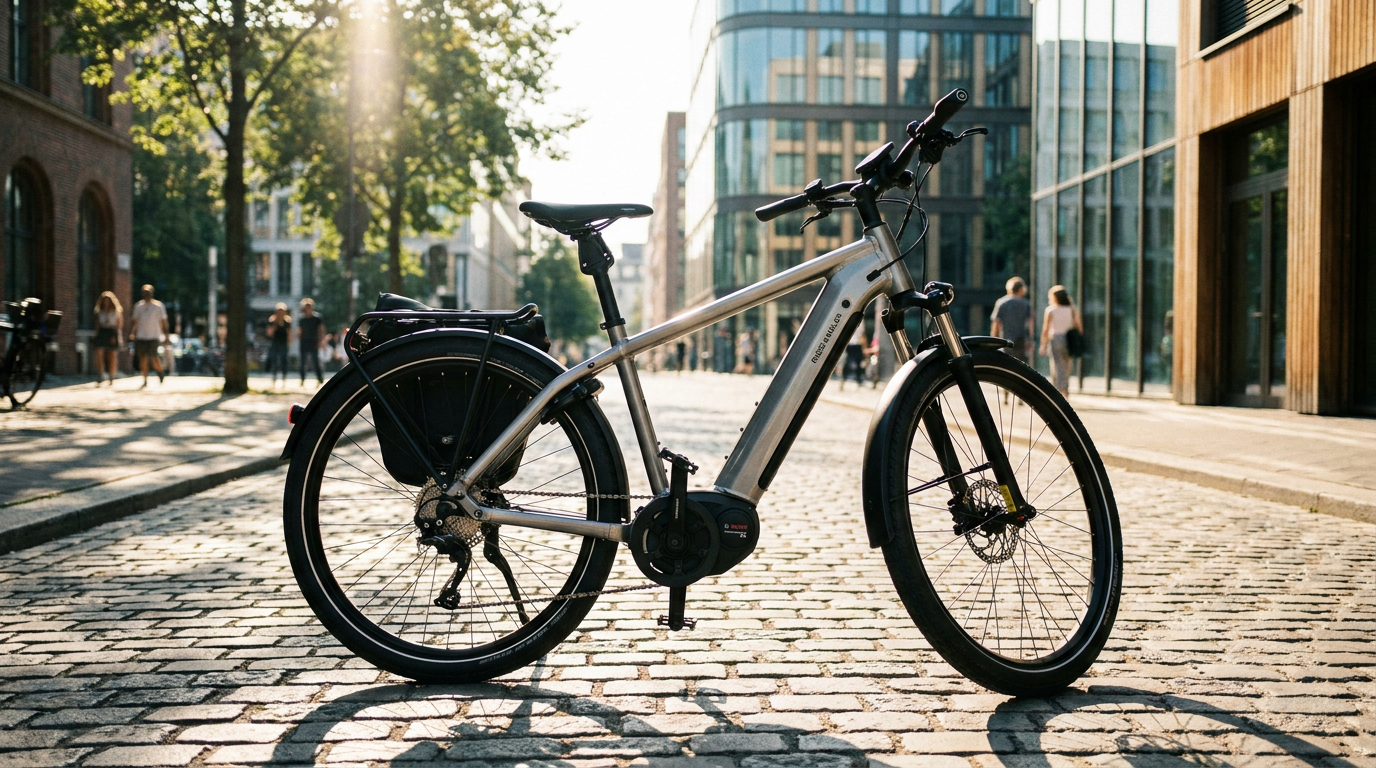
Mid-drive motors, positioned at the bike's bottom bracket between the pedals, represent the premium tier of e-bike propulsion. Because the motor drives the chain directly, it works in tandem with the bike's gears. This allows the motor to operate efficiently at high RPMs even when the bike is moving slowly up a steep incline. The result is a highly capable hill-climber that feels remarkably balanced, as the heaviest component is positioned low and central on the frame. Mid-drive systems from brands like Bosch and Shimano offer a deeply natural riding feel, amplifying the rider's effort rather than overriding it, though this sophisticated engineering comes with a noticeably higher price tag.[3][5]

Mid-drive motors, positioned at the bike's bottom bracket between the pedals, represent the premium tier of e-bike propulsion.
When comparing motor power, buyers are often bombarded with wattage numbers, but experts warn that watts only tell half the story. A motor's wattage indicates its raw electrical consumption, with 250 to 750 watts being the standard range. However, torque—measured in Newton-meters (Nm)—is the metric that actually dictates how the bike feels off the line. Torque is the twisting force that pushes you up a hill and gets a heavy cargo bike moving. A 250-watt mid-drive motor with 85Nm of torque will easily outperform a 750-watt hub motor with 50Nm of torque on a steep climb. Buyers living in hilly areas should prioritize high torque ratings over massive wattage numbers.[4][6]
How that power is delivered to the wheels is governed by the bike's sensors, an area that has seen massive upgrades in 2026. Older or cheaper e-bikes rely on cadence sensors, which act like a simple on/off switch. Once the pedals start turning, the motor kicks in at a predetermined speed, which can feel jerky and unnatural. The industry is rapidly shifting toward torque sensors, which measure exactly how hard the rider is pushing on the pedals and deliver a proportionate amount of electrical assist. This creates a buttery-smooth, intuitive ride. Remarkably, torque sensors are now becoming standard equipment even on sub-$1,000 models, representing a massive leap in accessible ride quality.[3][4]
The motor is useless without a reliable power source, making the battery the most critical and expensive component on the bike. Instead of looking at volts, buyers should focus on Watt-hours (Wh), which represents the total volume of energy the battery holds—essentially the size of the gas tank. A standard commuter bike typically features a 400 to 500 Wh battery, which reliably delivers 20 to 40 miles of real-world range depending on the assist level. For cargo bikes or long-distance touring, buyers should look for 600 to 750 Wh batteries, or even dual-battery setups. Manufacturer range claims are notoriously optimistic, so experts advise assuming you will get about 60 to 75 percent of the advertised distance in normal riding conditions.[3][7]

Battery safety has also taken center stage in 2026, driven by rising awareness of the fire risks associated with cheap, uncertified lithium-ion cells. Reputable manufacturers and major retailers now strictly adhere to UL 2849 certification, a rigorous safety standard that tests the battery, motor, and charger as a complete electrical system. Buyers are strongly cautioned against purchasing ultra-cheap, unbranded e-bikes from overseas marketplaces, as these often bypass critical safety testing. Investing in a bike with a certified battery from a known manufacturer like Samsung, LG, or Bosch is non-negotiable for ensuring the safety of the rider and their home.[7]
With the technical foundations understood, buyers can focus on the specific style of bike that fits their life. Everyday commuter bikes, like the Aventon Level series, are designed for pure utility. They come fully equipped with integrated front and rear lights, full-coverage fenders to block rain and mud, and sturdy rear racks for carrying panniers or a laptop bag. These bikes prioritize an upright, comfortable riding posture that keeps the rider's head up to scan for traffic. They are the workhorses of the e-bike world, built to reliably transport riders from point A to point B without requiring them to arrive sweaty or exhausted.[1][4]
For those with limited storage space, folding e-bikes have become an engineering marvel. Models like the Lectric XP4 dominate this category, proving that portability does not require sacrificing power. These bikes feature hinges in the center of the frame and on the steering column, allowing them to collapse into a cube that easily fits in the trunk of a sedan, under an office desk, or inside a cramped apartment. Despite their small 20-inch wheels, modern folding e-bikes often feature robust 750-watt motors and hydraulic disc brakes, making them highly capable urban explorers that solve the 'last mile' commute problem with ease.[2][3][4]

On the opposite end of the size spectrum are cargo e-bikes, which are rapidly replacing second cars for many suburban families. Long-tail cargo bikes feature an extended rear frame designed to carry two children in child seats or massive loads of groceries. Brands like Tern and Rad Power Bikes have refined these heavy-duty haulers with low centers of gravity, making them surprisingly stable even when fully loaded. They feature robust dual kickstands for safe loading and unloading, and often include modular accessory systems. While they are heavy and require dedicated parking space, their ability to handle the school run and the weekly supermarket trip makes them an unparalleled utility vehicle.[1][5]

Finally, the purchasing journey should always culminate in a physical test ride whenever possible. Spec sheets and online reviews cannot convey how a bike's geometry fits a specific rider's body, or whether the motor's power delivery feels natural or jarring. A short ride around the block will instantly reveal if the saddle is comfortable, if the brakes are responsive, and if the bike feels stable at speed. Furthermore, buying from a local bike shop ensures access to certified mechanics who can perform firmware updates and service proprietary electronics—a crucial safety net that direct-to-consumer online brands often struggle to provide.[6][7]
How we got here
2020
The global pandemic triggers a massive surge in e-bike adoption as commuters seek open-air alternatives to public transit.
2023
Major retailers and fire departments begin strictly enforcing UL safety certifications for e-bike batteries following a rise in lithium-ion fires.
2025
Direct-to-consumer brands heavily disrupt the market, driving down prices and forcing legacy bicycle brands to innovate.
2026
Premium components like torque sensors and hydraulic disc brakes become the baseline standard for entry-level e-bikes under $1,000.
Viewpoints in depth
Urban Commuters
Prioritize utility, speed, and replacing car trips with fully equipped Class 3 models.
For the urban commuter, an e-bike is not a recreational toy; it is a primary mode of transportation meant to replace a car or public transit. This camp heavily favors Class 3 e-bikes capable of reaching 28 mph, arguing that the extra speed is a crucial safety feature that allows cyclists to take the lane and keep pace with city traffic rather than being squeezed to the margins. They prioritize integrated utility—fenders to keep work clothes clean, built-in lighting powered by the main battery, and robust rear racks for carrying laptops and gym bags. For these riders, reliability and low maintenance are paramount, often leading them to favor internal gear hubs and belt drives over traditional chains.
Recreational & Fitness Riders
Value the natural cycling feel of mid-drive motors and torque sensors to enhance their workouts.
Recreational riders and fitness enthusiasts view e-bikes as a way to extend their range and tackle steeper terrain without entirely eliminating the physical effort of cycling. This group strongly prefers Class 1 e-bikes and mid-drive motors paired with highly sensitive torque sensors. They argue that the motor should feel like a natural extension of the rider's own legs, amplifying their effort rather than taking over completely. For this camp, the heavy, throttle-equipped hub-motor bikes feel too much like mopeds. They are willing to pay a premium for lightweight frames and sophisticated Bosch or Shimano motor systems that preserve the authentic, dynamic feel of a traditional bicycle.
Cargo & Family Haulers
Focus on heavy payload capacities, dual-battery setups, and stability for safely transporting children and goods.
The cargo and family hauling camp represents one of the fastest-growing segments in the e-bike world. For these riders, the e-bike is a direct replacement for the family minivan. They prioritize long-tail frames with low centers of gravity, ensuring the bike remains stable even when loaded with two squirming toddlers and a week's worth of groceries. Because they are moving significantly more weight, this group demands high-torque motors and massive battery capacities, often opting for dual-battery setups to eliminate range anxiety. Safety features like hydraulic disc brakes, robust dual kickstands, and modular passenger seating are non-negotiable requirements for this demographic.
Budget-Conscious Buyers
Seek maximum value, portability, and reliable hub motors in the sub-$1,000 market segment.
Budget-conscious buyers are driving the massive volume in the entry-level e-bike market. They argue that the barrier to entry for micro-mobility should be as low as possible, and they celebrate the fact that highly capable e-bikes can now be purchased for under $1,000. This camp is perfectly content with the slightly less refined feel of a hub motor, provided it delivers reliable power and decent range. They heavily favor direct-to-consumer brands and folding models, which offer the added value of easy storage in small apartments or car trunks without requiring the purchase of an expensive exterior bike rack.
What we don't know
- How local and state regulations will adapt to the increasing presence of heavy, high-speed Class 3 e-bikes on shared pedestrian paths.
- Whether the industry can establish a robust, standardized recycling infrastructure for lithium-ion e-bike batteries as early models reach their end of life.
- How the implementation of new tariffs on imported components might affect the current trend of falling e-bike prices.
Key terms
- Watt-hour (Wh)
- A measurement of battery capacity indicating how much energy the battery can store; higher Watt-hours generally translate to a longer riding range.
- Torque (Nm)
- Measured in Newton-meters, this is the rotational force produced by the motor, which is essential for quick acceleration and climbing steep hills.
- Mid-drive motor
- An electric motor positioned at the bike's pedals that leverages the bike's gears for highly efficient hill climbing and a natural riding feel.
- Hub motor
- An electric motor housed directly inside the center of the front or rear wheel, common on budget and commuter e-bikes.
- Torque sensor
- A sensor that measures exactly how hard the rider is pedaling and adjusts the motor's power output dynamically, creating a smooth and intuitive ride.
- Cadence sensor
- A basic sensor that detects whether the pedals are turning and delivers a fixed amount of motor power, often resulting in a slightly jerky, on/off feeling.
Frequently asked
How much should I spend on a reliable e-bike?
In 2026, you can find high-quality entry-level e-bikes starting around $999. Mid-range commuter bikes typically cost between $1,500 and $2,000, while premium mid-drive models can exceed $3,000.
Do I need a license or insurance to ride an e-bike?
In most regions, Class 1, 2, and 3 e-bikes do not require a license, registration, or insurance, as they are legally treated as bicycles. However, local laws vary, especially regarding age limits and helmet requirements for Class 3 bikes.
How long do e-bike batteries last before needing replacement?
A quality lithium-ion e-bike battery typically lasts between 3 to 5 years, or roughly 500 to 1,000 full charge cycles, before its capacity significantly degrades.
Can I ride an electric bike in the rain?
Yes, most modern e-bikes are highly water-resistant and designed to withstand rain and puddles. However, they are not waterproof, so you should never submerge the motor or battery in deep water or use a high-pressure hose to clean them.
Sources
Source coverage
8 outlets
4 viewpoints surfaced







[1]BicyclingUrban Commuters
Buying an E-Bike This Summer? 15 Editor-Tested Picks Worth the Money
Read on Bicycling →[2]Electric Bike ReportCargo & Family Haulers
Our picks for the Best Electric Bikes of 2026
Read on Electric Bike Report →[3]Rider GuideBudget-Conscious Buyers
The best electric bike for most riders in 2026
Read on Rider Guide →[4]OutdoorGearLabUrban Commuters
Best Electric Bikes of 2026
Read on OutdoorGearLab →[5]Cycling WeeklyRecreational & Fitness Riders
Our experts top-rated & best electric bikes 2026
Read on Cycling Weekly →[6]REI Co-opRecreational & Fitness Riders
How to Choose an E-Bike
Read on REI Co-op →[7]BikelineBudget-Conscious Buyers
E-bike buying guide for beginners
Read on Bikeline →[8]VelotricCargo & Family Haulers
How to choose an e-bike: What to consider
Read on Velotric →


Every angle. Every day.
Get shopping stories with full source coverage and perspective breakdowns delivered to your inbox.