
How the US-Iran Peace Deal and Hormuz Reopening Are Reshaping the Global Economy
The United States and Iran have reached an interim peace agreement to reopen the Strait of Hormuz, ending a blockade that paralyzed global energy markets. The deal has triggered a sharp drop in oil prices, a slide in Treasury yields, and a broadening stock market rally as inflation fears subside.
By Factlen Editorial Team
- Macroeconomic Strategists
- Focus on the broader financial implications, arguing that the deal will stabilize central bank policy and broaden the equity rally beyond tech.
- Energy Markets & Shippers
- Prioritize the physical resumption of global trade, tracking the clearing of the tanker backlog and the stabilization of crude oil supplies.
- Geopolitical Analysts
- Emphasize the fragility of the interim agreement and the long-term strategic vulnerabilities exposed by the strait's closure.
What's not represented
- · Consumer Advocates
- · Alternative Energy Investors
Why this matters
The reopening of the Strait of Hormuz immediately lowers global oil prices and eases inflation fears, which directly impacts everything from the cost of gasoline to the interest rates on consumer mortgages. By removing the threat of a prolonged energy crisis, the agreement allows central banks to halt rate hikes and gives the broader economy room to grow.
Key points
- The U.S. and Iran have reached an interim peace agreement to reopen the Strait of Hormuz.
- Crude oil futures and U.S. Treasury yields dropped sharply following the announcement.
- Analysts expect central banks to hold interest rates steady as energy-driven inflation fears subside.
- The stock market rally is broadening beyond AI into cyclical and European equities.
- Clearing the backlog of stranded ships and normalizing supply chains will likely take months.
The global economy is bracing for a massive recalibration following the announcement of an interim peace agreement between the United States and Iran. The deal, which effectively ends the recent military conflict, carries a singular, market-moving consequence: the reopening of the Strait of Hormuz. For months, the closure of this vital maritime artery has cast a long shadow over global trade, driving up energy costs and forcing central banks into a defensive posture. Now, the sudden prospect of normalized shipping lanes is sending shockwaves through financial markets, triggering a sharp drop in crude oil futures and prompting investors to rapidly reassess their macroeconomic outlooks.[4]
The immediate reaction across trading desks was swift and decisive. Crude oil futures plummeted shortly after the announcement, reflecting the market's collective exhale as the threat of a prolonged energy blockade evaporated. During the height of the conflict, the paralysis in the Persian Gulf had essentially choked off one of the world's most critical energy supplies, creating a bottleneck that threatened to derail global economic growth. With the signing of the agreement, the physical barriers to trade are being lifted, signaling an end to the severe restrictions that had defined the spring of 2026.[4][10]
To understand the magnitude of this market reaction, one must look at the geography and economics of the Strait of Hormuz itself. Situated between Oman and Iran, the strait is a narrow channel that connects the oil-rich Persian Gulf with the Gulf of Oman and the broader Arabian Sea. At its narrowest point, the navigable shipping lanes are just a few miles wide, making it a highly vulnerable chokepoint. Yet, despite its geographic constraints, it serves as the primary artery for the world's fossil fuel exports, with virtually no viable alternative routes capable of handling its immense daily volume.[8]
The sheer scale of the energy flowing through this narrow corridor is staggering. Before the conflict, the Strait of Hormuz facilitated the transit of approximately 20 million barrels of crude oil and condensate every single day. This volume represents roughly 20 percent of total global petroleum liquids consumption and a quarter of all seaborne traded oil. Furthermore, the strait is equally critical for natural gas, handling around one-fifth of the global liquefied natural gas (LNG) trade. When a conduit responsible for a fifth of the world's energy shuts down, the inflationary pressures are immediate and severe.[8]

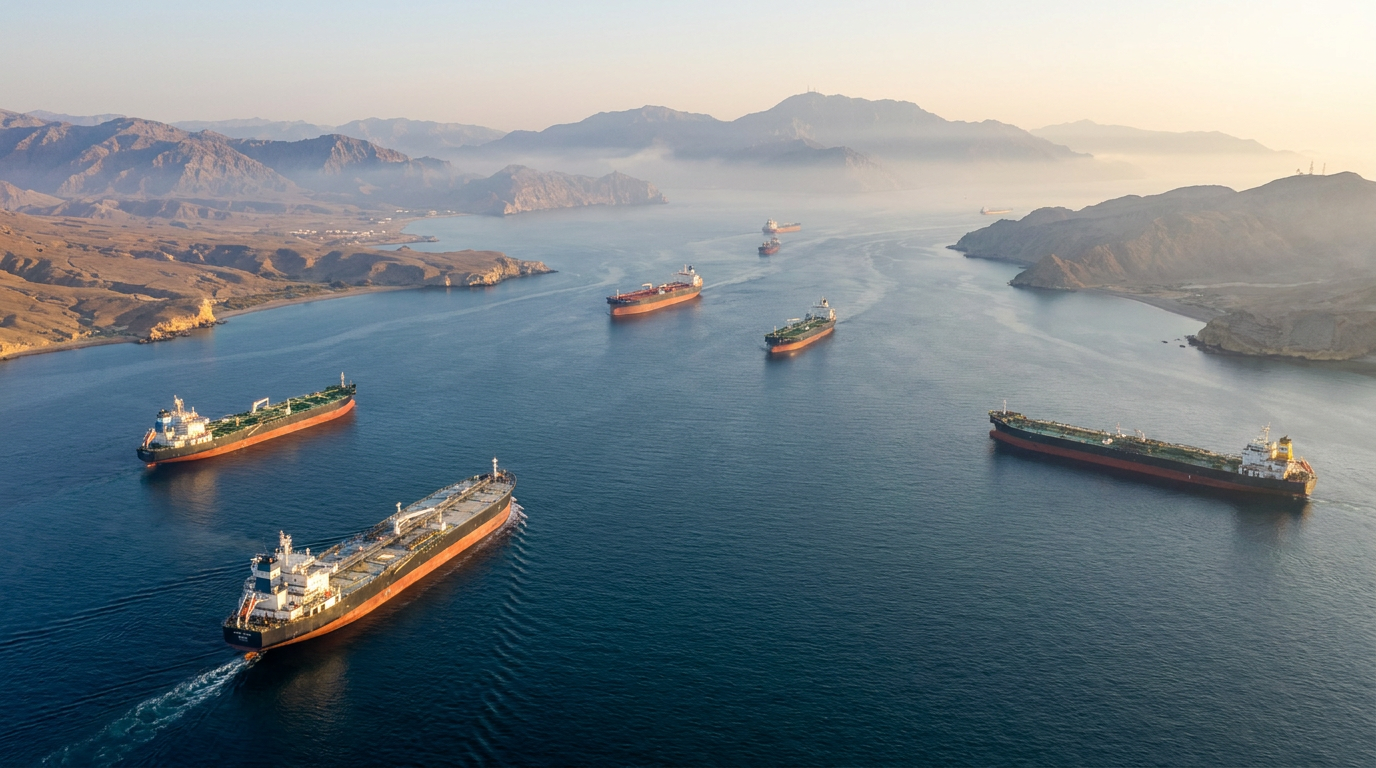
The impact of the 2026 war on this vital artery was unprecedented in modern maritime history. As hostilities escalated, commercial shipping traffic through the strait plummeted by more than 95 percent. Hundreds of tankers and cargo vessels were left stranded in the Persian Gulf, unable to safely navigate the contested waters. This near-total blockade severed the primary supply lines for major economies across Asia and Europe, forcing nations to tap into emergency reserves and scramble for alternative, vastly more expensive energy sources.[9]
With the interim peace deal in place, the logistical machinery of global trade is roaring back to life. Industry analysts project that maritime traffic will soon return to pre-conflict levels, with an estimated 140 to 200 commercial ships and oil tankers expected to transit the strait daily. This resumption will free dozens of stranded vessels, allowing millions of barrels of oil to finally flow into the global market. The sudden influx of supply is the primary catalyst driving down energy prices and alleviating the acute crisis that had gripped the shipping industry.[10]
The ripple effects of this energy stabilization are already profoundly altering the bond market. As the threat of skyrocketing, oil-driven inflation subsides, investors are aggressively rethinking their expectations for central bank policy. This shift in sentiment triggered a significant slide in Treasury yields, as bond traders priced in a less aggressive stance from the Federal Reserve. The logic is straightforward: if energy prices remain contained, the central bank faces less pressure to maintain punishingly high interest rates to cool the broader economy.[2]
The ripple effects of this energy stabilization are already profoundly altering the bond market.
This dynamic was clearly visible in the benchmark metrics of U.S. government borrowing. Following the announcement of the peace deal, the yield on the 10-year U.S. Treasury note fell by over 4 basis points, settling at 4.441 percent. Because the 10-year yield underpins everything from corporate debt to consumer mortgages, this slide represents a meaningful loosening of financial conditions. For an economy that had been bracing for a prolonged period of tight credit, the reopening of the strait acts as an unexpected pressure release valve.[2]

Financial institutions are rapidly updating their macroeconomic forecasts to reflect this new reality. Strategists at JPMorgan Asset Management have indicated that the U.S.-Iran agreement will likely keep central banks on hold for the foreseeable future. By removing the unpredictable variable of a Middle Eastern energy shock, policymakers now have the breathing room to assess underlying economic data without the distorting effect of artificially inflated oil prices.[5]
This stabilization in monetary policy expectations is serving as a powerful catalyst for equity markets, but the nature of the rally is fundamentally changing. For much of the year, market gains were heavily concentrated in the technology sector, driven by a frenzy around artificial intelligence and aerospace ventures. However, with the geopolitical overhang removed and interest rates stabilizing, capital is beginning to flow out of those crowded trades and into broader segments of the economy.[1][5]
The spotlight is decisively shifting away from the narrow tech dominance that characterized the early months of 2026. Morgan Stanley strategists note that the U.S. stock market rally is poised for a significant broadening. Investors are rotating into cyclical, economically sensitive industries—such as manufacturing, industrials, and consumer goods—that had previously lagged due to fears of an energy-induced recession. These sectors are uniquely positioned to benefit from a normalized supply chain and stable borrowing costs.[1][6]
This broadening phenomenon is not restricted to the United States. The resolution of the Hormuz blockade is providing a much-needed tailwind for international equities, particularly in regions highly dependent on imported energy. Strategists at UBS Group AG argue that the stumble in AI-centric tech stocks is actually the key to unlocking a longer, more sustainable rally in European markets. As capital expenditures diversify away from pure tech investments, European consumer cyclicals and industrial firms are expected to see significant inflows.[7]

The macroeconomic relief is also visible in real-time global trade data. Nations that rely heavily on the Strait of Hormuz for their energy imports are already seeing their economic outlooks brighten. India, for example, reported a narrowing of its trade deficit in May, a trend that is expected to accelerate as the interim deal lifts the months-long shipping disruptions. For emerging markets, the return of reliable, affordable energy imports is a critical component of maintaining domestic growth and currency stability.[11]
Despite the overwhelming market optimism, geopolitical and logistical experts caution that the transition back to normalcy will not be instantaneous. The sheer volume of delayed cargo and the complex choreography required to safely move hundreds of massive vessels through a narrow channel present significant operational challenges. Port authorities and shipping conglomerates must now untangle a massive logistical knot, a process that will require careful coordination to avoid further bottlenecks.[3]
Analysts warn that the secondary impacts of the war will continue to reverberate through the global economy for months to come. Supply chains that were rerouted or paused cannot be instantly reset, and the financial toll of the disruption has already been absorbed into the balance sheets of countless corporations. While the flow of oil is resuming, the broader industrial ecosystem will require time to fully digest the backlog and return to optimal efficiency.[3][9]

Furthermore, the geopolitical risk premium has not been entirely erased from the market. The current pact is explicitly an 'interim' agreement, designed to halt hostilities and reopen trade while diplomats work toward a permanent resolution. Until a comprehensive, long-term treaty is signed, energy markets will likely retain a baseline level of volatility, reflecting the underlying fragility of the region's security architecture.[3]
Ultimately, the 2026 blockade and subsequent reopening of the Strait of Hormuz serve as a stark reminder of the global economy's structural vulnerabilities. The fact that the trajectory of global inflation, the policy decisions of the Federal Reserve, and the valuation of multinational equities can all hinge on a 21-mile-wide waterway highlights the deep interconnectedness of modern trade. As ships once again navigate the strait, the financial world is breathing a sigh of relief, but the lessons of the bottleneck will undoubtedly reshape supply chain strategies for years to come.[2][8]
How we got here
Early 2026
Conflict escalates, leading to the effective closure of the Strait of Hormuz and a 95% drop in shipping traffic.
March - May 2026
Global energy markets experience a severe supply shock, driving up inflation fears and stalling cyclical equities.
June 15, 2026
The U.S. and Iran announce an interim peace agreement, paving the way for the strait's reopening.
Late June 2026
Dozens of stranded tankers and commercial ships are expected to begin clearing the backlog in the Persian Gulf.
Viewpoints in depth
Macroeconomic Strategists
Analysts focused on central bank policy and equity rotations.
For macroeconomic strategists, the reopening of the Strait of Hormuz is the catalyst needed to break the market's heavy reliance on artificial intelligence and tech stocks. Institutions like Morgan Stanley and UBS argue that the removal of the energy shock allows capital to flow safely into cyclical, economically sensitive sectors that had been suppressed by inflation fears. Furthermore, they believe the stabilization of oil prices gives central banks, including the Federal Reserve, the justification to pause interest rate hikes, creating a more favorable borrowing environment for global businesses.
Energy Markets & Shippers
Commodity trackers and logistics experts focused on physical supply chains.
Energy analysts and maritime trackers view the interim deal through the lens of physical supply and logistical bottlenecks. Organizations tracking the strait note that the 95 percent drop in traffic created an unprecedented backlog of commercial vessels. Their primary concern is the operational challenge of safely moving 140 to 200 ships daily through the narrow corridor to clear the stranded cargo. While they welcome the drop in crude futures, they caution that the physical supply chain will take months to fully normalize after such a severe disruption.
Geopolitical Analysts
Foreign policy experts focused on the long-term stability of the region.
Geopolitical observers maintain a cautious stance, emphasizing that the current agreement is merely an 'interim' measure rather than a permanent peace treaty. They argue that the fundamental security architecture of the Persian Gulf remains fragile, and the structural vulnerability of relying on a 21-mile-wide chokepoint for 20 percent of global oil has been starkly exposed. From this perspective, the immediate market relief masks the ongoing need for nations to permanently diversify their energy supply chains and reduce their reliance on the Strait of Hormuz.
What we don't know
- Exactly how long it will take to clear the massive backlog of stranded cargo ships in the Persian Gulf.
- Whether the interim peace agreement will hold long enough to be converted into a permanent treaty.
- How quickly the drop in wholesale crude futures will translate to lower prices for consumers at the gas pump.
Key terms
- Strait of Hormuz
- A critical maritime chokepoint between the Persian Gulf and the Gulf of Oman, essential for global energy transport.
- Basis Point
- A unit of measure used in finance to describe the percentage change in the value or rate of a financial instrument, equal to one-hundredth of one percent (0.01%).
- Cyclical Stocks
- Shares of companies whose underlying business performance is heavily tied to the economic cycle, typically outperforming when the economy is expanding.
- Capital Expenditures (CapEx)
- Funds used by a company to acquire, upgrade, and maintain physical assets such as property, plants, buildings, technology, or equipment.
- Liquefied Natural Gas (LNG)
- Natural gas that has been cooled to a liquid state for easier and safer non-pressurized storage or transport.
Frequently asked
What is the Strait of Hormuz?
It is a narrow waterway between Iran and Oman that serves as the only sea passage from the Persian Gulf to the open ocean, handling about 20% of global oil trade.
Why did the stock market rally broaden?
With the energy shock subsiding, investors are rotating capital out of tech and AI into economically sensitive and cyclical industries that had lagged during the war.
How will this affect interest rates?
Easing oil prices reduce inflationary pressures, leading analysts to predict that central banks, including the Federal Reserve, will keep interest rates on hold rather than hiking them.
How long will it take for shipping to normalize?
While the strait is reopening, experts warn that clearing the backlog of stranded vessels and restoring full supply chains could take several months.
Sources
Source coverage
11 outlets
3 viewpoints surfaced







[1]BloombergMacroeconomic Strategists
Iran, Fed Take Market Spotlight Away From SpaceX Frenzy
Read on Bloomberg →[2]CNBCMacroeconomic Strategists
Treasury yields slide as Iran deal drives rethink on Fed interest rate hikes
Read on CNBC →[3]BBCGeopolitical Analysts
The US and Iran could have a deal. How quickly will things go back to normal?
Read on BBC →[4]NPREnergy Markets & Shippers
Crude oil futures drop after Trump promises an Iran deal will be signed Friday
Read on NPR →JPMorgan Sees Central Banks on Hold on US-Iran Agreement
Read on Bloomberg →Morgan Stanley’s Wilson Sees US Stock Market Rally Broadening
Read on Bloomberg →UBS’s Baweja Says AI Stumble Key to Longer European Stock Rally
Read on Bloomberg →[8]U.S. Energy Information AdministrationEnergy Markets & Shippers
World Oil Transit Chokepoints
Read on U.S. Energy Information Administration →[9]CSISEnergy Markets & Shippers
The Strait of Hormuz in 8 Charts
Read on CSIS →[10]MaaalEnergy Markets & Shippers
Tomorrow... 140 ships will be freed and 20 million barrels of oil will flow into the global market if the Strait of Hormuz reopens
Read on Maaal →India Trade Gap Shrinks as US-Iran Hormuz Deal Lifts Outlook
Read on Bloomberg →
Every angle. Every day.
Get business stories with full source coverage and perspective breakdowns delivered to your inbox.