
How Solid-State Batteries Work: The Next Generation of Energy Storage
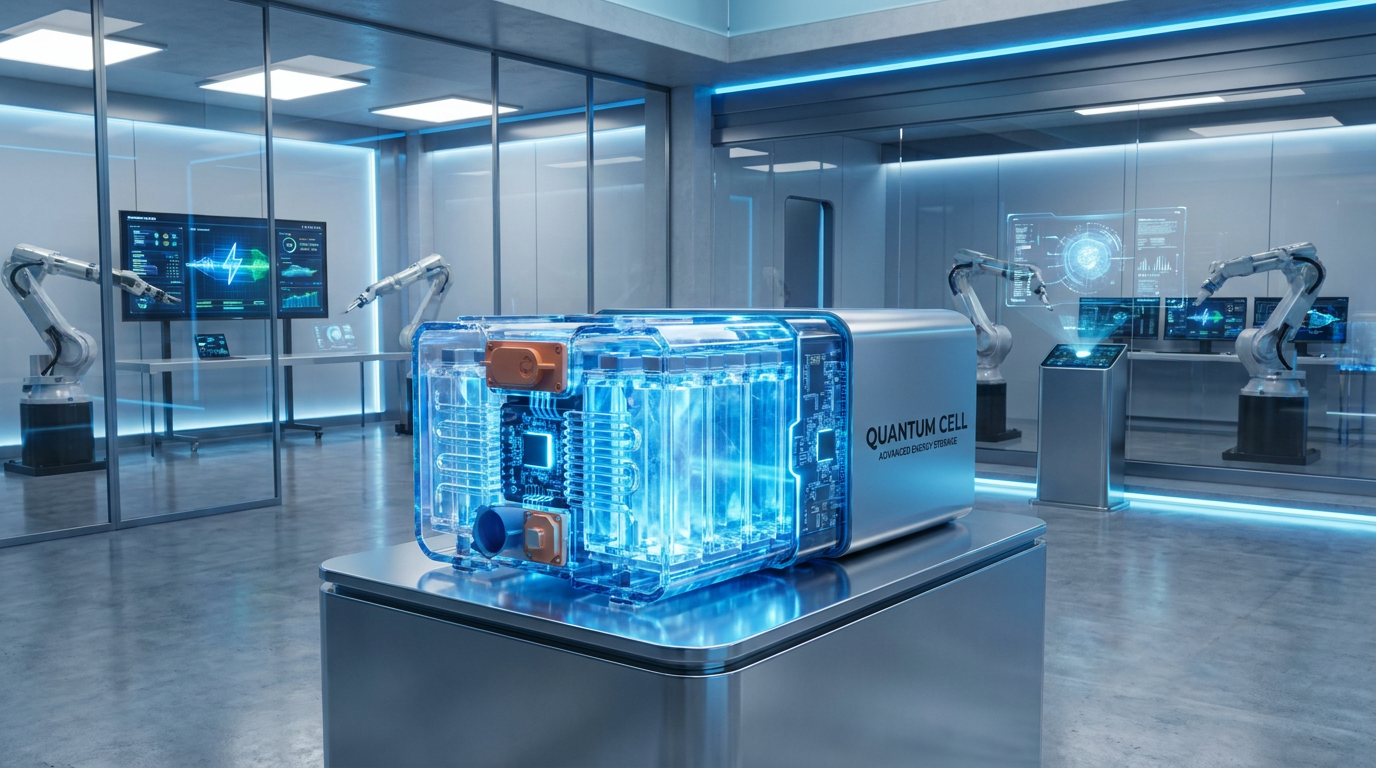
By replacing flammable liquids with advanced solid materials, solid-state batteries promise to double EV range and eliminate fire risks, though mass manufacturing challenges remain.
By Factlen Editorial Team
- Incumbent Manufacturers
- Prioritize manufacturing scale, yield, and phased hybrid rollouts.
- Next-Gen Innovators
- Focus on immediate breakthroughs and premium market disruption.
- Industry Analysts
- Track the economic transition, standardization, and market forecasting.
- Reference & Synthesis
- Provide foundational scientific context and neutral overview.
What's not represented
- · Raw Material Miners
- · Consumer Advocates
Why this matters
Solid-state technology is the key to unlocking electric vehicles that can drive over 600 miles on a single charge and recharge in ten minutes. Understanding this shift is crucial for anyone planning to buy an EV or invest in clean energy over the next decade.
Key points
- Solid-state batteries replace flammable liquid electrolytes with solid ceramics or polymers.
- The solid barrier prevents dendrite growth, allowing for pure lithium metal anodes.
- This architecture can double energy density to 500 Wh/kg and drastically cut charging times.
- Manufacturing requires extreme pressure to ensure perfect contact between solid materials.
- The industry is currently deploying hybrid 'semi-solid' batteries as a stepping stone.
- True mass-market commercialization is projected for the early 2030s.
The electric vehicle revolution has hit a chemical ceiling. While conventional lithium-ion batteries have successfully powered everything from smartphones to the current generation of passenger EVs, their fundamental architecture is nearing its theoretical limits. To push driving ranges past 600 miles, cut charging times down to ten minutes, and completely eliminate fire risks, the automotive industry needs a fundamental leap in chemistry.[1]
That leap is the solid-state battery, a technology widely considered the "holy grail" of modern energy storage. By replacing the liquid components of traditional batteries with advanced solid materials, solid-state cells promise to double energy density and fundamentally rewrite the safety profile of electric mobility.[1][3]
To understand why solid-state technology is so transformative, it helps to look at how current lithium-ion cells operate. In a standard battery, lithium ions travel back and forth between a positive cathode and a negative anode through a liquid electrolyte. This liquid is highly effective at conducting ions, but it is also inherently flammable, heavy, and susceptible to chemical degradation over time.[4][5]
Furthermore, traditional batteries require a bulky graphite anode to safely house the lithium ions during the charging process. If engineers try to replace that graphite with pure lithium metal—a move that would drastically increase the battery's capacity—the liquid electrolyte fails to prevent the formation of microscopic hazards known as dendrites.[4]
Dendrites are microscopic, needle-like structures of lithium metal that grow from the anode during rapid charging. In a liquid electrolyte, these metallic spikes can easily pierce the thin plastic separator between the battery's positive and negative sides. When that happens, it causes an internal short circuit, potentially triggering a catastrophic thermal runaway fire.[4]

Solid-state batteries solve this critical flaw by replacing the flammable liquid with a dense, solid electrolyte—typically engineered from ceramics, sulfides, or advanced polymers. This solid layer acts as both the conductor for the lithium ions and an impenetrable physical barrier that stops dendrite growth in its tracks.[3][4]
Because the solid electrolyte is so mechanically robust, battery designers can finally safely use a pure lithium metal anode. Removing the heavy, dead weight of the graphite anode allows the battery to store significantly more energy in the exact same physical footprint. According to recent industry analyses, this architectural shift enables energy densities of 400 to 500 watt-hours per kilogram, roughly double the capacity of today's best lithium-ion cells.[3][4]

Because the solid electrolyte is so mechanically robust, battery designers can finally safely use a pure lithium metal anode.
The safety benefits are equally profound. Without a volatile liquid solvent sloshing around inside the cell, the primary fuel source for battery fires is entirely eliminated. Solid-state cells can operate safely at much higher temperatures, which reduces the need for heavy, complex liquid cooling systems in electric vehicles, further dropping the overall weight of the battery pack.[3][5]
Charging speeds also see a dramatic improvement. Because the solid architecture is less prone to heat degradation and lithium plating at high electrical currents, these batteries can absorb power much faster. Some early production models, such as those introduced for premium electric motorcycles in early 2026, boast the ability to add up to 60 kilometers of range per minute of charging.[6]
Despite these massive advantages, manufacturing true all-solid-state batteries at a global scale remains one of the hardest engineering challenges of the decade. The primary bottleneck lies at the microscopic level: the solid-solid interface.[2][3]
In a traditional battery, the liquid electrolyte easily coats every microscopic crevice of the electrodes, ensuring perfect electrical contact. In a solid-state battery, pressing two solid materials together often leaves microscopic gaps. These tiny imperfections create high internal electrical resistance, which severely degrades the battery's performance and lifespan.[2]

To force the materials together flawlessly, engineers currently have to apply immense physical pressure. In recent interviews, industry leaders noted that some solid-state prototypes require warm isostatic pressing at 6,000 atmospheres just to bind the components. Scaling this extreme manufacturing environment to produce millions of battery packs a year is economically and logistically daunting.[2]
As a result, the transition to solid-state is happening in distinct phases. Rather than jumping straight to pure solid-state, many manufacturers are deploying "semi-solid" or hybrid batteries. These designs use a solid electrolyte but retain a small amount of liquid or gel to maintain good contact at the interfaces, offering a middle ground of improved safety and performance while utilizing existing factory equipment.[3]
Regulatory and standardization frameworks are now rapidly catching up to the technology. In mid-2026, China implemented its first formal national standard for automotive solid-state batteries, establishing strict terminologies and classifications. This regulatory move signals that the technology is officially graduating from the laboratory phase into structured industrial commercialization.[7]

While niche applications like premium electric motorcycles, aerospace, and medical devices are already seeing early solid-state integration, the mass-market automotive tipping point is still on the horizon. Major battery manufacturers project that true, high-volume commercialization—where solid-state batteries power millions of affordable passenger EVs—will likely arrive in the early 2030s, fundamentally transforming the global energy landscape.[2][5]
How we got here
1991
Sony commercializes the first rechargeable lithium-ion battery, revolutionizing portable electronics.
2010s
Automakers adopt liquid lithium-ion technology to launch the modern era of electric vehicles.
Early 2020s
Billions of dollars are invested into solid-state startups aiming to solve the dendrite problem.
2025
Early semi-solid and hybrid battery packs begin testing in premium automotive fleets.
Mid-2026
China implements the first formal national standards for automotive solid-state batteries.
Early 2030s
Projected timeline for true all-solid-state batteries to reach mass-market automotive scale.
Viewpoints in depth
Incumbent Manufacturers
Focused on the practical realities of scaling production and maintaining reliable yields.
Incumbent battery giants emphasize that while the chemistry of solid-state is proven in the lab, mass manufacturing is a different beast entirely. They point to the extreme pressures and pristine clean-room conditions required to assemble solid-solid interfaces without microscopic defects. For these manufacturers, the immediate future lies in scaling 'semi-solid' hybrid batteries that can be produced using existing factory equipment, rather than waiting for pure solid-state perfection to hit the mass market.
Next-Gen Innovators
Startups and specialized engineering firms pushing for immediate, disruptive commercialization.
Challenger brands and specialized startups argue that the timeline for solid-state adoption can be aggressively accelerated. By targeting premium, high-margin sectors like electric motorcycles, aerospace, and luxury hypercars, these companies are bypassing the need for immediate mass-market scale. They believe that getting early-generation solid-state cells onto the road now will provide the real-world data necessary to solve the remaining manufacturing bottlenecks.
Industry Analysts
Forecasting the economic and regulatory transition of the global battery market.
Market analysts view solid-state not as a sudden flip of a switch, but as a phased decade-long transition. They highlight that the establishment of national standards—such as China's 2026 regulatory framework—is the true signal that a technology is maturing. Analysts project that while niche applications will dominate the late 2020s, the true economic impact will hit in the early 2030s when economies of scale finally bring the cost of solid-state cells below parity with traditional lithium-ion.
What we don't know
- Whether the extreme manufacturing pressures required can be engineered out of the process.
- How the shift to pure lithium metal anodes will impact global raw material supply chains.
- Exactly when solid-state EVs will reach price parity with traditional lithium-ion models.
Key terms
- Solid Electrolyte
- A dense, solid material (like ceramic or sulfide) that conducts ions between battery electrodes without the use of flammable liquids.
- Dendrites
- Microscopic, needle-like metallic growths that can pierce battery components and cause dangerous short circuits.
- Anode
- The negative electrode of a battery, which stores lithium ions during the charging process.
- Cathode
- The positive electrode of a battery, which receives lithium ions during discharge to provide power.
- Energy Density
- The amount of energy a battery can store relative to its weight, typically measured in watt-hours per kilogram (Wh/kg).
- Thermal Runaway
- An unstoppable chain reaction within a battery where excess heat causes a fire or explosion.
Frequently asked
Will solid-state batteries make electric vehicles cheaper?
Initially, they will be more expensive and limited to premium vehicles due to complex manufacturing. Over time, as production scales in the 2030s, they are expected to drive down overall vehicle costs.
Are solid-state batteries completely fireproof?
While they eliminate the highly flammable liquid electrolytes that cause most battery fires, no energy storage device is entirely without risk. However, their thermal stability is vastly superior to current technology.
Can I put a solid-state battery in my current EV?
No. Solid-state batteries require entirely different pack architectures, thermal management systems, and vehicle integration, meaning they will only be available in newly designed vehicles.
Sources
Source coverage
7 outlets
4 viewpoints surfaced







[1]Factlen Editorial TeamReference & Synthesis
Synthesis by Factlen editorial team
Read on Factlen Editorial Team →[2]Caijing MagazineIncumbent Manufacturers
CATL boss drops solid-state battery reality check: Years away from mass market
Read on Caijing Magazine →[3]Volta FoundationIndustry Analysts
Solid-State Batteries in 2026: Promise vs. Reality
Read on Volta Foundation →[4]WikipediaReference & Synthesis
Solid-state battery
Read on Wikipedia →[5]IDTechExIndustry Analysts
Solid-State Batteries 2026-2036: Technology, Forecasts, Players
Read on IDTechEx →[6]Donut LabNext-Gen Innovators
Donut Lab Introduces World's First All-Solid-State Battery Ready for Production Vehicles
Read on Donut Lab →[7]Standardization Administration of ChinaIndustry Analysts
Solid-State Batteries for Electric Vehicles: Part 1 Terminologies and Classification
Read on Standardization Administration of China →

Every angle. Every day.
Get guides stories with full source coverage and perspective breakdowns delivered to your inbox.