
How Solid-State Batteries Work and Why They Could Transform Electric Vehicles
By replacing flammable liquid electrolytes with rigid materials, solid-state batteries promise to double EV range, eliminate fire risks, and cut charging times to 15 minutes.
By Factlen Editorial Team
- Battery Chemists & Engineers
- Focus on the material science breakthroughs, dendrite suppression, and the fundamental shift from liquid to solid electrolytes.
- Automakers & Manufacturers
- Focused on scaling production, overcoming solid-solid interface challenges, and integrating the technology into consumer EVs.
- Energy Policy Advocates
- Emphasize the safety benefits, reduced fire risks, and the potential to accelerate the global transition away from fossil fuels.
What's not represented
- · Lithium Mining Industry
- · Traditional Oil & Gas Sector
Why this matters
Solid-state batteries promise to eliminate the three biggest hurdles to electric vehicle adoption: range anxiety, long charging times, and fire risks. By doubling energy density and slashing charge times to 15 minutes, this technology could make EVs the undeniable default for all consumers by the end of the decade.
Key points
- Solid-state batteries replace the flammable liquid electrolyte found in traditional lithium-ion cells with a rigid, solid material.
- The solid electrolyte suppresses the growth of metallic dendrites, allowing the safe use of highly efficient pure lithium metal anodes.
- This architecture can potentially double energy density, enabling electric vehicles to travel over 1,000 kilometers on a single charge.
- Thermal runaway risks are virtually eliminated, as the solid materials do not ignite until reaching significantly higher temperatures.
- Automakers project that solid-state packs will be capable of charging from 10% to 80% in just 10 to 15 minutes.
- The primary remaining challenge is manufacturing precision, specifically maintaining perfect contact between the solid layers as the battery expands and contracts.
The electric vehicle revolution has a fundamental physics problem. While EVs have successfully gone mainstream and transformed the automotive landscape, the traditional lithium-ion batteries powering them are rapidly approaching their theoretical limits. For years, chemical engineers have squeezed every possible drop of efficiency out of existing battery chemistries, optimizing the materials to hold slightly more power. However, the foundational architecture of the lithium-ion cell is now acting as a hard ceiling, preventing the industry from achieving its ultimate goals. Consumers are demanding vehicles that can travel further, charge faster, and operate with absolute safety, but the current liquid-based battery technology simply cannot stretch much further without compromising stability.[7]
The symptoms of this technological ceiling are familiar to almost anyone who has driven or considered buying an electric vehicle. Range anxiety remains a persistent psychological barrier for long road trips, as drivers constantly calculate the distance to the next charging station. When they do plug in, charging times still stretch into the better part of an hour, a stark contrast to the five-minute convenience of a traditional gas station. Furthermore, the rare but highly publicized risk of battery fires continues to generate headlines and consumer hesitation. Solving these three interconnected issues requires more than an incremental update; it requires a complete reimagining of how a battery stores and releases its energy.[7]
For decades, the automotive and energy industries have chased a "holy grail" solution that could theoretically solve all three of these problems simultaneously. In 2026, that long-awaited solution—the solid-state battery—is finally moving out of isolated laboratory experiments and onto early commercial production lines. Major automakers and specialized battery startups are racing to commercialize what is widely considered the most significant leap in energy storage since the invention of the lithium-ion cell in the early 1990s. The transition from liquid to solid components promises to fundamentally rewrite the rules of electric mobility, offering a glimpse into a future where EVs outperform combustion engines in every conceivable metric.[3][4]
To understand why solid-state batteries are considered such a transformative breakthrough, it is essential to first look inside the battery currently sitting in your smartphone, laptop, or electric vehicle. A conventional lithium-ion battery consists of three primary components: a positive electrode known as the cathode, a negative electrode known as the anode, and a liquid electrolyte that physically separates the two. This liquid acts as a conductive medium, allowing charged particles to travel back and forth between the electrodes, which is the fundamental process that stores and releases electrical energy.[1]

When you plug your device into a wall or your car into a charging station, lithium ions swim through this liquid electrolyte from the cathode to the anode, where they are stored until the energy is needed. When you unplug and begin using the device, the ions swim back across the liquid pool to the cathode, releasing the electricity that powers your motor or screen. The liquid electrolyte is highly effective at facilitating this rapid movement because fluids naturally conform to the shape of the electrodes, ensuring constant and efficient chemical contact at all times.[1]
However, that highly conductive liquid pool comes with a severe and inherent drawback: it is typically composed of highly flammable organic solvents. If the battery casing is punctured in a severe car crash, if the internal components are overcharged, or if the cell is exposed to extreme external heat, this liquid can easily ignite. Once one cell catches fire, the intense heat quickly spreads to neighboring cells, triggering a catastrophic and self-sustaining chain reaction known in the industry as thermal runaway. This is why lithium-ion battery fires are notoriously difficult for firefighters to extinguish.[1][3]
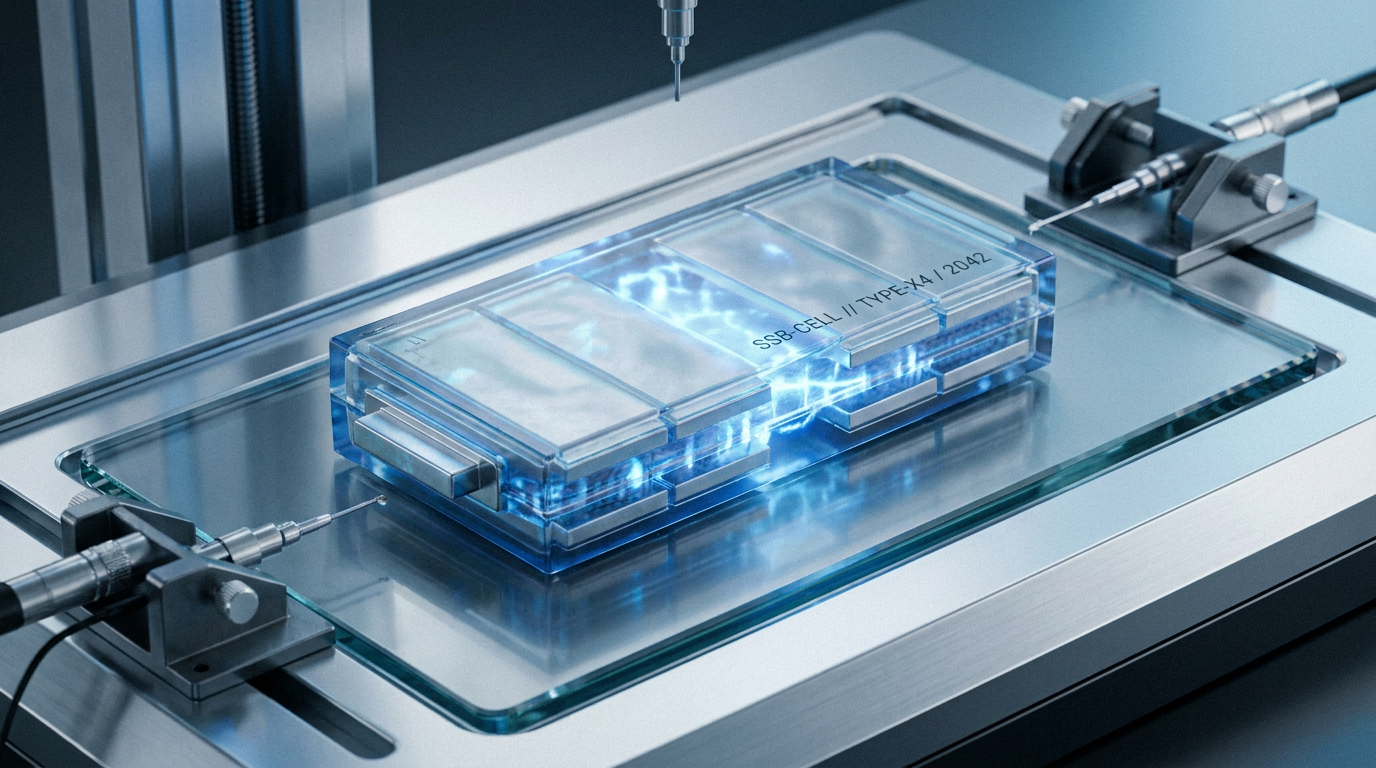
Solid-state batteries, exactly as their name implies, completely eliminate this vulnerability by replacing the flammable liquid pool with a rigid, solid material. Depending on the specific manufacturer and chemical design, this solid electrolyte is typically made from a specialized ceramic, a conductive glass, a sulfide-based compound, or an advanced polymer. By swapping a volatile fluid for a stable solid, engineers immediately remove the primary fuel source for battery fires, fundamentally altering the safety profile of the entire energy storage system.[1][6]
The safety improvements achieved by this simple material swap are staggering. Comparative testing demonstrates that thermal events in solid-state systems do not even begin to occur until internal temperatures reach approximately 247 degrees Celsius (476 degrees Fahrenheit). In stark contrast, conventional lithium-ion cells can begin to experience thermal runaway at temperatures as low as 90 degrees Celsius (194 degrees Fahrenheit). Furthermore, even if a solid-state battery is severely damaged or crushed, the lack of liquid means there is nothing to leak out and ignite, making the technology inherently safer for consumer transportation.[3]

But the elimination of fire risk is only the beginning of the solid-state story. The true, paradigm-shifting breakthrough of the solid electrolyte is what it allows battery engineers to do to the rest of the cell—specifically, how it enables them to completely redesign the anode. In a traditional lithium-ion battery, the anode is almost always made of graphite, a bulky, heavy, and relatively inefficient carbon material whose only real job is to act as a sponge, safely housing the lithium ions when the battery is fully charged.[6]
But the elimination of fire risk is only the beginning of the solid-state story.
For decades, battery chemists have desperately wanted to replace that heavy graphite sponge with a thin sheet of pure lithium metal. Lithium metal is the ultimate anode material because it is incredibly light and can store vastly more energy in a much smaller physical footprint. However, using a pure lithium metal anode in a traditional liquid battery has historically been a recipe for disaster, preventing its commercial use in rechargeable consumer electronics and electric vehicles.[6]
The catastrophic problem with lithium metal in a liquid environment is its tendency to form "dendrites." As the battery charges and discharges, the lithium metal does not deposit evenly; instead, it grows microscopic, needle-like metallic whiskers. In a liquid electrolyte, these sharp dendrites easily grow long enough to pierce the thin plastic separator dividing the two halves of the battery. Once a dendrite touches the cathode, it causes an immediate and violent short circuit, instantly destroying the battery and often triggering a fire.[2][6]
This is where the solid electrolyte proves its true worth. A solid ceramic or sulfide electrolyte acts as an impenetrable physical brick wall inside the battery cell. It is dense and rigid enough to physically suppress the growth of these metallic whiskers, stopping dendrites in their tracks before they can cause any damage. By solving the dendrite problem, the solid electrolyte finally unlocks the safe, long-term use of pure lithium metal anodes, unleashing a massive leap in overall battery performance.[2][6]
The immediate result of utilizing a lithium metal anode is a massive increase in energy density—the critical metric that measures exactly how much power a battery can hold relative to its physical weight. Today's absolute best, state-of-the-art lithium-ion batteries max out at an energy density of roughly 200 to 300 watt-hours per kilogram (Wh/kg). This is the hard physical ceiling that currently limits the range of modern electric vehicles to around 300 or 400 miles before requiring a massive, impractically heavy battery pack.[3]
First-generation commercial solid-state batteries are currently targeting an energy density of 400 to 500 Wh/kg, effectively doubling the capacity of the current market leaders. In practical, real-world terms, this means an electric vehicle equipped with a solid-state pack could easily travel over 1,000 kilometers (roughly 620 miles) on a single charge. Alternatively, automakers could choose to keep the range the same as today's cars but shrink the battery pack by half, resulting in significantly lighter, more agile, and more efficient vehicles.[3][4]

Beyond range and safety, charging speeds also see a dramatic and highly anticipated improvement. Because the solid ceramic and sulfide materials are inherently more stable and highly resistant to heat generation, they can accept a massive influx of electrical current without degrading the internal chemistry. In a liquid battery, pushing too much power too quickly causes the liquid to boil and degrades the graphite anode, permanently reducing the battery's overall lifespan and capacity.[5]
Automakers and specialized battery developers project that solid-state electric vehicles will be capable of ultra-fast charging, taking a battery from a 10 percent charge to an 80 percent charge in just 10 to 15 minutes. This rapid refueling capability effectively mirrors the time it takes to fill a traditional combustion engine car with gasoline, completely neutralizing one of the final remaining arguments against widespread electric vehicle adoption. Furthermore, these solid cells are projected to endure thousands of charge cycles with minimal degradation, outlasting the vehicles they power.[4][5]
Despite these staggering, industry-altering advantages on paper, the road to mass commercial production remains fraught with incredibly complex engineering hurdles. While the chemistry works perfectly in a controlled laboratory environment, the biggest challenge facing manufacturers today is maintaining a perfect "solid-solid interface." For a solid-state battery to function, the solid electrolyte must maintain flawless, microscopic physical contact with the solid electrodes at all times.[2]
As any battery charges and discharges, its internal components physically expand and contract as ions move in and out of the materials. In a traditional battery, the liquid electrolyte simply flows and adapts around these structural changes, maintaining constant contact. In a solid-state battery, however, the rigid materials can easily pull apart during this expansion and contraction, creating microscopic gaps and air pockets that instantly stop the flow of electricity and kill the battery cell.[2]

Solving this interface problem requires immense manufacturing precision. Engineers are currently exploring various solutions, including applying constant mechanical pressure to the battery pack to keep the layers tightly compressed, or developing hybrid "semi-solid" designs that use a microscopic amount of gel to keep the solid layers glued together. Scaling these high-precision manufacturing techniques from a sterile laboratory to a massive gigafactory producing millions of cells a day is the final bottleneck the industry must overcome.[2]
We are now officially entering the commercialization phase of this decades-long journey. In 2026, early solid-state and semi-solid batteries are already appearing in smaller, specialized applications like industrial drones, e-bikes, and niche vehicles. Meanwhile, major global automakers and battery giants are actively preparing their mass-market production lines, targeting widespread consumer EV integration for the 2027 to 2030 window. While the transition will not happen overnight, the foundation for the next great era of energy storage has been firmly established.[3][4]
How we got here
1990s
Commercialization of the first liquid lithium-ion batteries by Sony revolutionizes portable electronics.
2010s
Solid-state research accelerates as the electric vehicle market demands higher ranges and better safety.
Early 2020s
Laboratory breakthroughs successfully suppress dendrite growth using ceramic and sulfide solid electrolytes.
2026
First commercial solid-state and semi-solid production lines begin operating for specialized vehicles and electronics.
2027–2030
Projected window for mass-market integration of solid-state batteries into consumer electric vehicles.
Viewpoints in depth
Battery Chemists & Engineers
Focus on the material science breakthroughs and dendrite suppression.
For materials scientists, the solid-state transition is the culmination of decades of research into dendrite suppression. By proving that rigid ceramics and sulfides can safely contain lithium metal anodes, researchers have unlocked a new ceiling for energy density. However, they caution that discovering the right material in a lab is vastly different from manufacturing it flawlessly at scale.
Automakers & Manufacturers
Focused on overcoming manufacturing hurdles and integrating the technology into consumer EVs.
Car manufacturers view solid-state batteries as the ultimate solution to consumer hesitation around EVs—specifically range anxiety and charging times. While the performance metrics are undeniable, automakers are currently focused on the immense engineering challenge of maintaining the 'solid-solid interface' as battery cells naturally expand and contract during use. Their primary goal is to scale production enough to bring costs down by the late 2020s.
Energy Policy Advocates
Emphasize the safety benefits and the potential to accelerate the global transition away from fossil fuels.
For those focused on the broader energy transition, solid-state technology removes the final friction points of EV adoption. By eliminating the fire risks associated with flammable liquid electrolytes and matching the refueling speed of gasoline cars, advocates argue these batteries will make electric vehicles the undeniable default choice for consumers, accelerating the phase-out of combustion engines.
What we don't know
- Exactly how quickly manufacturing costs can be reduced to match current lithium-ion prices.
- Whether hybrid 'semi-solid' designs will become the permanent standard or just a stepping stone to pure solid-state.
- How long the solid-solid interface will hold up under a decade of real-world driving conditions.
Key terms
- Electrolyte
- The medium inside a battery that allows ions to flow between the positive and negative sides.
- Anode
- The negative electrode of a battery, which stores lithium ions when the battery is fully charged.
- Dendrites
- Microscopic, needle-like metallic growths that can form inside batteries and cause dangerous short circuits.
- Thermal Runaway
- An unstoppable chain reaction where a battery rapidly overheats, often resulting in a fire or explosion.
- Energy Density
- A measure of how much power a battery can store relative to its physical weight or size.
Frequently asked
What makes a solid-state battery different from lithium-ion?
It replaces the flammable liquid electrolyte found in traditional batteries with a rigid, solid material like ceramic or glass.
Are solid-state batteries safer?
Yes. Because they lack flammable liquids, they are highly resistant to catching fire, even if punctured or exposed to extreme heat.
When will solid-state EVs be available to buy?
Early versions are entering production in 2026, with major automakers targeting mass-market consumer availability between 2027 and 2030.
Why do they hold more energy?
The solid electrolyte allows the use of a pure lithium metal anode, which stores significantly more power in the same physical space than traditional graphite.
Sources
Source coverage
7 outlets
3 viewpoints surfaced







[1]U.S. Department of EnergyEnergy Policy Advocates
Solid-State and Flow Batteries: Tomorrow's Energy Storage
Read on U.S. Department of Energy →[2]Battery Tech OnlineBattery Chemists & Engineers
The Manufacturing Reality of Solid-State Batteries
Read on Battery Tech Online →[3]To7MotorAutomakers & Manufacturers
Solid-State Batteries Are Entering Real-World Production in 2026
Read on To7Motor →[4]EV Infrastructure NewsAutomakers & Manufacturers
What are solid-state batteries? Technology fundamentals explained
Read on EV Infrastructure News →[5]LiPower GroupAutomakers & Manufacturers
Technological Foundations: How Solid-State Batteries Work and Evolve
Read on LiPower Group →[6]PatSnapBattery Chemists & Engineers
Introduction to Solid-State Batteries: Advantages and Challenges Explained
Read on PatSnap →[7]Factlen Editorial TeamEnergy Policy Advocates
Synthesis by Factlen editorial team
Read on Factlen Editorial Team →
Every angle. Every day.
Get guides stories with full source coverage and perspective breakdowns delivered to your inbox.