
How Markerless Motion Capture is Extending Athletes' Careers
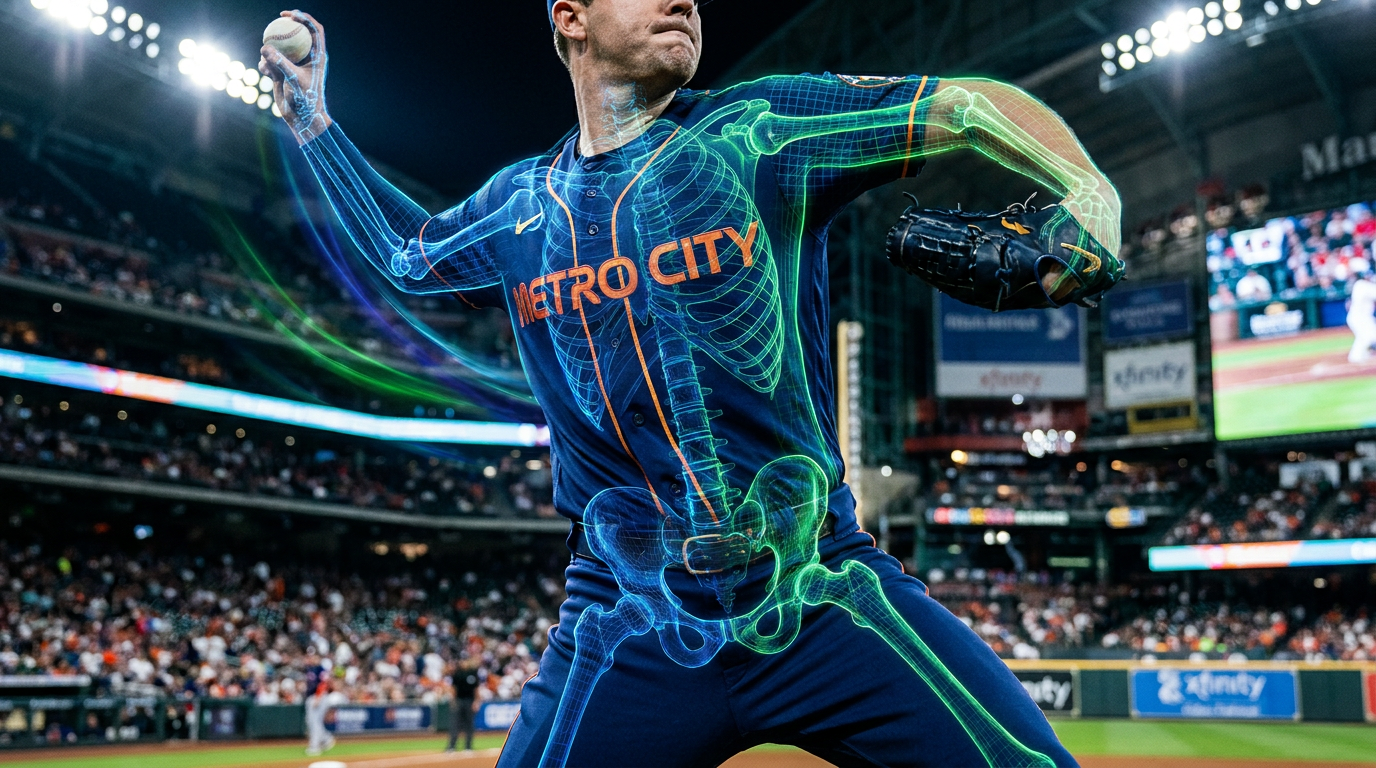
Advanced computer vision systems are now tracking players' skeletal movements in real-time, allowing teams to detect fatigue and correct mechanics before catastrophic injuries occur.
By Factlen Editorial Team
- Sports Science & Medical Staffs
- View the technology as a revolutionary tool to establish objective health baselines and prevent catastrophic injuries before they happen.
- Front Office & Analytics
- Focus on the return on investment, using biomechanical data to protect massive player contracts and optimize roster longevity.
- Players & Union Representatives
- Appreciate the health benefits but harbor deep concerns about data privacy and the potential weaponization of predictive injury models in contract talks.
- Traditional Coaching Staffs
- Cautious about data overload, emphasizing that biomechanical metrics must be translated into practical 'feel' and human coaching cues to be useful.
What's not represented
- · Youth and amateur athletes who currently lack access to elite injury-prevention tools
- · Traditional scouts who prefer evaluating players based on human observation rather than algorithmic models
Why this matters
By identifying the micro-changes in an athlete's biomechanics that precede a torn ligament or joint failure, this technology is saving careers, reducing rehabilitation times, and fundamentally changing how sports medicine operates.
Key points
- Markerless motion capture uses AI and high-speed cameras to track athletes' skeletal movements in real-time.
- The technology eliminates the need for wearable sensors, capturing authentic biomechanics during live competition.
- By tracking micro-changes in mechanics, teams can identify fatigue and dangerous joint stress before an injury occurs.
- Baseball and tennis are leading adopters, using the data to protect pitchers' elbows and optimize serve mechanics.
- The biggest challenge for teams is translating complex kinematic data into simple, actionable coaching cues.
- Player unions are beginning to raise concerns over who owns this predictive biological data.
For decades, the anatomy of a sports injury was a post-mortem science. A pitcher grabs his elbow after a fastball, a tennis player winces following a heavy serve, and the MRI machine eventually delivers the verdict. Medical staffs were largely confined to reacting to structural failures after they occurred, relying on subjective player feedback and the naked eye of coaches to monitor fatigue. The gap between feeling healthy and suffering a catastrophic tear was a black box that cost athletes years of their prime and franchises millions in guaranteed contracts.[1][2]
Today, a quiet revolution in sports analytics is shifting the medical paradigm from reactive diagnosis to proactive prevention. The breakthrough driving this change is markerless motion capture, a technology powered by advanced computer vision and machine learning. By tracking the exact three-dimensional coordinates of an athlete's skeletal joints in real-time during live competition, teams can now measure the invisible forces acting on ligaments and tendons, flagging dangerous mechanical deviations before tissue actually fails.[2][6]
Historically, capturing human biomechanics with high precision required a dedicated laboratory. Athletes had to wear skin-tight suits covered in reflective spherical markers, performing their specific movements in sterile, controlled environments. While this yielded excellent data, it suffered from a fatal flaw: athletes rarely move in a laboratory exactly as they do in the bottom of the ninth inning with the bases loaded. The adrenaline, the fatigue, and the reactive nature of live sports were entirely missing from the clinical data.[3][8]
Modern markerless systems discard the suits entirely. Instead, stadiums are rigged with arrays of high-resolution, high-speed cameras—often capturing video at 300 frames per second or more. As the athlete moves, proprietary artificial intelligence models analyze the video feeds, instantly identifying and tracking up to 29 distinct skeletal joints. The software triangulates these points across multiple camera angles to build a highly accurate, three-dimensional wireframe of the player in motion, completely unobtrusively.[1][6][8]

The sheer volume of data generated by these systems is staggering. For a single baseball pitch, the software calculates the exact rotational velocity of the hips, the degree of shoulder external rotation, and the valgus torque—the twisting force—placed on the elbow. It measures the "kinetic chain," the sequence of energy transfer from the ground, up through the legs, into the torso, and finally out through the arm. If any link in that chain fires a fraction of a second too early or too late, the system records the inefficiency.[1][7]
Baseball has become the primary proving ground for this technology, driven by the industry-wide epidemic of ulnar collateral ligament (UCL) tears requiring Tommy John surgery. Front offices realized that velocity alone was not the sole culprit; rather, it was how that velocity was generated. Teams began establishing baseline kinematic profiles for every pitcher on their roster during spring training, creating a digital fingerprint of what their mechanics look like when they are fully healthy and efficient.[1][2]
Front offices realized that velocity alone was not the sole culprit; rather, it was how that velocity was generated.
The preventative power of the technology unlocks when the season grinds on. When a pitcher fatigues, their mechanics subtly degrade in ways invisible to the human eye. The arm slot might drop by two degrees, or the lead leg might plant a fraction of a second late, forcing the arm to drag behind and absorb exponentially more stress. The markerless tracking systems flag these micro-deviations immediately. A coach can pull a player from a game or adjust their bullpen session not because they reported pain, but because the data shows their elbow is suddenly absorbing 15% more torque than their healthy baseline.[1][7]
Tennis is following a similar trajectory. The ATP Tour has increasingly integrated biomechanical tracking to analyze the serve, arguably the most complex and physically demanding motion in the sport. By tracking the exact load placed on the knees during the loading phase and the hyperextension of the lower back during the strike, sports scientists can help players tweak their ball toss or foot placement by mere centimeters. These microscopic adjustments maintain the player's power output while drastically reducing the sheer stress on their lumbar spine.[4][5]

The evidence supporting this approach is moving rapidly from anecdotal success stories to empirical science. Sports medicine journals are increasingly publishing peer-reviewed studies validating the accuracy of stadium-grade markerless systems against clinical gold standards. More importantly, early data suggests a strong correlation between specific kinematic deviations and the onset of soft-tissue injuries, giving medical staffs the predictive models they have sought for decades.[3][7]
However, biomechanists caution that the technology is not a flawless crystal ball. The human body is highly adaptable, and athletes often develop idiosyncratic mechanics that look dangerous on a spreadsheet but are perfectly safe for their specific anatomy. An AI model might flag a pitcher's mechanics as a high injury risk based on league-wide averages, failing to account for the unique laxity in that specific player's shoulder. Context and medical expertise remain essential to interpreting the raw data.[2][3]
There is also the profound challenge of translation. A tablet dashboard flashing red because a player's "pelvic-torso separation" has decreased is useless if the coaching staff cannot translate that metric into a physical cue the athlete understands. The most successful organizations are those that employ biomechanists who act as translators, turning complex kinematic data into simple, actionable coaching advice—like "drive your back hip sooner"—rather than overwhelming the player with physics equations.[2][7]

Furthermore, the aggregation of this deeply personal biological data has sparked quiet debates within players' unions. If a team's proprietary AI determines that a star player's mechanics are degrading and an injury is statistically imminent, unions worry that this predictive data could be weaponized during contract negotiations. Establishing clear boundaries regarding who owns an athlete's biomechanical data and how it can be used remains a looming frontier for collective bargaining agreements across major sports.[4][6]
Despite these hurdles, the trajectory of the technology points toward massive democratization. While currently confined to elite stadiums with multi-million dollar camera arrays, computer vision models are becoming lightweight enough to run on consumer hardware. Startups are already developing smartphone applications capable of performing basic markerless motion capture, bringing elite biomechanical analysis to high school and collegiate athletes who previously had no access to sports science.[6][8]
Ultimately, the integration of markerless motion capture represents a maturation of the sports analytics movement. The first wave of analytics optimized game strategy and player evaluation; this new wave is optimizing human health. By finally illuminating the invisible forces that dictate athletic longevity, sports science is offering players the greatest advantage of all: the ability to stay on the field.[2][4]

How we got here
1980s-1990s
Biomechanics relies heavily on clinical laboratories where athletes wear reflective suits for basic motion capture.
Early 2010s
Wearable sensors gain popularity in sports, but athletes complain they interfere with natural movement during competition.
2020
Major League Baseball installs Hawk-Eye optical tracking in all 30 stadiums, laying the groundwork for markerless capture.
2023-2024
Computer vision models advance to track 29+ skeletal joints at 300 frames per second, unlocking real-time injury prevention.
2026
Markerless tracking becomes a standard medical tool across global sports leagues, shifting focus from injury treatment to prevention.
Viewpoints in depth
Sports Science & Medical Staffs
View the technology as a revolutionary tool to establish objective health baselines and prevent catastrophic injuries before they happen.
For medical professionals, markerless motion capture is the holy grail of preventative care. Historically, trainers had to rely on an athlete's subjective reporting of pain—which is notoriously unreliable in highly competitive environments—or wait for a structural failure to show up on an MRI. By establishing a digital baseline of an athlete's healthy mechanics, medical staffs can now intervene the moment the data shows a dangerous deviation, effectively treating the fatigue before it becomes a tear.
Front Office & Analytics
Focus on the return on investment, using biomechanical data to protect massive player contracts and optimize roster longevity.
From a management perspective, player injuries represent massive financial liabilities. When a star pitcher on a $150 million contract tears an elbow ligament, the franchise loses both on-field production and financial flexibility. Front offices view biomechanical tracking as an essential risk-management tool. By keeping players healthy and optimizing their kinetic efficiency, teams maximize the return on their investments and maintain a competitive advantage over organizations still relying on traditional medical models.
Players & Union Representatives
Appreciate the health benefits but harbor deep concerns about data privacy and the potential weaponization of predictive injury models in contract talks.
While athletes universally want to avoid injury, the aggregation of their deeply personal biological data creates unease. Unions are increasingly concerned about how predictive models might be used against players during contract negotiations. If an algorithm flags a 28-year-old free agent as having a 60% chance of a shoulder injury within three years based on their kinematic profile, teams could use that data to suppress contract offers. Establishing strict data privacy and ownership rules is a top priority for player associations.
Traditional Coaching Staffs
Cautious about data overload, emphasizing that biomechanical metrics must be translated into practical 'feel' and human coaching cues to be useful.
Many veteran coaches acknowledge the value of the data but warn against "paralysis by analysis." They argue that athletes perform best when their minds are clear, and overwhelming a player with metrics about their pelvic rotation or valgus torque can destroy their natural athleticism. For this camp, the technology is only valuable if there is a skilled coach who can translate the complex physics into a simple, digestible cue—bridging the gap between the spreadsheet and the field.
What we don't know
- How collective bargaining agreements will ultimately regulate the ownership and use of a player's predictive biomechanical data.
- Whether the technology can accurately account for the unique, idiosyncratic mechanics of outlier athletes who defy traditional kinematic models.
- How quickly lightweight, smartphone-based versions of this technology will become accurate enough for widespread amateur use.
Key terms
- Markerless Motion Capture
- A technology that uses multiple cameras and artificial intelligence to track a person's 3D skeletal movements without requiring them to wear physical sensors or reflective suits.
- Kinematics
- The branch of biomechanics that describes the motion of points, bodies, and systems without considering the forces that cause them to move.
- Kinetic Chain
- The concept that the human body is a linked system of joints and segments, where energy generated by the lower body transfers sequentially up through the torso and out through the extremities.
- Valgus Torque
- A specific twisting force applied to a joint, commonly measured at the elbow in throwing athletes, which is a primary predictor of ulnar collateral ligament (UCL) tears.
Frequently asked
Do athletes have to wear sensors for this to work?
No. Modern markerless motion capture relies entirely on high-speed stadium cameras and computer vision AI to track skeletal joints, requiring no wearable technology.
Can this technology predict exactly when an injury will happen?
Not with absolute certainty. It identifies mechanical degradation and increased joint stress, which are strong precursors to injury, allowing teams to intervene before tissue fails.
Is this data used during live games?
Yes. Teams can monitor a player's mechanics inning by inning. If a pitcher's arm slot drops or their elbow torque spikes past their healthy baseline, coaches can pull them from the game immediately.
Will this technology be available to amateur athletes?
It is moving in that direction. While stadium setups are expensive, lightweight AI models are being developed to run on consumer smartphones, democratizing access to biomechanical analysis.
Sources
Source coverage
8 outlets
4 viewpoints surfaced








[1]ESPNPlayers & Union Representatives
How MLB teams are using Hawk-Eye to save pitchers' elbows
Read on ESPN →[2]The AthleticSports Science & Medical Staffs
The invisible skeleton: Inside the biomechanics revolution sweeping sports
Read on The Athletic →[3]Journal of Sports SciencesSports Science & Medical Staffs
Validity and reliability of markerless motion capture in elite athletic environments
Read on Journal of Sports Sciences →[4]Sports Business JournalFront Office & Analytics
Leagues double down on optical tracking for health and safety
Read on Sports Business Journal →[5]ATP TourTraditional Coaching Staffs
ATP and TDI launch next-generation biomechanical tracking
Read on ATP Tour →[6]MIT Technology ReviewPlayers & Union Representatives
Computer vision is turning athletes into real-time data streams
Read on MIT Technology Review →[7]Baseball ProspectusFront Office & Analytics
Quantifying the Kinetic Chain: Can data actually prevent the IL?
Read on Baseball Prospectus →[8]WiredTraditional Coaching Staffs
The end of the ping-pong ball suit: AI's leap into sports science
Read on Wired →

More in sports
See all 10 stories →Injury
Grass-Court Injury Report: Triumphant Returns and Major Absences Reshape the Road to Wimbledon
0 sources

Knicks Basketball
New York Knicks Win 2026 NBA Finals, Ending 53-Year Championship Drought
0 sources

Standings
Race to Turin and Riyadh Heats Up as Tennis Enters Grass-Court Swing
0 sources

Injury
Australian Cricket Boosted as Injured Stars Mahli Beardman and Nathan Lyon Near Returns
0 sources

Every angle. Every day.
Get sports stories with full source coverage and perspective breakdowns delivered to your inbox.