
How Latin America Became the World's Renewable Energy Powerhouse
Driven by a massive hydroelectric foundation and surging wind and solar investments, Latin America now generates 65% of its electricity from clean sources. Countries like Uruguay and Costa Rica are proving that near-100% renewable grids are both technically feasible and economically advantageous.
By Hailey Scott

In short
- Latin America generated 65% of its electricity from clean sources in 2025, far exceeding the global average of 43%.
- Uruguay and Costa Rica both achieved over 98% renewable electricity generation, driven by a mix of hydro, wind, and geothermal power.
- The abundance of green energy is attracting major foreign investments, including hyperscale data centers seeking zero-carbon operations.
While the industrialized world struggles to hit its 2030 carbon reduction targets, a quiet energy revolution has already been won in the Global South. Latin America and the Caribbean generated a staggering 65% of their electricity from clean sources in 2025, far outpacing the global average of 43%.[1]
This is not a future projection; it is the current operational reality. From the wind-swept plains of Patagonia to the volcanic ridges of Central America, the region has turned its extreme geography into a massive economic advantage.[5]
The foundation of this success was laid decades ago. Countries like Brazil, Costa Rica, and Uruguay invested heavily in hydroelectric power in the mid-20th century. Today, hydro still provides about 40% of the region's clean power, acting as a massive, zero-carbon battery.[1][4]
But hydro alone was not enough to meet rising demand, especially as climate change made rainfall less predictable. The real breakthrough of the 2020s has been the explosive growth of wind and solar, which have more than doubled in the past five years to account for 19% of the grid.[1]
Uruguay stands out as the ultimate success story of this transition. Just fifteen years ago, the small South American nation relied heavily on imported oil to keep its lights on, leaving its economy vulnerable to global price shocks.[5]
By 2024 and 2025, preliminary data confirmed that 99% of Uruguay's electricity generation came from renewable sources. The country achieved this by implementing long-term capacity markets that provided investors with predictable returns, effectively removing the systemic bias toward fossil fuels.[5]
This near-total decarbonization is now paying massive economic dividends. Tech giants are increasingly seeking out "net-zero" jurisdictions to power energy-hungry AI operations without the reputational burden of carbon offsets, bringing billions in foreign direct investment to the country.[5]
Further north, Costa Rica has maintained a similar streak, generating 98.6% of its electricity from renewables in 2025. This marked a triumphant rebound from a difficult 2024, when an El Niño-induced drought severely curtailed the nation's hydroelectric output.[2]
To survive that drought, Costa Rica had to temporarily lean on thermal backup plants. But by 2025, a strategic mix of geothermal energy from volcanic fields, biomass, and newly expanded wind and solar farms restored the grid to its historical green averages.[2]
Costa Rica's model proves that a developing nation can achieve energy autonomy through focused public policy. Between 2016 and 2023, while the general cost of living rose, Costa Rican energy rates actually decreased in nominal terms, shielding citizens from global fossil fuel inflation.
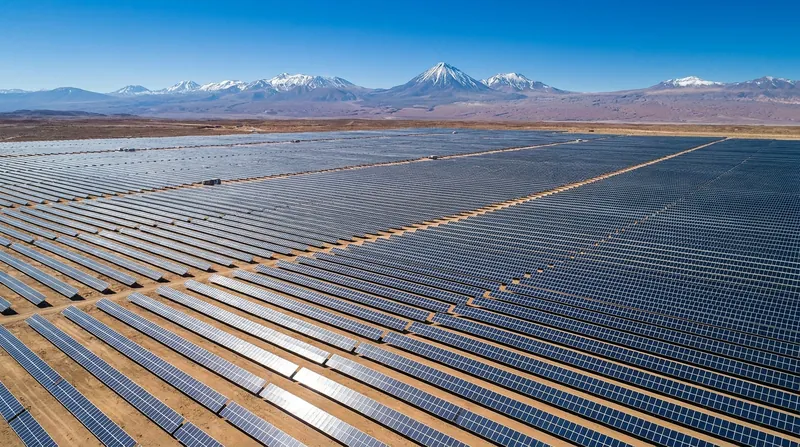
Meanwhile, Chile is leveraging its extreme geography to pioneer the next frontier of the transition: green hydrogen. The country possesses the highest direct normal solar irradiance on Earth in the Atacama Desert, alongside world-class wind resources in Patagonia.[3][4]
Chile's strategy is aggressive. The government aims to produce the world's cheapest green hydrogen—targeting $1.50 per kilogram by 2030—and capture a massive share of the global export market for synthetic fuels.[3]
Pilot projects are already operational. The HIF Haru Oni plant in the Magallanes region is using wind power to produce e-methanol and synthetic gasoline, which is already being exported to international markets.[3]
However, the transition is not without friction. High interest rates and logistical bottlenecks have delayed some of Chile's larger hydrogen projects, with industry experts warning that mass export viability may take until 2040 to fully mature.[3]
Across the broader region, grid infrastructure remains a critical bottleneck. As solar and wind capacity surges, transmission lines are struggling to keep pace, leading to energy curtailment in northern Chile and parts of Brazil.[4]
To maintain its lead, Latin America will need a fourfold increase in clean energy investment by 2030, according to industry analysts. The focus must shift from simply building generation capacity to deploying utility-scale battery storage and modernizing grid interconnectivity.
Despite these hurdles, the region's trajectory is locked in. With 60% of the world's lithium reserves and 40% of its copper, Latin America is not just decarbonizing its own economies; it is supplying the critical minerals required for the rest of the world to follow suit.[4]
The Latin American energy transition offers a powerful blueprint. It demonstrates that moving away from fossil fuels is not an economic burden, but a generational opportunity to secure cheaper power, attract foreign capital, and build resilience against a volatile global market.[5]
Key terms
- Green Hydrogen
- Hydrogen produced by splitting water using electricity generated from renewable sources, resulting in zero carbon emissions.
- Capacity Market
- A system where power plants are paid not just for the electricity they generate, but for guaranteeing they will be available to meet peak demand.
- Curtailment
- The deliberate reduction of renewable energy output below what could have been produced, usually because the grid cannot absorb or transmit the excess power.
- E-fuels
- Synthetic fuels, like e-methanol or e-gasoline, created by combining green hydrogen with captured carbon dioxide.
- Levelized Cost of Energy (LCOE)
- A metric used to compare the lifetime costs of generating electricity across different technologies.
Reader questions
Why is Latin America so far ahead in renewable energy?
The region invested heavily in hydroelectric dams in the mid-20th century, providing a massive baseline of clean power that is now being supplemented by rapid wind and solar growth.
Does Costa Rica really run on 100% renewable energy?
It frequently hits 98% to 99% clean generation, though it occasionally relies on thermal backup plants during severe droughts when hydroelectric reservoirs run low.
What is Chile's green hydrogen strategy?
Chile aims to use its world-class solar and wind resources to produce the cheapest green hydrogen on Earth by 2030, which it plans to export to Europe and Asia.
How is Uruguay attracting foreign tech investment?
Uruguay's 99% renewable grid allows tech companies to operate energy-intensive facilities without generating carbon emissions or buying offsets.
Where opinion splits
Regional Grid Operators
Focus on maintaining baseload stability and managing the fluctuations of hydro with new wind and solar.
For grid operators across Latin America, the massive hydroelectric foundation built in the 20th century is both a blessing and a vulnerability. While it provides a massive baseline of zero-carbon power, recent El Niño-induced droughts have exposed the risks of over-reliance on rainfall. Operators are now prioritizing the rapid integration of wind and solar to diversify the matrix, but they warn that without significant upgrades to transmission lines and utility-scale battery storage, the grid will struggle to absorb the intermittent surges of new renewable capacity.
Green Industrialists
View the renewable surplus as a massive economic moat to attract data centers and export e-fuels.
Industrial investors and policymakers view the region's clean energy dominance as a generational economic opportunity. They argue that as the United States and Europe tighten carbon regulations, Latin America's near-100% renewable grids offer a unique competitive advantage. By providing cheap, green electricity, the region can attract energy-intensive industries like hyperscale AI data centers and nearshoring manufacturing. Furthermore, projects like Chile's green hydrogen initiative aim to turn the region from a localized energy consumer into a global exporter of synthetic fuels.
Climate Adaptation Planners
Emphasize the vulnerability of hydro-heavy grids to climate change and the urgent need for diversification.
Climate planners caution against complacency. They point out that while 65% clean energy is a remarkable achievement, the region's heavy reliance on hydroelectric dams makes it uniquely vulnerable to the intensifying cycles of drought and extreme weather driven by climate change. They advocate for an accelerated deployment of geothermal, biomass, and decentralized solar microgrids to ensure that the region's energy autonomy remains resilient even when the reservoirs run dry.
- Green Industrialists
- View the renewable surplus as a massive economic moat to attract data centers and export e-fuels.
- Regional Grid Operators
- Focus on maintaining baseload stability, managing the fluctuations of hydro with new wind and solar.
- Climate Adaptation Planners
- Emphasize the vulnerability of hydro-heavy grids to climate change and the urgent need for diversification.
Perspectives this story doesn't cover
- Fossil Fuel Importers
- Local Indigenous Communities
Sources
Source coverage
5 outlets
3 viewpoints surfaced





- [1]EmberRegional Grid Operators
Latin America and Caribbean Power Data 2026
Read on Ember → - [2]The Tico TimesRegional Grid Operators
Costa Rica generated 98.6 percent of its electricity from renewable sources in 2025
Read on The Tico Times → - [3]S&P GlobalGreen Industrialists
Chile's green hydrogen ambitions face skepticism amid delays and high costs
Read on S&P Global → - [4]DNVRegional Grid Operators
Energy Transition Outlook 2025: Latin America
Read on DNV → - [5]Factlen Editorial TeamClimate Adaptation Planners
Synthesis by Factlen editorial team
Read on Factlen Editorial Team →
More in World
See all →Energy Transition
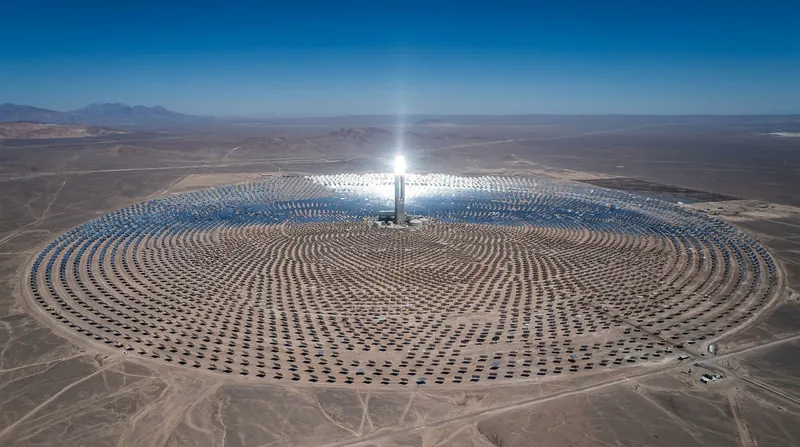
How Chile is Engineering a 100% Renewable Energy Grid in the Atacama Desert
6 sources
Public Health
How a Massive Mosquito Factory in Brazil is Defeating Dengue in Latin America
4 sources

Conservation Tech
How AI and Satellite Tech Are Predicting—and Preventing—Amazon Deforestation
2 sources
Urban Mobility
How Santiago Built the World’s Largest Electric Bus Fleet Outside China
2 sources
Comments
Every angle. Every day.
Get World stories with full source coverage and perspective breakdowns, free every day.