
The End of One-Size-Fits-All Diets: How AI and the Microbiome are Powering Precision Nutrition
Backed by a $170 million NIH initiative, researchers are combining artificial intelligence, wearable tech, and gut microbiome sequencing to create highly personalized dietary guidelines, marking a shift away from universal nutrition advice.
By Factlen Editorial Team
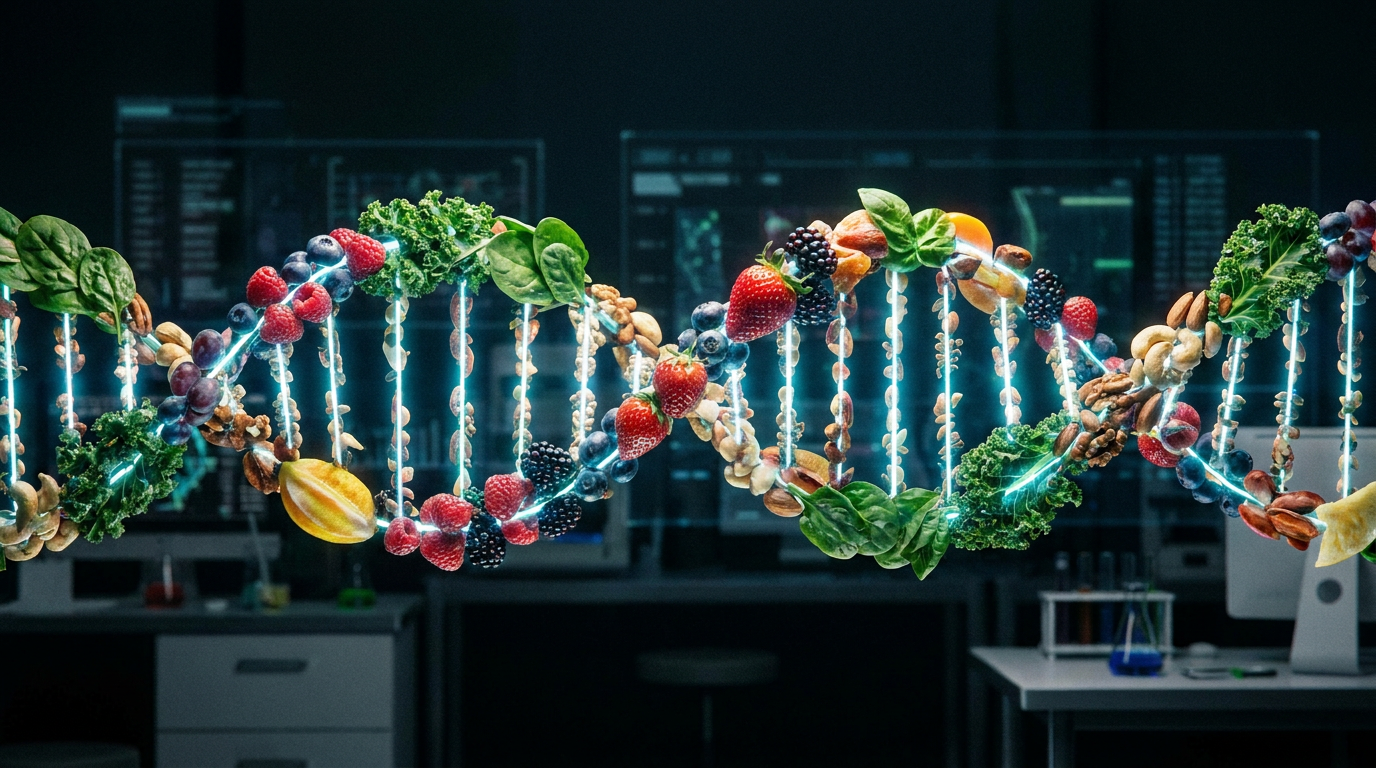
- Precision Nutrition Researchers
- Argue that integrating multi-omics data and AI is essential to move beyond ineffective, generalized dietary advice.
- Public Health Advocates
- Emphasize the need to ensure these advanced nutritional tools are accessible to diverse populations and do not widen health disparities.
- Digital Health Innovators
- Focus on the role of wearables and continuous monitoring to provide real-time, actionable dietary feedback to consumers.
What's not represented
- · Agricultural Producers
- · Traditional Dietitians
Why this matters
For decades, standard dietary advice has frustrated millions who fail to see results from 'one-size-fits-all' guidelines. Precision nutrition promises to eliminate the guesswork by using your unique biological data to determine exactly which foods optimize your personal health and metabolism.
Key points
- Precision nutrition aims to replace universal dietary guidelines with personalized recommendations based on individual biology.
- The NIH is funding a $170 million initiative to study how diverse populations respond differently to the same foods.
- The gut microbiome plays a central role in determining an individual's unique metabolic response to different nutrients.
- Researchers are combining multi-omics data with artificial intelligence to predict postprandial glycemic responses.
- Public health experts emphasize the need to ensure these advanced nutritional tools remain accessible to all socioeconomic groups.
For decades, public health dietary guidelines have operated on a fundamental assumption: that human bodies process food in roughly the same way. This "one-size-fits-all" approach has formed the bedrock of food pyramids, calorie counting, and standard nutritional advice. Yet, clinical outcomes have consistently shown that two people eating the exact same meal can experience wildly different metabolic responses.[3][4]
That biological reality is now driving a massive paradigm shift known as precision nutrition. Rather than issuing broad mandates to eat more vegetables or cut carbohydrates, precision nutrition seeks to tailor dietary interventions to an individual's unique biological makeup.[2][4]
The scale of this shift is best illustrated by the National Institutes of Health's "Nutrition for Precision Health" (NPH) initiative. Backed by $170 million in funding, the multi-year study is leveraging the NIH's "All of Us" research program to enroll over 10,000 participants across the United States.[1][3]
The goal of the NPH program is to build predictive models of individual dietary responses by integrating artificial intelligence with multi-omics data. This means moving beyond simple calorie tracking to analyze a patient's genetics, metabolomics, and most importantly, their gut microbiome.[1][3]

The gut microbiome—the trillions of bacteria, viruses, and fungi residing in the digestive tract—has emerged as the central engine of personalized nutrition. Recent studies have demonstrated that these microbial communities play a critical role in how the body extracts energy, synthesizes vitamins, and regulates systemic inflammation.[2][5]
Researchers have found that the composition of an individual's microbiome can dictate their postprandial glycemic response, which is the spike in blood sugar that occurs after eating. Because microbiome profiles vary drastically from person to person, a food that causes a severe glucose spike in one individual might keep blood sugar perfectly stable in another.[5][6]
To capture this dynamic data, scientists are increasingly relying on continuous glucose monitors (CGMs) and other wearable technologies. These devices provide real-time physiological feedback, allowing researchers to track exactly how specific foods impact metabolic parameters minute by minute.[2][4]
To capture this dynamic data, scientists are increasingly relying on continuous glucose monitors (CGMs) and other wearable technologies.
When this continuous stream of wearable data is combined with multi-omics profiling, the resulting datasets are too complex for traditional analysis. This is where artificial intelligence and machine learning algorithms become essential. AI systems can identify hidden patterns between a person's microbial signature and their nutritional responses.[2][4]

In controlled trials, these microbiome-informed algorithms have already proven capable of predicting glycemic responses more accurately than standard carbohydrate counting. By feeding the AI data on a patient's gut bacteria and baseline metabolism, clinicians can generate highly tailored dietary strategies that optimize energy levels and reduce disease risk.[4][5]
The clinical applications of this technology are particularly promising for managing chronic metabolic conditions. Precision nutrition interventions have shown significant potential in improving blood glucose, lipid levels, and blood pressure in patients with diabetes, hypertension, and obesity.[2][5]
For instance, while diets rich in fermentable fiber generally promote beneficial bacteria and enhance the production of short-chain fatty acids, precision nutrition can identify exactly which types of fiber will yield the best metabolic output for a specific patient's existing microbial ecosystem.[2][5]
Despite the rapid advancements, the field of precision nutrition still faces significant scientific and logistical hurdles. Many of the microbial signatures associated with favorable metabolic responses have been identified in dataset-specific studies, and researchers are working to ensure these findings replicate reliably across diverse, real-world populations.[2][6]

There is also the challenge of clinical translation. While targeted microbiome-directed approaches—such as specific probiotic supplementation or personalized meal algorithms—provide strong proof-of-concept signals, their long-term durability and scalability remain under investigation.[5][6]
Furthermore, public health officials have raised critical questions about health equity. As precision nutrition platforms and AI-driven dietary apps enter the commercial market, there is a risk that these advanced tools will only be accessible to affluent populations, potentially widening existing health disparities.[3][6]
To counter this, the NIH's NPH initiative is prioritizing diversity in its participant enrollment, aiming to build algorithms that work for all demographics. As these predictive models are validated, they are expected to eventually inform adaptive public health guidelines, transforming nutrition from a generic prescription into a precise, preventative medical tool.[1][3][6]
How we got here
1990s-2000s
Nutritional science largely focuses on population-wide dietary guidelines and the early exploration of single-gene interactions with diet (nutrigenomics).
2010s
Advances in sequencing technology reveal the vast complexity of the gut microbiome and its profound impact on human metabolism.
2020
The NIH Council of Councils approves the concept for the 'Nutrition for Precision Health' program to move beyond one-size-fits-all diets.
2022
The NIH officially awards $170 million to launch the Nutrition for Precision Health study, nested within the All of Us Research Program.
2026
Researchers increasingly integrate AI and continuous wearable data to build predictive models of individual dietary responses.
Viewpoints in depth
Precision Nutrition Researchers
Scientists focused on decoding the biological mechanisms that dictate individual responses to food.
Researchers in this camp argue that the era of population-wide dietary guidelines is fundamentally flawed because it ignores the vast biological diversity between individuals. By leveraging multi-omics—which includes genomics, metabolomics, and microbiome sequencing—they aim to identify the specific microbial signatures that dictate how a person metabolizes different nutrients. Their primary goal is to build robust, AI-driven predictive models that can accurately forecast an individual's glycemic and inflammatory responses to any given food, ultimately providing a scientific foundation for personalized medical diets.
Public Health Advocates
Experts concerned with the equitable distribution and clinical translation of advanced nutritional technologies.
While optimistic about the science, public health advocates warn that precision nutrition could inadvertently widen existing health disparities. They point out that the technologies driving this field—such as continuous glucose monitors, microbiome sequencing kits, and AI-driven apps—are currently expensive and largely accessible only to affluent consumers. This camp emphasizes the critical need for initiatives like the NIH's 'All of Us' program to prioritize diverse participant enrollment, ensuring that the resulting algorithms are validated across all socioeconomic and ethnic demographics before being integrated into national health guidelines.
Digital Health Innovators
Technologists and industry leaders focused on consumer-facing applications of precision nutrition.
This perspective views precision nutrition as a data challenge that can be solved through continuous monitoring and machine learning. Innovators in the digital health space are focused on creating closed-loop systems where wearable devices, such as continuous glucose monitors, feed real-time physiological data into adaptive AI algorithms. They argue that dynamic, continuously updated dietary guidance will ultimately replace static diet plans, empowering consumers to make immediate, data-driven choices about their daily food intake.
What we don't know
- Whether microbial signatures associated with favorable metabolic responses can be reliably replicated across diverse, global populations.
- How to scale precision nutrition technologies affordably so they do not widen existing health and socioeconomic disparities.
- The long-term durability and clinical outcomes of targeted microbiome-directed interventions, such as personalized probiotic supplementation.
Key terms
- Precision Nutrition
- A targeted approach to diet that uses an individual's biological data, such as genetics and microbiome composition, to optimize their health outcomes.
- Gut Microbiome
- The complex community of trillions of bacteria, viruses, and fungi that live in the human digestive tract and aid in digestion and immune function.
- Multi-omics
- A biological analysis approach that combines data from multiple fields, such as genomics (DNA), metabolomics (metabolites), and microbiomics (gut bacteria).
- Postprandial Glycemic Response
- The change in a person's blood sugar levels that occurs in the hours immediately following a meal.
- Continuous Glucose Monitor (CGM)
- A wearable medical device that tracks blood sugar levels in real-time throughout the day and night.
Frequently asked
What is precision nutrition?
Precision nutrition is an emerging scientific approach that tailors dietary recommendations to an individual's unique genetics, microbiome, and metabolism, rather than relying on one-size-fits-all guidelines.
Why do standard diets fail for some people?
Because human biology varies drastically, two people can eat the exact same food and experience completely different metabolic responses, such as different spikes in blood sugar.
What role does the gut microbiome play?
The trillions of microbes in the digestive tract heavily influence how the body extracts energy from food, synthesizes vitamins, and regulates metabolic health.
Is precision nutrition available to the public now?
While some commercial services offer early versions of personalized nutrition based on microbiome or genetic testing, the field is still largely in the research phase, with major NIH studies currently working to validate predictive algorithms.
Sources
Source coverage
6 outlets
3 viewpoints surfaced






[1]NIH Common FundDigital Health Innovators
Nutrition for Precision Health, powered by the All of Us Research Program
Read on NIH Common Fund →[2]Frontiers in NutritionPrecision Nutrition Researchers
Precision nutrition targeting the gut microbiota for weight management: mechanisms and applications
Read on Frontiers in Nutrition →[3]Tufts NowPublic Health Advocates
The Power and Promise of Precision Nutrition
Read on Tufts Now →[4]Global Wellness InstituteDigital Health Innovators
Nutrition For Healthspan Initiative Trends for 2026
Read on Global Wellness Institute →[5]NutrientsPrecision Nutrition Researchers
Personalized Nutrition Through the Gut Microbiome in Metabolic Syndrome and Related Comorbidities
Read on Nutrients →[6]Factlen Editorial TeamPublic Health Advocates
Synthesis by Factlen editorial team
Read on Factlen Editorial Team →

More in health
See all 5 stories →Clinical Guidelines
Massive 2026 Data Synthesis Proves Exercise Matches Medication as First-Line Treatment for Depression
0 sources

Exercise Science
The Science of Zone 2 Cardio: Why the Longevity World is Rethinking the 'Conversational Pace'
0 sources

Cardiovascular Health
COVID-19 Vaccination Dramatically Cuts Risk of Heart Attacks and Strokes, Massive Study Finds
0 sources

Every angle. Every day.
Get health stories with full source coverage and perspective breakdowns delivered to your inbox.