
Why the Internet is Retreating to 'Digital Gardens' and the 'Cozy Web'
Exhausted by algorithmic feeds and AI-generated content, a growing number of internet users are abandoning the public web to build slow, interconnected, and highly personal digital spaces.
By Factlen Editorial Team
- Digital Gardeners
- Value slow, intentional knowledge building and public learning over chronological feeds.
- Cozy Web Advocates
- Prioritize privacy, safety, and intimate community spaces away from the public square.
- Slow Web Proponents
- Argue for a deceleration of digital consumption, focusing on depth and permanence.
- Platform Skeptics
- View the shift as a necessary defense against surveillance capitalism and AI spam.
What's not represented
- · Major Social Media Executives
- · Algorithmic Feed Designers
Why this matters
As the public internet becomes increasingly noisy and automated, understanding how to cultivate private, intentional digital spaces empowers readers to reclaim their attention, protect their privacy, and engage with technology on their own terms.
Key points
- Internet users are increasingly abandoning public social media feeds due to algorithmic exhaustion and AI-generated content.
- Many are retreating to the 'Cozy Web,' a network of private, gatekept spaces like Discord and group chats.
- To solve the ephemeral nature of group chats, users are building 'Digital Gardens'—interconnected, self-hosted personal wikis.
- Unlike traditional blogs, digital gardens are organized by context rather than chronology, allowing ideas to evolve slowly over time.
- This shift represents a broader 'Slow Web' movement that prioritizes depth, permanence, and digital ownership over hyper-speed engagement.
The modern internet feels increasingly exhausting. Between the endless scroll of algorithmic feeds, the constant hum of manufactured outrage, and the rising flood of synthetic, AI-generated content, the public web has become a hostile environment for genuine human connection. For many users, logging online no longer feels like entering a global village; it feels like stepping onto a hyper-optimized performance stage where attention is aggressively harvested and monetized. This exhaustion has sparked a quiet but profound rebellion. Instead of trying to fix the major social media platforms, a growing cohort of internet users is simply walking away. They are retreating to build calmer, more intentional spaces online, fundamentally reshaping the architecture of internet culture in the process.[7]
To understand this exodus, it is essential to understand the 'Dark Forest' theory of the internet. Coined by Kickstarter co-founder Yancey Strickler, the theory borrows from science fiction to describe the public web as a dark, predatory environment. In a literal dark forest, making noise attracts predators, so survival dictates that all living creatures remain silent and hidden. Online, those predators take the form of trolls, reply guys, data-harvesting algorithms, and outrage-baiting bots. To survive this digital ecosystem, users have learned to stay silent, hiding their authentic selves and nuanced opinions from the public square to avoid being targeted or commodified.[2]
So where do these users go when they leave the public square? They retreat into what writer Venkatesh Rao famously termed the 'Cozy Web.' This is the private, gatekeeper-bounded internet consisting of Slack channels, Discord servers, WhatsApp groups, and invite-only Telegram chats. The Cozy Web operates as a digital safe haven. It is informal, untracked, and messily human. It runs on a human protocol of cutting and pasting links, sharing inside jokes, and engaging in depressurized conversation far away from the algorithmic gaze. In these spaces, users can drop the performative veneer required by public platforms and engage in genuine, low-stakes interactions.[3]

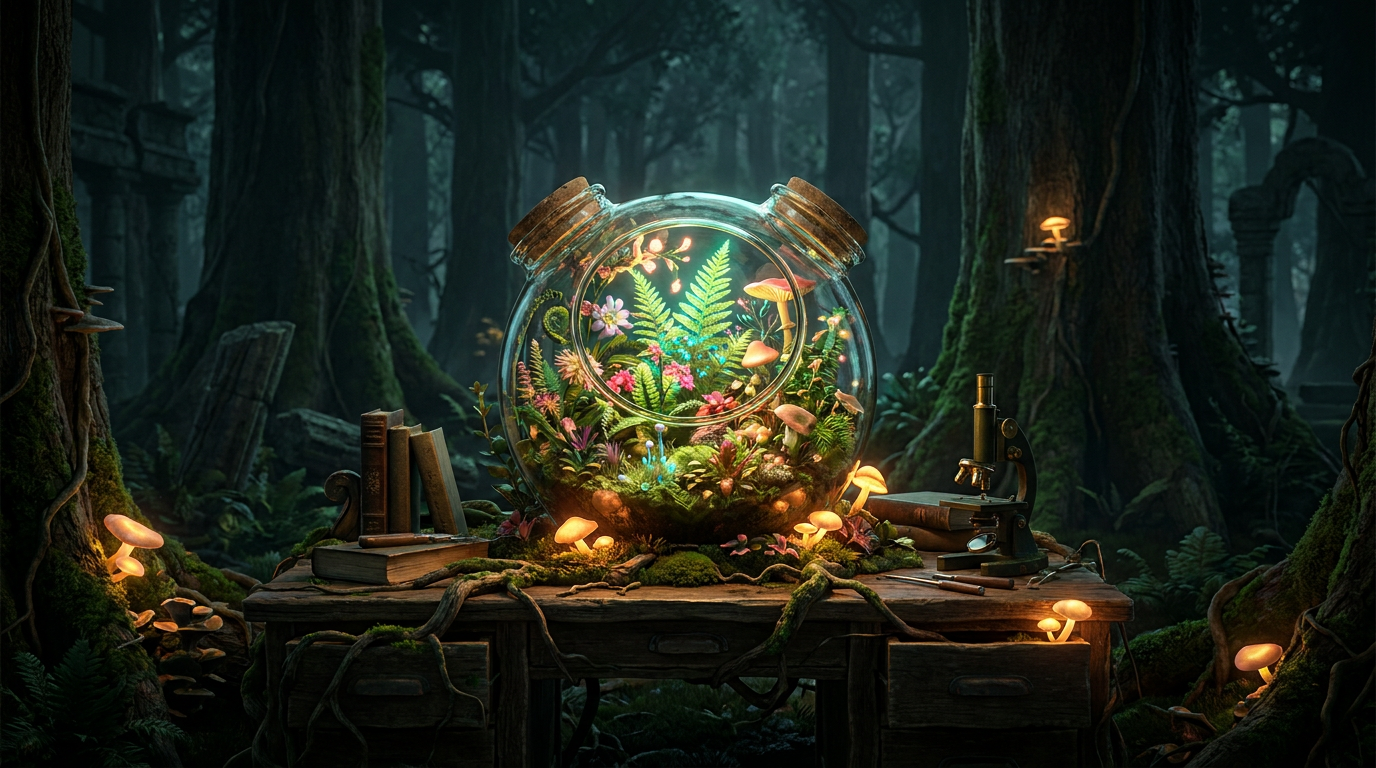
However, while the Cozy Web offers psychological safety, it severely lacks permanence. Group chats and Discord servers are inherently ephemeral; brilliant ideas, helpful links, and deep conversations quickly scroll out of view and are lost forever in the chat history. This limitation has given rise to the most fascinating and empowering development in this cultural shift: the resurgence of 'Digital Gardens.' If the public web is a dark forest and the Cozy Web is a hidden burrow, a digital garden is a cultivated, sunlit clearing where a user can slowly grow their ideas over time.[3][7]
A digital garden is a personal, curated corner of the internet that serves as a living knowledge base. Unlike a traditional blog, which is organized chronologically and demands polished, finished posts, a digital garden is organized topologically. Designer and anthropologist Maggie Appleton describes digital gardens as spaces where ideas are planted as 'seedlings.' These notes are inherently exploratory and are often published as half-finished thoughts. Over time, the gardener returns to them, pruning the text, updating the facts, and connecting them to other related ideas as their understanding of the topic evolves.[1][4]
A digital garden is a personal, curated corner of the internet that serves as a living knowledge base.
The architecture of a digital garden is designed to mimic the associative nature of the human brain. Instead of forcing readers down a linear timeline of recent posts, it relies heavily on bi-directional linking. When a user visits a digital garden and reads about one concept, they can click through a web of contextual associations, falling down a rabbit hole of the creator's curated interests. It is hyperlinking at its absolute best, allowing the reader to actively choose which curiosity trail to follow rather than defaulting to an algorithmically filtered, ephemeral stream of content.[1][4]

This practice is deeply intertwined with the rising trend of Personal Knowledge Management, often abbreviated as PKM. In recent years, a new generation of software tools like Obsidian, Roam Research, and Notion have made it easier than ever for non-technical users to build these interconnected databases. These tools allow users to capture their research, reading notes, and personal reflections, linking them together to form a 'second brain.' By publishing these databases to the web, users transform their private notes into public gardens, inviting others to wander through their intellectual landscapes.[7]
Digital gardening is a core component of the broader 'Slow Web' movement. Just as the slow food movement emerged in the late twentieth century as a reaction to the industrialization of fast food, the slow web advocates for a fundamental deceleration of our digital consumption. It prioritizes depth, reflection, and permanence over the hyper-speed engagement demanded by modern social media. The slow web asks users to spend meaningful time on the internet, reading long-form content and engaging deeply with complex ideas, rather than mindlessly grazing through bite-sized, optimized content.[5][6]
In 2026, the appeal of these slow, intentional spaces has skyrocketed for a very specific reason: the internet is drowning in artificial intelligence. As generative AI models flood the public web with synthetic text, automated blog posts, and SEO-optimized filler, verifiable human authenticity has become the internet's most valuable and scarce currency. Readers are increasingly skeptical of polished, authoritative-sounding articles that may have been generated by a machine in seconds. In this environment, the messy, evolving, and deeply personal nature of a digital garden serves as a cryptographic signature of humanity.[7]

A digital garden cannot be easily faked or automated by a language model. It is a deeply idiosyncratic reflection of a single human mind, built slowly and painstakingly over years of reading, thinking, and connecting dots. It rejects the modern pressure to build a scalable 'personal brand' or cater to a specific target audience. Instead, it focuses on the intrinsic joy of learning in public. When you read a digital garden, you are not consuming content; you are witnessing the genuine cognitive process of another human being.[7]
The shift toward digital gardens also represents a reclamation of digital ownership. For the past decade, internet users have acted as digital sharecroppers, building their audiences and storing their thoughts on platforms owned by massive tech conglomerates. When algorithms change or platforms shut down, that labor is lost. By hosting their own digital gardens, users are taking back control of their intellectual property. They own the domain, they own the links, and they dictate exactly how their ideas are presented to the world, completely free from the influence of engagement metrics.[4][7]
Ultimately, the rise of the Cozy Web and the flourishing of digital gardens represent a hopeful paradigm shift in how we view online real estate. We are slowly moving away from the exhausting idea of the internet as a high-stakes performance stage. In its place, we are returning to the web's original, utopian promise: a quiet, interconnected library of human curiosity, where individuals can share what they know, learn from one another, and cultivate their own little bit of the internet in peace.[7]
How we got here
1998
Hypertext pioneer Mark Bernstein first coins the term 'digital garden' in an essay about web navigation.
2015
The Slow Web movement begins gaining traction as a reaction against the hyper-speed engagement of early social media.
2019
Yancey Strickler publishes the 'Dark Forest' theory, and Venkatesh Rao introduces the concept of the 'Cozy Web'.
2020
The COVID-19 pandemic accelerates the retreat into private digital spaces and sparks a renewed interest in Personal Knowledge Management tools.
2026
Amidst a flood of AI-generated web content, digital gardens experience a massive resurgence as users seek verifiable human authenticity.
Viewpoints in depth
Digital Gardeners
Advocates for building interconnected, evolving personal knowledge bases in public.
Digital gardeners view the internet not as a chronological feed of finished products, but as a topological space for exploration. They argue that traditional blogging creates unnecessary pressure to publish polished, SEO-optimized content, which stifles genuine learning. By treating ideas as 'seedlings' that can be updated and connected over time, they prioritize the slow, compounding growth of personal knowledge. This camp heavily values digital ownership, preferring self-hosted platforms where they control the architecture and presentation of their thoughts, free from algorithmic interference.
Cozy Web Advocates
Proponents of retreating to private, gatekept digital spaces for authentic connection.
This perspective emphasizes psychological safety and the necessity of boundaries online. Cozy Web advocates argue that the public internet has become too hostile, performative, and heavily surveilled to support genuine human interaction. By moving conversations into private Discord servers, Slack channels, and group chats, they create 'high-gatekeeping' environments where users can share ideas without fear of context collapse, harassment, or algorithmic commodification. They view this retreat not as isolationism, but as a healthy boundary-setting mechanism in an increasingly noisy digital world.
Slow Web Proponents
A movement focused on decelerating digital consumption and prioritizing depth over speed.
Drawing inspiration from the slow food movement, Slow Web proponents argue that the fundamental pace of the modern internet is incompatible with human well-being. They criticize the design of endless scrolls, push notifications, and ephemeral content that forces users into a state of constant, shallow stimulation. Instead, they champion digital environments that encourage long-form reading, deep reflection, and intentional navigation. For this camp, the resurgence of digital gardens is a practical application of their philosophy, proving that the internet can still function as a calm, contemplative library rather than an exhausting slot machine.
What we don't know
- Whether digital gardens will remain a niche practice for tech-savvy users or achieve mainstream adoption.
- How major social media platforms will adapt their algorithms to combat the exodus of users to the Cozy Web.
- If new monetization models will emerge to support creators who prioritize slow, evergreen content over viral engagement.
Key terms
- Digital Garden
- A personal, curated online space where ideas are published as evolving notes and connected via contextual links rather than a chronological timeline.
- Cozy Web
- The private, gatekeeper-bounded spaces of the internet, such as group chats and Discord servers, where users retreat for safe, untracked conversation.
- Dark Forest Theory
- The concept that the public internet is a predatory environment, prompting users to hide their authentic selves to avoid harassment or algorithmic harvesting.
- Bi-directional Linking
- A feature in note-taking systems where linking from Note A to Note B automatically creates a reciprocal link from Note B back to Note A, mimicking neural pathways.
- Personal Knowledge Management (PKM)
- The practice of capturing, organizing, and retrieving information to build a personal database or 'second brain.'
Frequently asked
What is a digital garden?
A digital garden is a personal online space where ideas are published as evolving notes and connected via contextual links, rather than a chronological timeline of finished posts.
What is the Dark Forest theory of the internet?
Coined by Yancey Strickler, it is the concept that the public web has become a predatory environment, causing authentic users to hide in private spaces to avoid harassment or algorithmic harvesting.
How is the Cozy Web different from the public internet?
The Cozy Web consists of private, gatekeeper-bounded spaces like Discord servers and group chats, offering a safe, untracked environment for genuine conversation away from algorithms.
Why are digital gardens becoming more popular?
As the internet becomes flooded with AI-generated content and fast-paced feeds, users are seeking out authentic, human-curated spaces that prioritize deep thinking and digital ownership.
Sources
Source coverage
7 outlets
4 viewpoints surfaced







[1]Maggie AppletonDigital Gardeners
A Brief History of Digital Gardens
Read on Maggie Appleton →[2]Yancey StricklerCozy Web Advocates
The Dark Forest Theory of the Internet
Read on Yancey Strickler →[3]RibbonfarmCozy Web Advocates
The Extended Internet Universe and the Cozy Web
Read on Ribbonfarm →[4]MIT Technology ReviewDigital Gardeners
Digital gardens let you cultivate your own little bit of the internet
Read on MIT Technology Review →[5]MediumSlow Web Proponents
An Introduction To The Slow Web Movement
Read on Medium →[6]Early MagazineSlow Web Proponents
The Slow Web and the Rise of Digital Gardens
Read on Early Magazine →[7]Factlen Editorial TeamPlatform Skeptics
Synthesis by Factlen editorial team
Read on Factlen Editorial Team →
Every angle. Every day.
Get culture stories with full source coverage and perspective breakdowns delivered to your inbox.